
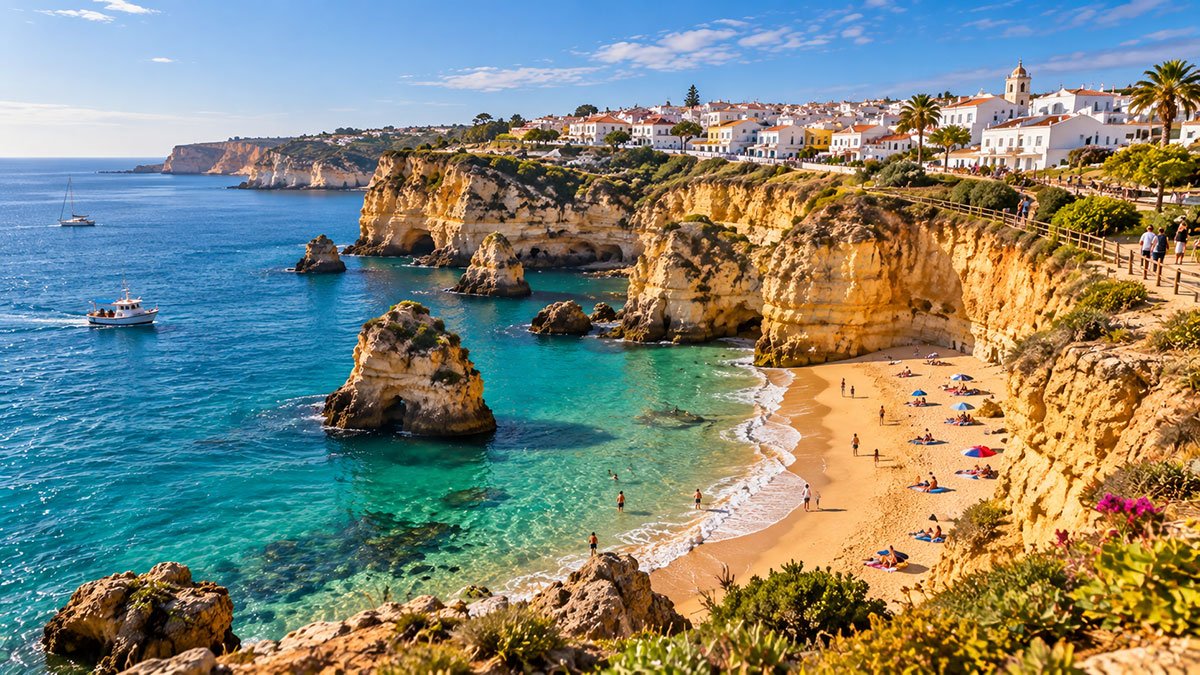
The Algarve combines golden cliffs, sandy beaches, Atlantic waters and distinctive coastal towns along southern Portugal.
Algarve Beaches: A Practical Guide to the Best Beaches and Coastal Towns
Portugal’s Algarve is one of Europe’s most varied coastal destinations.
The region stretches along the southern edge of Portugal, with roughly 200 kilometres of beaches ranging from rugged Atlantic shores and golden cliffs to broad eastern sands backed by dunes and pine forests. The character of the coastline changes significantly as you travel from west to east.
That variety is what makes Algarve beaches so appealing.
Some beaches are surrounded by dramatic limestone cliffs and sea caves. Others offer long stretches of sand with shallow, calmer water. Some sit beside busy resort towns, while others are reached through protected natural areas.
The best beach for you depends on what you want from your holiday.
Families may prefer the calmer eastern Algarve. Couples may enjoy smaller coves around Lagos and Carvoeiro. Travelers looking for nightlife can stay near Albufeira or Praia da Rocha, while nature lovers can explore the Ria Formosa and the western coast.
Understanding the Algarve Coast
The Algarve becomes easier to explore when you divide it into three broad coastal areas.
Western Algarve
The area around Sagres and the Costa Vicentina feels more rugged and exposed to the Atlantic.
Beaches around Arrifana, Carrapateira and Praia do Amado attract surfers and travelers looking for dramatic scenery.
Closer to Lagos, the coastline becomes more sheltered and is known for golden cliffs, smaller coves and distinctive rock formations.
Central Algarve
Between Lagos and Faro, the coast has a much more developed tourism infrastructure.
This is where you will find major resorts such as Portimão, Albufeira and Vilamoura, along with popular beaches such as Praia da Rocha, Alvor, Galé, São Rafael and Falésia.
Eastern Algarve
East of Faro, the coastline changes again.
The Ria Formosa Natural Park dominates much of the landscape, with lagoons, marshes, barrier islands and long sandy beaches.
Further east, beaches around Cabanas, Manta Rota, Altura, Praia Verde and Monte Gordo offer broad sands and generally calmer, shallower water.
This section of the coast can be especially attractive to families and travelers who prefer space over dramatic cliffs.
Praia da Rocha: Dramatic Cliffs and a Lively Resort
Praia da Rocha is one of the Algarve’s best-known beaches.
Located in Portimão, it combines a broad sandy beach with the region’s characteristic golden and reddish rock formations.
The surrounding resort has restaurants, bars, accommodation and evening entertainment, making it convenient for travelers who want a beach holiday without staying far from urban facilities.
The beach is also close to Fortaleza de Santa Catarina, which overlooks the coastline and the entrance to the Arade River.
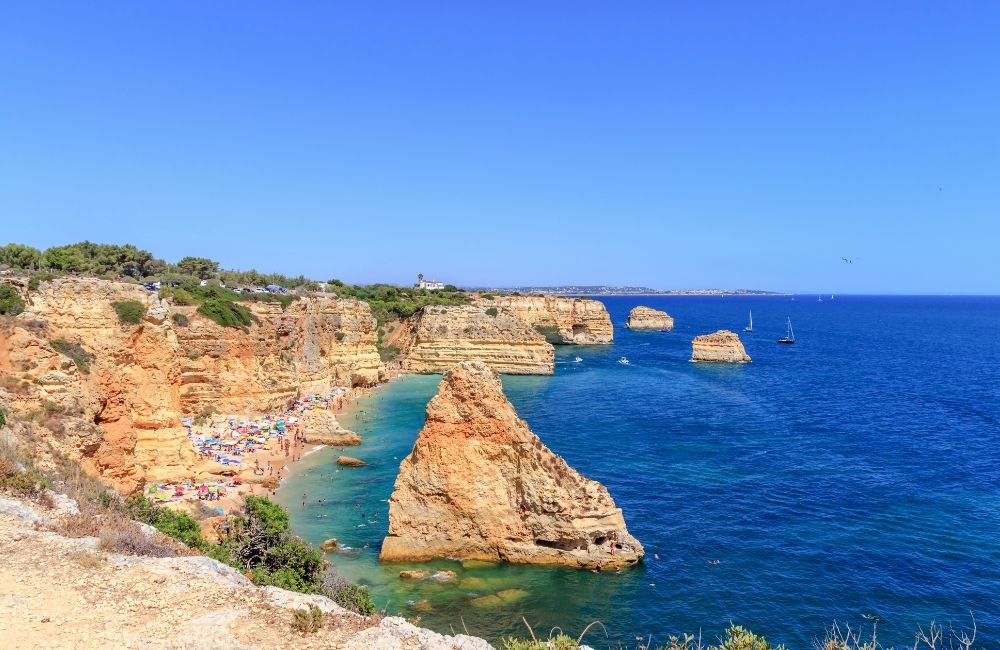
Praia da Rocha is a good choice when you want:
- A large sandy beach
- Resort facilities
- Restaurants and nightlife
- Water-based activities
- Easy access to Portimão
- A convenient base for exploring nearby beaches
For travelers who prefer quiet coves and natural surroundings, however, smaller beaches nearby may be a better choice.
Alvor: Beach, Lagoon and a Fishing-Village Atmosphere
Alvor offers a useful alternative to the larger resorts.
The town retains its traditional fishing-village character while providing access to a long sandy beach and the Alvor Nature Reserve.
The Alvor area is particularly interesting because its coastline combines beach scenery with wetlands, dunes and lagoon habitats.
The protected landscape provides opportunities for walking and birdwatching as well as beach activities.
The coastal setting also makes Alvor convenient for travelers who want to divide their holiday between relaxation and nature.
It is a good option for:
- Couples
- Families
- Nature lovers
- Walkers
- Travelers seeking a quieter resort atmosphere
Lagos: Beaches, Old Town and Ponta da Piedade
Lagos is one of the most useful bases for exploring the western and central Algarve.
The town combines a historic centre, restaurants and accommodation with access to several spectacular beaches.
Among the best-known are:
- Praia Dona Ana
- Praia do Camilo
- Porto de Mós
- Meia Praia
The coastline becomes particularly impressive around Ponta da Piedade.
Here, the sea has carved cliffs into arches, pillars, caves and other formations. Official Portuguese tourism information recommends boat trips as one way to appreciate the formations from the water.
For many travelers, Ponta da Piedade is as important as the beach itself.
A Practical Point About Lagos Beaches
Some of the smaller beaches around Lagos require steep access routes or stairs.
That matters for travelers with young children, limited mobility or substantial beach equipment.
Meia Praia provides a very different experience, with a much longer stretch of sand and easier space for a traditional beach day.
Lagos therefore works well when you want both a historic town and several different beach experiences.
Praia da Marinha: A Classic Algarve Landscape
Praia da Marinha near Lagoa is one of the Algarve’s most photographed beaches.
Tall limestone cliffs surround the sand, while natural rock formations rise from the water.
The viewpoint above the beach provides an excellent perspective before you descend toward the shore. The official tourism portal notes that access includes a long staircase.
This is one of the beaches to prioritize for scenery rather than simply convenience.
It is particularly attractive to:
- Photographers
- Couples
- Scenic travelers
- Visitors interested in coastal geology
- Travelers exploring the Lagoa area
The beach can become busy during popular periods, so arriving earlier can make the experience more relaxed.
Benagil and the Algarve’s Sea Caves
Benagil is famous for its dramatic coastal formations and caves.
The small beach sits beneath cliffs that have been shaped by erosion, while nearby sea caves have made this section of coastline a popular destination for boat excursions.
Benagil is better understood as a coastal excursion destination rather than simply a beach for spending the entire day.
Boat trips can provide a different view of the cliffs and caves, especially when sea conditions allow.
Before booking a water excursion, check the operator’s current route, safety arrangements and weather policy.
Sea conditions can change quickly along the Atlantic coast.
Albufeira: Beaches, Restaurants and Nightlife
Albufeira has grown from a former fishing town into one of the Algarve’s major tourist centres.
Its appeal comes partly from variety.
The municipality includes numerous beaches, while the town provides a wide choice of restaurants, accommodation and entertainment.
Popular beaches in and around the area include:
- Praia da Oura
- Santa Eulália
- São Rafael
- Galé
- Maria Luísa
Official tourism information highlights several of these beaches for leisure and water-based activities.
Albufeira is particularly suitable for travelers who want easy access to restaurants and nightlife.
It is less suitable for someone seeking an entirely secluded beach experience.
Should Families Stay in Albufeira?
They certainly can.
The key is choosing the area carefully.
Some parts of Albufeira are known for nightlife, while other neighborhoods and nearby beach communities offer a quieter atmosphere.
Families should therefore choose accommodation based on the specific beach and neighborhood rather than simply searching for “Albufeira.”
Ria Formosa: Beaches, Islands and Wildlife
One of the biggest mistakes travelers can make is treating the Algarve as a destination made only of cliffs and resort beaches.
The Ria Formosa Natural Park offers a completely different environment.
The protected area contains canals, islands, marshland, lagoons and sandy beaches and extends for around 60 kilometres along the Algarve coast. It also supports a wide range of birdlife.
The park is particularly interesting for travelers who enjoy:
- Birdwatching
- Nature walks
- Boat trips
- Photography
- Quiet beaches
- Wetland landscapes
Some barrier-island beaches require a boat trip across the lagoon.
This makes the experience feel very different from visiting an urban resort beach.
Explore the Barrier Islands
Depending on where you start, boat access can take you toward islands and beaches including:
- Ilha Deserta
- Culatra
- Armona
- Fuseta
- Tavira Island
The exact transport arrangements vary by location and season, so check current local ferry or boat information before traveling.
Monte Gordo: Wide Sands and Calmer Water
Monte Gordo lies in the eastern Algarve near Vila Real de Santo António.
Its beach is very different from the intimate coves around Lagos.
Here you get a broad expanse of sand, established resort facilities and relatively shallow water.
Portugal’s official tourism information describes Monte Gordo as having some of the warmest seawater on mainland Portugal and highlights its restaurants, sports facilities and accessibility.
This makes Monte Gordo particularly appealing to:
- Families
- Long-stay travelers
- Beach-focused holidays
- Travelers who prefer broad sandy beaches
- Visitors exploring the eastern Algarve
The eastern coastline also provides a convenient route toward Tavira and the Spanish border.
Vila Real de Santo António: The Eastern Gateway
Vila Real de Santo António sits beside the Guadiana River at the Portuguese-Spanish border.
The town provides a useful contrast to the resort-heavy central Algarve.
Its central square, traditional architecture and riverfront give it a distinct historical character.
Nearby beaches extend toward Monte Gordo and further east.
Travelers can also use the area as part of a wider itinerary that includes Tavira, Cacela Velha and the eastern Algarve.
The region’s long sandy beaches and calmer coastal conditions make it especially appealing during a relaxed beach holiday.
Which Algarve Beach Is Best for Families?
There is no single answer, but the eastern Algarve deserves particular attention.
The beaches around Monte Gordo, Altura, Manta Rota and nearby resorts generally have long stretches of sand and shallower water than many cliff-backed beaches farther west.
Families should also look for beaches with:
- Lifeguard supervision
- Clear beach signage
- Accessible facilities
- Nearby toilets
- Food and drink facilities
- Easy access from parking or public transport
Beach conditions and lifeguard coverage are seasonal, so check current information before swimming.
Portugal’s National Maritime Authority specifically advises visitors to use supervised beaches, follow beach flags and lifeguard instructions, and avoid unnecessary risks.
Which Beaches Are Best for Couples?
Couples often prefer a combination of scenery, good restaurants and a more intimate setting.
Consider:
Praia da Marinha: Dramatic scenery and a memorable coastal setting.
Praia do Camilo: A smaller beach near Lagos with striking cliffs.
Carvoeiro: A picturesque coastal town with a compact beach and restaurants.
Praia da Falésia: Long stretches of sand and striking ochre cliffs.
Cacela Velha: A more tranquil eastern setting overlooking the Ria Formosa.
The best choice depends on whether you prioritize seclusion, scenery, swimming or access to restaurants.
Where Should You Stay in the Algarve?
Your choice of base can make a big difference.
Stay in Lagos for:
- Historic streets
- Western Algarve beaches
- Ponta da Piedade
- Coastal excursions
- Restaurants and nightlife
- A mix of culture and beach time
Stay around Portimão or Praia da Rocha for:
- Large beaches
- Resort facilities
- Nightlife
- Convenient access to Alvor and nearby beaches
Stay in Albufeira for:
- Numerous beaches
- Restaurants
- Nightlife
- Family-friendly options in quieter areas
- Easy access to central Algarve attractions
Stay around Faro for:
- City sightseeing
- Access to the Ria Formosa
- Eastern Algarve excursions
- Public transport connections
Stay around Tavira or Monte Gordo for:
- Long sandy beaches
- Calmer coastal areas
- Eastern Algarve scenery
- A slower pace
There is no need to choose the “best” Algarve town in general. Choose the base that matches your holiday style.
Getting Around the Algarve
A car gives you the greatest freedom to explore beaches that are separated by rural roads, cliffs and resort areas.
However, driving is not essential for every itinerary.
Portugal’s railway operator CP currently operates regional services along the Algarve line linking Lagos, Faro and Vila Real de Santo António, with stations serving places including Portimão, Albufeira, Faro, Olhão, Tavira and Monte Gordo.
This makes rail particularly useful for travelers moving between major towns.
Buses and local services provide additional connections, although schedules and seasonal frequency vary.
For a beach-focused trip, check the route from your accommodation to the specific beach rather than assuming that nearby towns have direct public transport.
How to Travel Between Algarve Beaches
A flexible approach works best.
You could divide your trip into sections:
Western day: Lagos, Ponta da Piedade and nearby beaches.
Central day: Praia da Rocha, Alvor and surrounding coast.
Lagoa day: Praia da Marinha, Benagil and Carvoeiro.
Albufeira day: Falésia, São Rafael, Galé or nearby beaches.
Eastern day: Faro, Ria Formosa, Tavira and the barrier islands.
This prevents you from wasting large parts of the day driving back and forth across the region.
When Is the Best Time to Visit the Algarve?
The Algarve has a long beach season, but the experience changes significantly through the year.
Spring
Spring is excellent for walking, sightseeing, photography and exploring the coast before the peak summer crowds.
The sea can still feel cool for some swimmers.
Summer
Summer brings the classic beach-holiday conditions.
Expect the most demand for accommodation and popular beaches during peak holiday periods.
Arriving early can help at the most popular locations.
Autumn
September and early autumn can provide a useful combination of warm weather and a more relaxed atmosphere.
The sea can also remain comfortable for swimming.
Winter
The Algarve remains attractive outside the traditional beach season.
The focus shifts toward golf, walking, nature, food and exploring towns rather than spending every day swimming.
Some seasonal businesses operate reduced hours, so check accommodation, restaurants and excursions before committing to a specific location.
Algarve Beach Safety Tips
Beautiful cliffs and Atlantic water also deserve respect.
Portugal’s National Maritime Authority recommends using supervised beaches and following the instructions displayed by lifeguards and beach authorities. Visitors should also pay attention to flag signals.
Keep these points in mind:
- Do not swim beyond your ability.
- Follow the beach flag system.
- Keep children under constant supervision.
- Stay away from unstable cliff edges.
- Do not climb onto restricted rock formations.
- Check sea conditions before boat or water activities.
- Avoid unnecessary exposure during the strongest midday sun.
- Call 112 for emergencies.
Cliff erosion is a natural process. A viewpoint that looks safe from a distance may have unstable edges.
Follow barriers and official signs.
Are Algarve Beaches Accessible?
Accessibility varies from one beach to another.
Portugal has an Accessible Beach programme identifying bathing areas with facilities such as accessible parking, adapted pedestrian access and beach walkways. Some also provide equipment designed to assist people with reduced mobility in reaching the water.
Travelers with mobility requirements should check the official Accessible Beach information for the specific beach they plan to visit.
Do not assume that a beach with easy road access also has an accessible route down to the sand.
What to Pack for an Algarve Beach Holiday
Your packing list depends on the season and activities, but useful items include:
- Swimwear
- Sun protection
- Sunglasses
- Sun hat
- Lightweight clothing
- Comfortable walking shoes
- Water shoes for rocky areas
- Reusable water bottle
- Small beach bag
- Light jacket for evenings
- Waterproof cover for phones and cameras
If you plan to visit cliff viewpoints or coastal trails, proper footwear matters more than beach sandals.
An Easy Algarve Beach Itinerary
Three Days
Day 1: Stay around Lagos and explore Praia Dona Ana, Praia do Camilo and Ponta da Piedade.
Day 2: Explore Praia da Rocha, Alvor and the surrounding Portimão coastline.
Day 3: Visit Praia da Marinha, Benagil and Carvoeiro.
Five to Seven Days
With more time, continue east.
Add:
- Albufeira and Praia da Falésia
- Faro
- Ria Formosa
- Tavira
- Cacela Velha
- Monte Gordo
This gives you a much better understanding of how dramatically the Algarve coastline changes from west to east.
Algarve Beaches Offer More Than Sun and Sand
The Algarve is easy to underestimate if you view it only as a conventional European beach resort.
Yes, there are major resort towns, busy beaches and lively summer nightlife.
But there are also wetlands, barrier islands, historic towns, fishing traditions, rugged Atlantic cliffs, surf beaches, nature reserves and quieter stretches of sand.
That variety is the real attraction.
Lagos offers dramatic cliffs and historic character. Portimão and Praia da Rocha provide lively resort energy. Albufeira combines beaches with a broad tourism infrastructure. Faro opens the door to the Ria Formosa. Tavira and the eastern Algarve offer a slower coastal experience, while Monte Gordo provides broad sands and calmer waters.
The right Algarve beach is therefore not necessarily the most famous one.
It is the one that matches the kind of holiday you want.
