
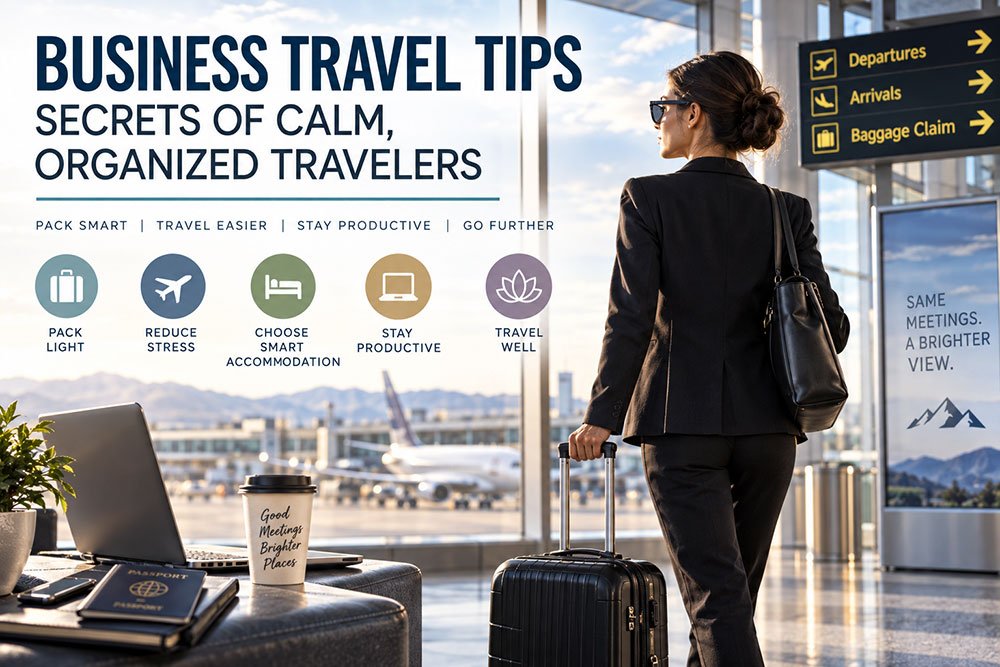
Business Travel Tips: Secrets of Calm, Organized Travelers
Business travelers often look calm and organized as they move through airports with a laptop bag, phone and boarding pass in hand. However, frequent business travel is not always as glamorous as it appears.
A business trip can mean early flights, unfamiliar airports, changing time zones, meetings, presentations and long days away from home. The pressure can increase when you add packing, airport security, transportation and accommodation to an already busy schedule.
The good news is that a little preparation can make business travel much easier.
From packing light to managing jet lag, these business travel tips can help you stay organized, comfortable and focused throughout your trip.

-
Pack Light for Your Business Trip
One of the simplest ways to make business travel easier is to pack less.
It is tempting to prepare for every possible situation. However, carrying unnecessary clothes and equipment can make airports and transfers more stressful.
Start by planning your outfits around your meetings and the length of your trip. Choose clothing that can be combined in different ways. If you are travelling for several days, consider using hotel laundry or dry-cleaning services instead of packing an excessive amount of clothing.
Keep essential toiletries compact and check the airline’s current baggage requirements before you travel.
A lightweight universal travel adapter can also be useful for international trips because electrical outlets and voltage standards vary between countries.
-
Prepare Before You Reach the Airport
Good preparation can remove many unnecessary decisions from your travel day.
Before leaving home, check:
- Flight status
- Terminal information
- Baggage allowance
- Check-in requirements
- Passport validity
- Visa or entry requirements
- Airport transportation
- Meeting schedules
- Hotel booking details
Online and mobile check-in can also save time when the airline and airport offer those options.
Air travel is becoming increasingly digital. According to the International Air Transport Association’s 2025 Global Passenger Survey, 78% of passengers wanted a smartphone application that could combine a digital wallet, digital passport and loyalty cards. The survey also found that half of travellers had already used biometric identification at an airport.
However, digital services vary by airline, airport and country. Keep essential travel documents accessible even when you plan to use mobile services.
-
Keep Your Important Work Items Accessible
Your laptop, phone, charger and important documents should be easy to reach.
If you are travelling with a laptop, place it somewhere that allows you to remove it quickly if the relevant airport security procedure requires separate screening.
Do not put essential work equipment in checked baggage when you can reasonably avoid it. A delayed checked bag should not leave you without the documents or equipment you need for an important meeting.
Create a small business-travel technology kit containing:
- Laptop
- Phone
- Chargers
- Power bank, where permitted
- Travel adapter
- Headphones
- Necessary cables
- Presentation files
- Backup copies of important documents
Check the current airline and airport rules for batteries, power banks and electronic equipment before departure.
-
Use Technology to Stay Organized
A smartphone can now handle many parts of a business trip.
Use your airline’s official app when available to manage check-in, boarding information and flight updates. You can also keep hotel confirmations, transportation details, meeting schedules and important contact information in one place.
IATA’s latest passenger research shows that travellers increasingly rely on smartphones throughout the journey. Digital wallets and mobile travel services are also becoming more common.
However, do not rely entirely on an internet connection. Save important information offline when possible.
Keep offline copies of:
- Boarding information
- Hotel address
- Meeting details
- Passport information
- Visa documents
- Emergency contacts
- Transportation reservations
This simple step can be valuable when mobile data or Wi-Fi is unavailable.
-
Reduce Airport Stress
Business travel becomes much easier when you avoid unnecessary rushing.
Give yourself enough time to reach the airport, complete security procedures and get to the gate. The amount of time required varies considerably by airport, flight and traveller, so avoid relying on a fixed rule for every trip.
If you are checking baggage, allow additional time for bag drop. If you are travelling internationally, allow time for immigration and other border procedures.
It is also useful to check airport and airline updates before leaving for the airport.
Modern baggage technology can help reduce uncertainty. IATA reported in 2025 that 81% of surveyed travellers wanted better baggage tracking, while 74% wanted real-time baggage updates on their mobile phones.
-
Choose Business Accommodation Carefully
Your accommodation can have a major effect on the success of a business trip.
A low room rate is not necessarily the best value if the property is far from your meetings or lacks the facilities you need.
When choosing accommodation, consider:
- Distance from your meetings
- Airport access
- Reliable Wi-Fi
- Workspace
- Quiet rooms
- Breakfast options
- Laundry facilities
- Fitness facilities
- Flexible check-in and check-out
- Public transportation
- Nearby restaurants
For longer business trips, an apartment-style property may offer additional space, kitchen facilities and laundry access. However, hotels can be more convenient for short stays because they often provide reception, housekeeping and business services.
Choose accommodation based on the requirements of your particular trip rather than assuming that one type is always better.
-
Plan for Jet Lag
Jet lag can be particularly challenging when you need to attend meetings soon after arriving.
The Centers for Disease Control and Prevention explains that jet lag results from travelling across multiple time zones and can affect sleep, concentration, mood and physical performance.
You can reduce its impact by preparing before departure.
Depending on the direction of travel, gradually adjusting your sleep schedule before the trip may help. After arrival, try to follow the local schedule and get appropriate daylight exposure.
Other useful habits include:
- Drink enough water.
- Eat sensibly.
- Limit alcohol.
- Use caffeine strategically.
- Take short naps when necessary.
- Get regular physical activity.
- Prioritize sleep.
For an important meeting, the CDC recommends considering arrival at least two days before major events when practical, giving your body more time to adjust.
-
Leave Space in Your Schedule
A common mistake among business travelers is scheduling every minute of a trip.
Flights can be delayed. Meetings can run late. Traffic can be unpredictable. You may also need time to prepare for a presentation or simply recover from a long journey.
Instead of creating a schedule with no flexibility, leave some buffer between important commitments.
For example, avoid scheduling an important presentation immediately after a long international flight whenever possible.
A little empty space in your itinerary can make the entire trip feel more manageable.
-
Prepare for International Business Travel
International business travel requires additional preparation.
Before travelling to another country, check the latest official information about entry requirements. Visa rules and travel authorizations can vary according to nationality, destination and purpose of travel.
For example, the UK government advises business visitors to check whether they are eligible for their intended business activity and whether they need a visa or electronic travel authorization.
Also research:
- Passport requirements
- Visa or travel authorization
- Local business customs
- Currency
- Electrical standards
- Local transportation
- Emergency numbers
- Mobile connectivity
- Travel insurance
- Health requirements
Do this before your departure date rather than waiting until you reach the airport.
-
Keep Work and Travel Documents Organized
Business travelers often handle more documents than leisure travelers.
You may need contracts, presentations, invoices, meeting notes, identification documents and expense receipts during one trip.
Create a simple digital folder for each business trip. Use clear file names and keep important documents available offline.
It can also help to maintain separate folders for:
Travel: flights, hotel and transportation.
Work: presentations, proposals and meeting documents.
Expenses: receipts and invoices.
Important documents: passport, visa and insurance information.
This system makes it easier to find information when you need it.
-
Protect Your Work and Personal Information
Business travelers frequently work from airports, hotels, cafés and conference venues. Public environments can create additional privacy and security risks.
Avoid leaving your laptop or phone unattended. Use strong passwords and enable multi-factor authentication on important accounts.
When using public Wi-Fi, follow your company’s security policies. A company-approved VPN may be appropriate if your employer provides one.
Also avoid discussing confidential business information loudly in public areas.
Digital security is becoming increasingly important as travel becomes more connected. IATA has emphasized that cybersecurity needs to remain central as airlines and airports expand digital identity and mobile travel services.
-
Make Your Travel Day Comfortable
Small comforts can make a significant difference during frequent business travel.
Wear comfortable clothing while travelling and keep a few useful items within easy reach.
Depending on your needs, consider carrying:
- Noise-cancelling headphones
- Eye mask
- Neck pillow
- Reusable water bottle
- Light snack
- Comfortable shoes
- Portable charger
- Basic medication
Do not overpack. The goal is to make your journey more comfortable without creating another bag full of things to manage.
-
Keep Your Routine While Travelling
Business trips can disrupt normal routines. However, maintaining a few healthy habits can help you stay focused.
Try to:
- Sleep at regular times.
- Eat balanced meals.
- Walk between meetings when practical.
- Exercise regularly.
- Drink enough water.
- Take short breaks from screens.
- Avoid excessive alcohol.
The CDC specifically recommends healthy meals, regular exercise, adequate sleep and limiting alcohol for business travelers.
You do not need to follow your normal routine perfectly. Even a few consistent habits can make a busy trip easier.
-
Build Time for Yourself
A business trip does not have to consist entirely of airports, hotel rooms and conference rooms.
If your schedule allows, spend some time exploring the destination.
You might take a short walk, visit a local attraction, try regional food or simply sit somewhere away from the meeting venue.
Even a small amount of personal time can provide a useful break from work.
The key is to plan it around your professional commitments rather than allowing sightseeing to create additional stress.
Latest Business Travel Trends in 2026
Business travel continues to evolve as airlines, airports and travellers adopt new technologies.
IATA’s 2026 Annual Review reports that global passenger traffic increased in 2025, with air travel demand measured in revenue passenger kilometres rising 5.3% from the previous year. The same report highlights the growing role of digital travel credentials and biometric processing.
IATA’s latest passenger data also shows that digital travel is moving beyond simple online check-in. Smartphones, digital wallets, biometric identification and baggage tracking are increasingly becoming part of the passenger experience.
For business travelers, these developments can make trips easier to organize. However, travelers should still keep physical travel documents and backup information available because digital services are not yet identical at every airport or border.
A Simple Business Travel Checklist
Before leaving for your next business trip, check the following:
Before Departure
- Confirm your flight.
- Complete online check-in when available.
- Check baggage rules.
- Confirm passport and visa requirements.
- Download airline and travel apps.
- Save important documents offline.
- Confirm your hotel.
- Check transportation from the airport.
- Review your meeting schedule.
- Prepare presentations and documents.
During the Trip
- Keep important electronics accessible.
- Stay hydrated.
- Follow the local time zone.
- Take breaks between meetings.
- Protect confidential information.
- Track expenses.
- Keep receipts organized.
- Allow time for unexpected delays.
Before Returning Home
- Check your flight status.
- Confirm airport transportation.
- Pack business documents securely.
- Check for personal belongings.
- Download anything you need for the journey.
- Keep receipts for expense reporting.
Conclusion
Business travel does not have to be exhausting or chaotic. With the right preparation, you can reduce unnecessary stress and focus more attention on the reason for your trip.
The most effective business travel tips are often simple: pack light, organize your documents, choose convenient accommodation, prepare for jet lag, protect your work information and leave enough flexibility in your schedule.
Travel technology is also changing rapidly. Mobile check-in, digital identity, biometrics and baggage tracking are becoming increasingly important parts of modern air travel.
However, technology should support good preparation rather than replace it.
A calm business traveler is usually not someone who has fewer things to deal with. Instead, they are someone who has prepared for the things that can go wrong.
Plan ahead, keep your essentials organized and give yourself enough time. Your next business trip can then be more productive, comfortable and manageable.
