
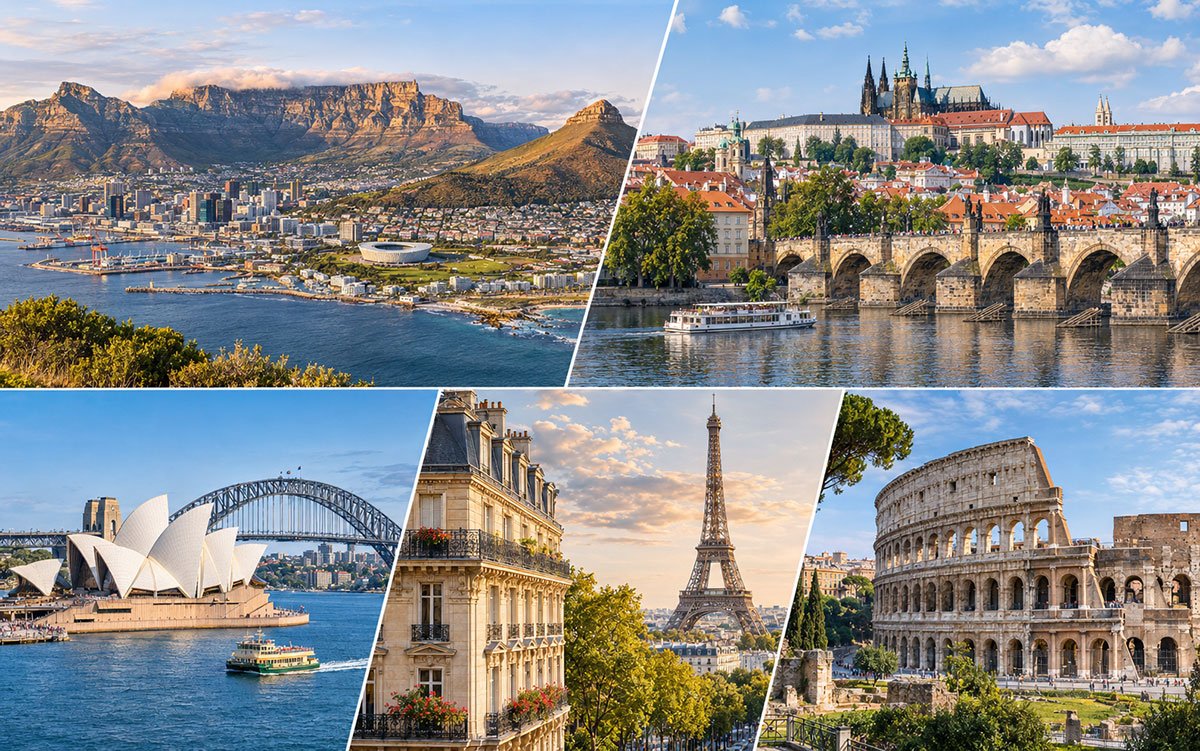
Discover five memorable holiday destinations: Cape Town, Prague, Sydney, Paris and Rome.
5 Best Holiday Destinations in the World to Explore
Choosing your next holiday destination is one of the most exciting parts of planning a trip. Some travellers dream of golden beaches and spectacular mountains, while others prefer historic streets, world-class museums and unforgettable food.
The best holiday destinations in the world offer more than famous landmarks. They give visitors opportunities to experience local culture, discover extraordinary landscapes and create memories that extend far beyond the usual sightseeing photographs.
From the dramatic coastline of Cape Town to the ancient monuments of Rome, these five cities offer remarkably different experiences. Each deserves consideration for your next international holiday.
Whether you are planning a romantic escape, a family adventure or a memorable city break, this guide explores what makes Cape Town, Prague, Sydney, Paris and Rome worth visiting.
1. Cape Town, South Africa – Mountains, Beaches and Coastal Adventures
Best for: Nature lovers, beach holidays, scenic drives and outdoor adventures
Suggested stay: 4–6 days
Best time to visit: November to March for summer activities; spring and autumn for milder sightseeing
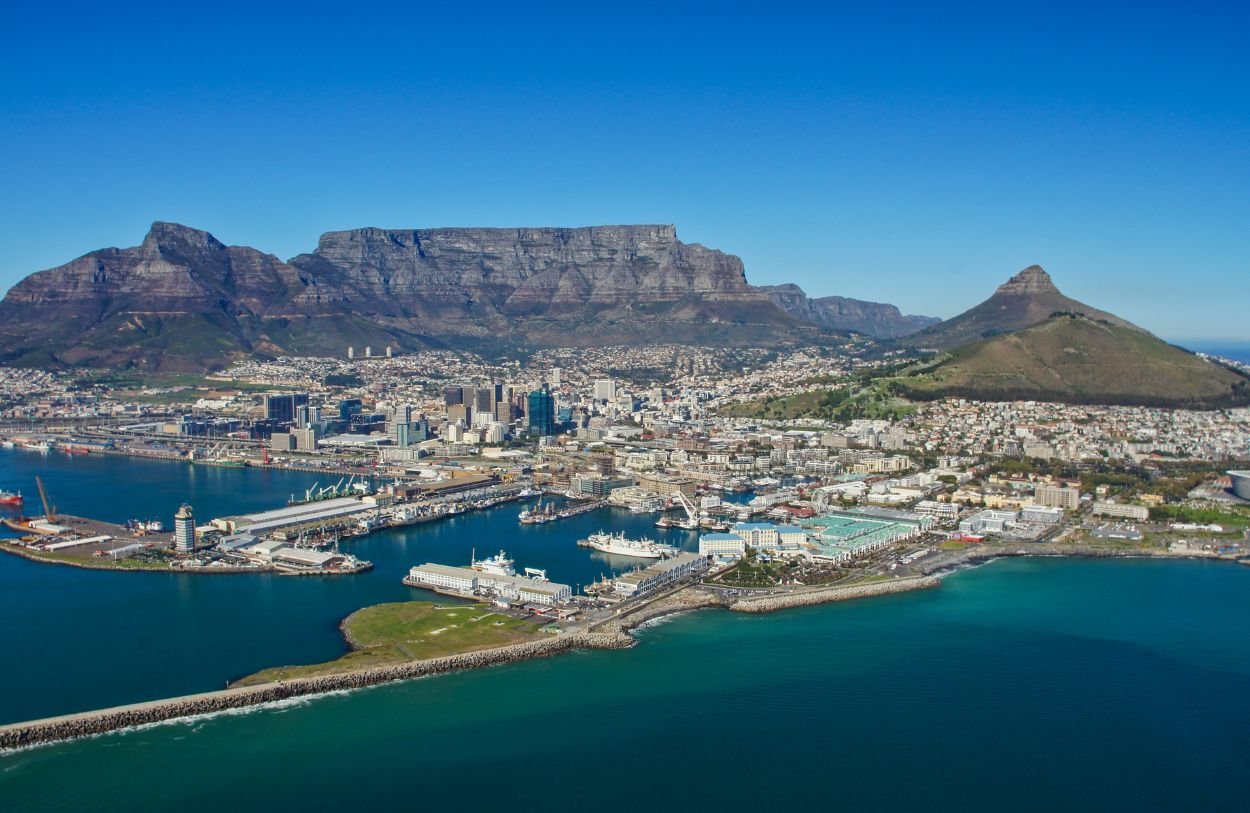
A spectacular panoramic view of Cape Town, featuring the iconic Table Mountain, Lion’s Head, the bustling waterfront and the Atlantic coastline.
Cape Town enjoys one of the world’s most striking natural settings. Located on South Africa’s southwestern coast, the city sits beneath the unmistakable silhouette of Table Mountain, with the Atlantic Ocean stretching towards the horizon.
Few cities combine dramatic mountain scenery, beautiful beaches, cultural heritage and celebrated wine regions quite so effectively.
The variety makes Cape Town an appealing choice for travellers who want more than a conventional city holiday.
Best Things to Do in Cape Town
Explore Table Mountain
Table Mountain is Cape Town’s most recognisable landmark.
Visitors can reach the summit area by the Table Mountain Aerial Cableway or explore designated hiking routes.
The upper mountain offers panoramic views across the city, coastline and surrounding mountain ranges.
The cableway operates only when weather conditions permit. Strong winds and poor conditions can cause temporary closures, so checking its official operating status before travelling is essential.
Relax at Camps Bay and Clifton Beaches
Cape Town’s coastline includes beautiful beaches framed by rocky cliffs and mountains.
Camps Bay is particularly popular for its broad sandy beach, oceanfront restaurants and views of the Twelve Apostles mountain range.
Clifton’s sheltered coves are another attractive choice for sunbathing and coastal scenery.
However, Atlantic Ocean water temperatures can be cold, and swimming conditions vary. Always follow local safety guidance.
Visit Boulders Beach Penguin Colony
Near Simon’s Town, Boulders Beach is home to a protected colony of African penguins.
Visitors can observe these endangered birds from designated boardwalks managed by South African National Parks.
The experience is especially memorable for families and wildlife enthusiasts.
Do not feed or approach the penguins, and remain within permitted visitor areas.
Discover the V&A Waterfront
The Victoria & Alfred Waterfront combines a working harbour with shopping, restaurants, cultural attractions and views of Table Mountain.
It is also the departure area for authorised Robben Island Museum tours.
Robben Island is closely associated with South Africa’s struggle against apartheid and Nelson Mandela’s imprisonment.
Tours should be arranged through the official museum, and ferry operations depend on weather and demand.
Explore the Cape Winelands
The wine regions around Stellenbosch, Franschhoek and Paarl offer scenic landscapes, historic estates and excellent dining experiences.
You can explore the countryside through organised excursions or independent travel.
Wine tasting is optional; the historic towns, mountain views and restaurants also make the region enjoyable for visitors who do not drink alcohol.
Practical Cape Town Travel Tips
Cape Town’s summer generally falls between December and February, while its winter is from June to August.
Summer is attractive for beach holidays, although popular attractions can become busy. Spring and autumn provide alternatives for sightseeing and hiking.
For transportation, consider reputable guided excursions, established transfer services and suitable public transport connections.
Plan airport transfers in advance and review official safety advice. Avoid isolated areas, particularly after dark, and use experienced guides for mountain walks.
Why visit Cape Town? Its exceptional combination of mountains, ocean scenery, wildlife and cultural experiences makes it ideal for travellers seeking both relaxation and adventure.
2. Prague, Czech Republic – Fairytale Architecture and European History
Best for: Romantic city breaks, architecture, history and cultural exploration
Suggested stay: 3–4 days
Best time to visit: Spring and early autumn for comfortable sightseeing
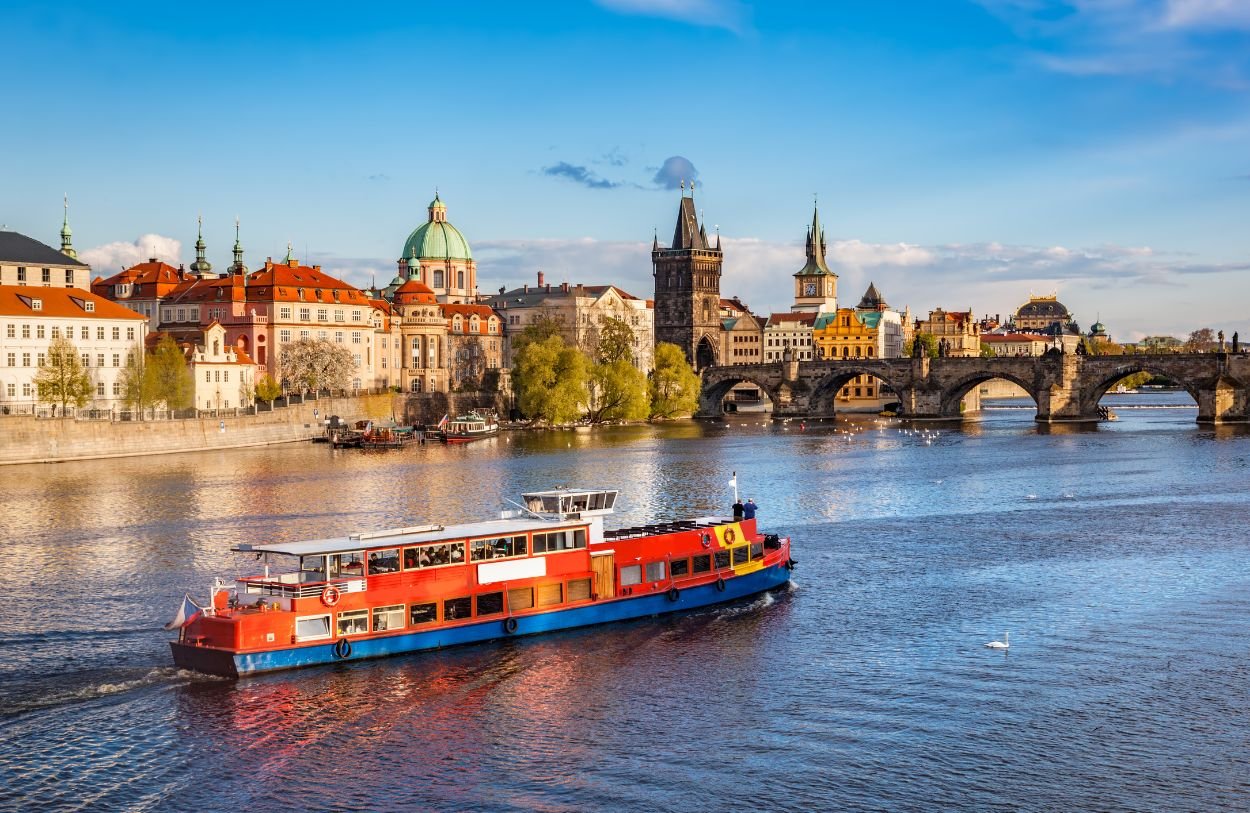
A colourful sightseeing boat cruises along the Vltava River beneath Prague’s historic Charles Bridge, surrounded by beautiful architecture and the Old Town skyline.
Prague is one of Europe’s most atmospheric historic capitals.
Its medieval streets, Gothic towers, Baroque buildings and picturesque riverfront create a distinctive setting that rewards travellers who enjoy exploring on foot.
The Czech capital is divided by the Vltava River, with many celebrated landmarks concentrated around the Old Town and Lesser Town districts.
Despite its international popularity, Prague retains a strong cultural identity reflected in its architecture, traditional restaurants, music and public spaces.
Best Things to Do in Prague
Visit Prague Castle
Prague Castle dominates the city’s skyline and remains one of the Czech Republic’s most significant historic sites.
The extensive complex includes St Vitus Cathedral, the Old Royal Palace, St George’s Basilica and Golden Lane.
Visitors can explore parts of the castle grounds without purchasing an admission ticket, while access to major historic interiors requires the appropriate ticket.
Allow enough time to appreciate the buildings and enjoy the views over Prague.
Walk Across Charles Bridge
Charles Bridge is one of Prague’s most famous landmarks.
Spanning the Vltava River, the historic stone bridge connects the Old Town with Lesser Town.
Its statues, towers and river views make it particularly attractive in the early morning and evening.
Walking across the bridge is free.
Explore Old Town Square
The Old Town Square is the historic heart of Prague.
It is surrounded by remarkable architecture, including the Church of Our Lady before Týn and the Old Town Hall.
The medieval Astronomical Clock is one of the area’s best-known attractions.
Exploring the square is free, although certain historic buildings and viewpoints charge admission.
Discover Lesser Town and Petřín Hill
The Lesser Town, known locally as Malá Strana, is characterised by historic streets, churches and attractive buildings.
Nearby Petřín Hill offers gardens, walking paths and elevated city views.
It provides a welcome change of pace from the busiest sightseeing streets.
Experience Czech Food and Culture
Prague’s food scene includes traditional Czech soups, roast dishes, dumplings and baked specialities.
Local cafés and restaurants offer opportunities to experience Czech hospitality without limiting your trip to major tourist attractions.
The city also has a strong classical music tradition, with concerts performed in historic venues.
Practical Prague Travel Tips
Prague has a convenient public transport network of trams, metro services and buses.
Many central attractions are within walking distance, although some streets are cobbled and the approach to Prague Castle involves slopes.
From Václav Havel Airport, public transport connections include Trolleybus 59 to Nádraží Veleslavín, where travellers can connect with Metro Line A.
Purchase and validate the appropriate transport ticket, or use the official PID Lítačka app according to its instructions.
Spring brings attractive gardens and pleasant walking conditions. Autumn is another appealing period, while winter offers a different atmosphere with colder weather and seasonal events.
Why visit Prague? It is particularly well suited to travellers looking for historic architecture, walkable neighbourhoods and a culturally rich European city break.
3. Sydney, Australia – Iconic Landmarks, Harbour Views and Beaches
Best for: Beach lovers, families, outdoor activities and city sightseeing
Suggested stay: 4–6 days
Best time to visit: March to May or September to November for generally comfortable outdoor conditions
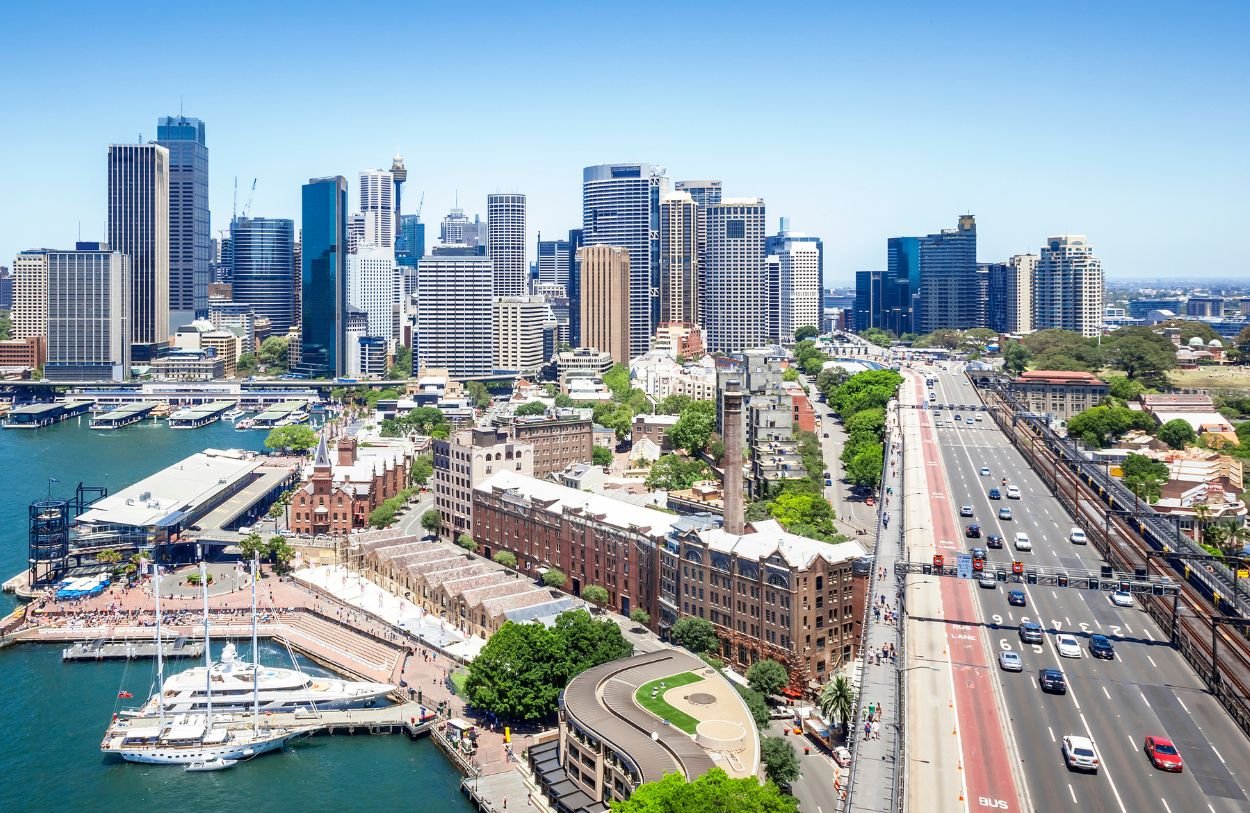
A panoramic view of Sydney’s central business district and Circular Quay, featuring modern skyscrapers, historic waterfront buildings and the busy Cahill Expressway.
Sydney combines an impressive natural harbour with famous architecture, lively neighbourhoods and beautiful beaches.
Australia’s largest city offers the energy of a major international destination without losing its strong connection to the outdoors.
You can spend the morning exploring the harbour, enjoy an afternoon by the ocean and finish the evening at a restaurant overlooking the water.
Sydney is also a convenient starting point for exploring other parts of New South Wales.
Best Things to Do in Sydney
Admire the Sydney Opera House
The Sydney Opera House is one of Australia’s most recognisable buildings.
Its distinctive architectural design and waterfront location make it a highlight of any first visit.
You can admire the exterior from the surrounding public areas or book an official guided tour to learn more about its history and design.
Tour availability varies because the venue remains an active performing arts centre.
Explore Sydney Harbour
Sydney Harbour is central to the city’s appeal.
Take a ferry from Circular Quay to enjoy views of the Opera House, Harbour Bridge and surrounding waterfront.
Public ferry services offer a practical way to travel while experiencing the scenery.
A harbour walk around Circular Quay and The Rocks is another enjoyable activity.
Relax at Bondi Beach
Bondi Beach is internationally known for its surfing culture, golden sand and lively coastal atmosphere.
Visitors can swim, relax by the beach or explore nearby cafés.
The Bondi to Coogee coastal walk provides attractive views of beaches, cliffs and the Pacific Ocean.
When swimming, choose patrolled areas and stay between the red and yellow flags.
Take the Ferry to Manly
Manly offers a different side of Sydney.
The ferry journey from Circular Quay is an enjoyable experience in itself, with harbour views along the way.
After arriving, visitors can explore Manly’s shopping streets, beach and nearby coastal walks.
It makes an excellent half-day or full-day excursion.
Visit the Blue Mountains
The Blue Mountains are located west of Sydney and are a popular destination for a day trip or a longer nature-focused stay.
The region is known for sandstone cliffs, forested valleys, walking trails and the Three Sisters rock formation near Katoomba.
The Blue Mountains are not within central Sydney, so allow sufficient travel time.
Visitors can reach Katoomba using regional train services and continue to local attractions using available transport connections.
Practical Sydney Travel Tips
Sydney’s seasons are opposite to those in Europe and North America.
Summer runs from December to February, while winter falls between June and August.
Autumn and spring are particularly attractive for walking, sightseeing and exploring the coastline.
Sydney’s public transport network includes trains, buses, ferries, metro and light rail.
Visitors can use an Opal card or an eligible contactless payment card on participating services.
Always use the same card or device when tapping on and off to receive the correct fare.
Why visit Sydney? Its combination of famous harbour landmarks, accessible coastal scenery and outdoor experiences makes it an appealing choice for travellers who enjoy both city life and nature.
4. Paris, France – Art, Romance and Timeless City Experiences
Best for: Couples, art enthusiasts, food lovers and cultural city breaks
Suggested stay: 4–5 days
Best time to visit: Spring or early autumn for pleasant walking conditions
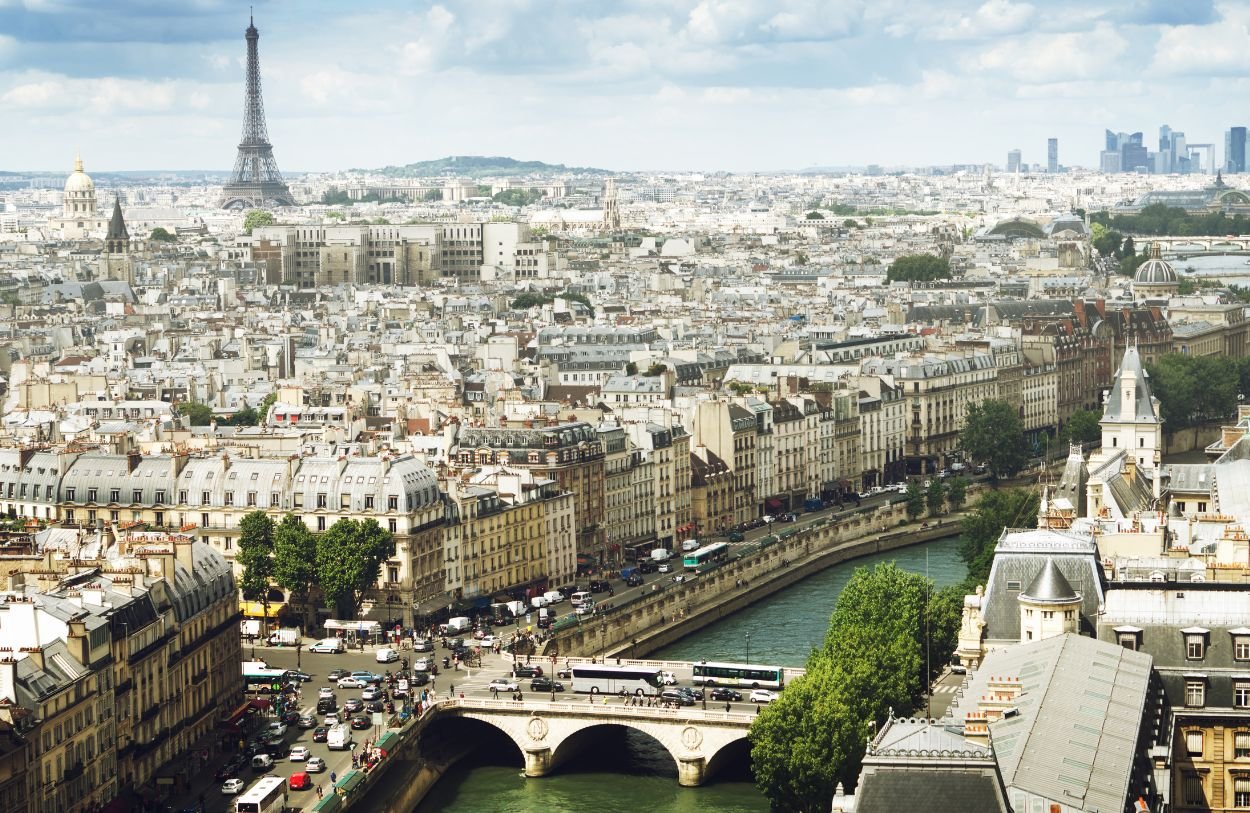
A beautiful panoramic view of Paris featuring the iconic Eiffel Tower, the Seine River, historic bridges and the city’s distinctive architecture.
Paris remains one of the world’s most recognisable holiday destinations.
The French capital is celebrated for its architecture, museums, gardens, cafés and neighbourhoods that invite leisurely exploration.
While famous attractions such as the Eiffel Tower and Louvre Museum deserve attention, much of Paris’s character is discovered through its streets, markets and riverside walks.
The city offers opportunities for both carefully planned sightseeing and spontaneous discoveries.
Best Things to Do in Paris
Visit the Eiffel Tower
The Eiffel Tower is the defining landmark of Paris.
Visitors can admire the monument from several public viewpoints, including the Champ de Mars area and the Trocadéro.
Those wishing to ascend the tower can purchase tickets for different access levels using stairs or elevators, depending on availability and eligibility.
Book through the official ticketing website, especially if you want access to the summit.
Remember that entry to the surrounding public gardens and esplanade is free, while climbing or taking the elevators requires a ticket.
Explore the Louvre Museum
The Louvre is one of the world’s most important art museums.
Its collections include works from different periods and civilisations, ranging from ancient sculptures to celebrated European paintings.
The museum is home to Leonardo da Vinci’s Mona Lisa, although there is considerably more to explore beyond its most famous exhibit.
Reserve a timed entry slot in advance, particularly during busy periods.
Rather than attempting to see the entire collection in one visit, select a few galleries that interest you most.
Discover Notre-Dame Cathedral
Notre-Dame Cathedral is an important symbol of Parisian history and Gothic architecture.
Following extensive restoration, the cathedral welcomes visitors once again.
Entry to the cathedral is free.
An optional free reservation can help visitors manage waiting times, but tickets should only be obtained through the cathedral’s official website.
Some associated areas and experiences have separate access arrangements.
Walk Along the Seine
The banks of the Seine offer wonderful views of Parisian bridges, historic buildings and riverside neighbourhoods.
Walking is free and provides an enjoyable way to experience the city’s atmosphere.
Alternatively, sightseeing cruises offer a different perspective of the capital, with several operators providing paid excursions.
Explore Montmartre
Montmartre is known for its artistic heritage, distinctive streets and elevated position overlooking Paris.
The Sacré-Cœur Basilica is one of the neighbourhood’s principal landmarks.
Allow time to explore the surrounding streets, small cafés and viewpoints.
Enjoy French Food and Local Life
Paris offers far more than formal restaurant dining.
Visit a neighbourhood bakery for fresh bread or pastries, browse food markets and spend time in a traditional café.
Cheese shops, patisseries and local markets provide an accessible introduction to French food culture.
For an affordable meal, consider casual neighbourhood restaurants or picnic supplies from a market.
Practical Paris Travel Tips
Paris is particularly pleasant during spring and autumn, although popular attractions can be busy throughout the year.
The Metro, RER, buses and trams provide extensive public transport connections.
Visitors can purchase appropriate tickets using supported transport cards or mobile ticketing options.
A Navigo Easy pass is one option for occasional journeys.
Book major attractions in advance and check museum opening days before finalising your itinerary.
Why visit Paris? The city’s blend of art, architecture, food and atmospheric neighbourhoods makes it especially rewarding for travellers seeking cultural experiences and romantic surroundings.
5. Rome, Italy – Ancient History, Italian Food and Beautiful Piazzas
Best for: History enthusiasts, couples, food lovers and cultural holidays
Suggested stay: 3–5 days
Best time to visit: Spring and autumn for comfortable outdoor sightseeing
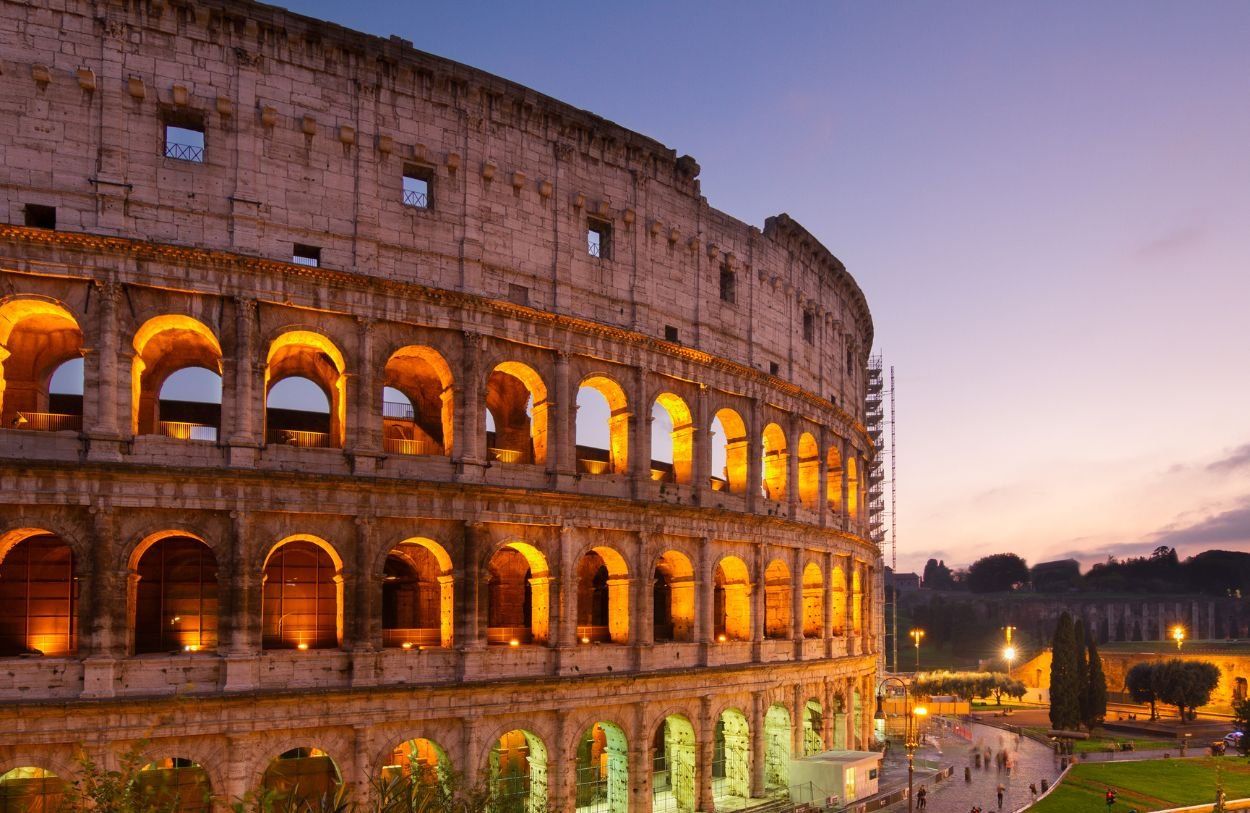
The iconic Colosseum in Rome glows under warm evening lights, showcasing the magnificent architecture of ancient Rome.
Rome offers a remarkable opportunity to explore thousands of years of history while enjoying the rhythms of a modern Italian capital.
Ancient monuments stand alongside churches, lively piazzas, neighbourhood restaurants and ordinary residential streets.
Much of the city’s appeal comes from this contrast.
You can spend the morning exploring archaeological sites, enjoy a relaxed lunch at a trattoria and discover a beautiful fountain or historic square during an evening walk.
Best Things to Do in Rome
Explore the Colosseum
The Colosseum is among Rome’s most famous historic monuments.
Completed during the Roman Empire, the amphitheatre once hosted public spectacles and remains an extraordinary example of ancient engineering.
Visitors should book tickets through the official archaeological park ticketing system.
Different ticket options cover specific areas and experiences, and timed reservations are required for entry to the Colosseum.
Discover the Roman Forum and Palatine Hill
The Roman Forum was an important centre of public life in ancient Rome.
Today, visitors can explore archaeological remains, temples and historic structures that reveal different periods of Roman history.
Nearby Palatine Hill offers further archaeological sites and views across the surrounding area.
The Colosseum, Roman Forum and Palatine Hill can often be combined using the appropriate official admission ticket.
Allow enough time to explore rather than rushing through the sites.
Visit the Pantheon
The Pantheon is one of the most impressive surviving buildings from ancient Rome.
Its remarkable dome and central oculus remain outstanding examples of Roman architectural design.
The building is now a Catholic church as well as a historic monument.
Tourist admission is ticketed, with exemptions and reduced rates for eligible visitors.
Check the official museum authority’s admission information before arriving.
See the Trevi Fountain
The Trevi Fountain is one of Rome’s best-known Baroque landmarks.
Visitors gather in the surrounding square to admire its elaborate sculptures and flowing water.
The fountain remains visible free of charge from the public area.
However, tourists and non-residents who wish to enter the controlled inner perimeter closest to the monument must purchase an admission ticket under the current visitor arrangements.
Check the official Trevi Fountain website for access information.
Explore Trastevere
Trastevere offers a different experience from Rome’s major archaeological sites.
Its narrow streets, historic buildings, restaurants and neighbourhood squares make it a pleasant place to explore.
The area is especially atmospheric in the evening when local restaurants and cafés become busy.
Experience Italian Food in Rome
Food is an important part of visiting the Italian capital.
Roman cuisine includes traditional pasta dishes such as carbonara, amatriciana and cacio e pepe.
Visitors can also enjoy pizza, gelato, espresso and seasonal dishes.
Try restaurants away from the most crowded tourist squares and examine displayed menus before ordering.
A relaxed meal in a neighbourhood trattoria can be as memorable as visiting a major monument.
Practical Rome Travel Tips
Spring and autumn generally offer comfortable conditions for exploring Rome on foot.
Summer can be very hot, particularly when visiting exposed archaeological sites.
Carry drinking water, wear suitable footwear and plan outdoor sightseeing around the weather.
Rome has a public transport network of metro services, buses and trams.
Contactless Tap & Go payments are available on participating ATAC services, providing an alternative to purchasing individual paper tickets.
Book high-demand attractions early and check official ticketing conditions, especially for the Colosseum.
Why visit Rome? Its extraordinary concentration of ancient monuments, historic neighbourhoods and Italian food makes it one of the most rewarding destinations for travellers interested in history and culture.
How to Choose the Best Holiday Destination for Your Trip
Each city offers something different, so the right choice depends on your interests, travel budget and available time.
| Destination | Particularly good for | Suggested duration |
|---|---|---|
| Cape Town | Nature, wildlife, beaches and scenic drives | 4–6 days |
| Prague | Historic architecture, romantic walks and cultural sightseeing | 3–4 days |
| Sydney | Harbour attractions, beaches and outdoor adventures | 4–6 days |
| Paris | Art, museums, food and romantic city breaks | 4–5 days |
| Rome | Ancient history, archaeological sites and Italian cuisine | 3–5 days |
These durations are suggested sightseeing allowances rather than minimum requirements.
Travellers who enjoy a slower pace, day trips or extended cultural experiences may prefer longer stays.
Best Destinations for Couples
Paris and Prague are appealing for couples who enjoy historic streets, scenic walks and atmospheric restaurants.
Rome offers a combination of romantic piazzas, cultural landmarks and memorable dining experiences.
Best Destinations for Families
Sydney provides a varied combination of beaches, public parks, harbour activities and family attractions.
Cape Town also offers wildlife experiences, scenic excursions and outdoor adventures.
The best choice depends on children’s ages, the season and how much travel time the family is comfortable with.
Best Destinations for History Lovers
Rome stands out for its ancient Roman monuments, while Prague is particularly rich in medieval and Baroque architecture.
Paris offers world-class art museums, historic buildings and important cultural landmarks.
Best Destinations for Outdoor Adventures
Cape Town is especially attractive for mountain scenery, coastal landscapes and nature excursions.
Sydney combines coastal walking routes, beaches and access to the Blue Mountains.
Essential Tips for Planning an International Holiday
Choosing a destination is only the beginning. A successful trip also depends on transport arrangements, accommodation and entry requirements.
Check Passport and Visa Requirements
Visa rules depend on nationality, destination and the purpose and duration of travel.
France, Italy and the Czech Republic are part of the Schengen Area, where common short-stay entry arrangements generally apply.
However, travellers should check the applicable visa requirements and European border procedures before departure.
Australia and South Africa have separate immigration systems.
Consult official government sources rather than assuming that the same entry arrangements apply to all international visitors.
Book Major Attractions Through Official Websites
Popular attractions can have limited daily capacity or require advance reservations.
For example:
- Table Mountain’s cableway operates according to weather conditions.
- Prague Castle charges admission for access to many historic interiors.
- Sydney Opera House tours have scheduled departures and limited availability.
- The Eiffel Tower and Louvre offer advance booking options.
- The Colosseum requires timed entry reservations.
Check official websites for ticket conditions, current prices and opening arrangements.
Consider the Season
The best time to travel depends on the experience you want.
Cape Town and Sydney are in the Southern Hemisphere, meaning their summer months fall during the Northern Hemisphere’s winter.
Prague, Paris and Rome generally offer comfortable sightseeing during spring and autumn.
However, weather conditions can vary, and popular events or school holiday periods may increase demand for accommodation.
Plan Your Accommodation Location
A centrally located hotel or apartment may cost more per night but reduce transportation time and expenses.
Check connections to public transport, the location of major attractions and the availability of nearby restaurants.
For longer stays, accommodation with cooking facilities may help manage food expenses.
Set a Realistic Travel Budget
Include more than flights and accommodation when calculating your holiday costs.
Consider:
- Local transportation
- Attraction admission
- Meals and refreshments
- Day trips and guided excursions
- Travel insurance
- Airport transfers
- Currency exchange and payment fees
- Unexpected expenses
Prices vary significantly between destinations and travel seasons.
Compare total trip costs rather than assuming that one city will always be cheaper than another.
Travel Responsibly
Popular destinations benefit when visitors respect their communities, environments and historic sites.
Follow local rules, avoid disturbing wildlife, use designated walking routes and dispose of rubbish responsibly.
Whenever possible, support local businesses and choose activities that respect cultural heritage.
Frequently Asked Questions About the Best Holiday Destinations
What are five of the best holiday destinations in the world?
Cape Town, Prague, Sydney, Paris and Rome are five excellent options for different travel interests.
Cape Town offers mountains and coastal scenery, Prague is rich in historic architecture, Sydney combines beaches and city attractions, Paris is celebrated for art and culture, and Rome is renowned for its ancient monuments.
Which holiday destination is best for a first international trip?
The right destination depends on your passport, budget, language preferences and personal interests.
Paris, Prague and Rome are popular choices for European city breaks, while Sydney and Cape Town offer a strong combination of city sightseeing and outdoor experiences.
Consider flight connections, entry requirements and the amount of time available before deciding.
Which destinations are best for romantic holidays?
Paris, Prague and Rome are particularly appealing to couples seeking historic architecture, atmospheric streets and memorable dining.
Cape Town also offers romantic coastal scenery and scenic excursions.
Which holiday destinations offer beaches and sightseeing?
Sydney and Cape Town are excellent options for travellers who want to combine beaches with major attractions.
Sydney features well-known coastal areas such as Bondi and Manly, while Cape Town offers Camps Bay, Clifton and other scenic beaches.
How many days should I spend visiting a major city?
Three to five days is a useful starting point for many city breaks.
However, destinations with multiple day-trip opportunities, such as Cape Town and Sydney, may benefit from longer stays.
Allow additional time for intercontinental travel and recovery after long flights.
How can I save money on an international holiday?
Travel outside the busiest periods when practical, compare accommodation locations, use public transportation and look for free attractions.
Reserve important experiences early, examine ticket conditions and set aside a contingency budget for unexpected expenses.
Final Thoughts
The best holiday destinations in the world are not necessarily those with the most famous landmarks. They are places that match your interests and offer experiences you will remember long after returning home.
Cape Town combines natural beauty with coastal adventure. Prague offers atmospheric streets and centuries of European history. Sydney brings together harbour views, beaches and outdoor activities, while Paris celebrates art, architecture and food. Rome invites travellers to experience the remarkable legacy of the ancient world.
Each of these cities rewards thoughtful planning and a willingness to explore beyond the most familiar tourist attractions.
Choose the destination that inspires you, allow enough time to experience it properly and build an itinerary around the activities that matter most to you.
