
5 Best Hidden Gems in Leeds for a Different City Break
Leeds is often associated with shopping, nightlife, music and its lively city centre. But spend a little more time exploring and you will find another side of the city.
Some of the most interesting places are tucked behind busy shopping streets, hidden inside historic buildings or sitting just beyond the centre.
If you are searching for hidden gems in Leeds, these five places offer a different way to experience the city. They range from historic libraries and beautifully restored interiors to medieval ruins and independent music venues.
1. Discover The Leeds Library
It is easy to walk past The Leeds Library without realizing what is behind its entrance on Commercial Street.
Founded in 1768, The Leeds Library is the oldest surviving subscription library of its type in the British Isles. Its collection covers subjects including history, literature, travel and topography.
The building itself is part of the attraction. Inside, you will find historic reading rooms, bookshelves, galleries and architectural details that feel worlds away from the busy shopping streets outside.
The library also hosts tours and special events, making it more than simply a place to look at old books.
For visitors interested in architecture, literature and local history, this is one of the most rewarding places to seek out.
Travel tip: Check the library’s current tour and event programme before visiting. It operates as a working library as well as a visitor attraction.
2. Take a Break at the Tiled Hall Café
For a quieter experience in the heart of Leeds, head to the Tiled Hall Café.
The café occupies a magnificent Victorian hall within the building shared by Leeds Art Gallery and Leeds Central Library. The room was originally the main library reading room and later served as a sculpture court.
Its elaborate tiled walls, arches and historic interior make the café far more memorable than an ordinary coffee stop.
You can combine a visit with Leeds Art Gallery and then take some time to enjoy a coffee, light meal or cake in the Tiled Hall.
The location also makes it an easy stop during a city-centre walking itinerary.
Travel tip: Check the café’s current opening hours before visiting because its hours differ from some other city-centre attractions.
3. Explore Kirkstall Abbey
A short journey from central Leeds takes you to one of the city’s most atmospheric historic sites.
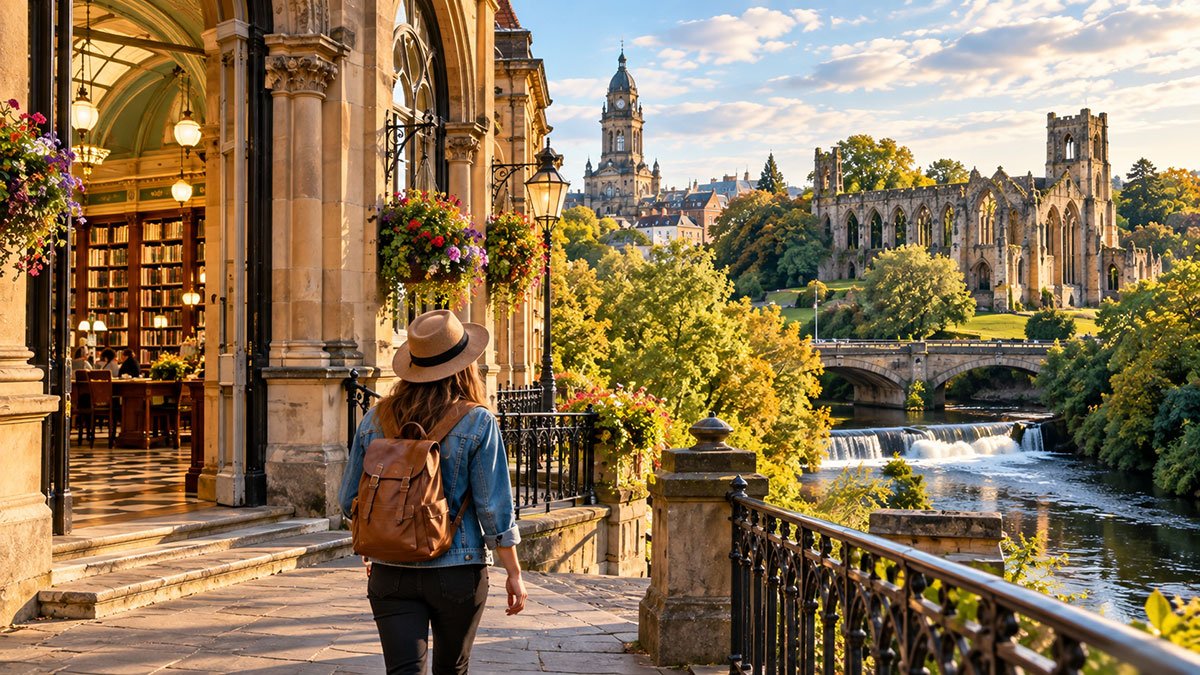
Kirkstall Abbey is the remains of a medieval Cistercian abbey founded in the 12th century. The ruins stand beside the River Aire within surrounding parkland.
The combination of medieval architecture, open green space and the riverside setting makes it feel surprisingly removed from the city.
You can explore the abbey and its grounds, then visit Abbey House Museum across the road. The museum recreates Victorian streets and shops, offering another perspective on Leeds’ social history.
The surrounding park is also useful if you simply want somewhere to walk and escape the busiest parts of the city.
Kirkstall Abbey is particularly attractive for photographers because the ruins provide strong architectural views in almost every season.
Travel tip: The site is family-friendly and accessible facilities are available, but check the current opening arrangements before travelling.
4. Go Behind the Scenes at Leeds Discovery Centre
This is one for travelers who like museums but want something beyond conventional galleries.
Leeds Discovery Centre houses part of the city’s extensive museum collections. Rather than displaying only a small selection of objects, the centre provides access to collections covering areas such as natural sciences, archaeology, social history, world cultures, fashion and textiles.
Among the collections are hundreds of thousands of scientific specimens and historic objects.
The important thing to know is that this is not a walk-in museum with unrestricted daily access.
Visits are generally available through pre-booked tours, events and special programmes.
That limitation is part of what makes the experience unusual. Instead of simply walking through exhibition rooms, visitors can sometimes see collection stores and objects that are not normally on public display.
Travel tip: Book in advance and check the current programme before adding the Discovery Centre to your itinerary.
5. Catch Live Music at the Brudenell Social Club
Leeds has a strong musical identity, and the Brudenell Social Club is one of the city’s most respected independent live-music venues.
Located in the Hyde Park area, the venue hosts a wide range of performers and events throughout the year. Its programme includes established touring acts, emerging artists, club events and occasional free-entry shows.
It offers a very different night out from the large commercial venues in the city centre.
The Brudenell is also useful for visitors who want to experience the independent side of Leeds’ cultural scene.
Rather than building your evening around a generic nightlife itinerary, check the venue’s calendar and see whether something interests you during your stay.
Travel tip: Events vary considerably, and popular shows can sell out. Check the official programme and ticket information before travelling.
Other Places to Add to Your Leeds Itinerary
These five are only a starting point.
Leeds has several other places worth exploring if you have more time.
Leeds Corn Exchange
The Grade I* listed Leeds Corn Exchange remains one of the city’s most distinctive buildings. Its impressive domed interior is now home to independent retailers, food businesses and creative enterprises.
It works particularly well alongside a walk through the surrounding Kirkgate area.
Kirkgate Market
Kirkgate Market has been part of Leeds’ retail landscape since 1857 and remains one of the city’s major indoor markets.
It is a good place to experience a more everyday side of Leeds, with food, produce, clothing and independent traders.
For visitors interested in local food, the market can be more rewarding than spending an entire afternoon in conventional shopping centres.
What Happened to Some of the Original Hidden Gems?
Several places that once appeared in older Leeds travel guides should not simply be copied into a current itinerary.
The Garden Gate pub is a good example. The Grade II* listed building remains an important piece of Leeds’ historic pub architecture, but its operating status has changed and it is currently closed. It should therefore be treated as a heritage building rather than recommended as a place to go for a drink.
Likewise, older references to Primo’s Gourmet Hot Dogs at Leeds Corn Exchange and the Brandon Street Night Market should not be presented as current attractions without verification.
This is an important consideration when using older travel content. Restaurants, markets, pubs and event series can disappear or change location even when the surrounding destination remains popular.
How to Explore Leeds Beyond the Tourist Trail
You do not need a complicated itinerary to discover the less obvious side of Leeds.
Try combining a few different experiences in one day:
Morning: Explore The Leeds Library and walk through the historic city centre.
Lunch: Visit Kirkgate Market or the Corn Exchange.
Afternoon: Stop at Leeds Art Gallery and the Tiled Hall Café.
Late afternoon: Travel towards Kirkstall and explore the abbey and surrounding parkland.
Evening: Check the Brudenell Social Club programme for a live show.
This approach gives you a mix of architecture, history, food, culture and entertainment without spending the entire trip inside the city’s busiest attractions.
When Is the Best Time to Explore Leeds?
Leeds works well for a city break throughout the year.
Spring and summer are particularly useful for combining indoor attractions with walks around Kirkstall and other green spaces.
Autumn and winter can be ideal for museums, historic interiors, cafés, libraries and live music. The city’s indoor attractions also provide plenty of alternatives when Yorkshire weather turns wet.
If your trip revolves around a particular concert, tour or special event, plan around its confirmed date rather than assuming it runs throughout the year.
Final Thoughts
The best hidden gems in Leeds are not necessarily places that nobody knows about.
Instead, they are places that can easily be overlooked when visitors concentrate only on shopping streets, major venues and the city’s busiest nightlife areas.
A historic library hidden behind a commercial street, a beautifully restored Victorian reading room, medieval abbey ruins beside the River Aire and an independent music venue all reveal a different character of Leeds.
Take some time to look beyond the obvious attractions and the city becomes much more interesting.
