
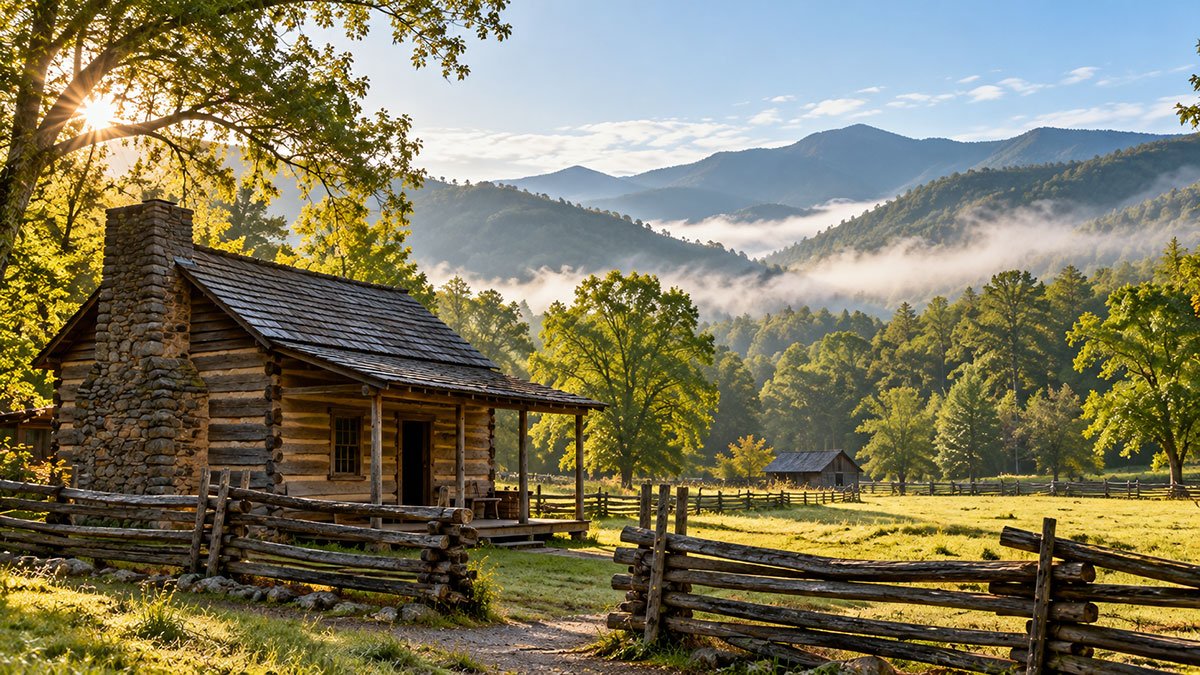
Discover the history of Southern Appalachian communities among the preserved homesteads and mist-covered mountains of the Great Smoky Mountains.
Exploring Southern History in America: 3 Places to Visit
The American South offers a rich and complex history that extends far beyond its best-known landmarks. From colonial settlements and the American Revolution to slavery, African American culture, Cherokee heritage and Appalachian communities, the region preserves many stories that shaped the United States.
Exploring Southern history sites provides an opportunity to understand these stories through historic buildings, museums, cultural institutions and landscapes. Colonial Williamsburg in Virginia recreates aspects of life in the eighteenth century. Charleston, South Carolina, reveals the connections between colonial commerce, slavery and the Civil War. Great Smoky Mountains National Park preserves the remains of mountain communities while recognizing the Cherokee people’s longstanding ties to the region.
These destinations offer three distinct historical experiences. They are also widely separated geographically, so travelers planning to visit all three should prepare for a multi-stop road trip rather than treat them as day trips from Gatlinburg.
1. Colonial Williamsburg, Virginia: Experience Life in the Colonial Era
Colonial Williamsburg offers an immersive introduction to life in eighteenth-century Virginia. The historic area combines original buildings, carefully researched reconstructions, museums, gardens and working demonstrations of traditional crafts.
Williamsburg served as Virginia’s colonial capital before the American Revolution. Today, the living-history experience allows visitors to explore the town’s historic streets while learning about the political, social and economic forces that shaped early America.
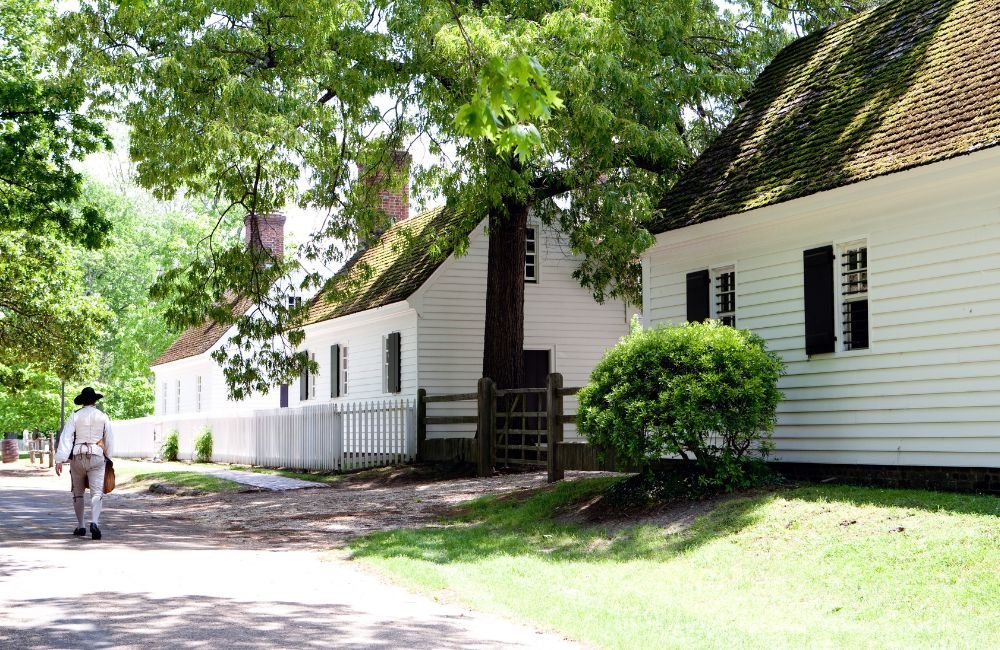
Explore Historic Buildings and Colonial Streets
The Historic Area includes original eighteenth-century structures alongside reconstructed buildings based on historical records and archaeological research.
The Capitol and Governor’s Palace are among the best-known landmarks. Their architecture and interpretation help visitors understand colonial government, public life and the social hierarchy of the period.
Bruton Parish Church offers a different perspective. This historic church remains an active place of worship and stands as an original building associated with Williamsburg’s colonial past.
As you walk through the historic streets, look for interpreters, period settings and signs explaining the uses of individual buildings. Each site can provide a different insight into the everyday lives of the people who lived there.
Watch Traditional Crafts in Action
Colonial Williamsburg is also known for its historic trades. Craftspeople demonstrate techniques associated with eighteenth-century life, helping visitors understand the skill and labor required to produce everyday goods.
Depending on the day’s program, you may see demonstrations connected with blacksmithing, printing, woodworking or other traditional crafts.
Gardens, shops and historic tavern settings add to the experience. These details show how people worked, traded, obtained food and organized their communities before modern industrial technology transformed daily life.
Understand the Lives of Enslaved and Free Black People
Colonial Williamsburg’s history cannot be understood through architecture and revolutionary politics alone. Enslaved Africans and African Americans performed essential labor throughout colonial society, while free Black people created communities and pursued their own opportunities within a deeply unequal system.
The site’s interpretation includes stories of enslaved people, Black religious life and people who challenged the limits imposed on them. The Williamsburg Bray School, established in the eighteenth century, also provides an important perspective on the history of education for Black children under slavery.
These stories add context to the period’s political ideals. They help visitors examine the contradiction between growing debates about liberty and the continued institution of slavery.
Plan Your Visit
Colonial Williamsburg is a substantial historic attraction, so allow enough time to explore beyond the most famous buildings.
Admission requirements depend on the experience you choose. Tickets are required for entry to historic buildings and many programs, although the details vary across the wider historic area.
Review the official visitor guide for ticket options, available sites, trade demonstrations and seasonal programming. Check the opening arrangements for particular buildings before planning your route.
Best for: Travelers interested in colonial architecture, early American politics, living-history demonstrations and the social history of the eighteenth century.
2. Charleston, South Carolina: Discover Colonial History and African American Heritage
Charleston is one of South Carolina’s most historically significant cities. Founded in 1670, it developed into an important port and commercial centre whose prosperity depended heavily on the forced labor of enslaved Africans and their descendants.
The city’s historic streets and architecture attract visitors, but its deeper significance lies in the stories behind those buildings. Colonial trade, slavery, African American cultural traditions, the struggle for independence and the Civil War all form part of Charleston’s history.
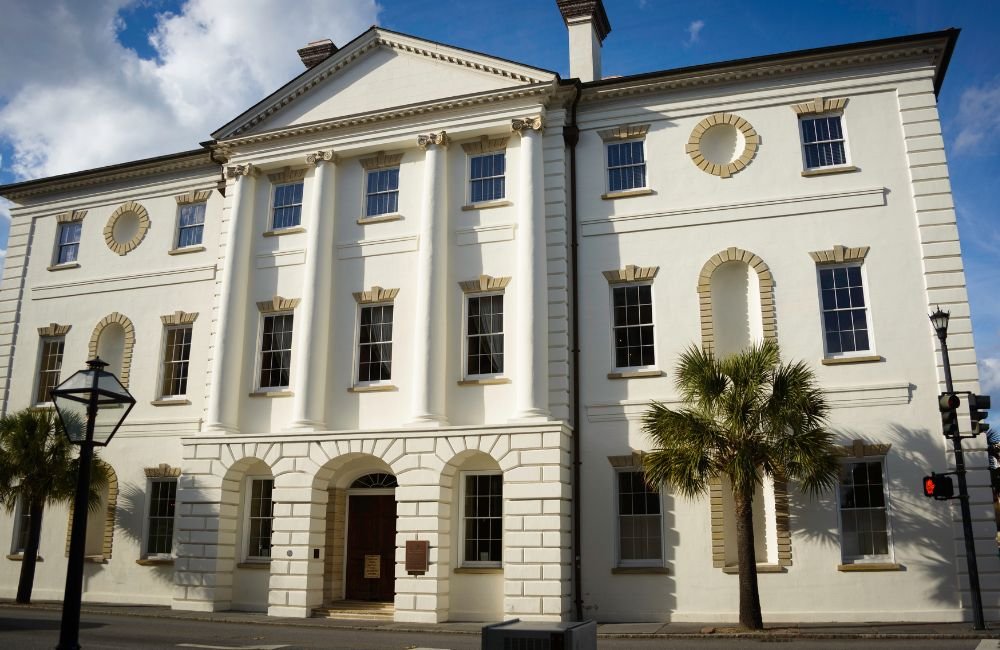
Walk Through the Historic District
Charleston’s historic district contains buildings from several periods, including the colonial era, the Federal period and the nineteenth century.
The French Quarter is part of the historic core, where visitors can explore narrow streets, historic churches and preserved commercial buildings. The waterfront and Battery areas offer further opportunities to understand the city’s relationship with trade, defense and maritime activity.
Architecture is one of the city’s most visible attractions. Historic houses, masonry buildings and traditional streetscapes reveal how wealth and political influence shaped the urban environment.
As you explore, remember that these attractive buildings represent only one side of Charleston’s past. Many depended on wealth created through the labor and exploitation of enslaved people.
Visit the Old Exchange and Provost Dungeon
Completed in 1771, the Old Exchange served important commercial and public functions during the colonial period. It later became associated with events connected to the American Revolution and the early history of the United States.
The building’s cellar, known as the Provost Dungeon, has its own history connected with imprisonment under British occupation. Today, the site interprets Charleston’s political and commercial past through exhibitions and guided experiences.
Check the official visitor information before arriving, as museum hours, tours and admission arrangements can change.
Learn About Slavery at the Old Slave Mart
The Old Slave Mart is one of Charleston’s most important sites for understanding the history of slavery.
Built in 1859, the surviving building was used as part of a complex in which enslaved people were sold. It provides a direct connection to the human suffering behind Charleston’s nineteenth-century commercial prosperity.
When visiting this site or other places connected with slavery, give yourself time to engage with the historical interpretation rather than viewing the building only as an architectural landmark.
Explore African American History at the International African American Museum
The International African American Museum offers another essential perspective on Charleston’s history. Located near Gadsden’s Wharf, the museum examines African American history and the experiences of people whose forced migration and labor shaped the development of the United States.
Its exhibitions explore the African diaspora, enslavement, resistance, culture and continuing contributions of African Americans.
For visitors seeking a deeper understanding of the Lowcountry, the region’s Gullah Geechee heritage is also important. Gullah Geechee communities maintain distinctive cultural traditions shaped by African ancestry and the history of coastal communities in the American South.
Consider including the museum in your itinerary alongside the Old Slave Mart and other historic sites. Together, these experiences help create a more complete understanding of Charleston than a sightseeing walk alone.
Plan a Meaningful Visit
Charleston’s historic centre is well suited to walking, but comfortable footwear and protection from heat and rain can make a substantial difference.
Allow time for museum visits rather than filling every part of the day with outdoor sightseeing. Some attractions use scheduled tours or timed-entry tickets, so check current arrangements in advance.
Best for: Travelers interested in historic architecture, colonial America, slavery and emancipation, African American history, and the cultural heritage of the Lowcountry.
3. Great Smoky Mountains National Park: Discover Cherokee and Appalachian Heritage
Great Smoky Mountains National Park stretches along the Tennessee–North Carolina border. Its forests, valleys and mountain communities preserve another important part of Southern history.
The region’s cultural history extends back thousands of years. Cherokee people maintained longstanding connections with these mountains before European settlers arrived. Later generations established farms and communities in the valleys, while commercial logging transformed large areas during the early twentieth century.
The park’s historical sites reveal how people lived and worked in the mountains, while its conservation history raises important questions about how public lands were created.
Understand Cherokee History
The Smoky Mountains form part of the ancestral homeland of the Cherokee people. Cherokee communities hunted, farmed, traded and maintained cultural connections throughout the wider Southern Appalachian region.
During the nineteenth century, expanding settlement, land seizures and forced removal caused profound disruption. The forced removal of most Cherokee people from their southeastern homelands in the 1830s became part of the history remembered as the Trail of Tears.
Cherokee communities and culture continue to thrive today. Travelers interested in this history can visit the Museum of the Cherokee People in Cherokee, North Carolina, just outside the national park.
The museum presents Cherokee history, cultural practices and contemporary experiences through exhibitions and educational programs. It offers an important opportunity to learn from Cherokee perspectives rather than relying solely on accounts written by outside observers.
Explore Historic Buildings at Cades Cove
Cades Cove is a scenic valley known for its historic farm buildings, churches, mountain views and wildlife.
An eleven-mile, one-way loop road circles the valley, providing access to numerous historic sites. Visitors can see log houses, barns, cemeteries and churches associated with the farming communities that once occupied the cove.
European American settlers established permanent communities there in the early nineteenth century. Families cleared land, cultivated crops, raised livestock and built the structures needed for rural life.
The restored buildings offer a practical way to explore this history. Instead of reading only about Appalachian farming, visitors can see the kinds of homes and working structures that supported these communities.
Cades Cove also offers opportunities for wildlife viewing and short walks. However, traffic can be heavy during popular travel periods, especially in summer and autumn.
The road has scheduled vehicle-free days during part of the year. Check the current National Park Service calendar before choosing your visit date.
Visit the Mountain Farm Museum
Near the Oconaluftee Visitor Center on the North Carolina side of the park, the Mountain Farm Museum preserves a collection of historic farm buildings.
The collection includes structures such as a farmhouse, barn, smokehouse and other buildings associated with traditional Appalachian life.
Together, the buildings help visitors understand how rural families organized their work, stored food, maintained livestock and used locally available materials.
The site is particularly useful for travelers who want a relatively accessible introduction to the region’s rural history. It can also complement a visit to the nearby Museum of the Cherokee People.
Learn About Logging and Conservation
The history of the Smokies also includes the rapid expansion of commercial logging during the early twentieth century.
Large timber operations transformed the landscape and raised concerns about the loss of old-growth forest. Conservation campaigns helped lead to the establishment of Great Smoky Mountains National Park in 1934.
However, park creation also changed the lives of people who already lived in the mountains. Many families had to leave their land as the park took shape, while some retained limited rights to remain for part of their lives.
Understanding this history adds depth to a visit. The park preserves natural landscapes and cultural remains, but the process that created the protected area also involved significant human consequences.
Before traveling, check the National Park Service’s current conditions page for road closures, trail notices and facility updates. The interior of Mingus Mill is currently listed as closed for preservation work, although visitors can still view the exterior.
The park does not charge a general entrance fee, but vehicles parked for more than fifteen minutes require a valid parking tag. Confirm the current parking-tag arrangements before your visit.
Best for: Travelers interested in Cherokee history, Appalachian communities, rural buildings, conservation history and outdoor exploration.
How to Plan a Southern History Road Trip
These three destinations offer a broad introduction to Southern history, but they are not close together.
Colonial Williamsburg lies in Virginia, Charleston is on the South Carolina coast, and Great Smoky Mountains National Park occupies the Tennessee–North Carolina border. Trying to visit all three during a short stay in Gatlinburg would involve substantial travel between regions.
Choose an approach that matches your available time.
Focus on the Smoky Mountains
If you are staying in Gatlinburg, concentrate on Great Smoky Mountains National Park and the surrounding Cherokee cultural area.
You can explore historic farm buildings, mountain communities and regional museums without building a long-distance journey into your schedule.
Plan a Multi-Stop Historical Journey
If you have more time, plan a broader road trip with separate stays in Williamsburg, Charleston and the Smoky Mountains region.
Allow enough time to visit museums, explore historic streets and enjoy the surrounding areas. Each destination offers more than a quick photo stop.
Use official attraction websites for current tickets and opening arrangements. Check road conditions before traveling through the mountains, particularly during winter weather or periods of heavy rain.
Balance the Stories You Explore
The American South cannot be reduced to a single historical narrative. Colonial government, Indigenous societies, enslavement, resistance, cultural creativity, war, rural life and conservation all contribute to the region’s history.
Approach historic sites with curiosity and a willingness to consider perspectives that older travel accounts may have overlooked. This will make the journey more informative and give greater context to the places you visit.
Explore the Many Layers of Southern History
Colonial Williamsburg, Charleston and Great Smoky Mountains National Park reveal different aspects of the American South.
Williamsburg helps visitors understand colonial government, craft traditions and the contradictions of the Revolutionary era. Charleston connects historic architecture with slavery, African American culture and the struggle for freedom. The Smokies preserve Cherokee heritage, Appalachian communities and the complicated history of creating a national park.
Rather than rushing between attractions, choose the places that interest you most and allow time to understand their stories. A carefully planned visit can turn a Southern getaway into a deeper exploration of the people, cultures and events that shaped American history.
