
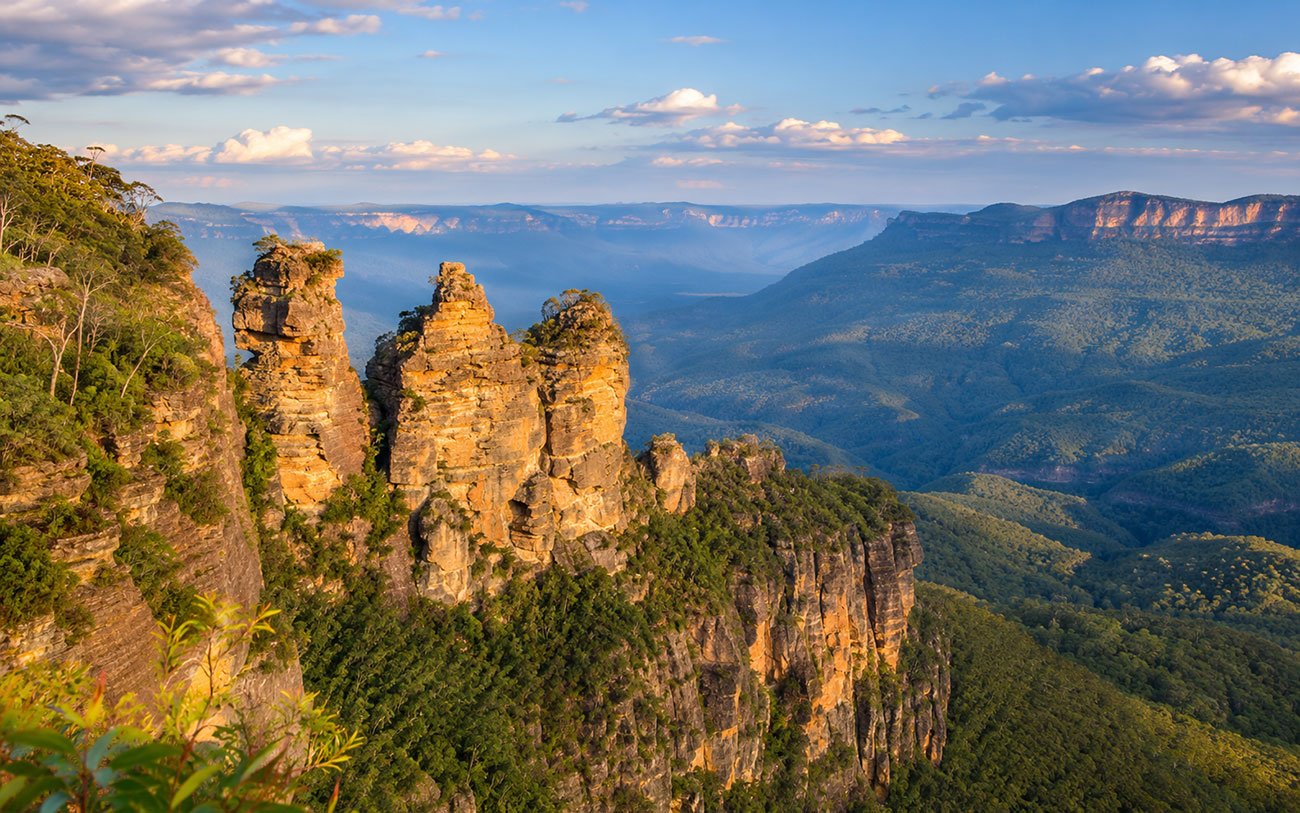
The iconic Three Sisters rise above the Jamison Valley in Australia’s UNESCO World Heritage-listed Blue Mountains.
12 Best Things to Do in the Blue Mountains, Australia
The best things to do in the Blue Mountains take you through ancient eucalyptus forests, dramatic sandstone escarpments, mist-covered valleys and charming mountain villages. Located west of Sydney in New South Wales, this spectacular region offers one of Australia’s most rewarding nature-based holidays.
From admiring the iconic Three Sisters at Echo Point to riding the world’s steepest passenger railway and exploring rainforest-covered canyons, the Blue Mountains offers experiences for casual sightseers and adventurous travellers alike.
You can visit the region on a day trip from Sydney, although spending two or three days allows more time to discover its walking tracks, gardens, heritage attractions and Aboriginal cultural experiences.
Why Visit the Blue Mountains?
UNESCO recognised the Greater Blue Mountains Area as a World Heritage Site in 2000 because of its outstanding natural significance.
The protected landscape covers approximately 1.03 million hectares and includes seven national parks and the Jenolan Karst Conservation Reserve.
Its sandstone plateaus, deep gorges and diverse eucalyptus forests provide habitats for an extraordinary variety of native Australian plants and animals.
The region’s characteristic blue haze results from atmospheric light scattering, influenced in part by naturally occurring compounds released by eucalyptus trees.
Beyond its natural beauty, the Blue Mountains has deep cultural significance for Aboriginal communities, including the Dharug and Gundungurra peoples, whose connections to Country continue today.
Best Places to Visit in the Blue Mountains at a Glance
| Attraction | Location | Best For |
|---|---|---|
| Three Sisters and Echo Point | Katoomba | Iconic mountain views |
| Scenic World | Katoomba | Railway and cable car experiences |
| Wentworth Falls | Wentworth Falls | Waterfalls and bushwalking |
| Grand Canyon Track | Blackheath | Rainforest hiking |
| Govetts Leap Lookout | Blackheath | Dramatic valley views |
| Grand Cliff Top Walk | Wentworth Falls to Katoomba | Extended hiking adventures |
| Leura Village | Leura | Gardens, cafés and shopping |
| Blue Mountains Cultural Centre | Katoomba | Art, history and culture |
| Aboriginal cultural tours | Various locations | Indigenous heritage |
| Blue Mountains Botanic Garden | Mount Tomah | Nature and landscaped gardens |
| Guided adventure activities | Various locations | Canyoning and abseiling |
| Jenolan Caves | Near Oberon | Limestone caves – temporarily closed |
1. Admire the Three Sisters at Echo Point
The Three Sisters is undoubtedly the most recognisable natural landmark in the Blue Mountains.
These three sandstone formations rise above the Jamison Valley near Katoomba. Weathering and erosion have shaped the surrounding cliffs and rock formations over millions of years.
Echo Point Lookout provides one of the best views of the Three Sisters, with forest-covered valleys and distant sandstone ridges stretching across the horizon.
The formations also hold cultural significance for Aboriginal people and form part of a recognised Aboriginal Place.
Explore the Three Sisters Walk
Visitors who want a closer view can follow the Three Sisters walking track from Echo Point.
- Distance: 800 metres return
- Walking time: 25–45 minutes
- Difficulty: Grade 1 – easy
Additional paths and staircases lead towards other sections of the escarpment. However, rockfalls and maintenance can restrict access to routes such as Honeymoon Bridge.
Always follow closure notices and remain behind protective barriers.
Travel tip: Echo Point is particularly beautiful in the early morning and late afternoon. Low cloud and fog occasionally obscure the formations, so allow flexibility in your sightseeing plans.
2. Ride the World’s Steepest Railway at Scenic World
Scenic World in Katoomba provides an exciting way to experience the Blue Mountains without undertaking demanding bushwalks.
The attraction combines railway journeys, cable car rides and forest boardwalks, offering different perspectives of the Jamison Valley.
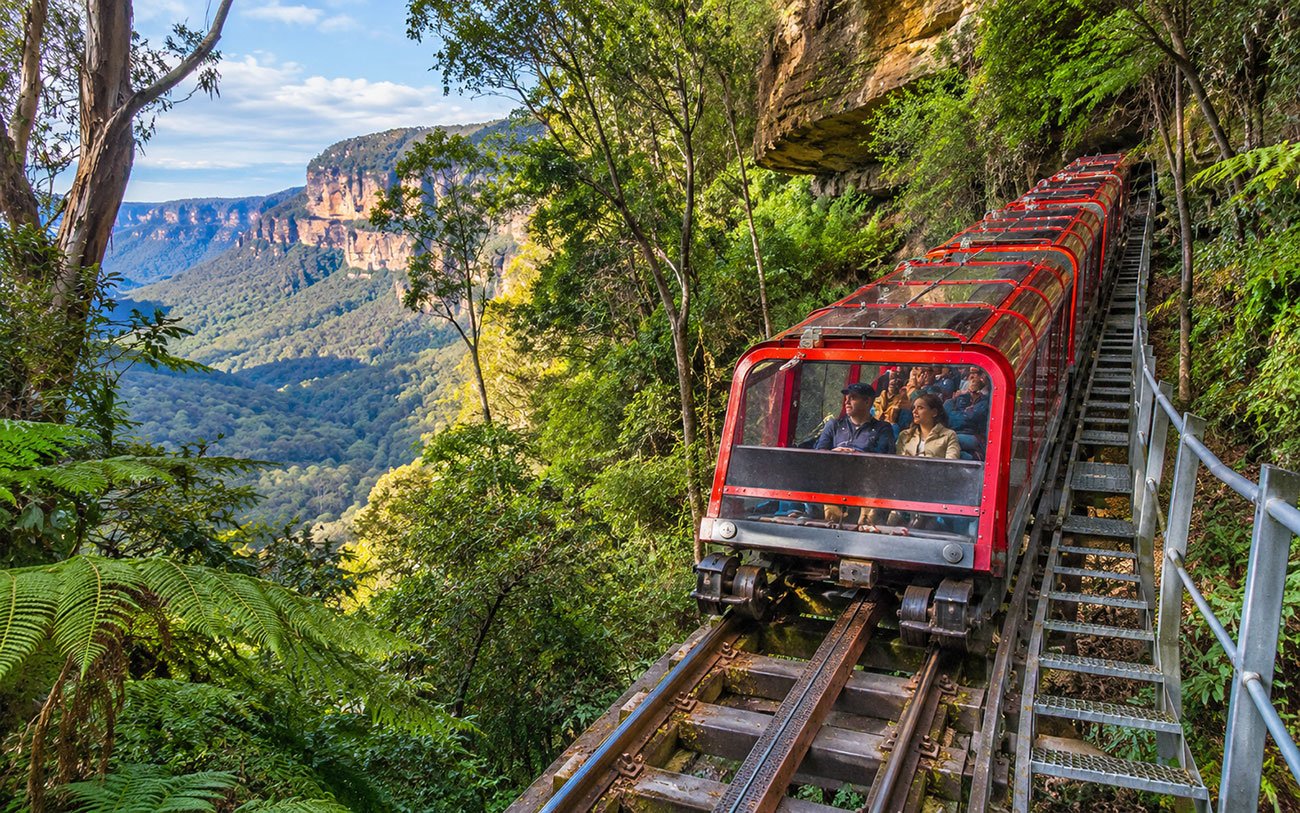
Experience the world’s steepest passenger railway at Scenic World in Katoomba, surrounded by the spectacular Blue Mountains landscape.
Scenic Railway
Recognised as the world’s steepest passenger railway, the Scenic Railway descends into the valley through a natural rock tunnel and steep forested terrain.
The railway’s history is connected to the area’s former coal mining industry.
Today, it provides an exhilarating introduction to the dramatic landscape below the escarpment.
Scenic Skyway
The Scenic Skyway travels high above the valley, offering panoramic views of the Three Sisters, Katoomba Falls and Mount Solitary.
Its glass-floor viewing section provides an additional perspective for visitors comfortable with heights.
Scenic Cableway
The Scenic Cableway connects the upper escarpment with the rainforest below, providing sweeping views of the surrounding cliffs and forest canopy.
Scenic Walkway
Raised boardwalks allow visitors to explore the valley’s forest environment while protecting sensitive vegetation.
Scenic World recommends allowing approximately two to three hours to experience its principal attractions.
Book tickets in advance during weekends, school holidays and other busy periods. Visitors with mobility requirements should consult the official accessibility information, as the railway and some walking sections have restrictions.
3. Discover the Spectacular Wentworth Falls
Wentworth Falls is one of the most impressive waterfall destinations in the Blue Mountains.
The surrounding area features sandstone cliffs, eucalyptus forests and walking tracks that provide views across the Jamison Valley.
Visitors can start at the Wentworth Falls picnic area and choose from several lookout and walking options.
The main Wentworth Falls track passes through scenic bushland before descending towards Fletchers Lookout and the top of the waterfall.
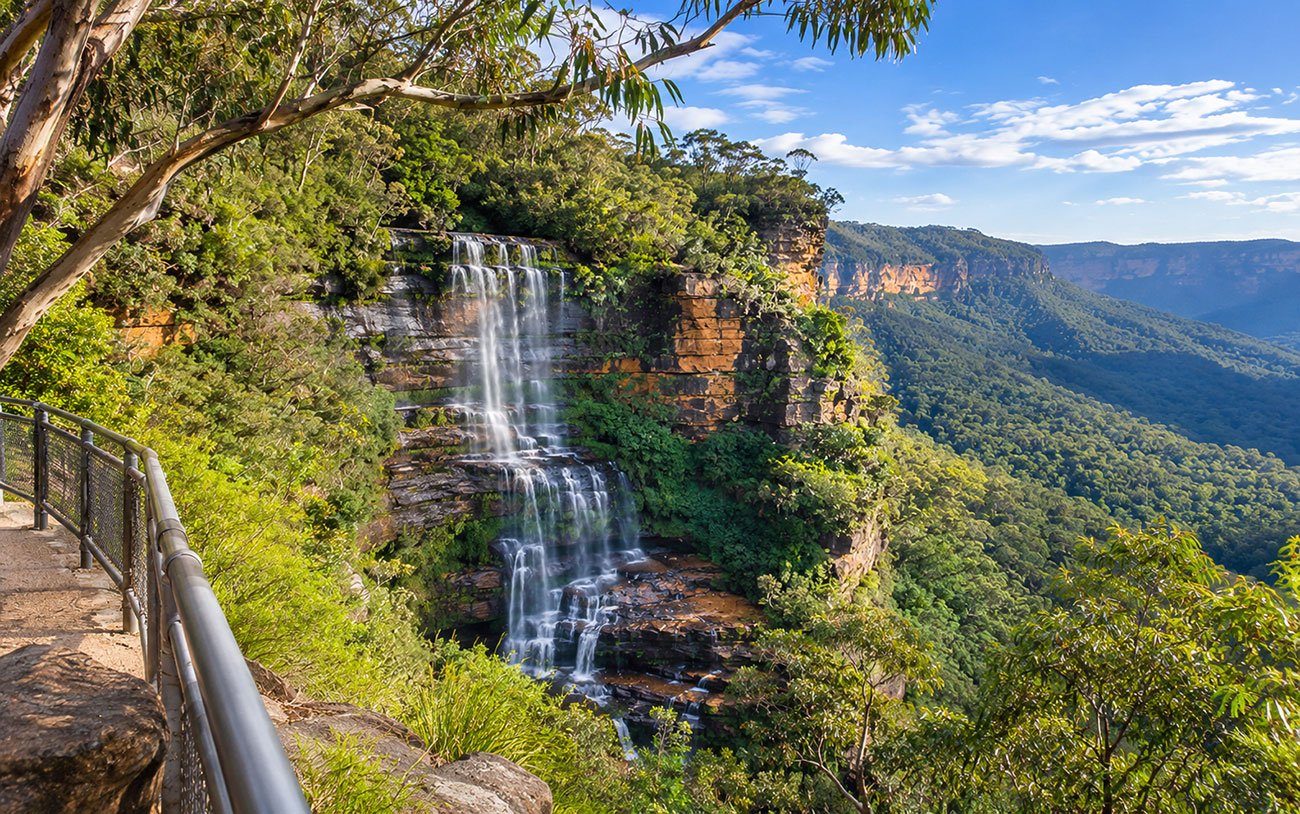
Wentworth Falls offers spectacular waterfalls, dramatic sandstone cliffs and panoramic views of the Jamison Valley.
Wentworth Falls Track
- Distance: 1.4 kilometres return
- Walking time: 45 minutes to one hour
- Difficulty: Grade 3 – moderate
- Terrain: Steep stairs and uneven sections
The route is relatively short but involves a substantial staircase descent and climb.
For visitors who prefer a less demanding experience, the upper lookouts offer beautiful valley views without completing the entire walking track.
Some longer routes around Wentworth Falls, including sections of National Pass, have experienced extended closures following rockfalls and landslides.
Check NSW National Parks alerts before attempting any route beyond the main visitor areas.
Never approach unprotected cliff edges or enter fast-flowing water.
4. Hike the Grand Canyon Track in Blackheath
The Grand Canyon Track near Blackheath offers a very different experience from the Blue Mountains’ elevated lookouts.
Instead of remaining above the escarpment, walkers descend into a sheltered canyon filled with lush ferns, flowing creeks, waterfalls and towering sandstone walls.
The historic walking route dates back to 1907 and remains one of the region’s most rewarding bushwalks.
Grand Canyon Track information
- Distance: 6.3-kilometre loop
- Walking time: Three to four hours
- Difficulty: Grade 3 – moderate
- Terrain: Stone steps, creek crossings and uneven paths
Although the track does not require specialist canyoning equipment, it involves numerous stairs and requires a reasonable level of fitness.
The cool, shaded environment contrasts beautifully with the drier eucalyptus forests above.
Avoid canyon walks before, during or immediately after heavy rainfall because of the risk of flooding.
The Grand Canyon walking track should not be confused with technical canyoning routes in the same area, which require specialist skills and equipment.
5. Enjoy the Views from Govetts Leap Lookout
Govetts Leap Lookout in Blackheath overlooks the impressive Grose Valley.
The landscape features towering sandstone cliffs, deep forested gorges and extensive wilderness stretching towards distant ridges.
From the lookout, visitors can also admire Bridal Veil Falls, known locally as Govetts Leap Falls.
This lookout is an excellent alternative to the busier viewing areas around Katoomba.
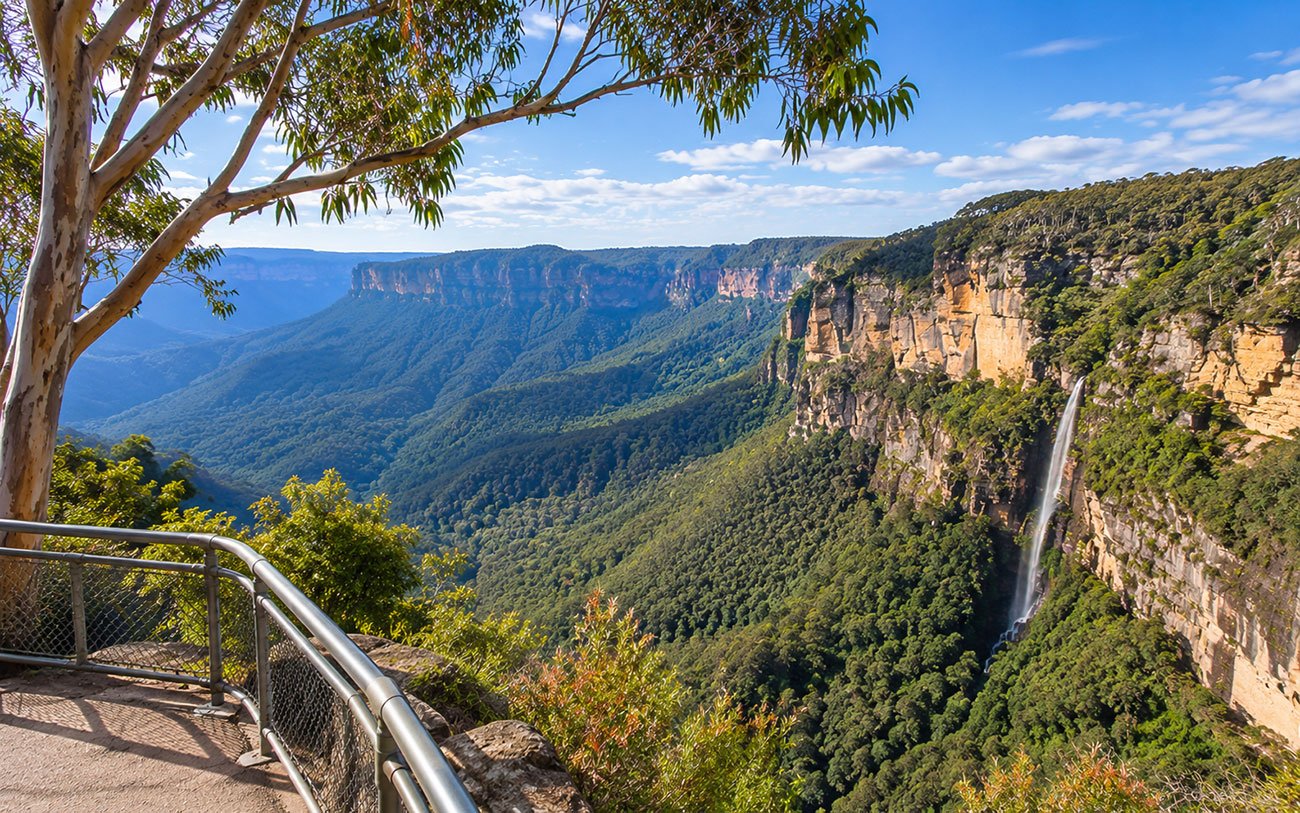
Govetts Leap Lookout in Blackheath offers spectacular views of the Grose Valley, towering sandstone cliffs and Bridal Veil Falls.
Fairfax Heritage Walking Track
The Fairfax Heritage Walking Track connects the Blue Mountains Heritage Centre with scenic viewpoints near Govetts Leap.
Its relatively gentle terrain makes it a suitable option for visitors seeking an easier nature experience.
Check the current accessibility information if travelling with a wheelchair, mobility aid or stroller.
The nearby Heritage Centre provides information about the national park, walking conditions and local attractions.
6. Experience the Grand Cliff Top Walk
Travellers who enjoy longer hikes should consider the Grand Cliff Top Walk.
This scenic route connects Wentworth Falls, Leura and Katoomba, combining some of the Blue Mountains’ most impressive escarpment landscapes.
Along the way, walkers encounter waterfalls, forest tracks, historic paths and panoramic valley views.
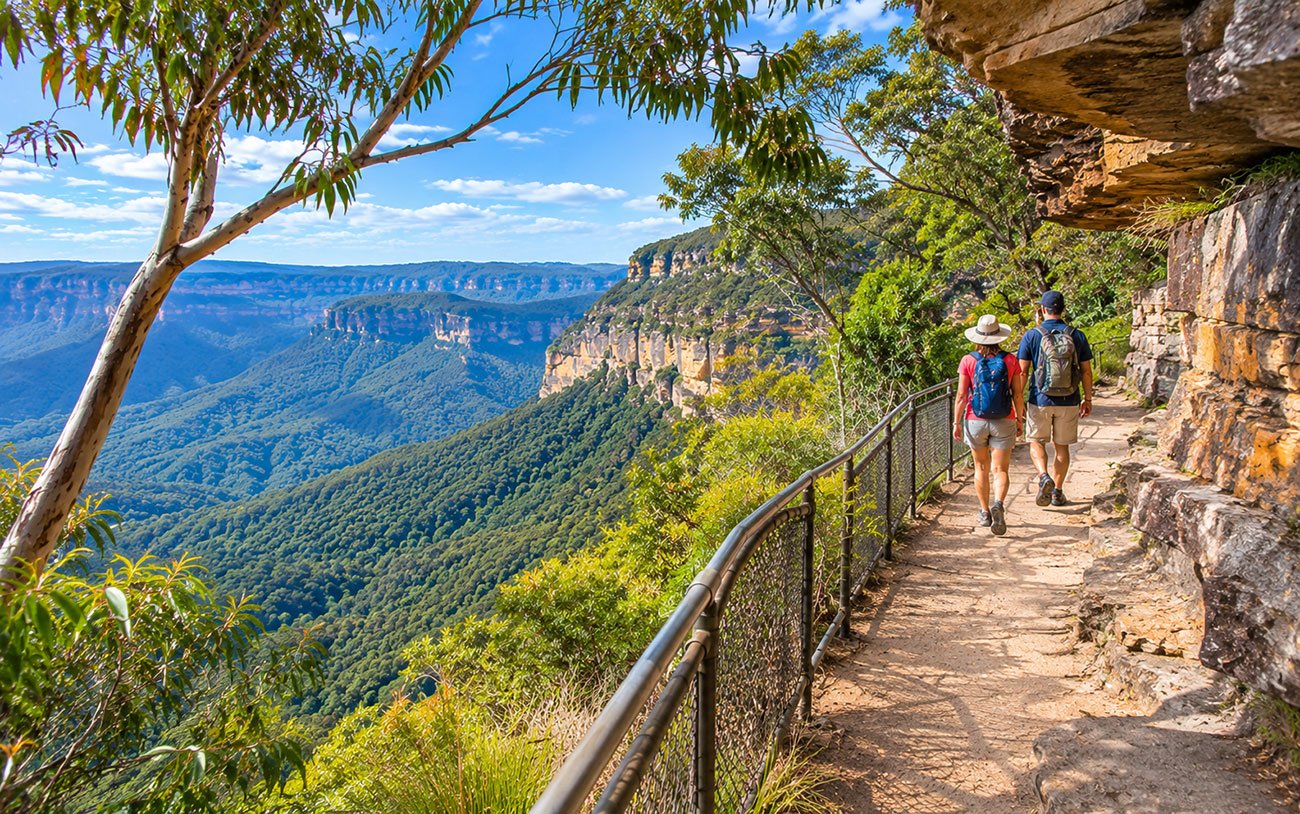
The Grand Cliff Top Walk combines dramatic sandstone cliffs, eucalyptus forests and breathtaking valley views in the Blue Mountains.
Grand Cliff Top Walk information
- Distance: 19 kilometres one way
- Recommended duration: Two days
- Difficulty: Grade 3 – moderate
The official itinerary divides the walk into two sections:
| Section | Distance |
|---|---|
| Wentworth Falls Village to Leura | 11 kilometres |
| Gordon Falls to Katoomba | 8 kilometres |
Unlike remote wilderness treks, the route allows walkers to stay in mountain village accommodation along the way.
You can also explore shorter sections if you do not have time to complete the entire route.
Check current track alerts, detours and access arrangements before setting out. Arrange overnight accommodation and transport between your starting and finishing points in advance.
7. Explore the Charming Village of Leura
Leura provides a relaxing contrast to the rugged mountain landscape.
The village is known for its attractive streets, independent boutiques, antique shops, cafés, gardens and heritage buildings.
Spend time exploring Leura Mall, enjoy lunch at a local café or browse shops selling regional products and handmade items.
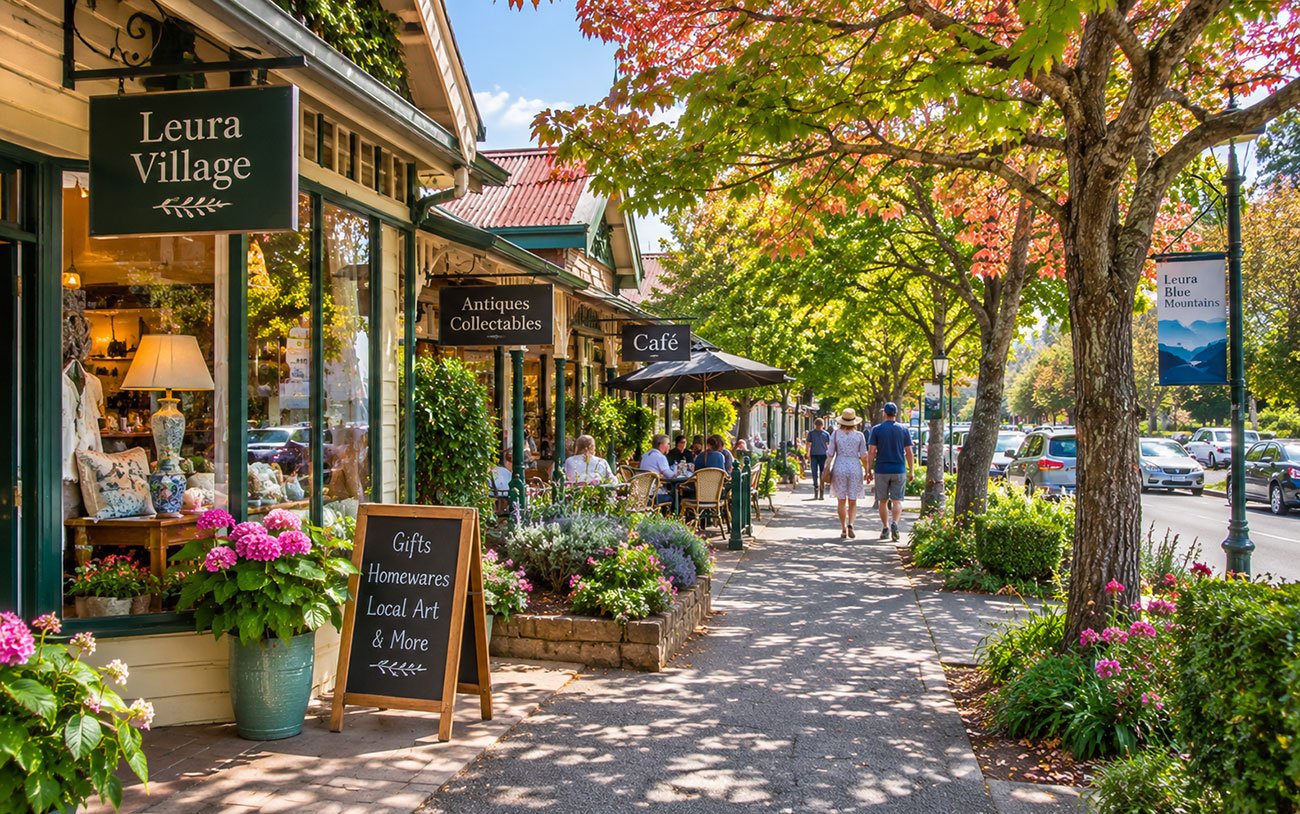
Leura Village charms visitors with its heritage architecture, independent boutiques, cosy cafés and beautifully landscaped streets.
Everglades House & Gardens
One of Leura’s most distinctive attractions is Everglades House & Gardens, a National Trust property featuring landscaped gardens, stone terraces and historic architecture from the interwar period.
Its combination of European garden design and Australian bushland makes it particularly interesting.
Seasonal flowers and autumn foliage provide changing scenery throughout the year.
Leura also hosts a garden festival during spring, when selected private gardens open to visitors.
Check the festival’s official dates and individual garden opening arrangements before planning a visit.
8. Discover Katoomba’s Art, History and Heritage
Katoomba is the main tourism centre of the Upper Blue Mountains and a convenient base for exploring the region.
Its streets feature historic hotels, independent businesses, restaurants and local art.
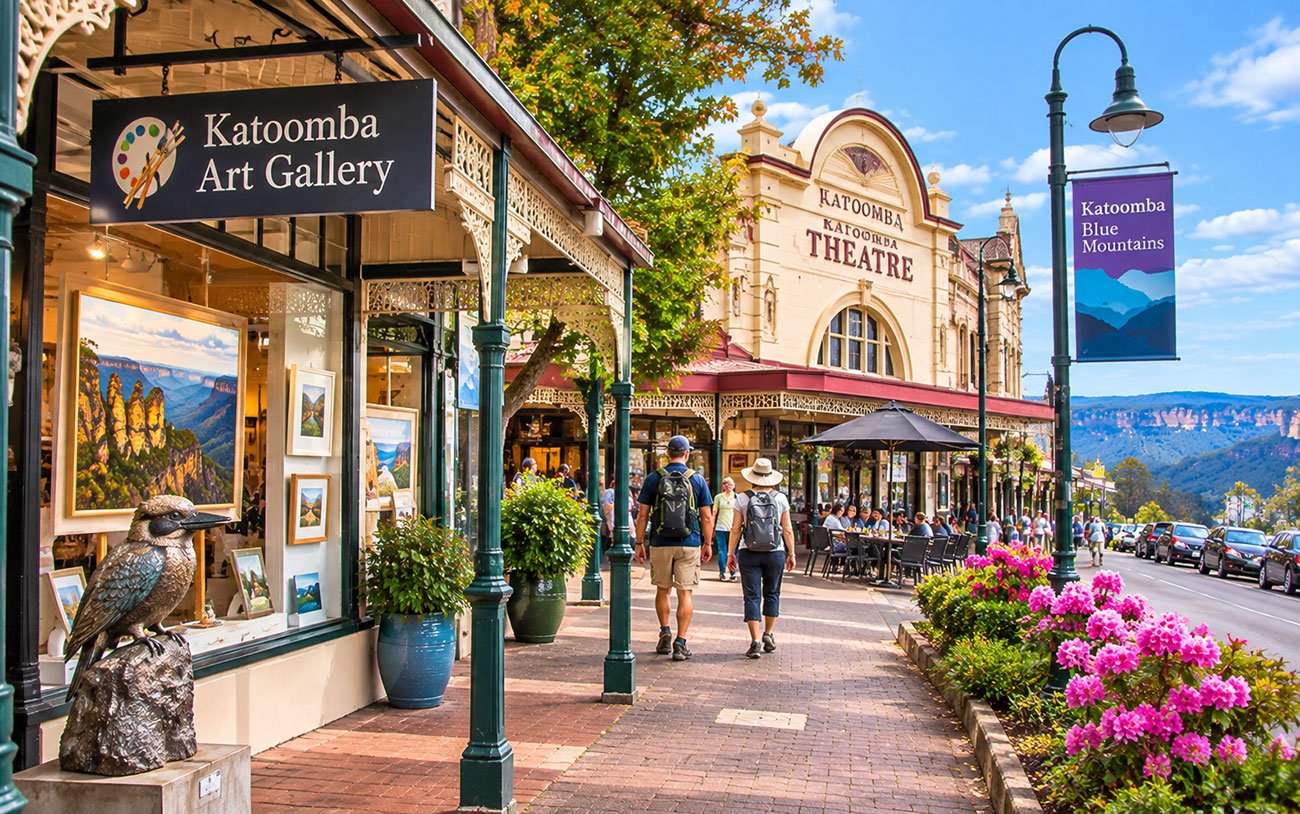
Katoomba combines historic architecture, a vibrant arts scene, independent shops and a distinctive mountain town atmosphere.
Blue Mountains Cultural Centre
The Blue Mountains Cultural Centre offers an excellent introduction to the region’s artistic and cultural identity.
It houses the Blue Mountains City Art Gallery and the Into the Blue exhibition, which explores the area’s natural landscape and history.
The gallery hosts changing exhibitions featuring regional and Australian artists.
This is a worthwhile attraction for visitors interested in understanding the landscape beyond its scenic appeal.
It also provides a useful alternative when fog, rain or cold weather affects outdoor sightseeing.
Afterwards, explore Katoomba Street and admire the town’s historic buildings, including the landmark Carrington Hotel.
9. Learn About Aboriginal Culture and Heritage
The Blue Mountains is not simply a wilderness destination. It is also a living cultural landscape with enduring significance for Aboriginal peoples.
The Dharug and Gundungurra Traditional Owners maintain deep connections to the region’s land, waterways and cultural sites.
Joining an Aboriginal-led tour provides an opportunity to understand these connections through the knowledge and perspectives of local guides.
Depending on the experience, visitors may learn about:
- Traditional relationships with the landscape
- Native plants and their cultural uses
- Aboriginal history and storytelling
- The significance of Country and cultural heritage
- Traditional ecological knowledge
NSW National Parks lists guided cultural experiences operated by licensed tour providers.
Choose authentic, Aboriginal-led experiences wherever possible. Respect cultural restrictions, avoid disturbing archaeological sites and ask permission before photographing sensitive cultural activities.
10. Visit the Blue Mountains Botanic Garden at Mount Tomah
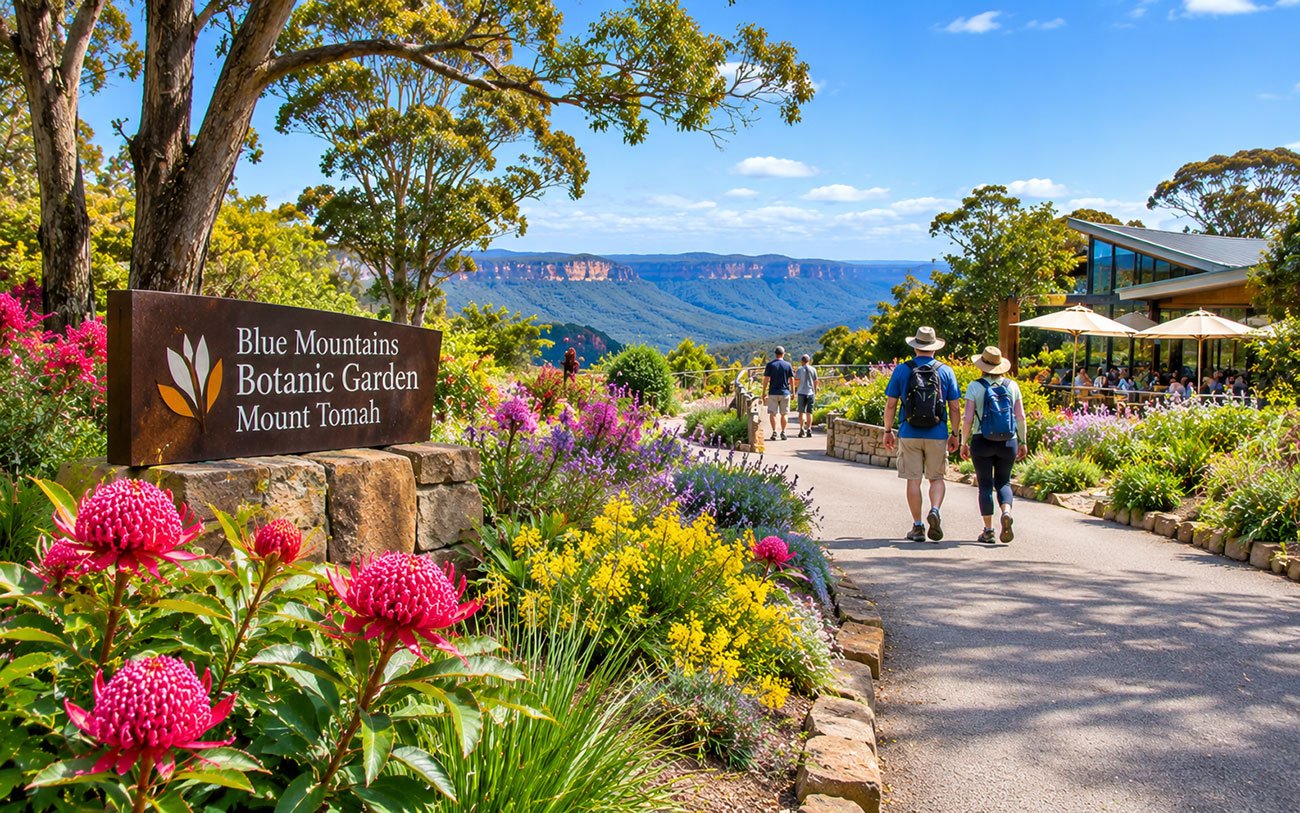
The Blue Mountains Botanic Garden at Mount Tomah offers beautiful landscaped gardens, diverse plant collections and spectacular mountain views.
Located along Bells Line of Road, the Blue Mountains Botanic Garden at Mount Tomah showcases plants suited to cooler mountain climates.
Its elevated setting offers expansive views across the surrounding countryside.
Visitors can explore landscaped gardens, native vegetation, walking paths and seasonal plant displays.
The garden also features Wollemi pines, a remarkable ancient plant lineage discovered in the wilderness of New South Wales.
Spring brings colourful flowers, while autumn offers striking seasonal foliage.
General admission to the garden is free, although some tours, workshops and special events may charge separate fees.
Mount Tomah lies away from the main Katoomba–Leura railway corridor, so travelling by car or organised tour is generally more practical.
11. Try Canyoning, Abseiling and Other Adventure Activities
The Blue Mountains offers numerous opportunities for travellers seeking more challenging outdoor experiences.
Its sandstone cliffs, narrow canyons and extensive forest networks make it a well-known adventure destination.
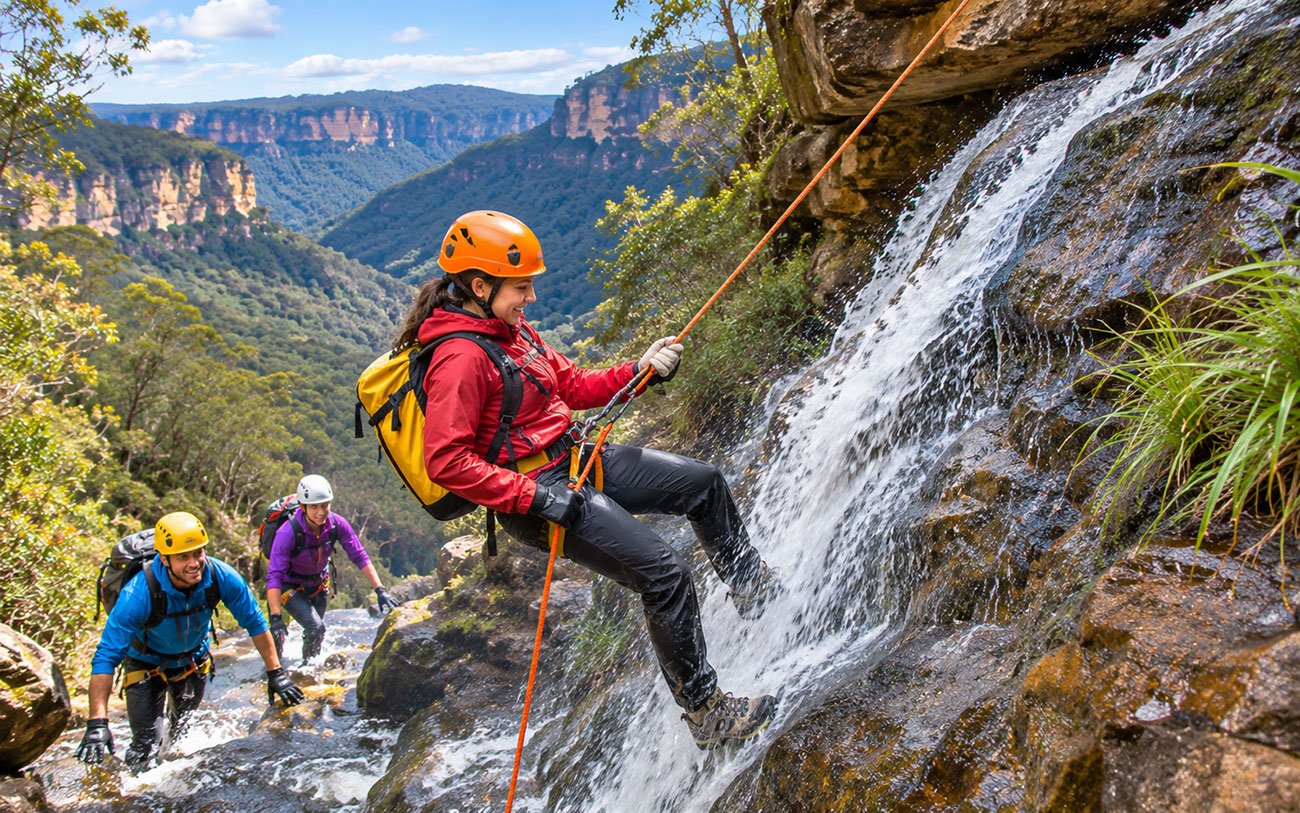
Canyoning and abseiling offer adventurous ways to experience the dramatic sandstone cliffs, waterfalls and rugged wilderness of the Blue Mountains.
Licensed local operators offer experiences such as:
- Guided canyoning
- Abseiling
- Rock climbing
- Mountain biking
- Guided wilderness hikes
- Stargazing experiences
Beginners can choose introductory activities with experienced guides, while more advanced options may require previous outdoor experience.
Canyoning and abseiling involve significant risks if undertaken without appropriate training, equipment and knowledge of local conditions.
Book with a licensed, reputable operator and confirm the physical requirements of your chosen activity.
Weather conditions can affect departures, particularly for activities involving cliffs, creeks and narrow canyons.
12. Discover the Extraordinary Jenolan Caves
Located near Oberon, Jenolan Caves forms part of the Greater Blue Mountains World Heritage Area.
The ancient limestone cave system is internationally recognised for its geological significance, underground waterways and remarkable mineral formations.
Its chambers contain stalactites, stalagmites, delicate calcite formations and other natural features created through lengthy geological processes.
The caves also hold cultural significance for the Gundungurra people.
Historically, guided show-cave tours have allowed visitors to explore illuminated underground chambers using established pathways and staircases.
The heritage buildings surrounding the caves, including Caves House, add another dimension to the destination’s appeal.
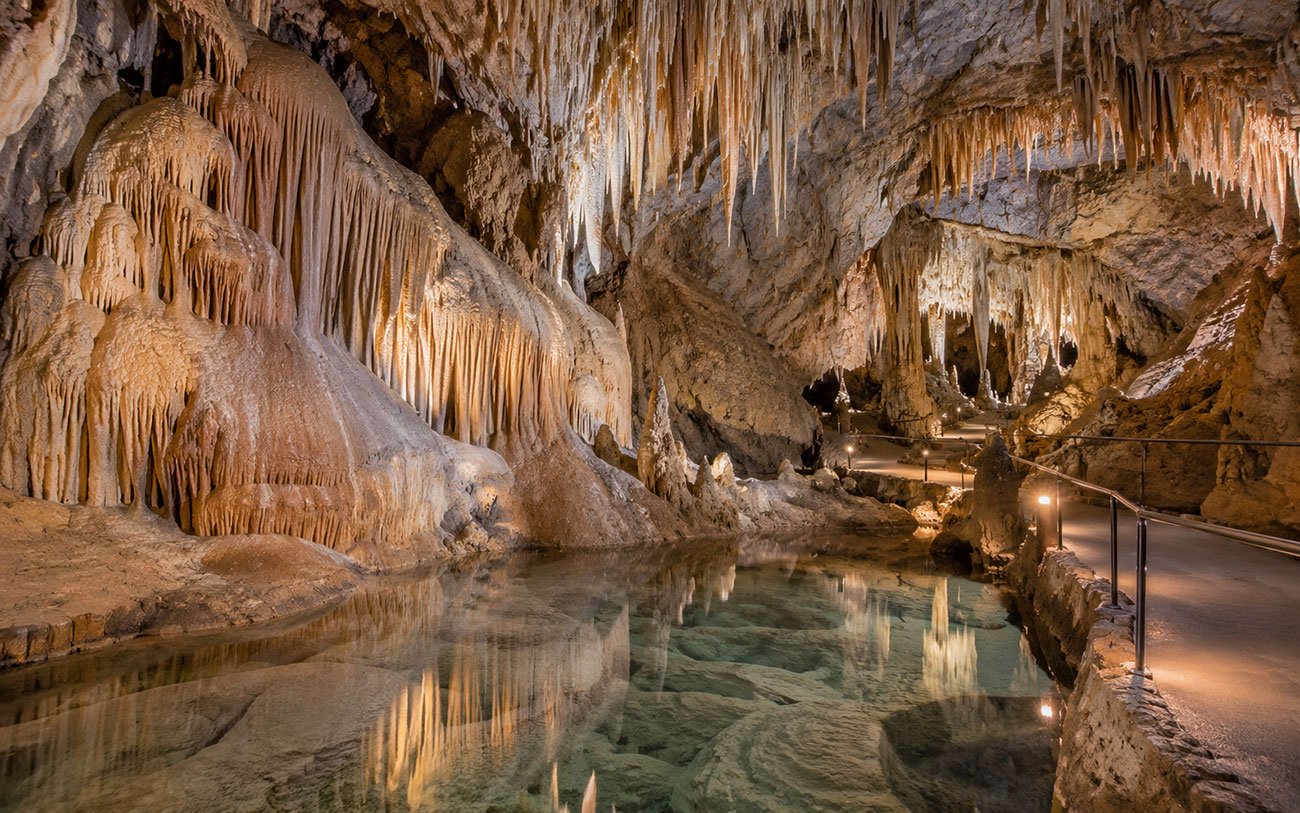
A dramatic limestone chamber inside Jenolan Caves, one of the Blue Mountains’ most remarkable natural attractions.
Can you visit Jenolan Caves?
Jenolan Caves and its surrounding visitor precinct are currently closed while authorities undertake major repairs to flood-damaged access roads and improve visitor infrastructure.
The official operator has announced a planned reopening in early 2027, subject to completion of roadworks and site preparations.
Do not attempt to access the caves, reserve or closed roads before authorities confirm that public access has resumed.
Once the precinct reopens, check which cave tours are available, whether advance reservations are required and what physical or accessibility restrictions apply.
Until then, Scenic World, the Grand Canyon Track and the region’s numerous waterfalls offer worthwhile alternatives for visitors seeking immersive nature experiences.
Best Time to Visit the Blue Mountains
The Blue Mountains generally experiences cooler conditions than central Sydney, particularly in the higher mountain villages.
Each season offers a different atmosphere.
| Season | Months | Highlights |
|---|---|---|
| Spring | September–November | Flowers, gardens and comfortable walking conditions |
| Summer | December–February | Long daylight hours and outdoor adventures |
| Autumn | March–May | Colourful foliage and pleasant sightseeing weather |
| Winter | June–August | Cosy village stays, crisp air and occasional light snow |
Spring and autumn are particularly attractive for travellers interested in bushwalking, gardens and landscape photography.
Summer provides longer days but can also bring high temperatures, thunderstorms and bushfire danger.
Winter can be surprisingly cold, especially around Katoomba and Blackheath. Snow occasionally falls at higher elevations, although visitors should not plan a trip expecting guaranteed snowfall.
Fog, rain and sudden weather changes can occur throughout the year. Pack layers regardless of the season.
How to Get to the Blue Mountains from Sydney
The Blue Mountains is easily accessible from Sydney by train, car or organised tour.
By Train
Regular intercity trains travel along the Blue Mountains Line from Sydney Central Station.
Major stations include:
- Wentworth Falls
- Leura
- Katoomba
- Blackheath
- Mount Victoria
The journey from Sydney Central to Katoomba generally takes around two hours.
Travellers can use an Opal card or an accepted contactless payment card for travel on the suburban and intercity Opal network.
From Katoomba, local buses connect the town centre with Echo Point and Scenic World.
Use the Transport for NSW Trip Planner to check current services, fares, accessibility and planned rail maintenance.
By Car
Driving offers greater flexibility, particularly if you want to visit Mount Tomah, explore multiple walking tracks or stay in accommodation outside the main villages.
The usual route from Sydney follows the M4 and Great Western Highway towards the Upper Blue Mountains.
Allow approximately 90 minutes from central Sydney to Katoomba in favourable traffic conditions.
The Bells Line of Road offers an alternative scenic approach through the Hawkesbury region and mountain countryside.
Roadworks, landslides and severe weather can affect mountain roads, particularly routes west of Katoomba.
Check Live Traffic NSW before departing.
By Guided Tour
Organised day tours from Sydney are convenient for travellers who prefer not to drive or manage public transport connections.
Many itineraries include Echo Point, Scenic World and selected mountain villages or lookouts.
Before booking, check whether attraction admission, meals and transport are included. Some tours offer shorter sightseeing stops, while others provide more time for bushwalking.
Guided Tour or Independent Travel?
Both options offer advantages depending on your interests, budget and available time.
| Consideration | Guided Tour | Independent Travel |
|---|---|---|
| Transport | Usually arranged | Self-managed |
| Sightseeing pace | Fixed itinerary | Flexible |
| Cultural interpretation | Guide-dependent | Self-guided or optional tours |
| Remote attractions | Depends on itinerary | Easier with a car |
| Budget | Package-dependent | More control over expenses |
| Adventure activities | Specialist guidance available | Requires appropriate experience |
A guided day tour is a practical option for first-time visitors with limited time.
Independent travel works particularly well for travellers who want to explore Katoomba and Leura at their own pace or spend several days in the region.
You can also combine independent sightseeing with an Aboriginal-led cultural tour or professionally guided adventure activity.
Suggested Blue Mountains Day Trip from Sydney
If you have only one day, concentrate on Katoomba and nearby attractions rather than attempting to cover the entire region.
Morning
Travel from Sydney to Katoomba.
Visit Echo Point Lookout and admire the Three Sisters. Explore the short walking track if conditions permit.
Late Morning and Early Afternoon
Spend approximately two to three hours at Scenic World, including the railway, cable car experiences and rainforest boardwalks.
Late Afternoon
Visit Leura for refreshments, shopping and a relaxed village stroll.
Alternatively, travellers with a car may prefer to visit one of the upper Wentworth Falls lookouts.
Return to Sydney in the evening.
If travelling by public transport, check connections and return train times before finalising your plans.
Suggested Two-Day Blue Mountains Itinerary
An overnight stay allows you to experience the region without rushing between attractions.
Day 1: Katoomba and Leura
- Visit Echo Point and the Three Sisters.
- Explore Scenic World.
- Discover Katoomba’s heritage streets or Cultural Centre.
- Enjoy dinner and stay overnight in Katoomba or Leura.
Day 2: Waterfalls or Blackheath
Choose your itinerary according to your fitness and interests.
For a waterfall-focused day, visit Wentworth Falls and explore Leura’s gardens.
For a more active adventure, head to Blackheath and complete the Grand Canyon Track if weather and track conditions are suitable. Finish with the views at Govetts Leap.
Travellers staying longer can dedicate an additional day to Mount Tomah, Aboriginal cultural experiences or other parts of the national park.
Where to Stay in the Blue Mountains
Choosing the right village can make your visit considerably more convenient.
| Location | Best For |
|---|---|
| Katoomba | First-time visitors and major attractions |
| Leura | Gardens, romantic breaks and boutique stays |
| Blackheath | Bushwalking and quieter surroundings |
| Wentworth Falls | Waterfalls and nature-focused holidays |
| Mount Victoria | Heritage atmosphere and western mountain exploration |
Katoomba is particularly convenient for travellers relying on public transport.
The region offers historic hotels, guesthouses, holiday cottages and other accommodation options.
Book ahead during long weekends, school holidays and major seasonal events.
Practical Blue Mountains Travel Tips
The Blue Mountains is accessible, but its natural environment requires appropriate preparation.
- Check NSW National Parks alerts before walking or visiting remote areas.
- Monitor weather forecasts, bushfire warnings and road conditions.
- Wear sturdy walking shoes and carry warm, waterproof clothing.
- Bring sufficient drinking water, snacks and sun protection.
- Stay on designated tracks and behind lookout barriers.
- Never enter closed walking tracks or restricted areas.
- Download offline maps because mobile reception can be unreliable.
- Tell someone your itinerary before undertaking longer walks.
- Carry a personal locator beacon for remote wilderness adventures.
- Avoid feeding wildlife and take all rubbish with you.
For emergencies in Australia, call Triple Zero (000) when phone service is available.
Many popular lookouts and walking tracks are free to visit. However, selected national park areas, parking facilities, guided tours and commercial attractions may charge fees.
Frequently Asked Questions
Is the Blue Mountains worth visiting?
Yes. The Blue Mountains combines World Heritage-listed wilderness, spectacular lookouts, waterfalls, historic towns and adventure activities. It is one of the most rewarding short trips from Sydney.
How many days do you need in the Blue Mountains?
One full day is sufficient for the Three Sisters and Scenic World. Two or three days are better for travellers interested in bushwalking, gardens and exploring several mountain villages.
Can you visit the Blue Mountains without a car?
Yes. Trains from Sydney serve major mountain towns, including Katoomba, Leura and Blackheath. Local buses provide access to popular attractions around Katoomba.
A car is more convenient for visiting remote attractions and areas away from the railway corridor.
Are the Blue Mountains free to visit?
Many lookouts, public areas and walking tracks are free. Charges apply to attractions such as Scenic World, selected heritage properties, certain parking facilities and some national park areas.
Is the Blue Mountains suitable for families?
Yes. Echo Point, Scenic World, mountain villages, gardens and shorter walking tracks offer enjoyable family experiences.
Choose activities suitable for children’s ages and abilities, and supervise them closely near cliffs and waterways.
Are Jenolan Caves open to visitors?
The caves remain closed for major road repairs and visitor infrastructure works, with reopening planned for early 2027. Check the official Jenolan Caves website for confirmation before arranging a visit.
Why are the Blue Mountains blue?
Light scattering in the atmosphere creates the distant blue appearance of the mountains. Naturally occurring compounds released by the region’s extensive eucalyptus forests contribute to the atmospheric effect.
What should I wear in the Blue Mountains?
Wear comfortable walking shoes and layered clothing. Bring a waterproof jacket, particularly when exploring outdoor attractions. Mountain conditions can be considerably cooler than those in Sydney.
Final Thoughts
The Blue Mountains offers much more than a memorable view of the Three Sisters. Its sandstone cliffs, rainforest canyons, waterfalls, Aboriginal cultural heritage and historic villages reveal an extraordinary part of Australia’s natural and cultural identity.
Whether you spend a day exploring Katoomba or several days walking through the World Heritage-listed landscape, the region provides an appealing combination of relaxation and outdoor adventure.
Choose activities that suit your abilities, check local conditions before travelling and allow enough time to appreciate the scenery rather than simply moving between attractions.
