
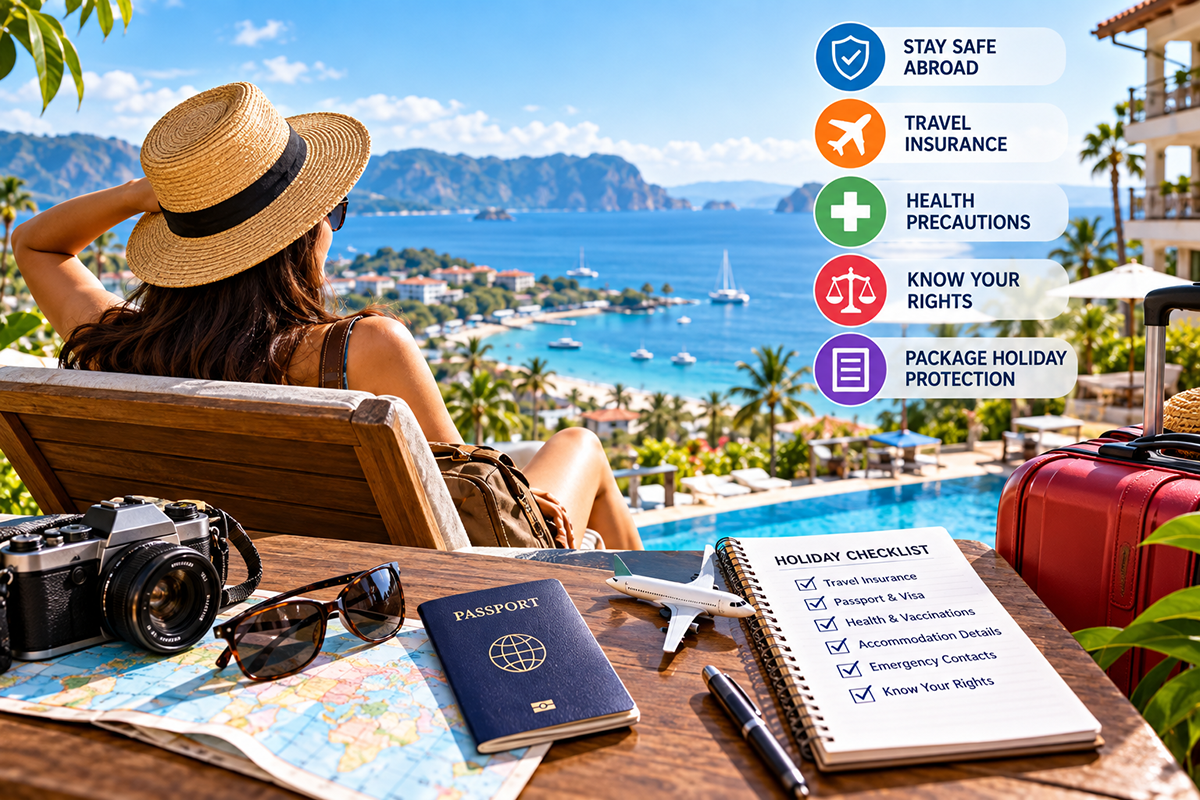
Holiday Safety and Your Rights: A Guide to Staying Safe Abroad
Going on holiday should be an opportunity to relax, explore new places and experience different cultures. However, good preparation can make a significant difference if you become ill, suffer an accident or experience problems with your accommodation or travel arrangements.
If you are travelling abroad from the UK, check the latest destination advice, understand your travel insurance and keep important documents accessible. The Foreign, Commonwealth & Development Office (FCDO) recommends researching entry requirements, safety, health risks and local laws before travelling. It also recommends arranging appropriate travel insurance before departure.
If you book a qualifying package holiday, you may also have important legal protections under UK package travel legislation.
What Is a Package Holiday?
A package holiday is not simply any holiday that includes more than one travel service.
Under the Package Travel and Linked Travel Arrangements Regulations 2018, a package generally combines at least two different types of travel services for the same trip or holiday. These can include:
- Passenger transport
- Accommodation
- Car rental or certain other motor-vehicle rental services
- Other tourist services that form an essential part of the package
The rules can also apply to certain combinations of services that a traveller purchases through a single booking process or from linked traders.
This is broader and more modern than the definition used in the original 2013 article. The 2018 regulations replaced the Package Travel, Package Holidays and Package Tours Regulations 1992.
Do Holiday Excursions Count?
Not every activity you purchase during your holiday automatically becomes part of your original package.
For example, if you independently book a scuba-diving trip, sightseeing excursion or other activity after arriving at your destination, whether the purchase forms part of the original package depends on how and when you booked the service and whether the legal definition of a package or linked travel arrangement is satisfied.
Therefore, do not assume that every excursion arranged locally receives the same protection as a service included in your package.
Keep your booking confirmations and receipts for separately purchased activities.
What Protection Does a Package Holiday Provide?
One of the most important protections under the 2018 Regulations concerns the organiser’s responsibility for the services included in the package.
The organiser is responsible for the performance of the travel services included in the package, even when another travel provider actually delivers those services.
If a service does not conform to the package contract, travellers may have rights that include a price reduction or compensation for damages, subject to the circumstances and exceptions set out in the regulations.
Travellers should also report problems to the organiser without undue delay while the holiday is taking place. This gives the organiser an opportunity to address the problem.
Why This Matters
Suppose your package includes accommodation and you encounter a serious problem with the hotel. Rather than dealing only with the individual hotel provider, the package organiser may have responsibilities under the regulations.
The precise legal position depends on the facts, the contract, the type of booking and the applicable law.
For serious injuries or disputes, obtain independent legal advice before deciding whether to pursue a claim.
Stay Safe Before You Travel
Good holiday safety begins before you leave home.
The FCDO’s current foreign travel checklist recommends researching your destination, checking travel warnings, confirming passport and visa requirements, arranging travel insurance and reviewing health advice.
Check Your Destination
Before departure, research:
- Entry requirements
- Visa requirements
- Local laws
- Safety and security information
- Health risks
- Recommended vaccinations
- Local emergency numbers
- Weather and natural hazards
- Transport arrangements
- Local customs
The FCDO updates country-specific travel advice when relevant information changes, so check the guidance close to your departure date.
Take Out Appropriate Travel Insurance
Travel insurance remains one of the most important parts of holiday preparation.
The FCDO recommends buying appropriate travel insurance before travelling abroad. Your policy should match your destination, itinerary and planned activities. You should also disclose relevant medical conditions and check exclusions carefully.
Your policy may provide cover for expenses such as:
- Emergency medical treatment
- Medical evacuation
- Repatriation
- Lost or stolen belongings
- Travel disruption
- Cancellation
- Certain adventure activities
The exact coverage depends on the policy.
A GHIC or EHIC is not a substitute for travel insurance. These cards can provide access to certain state healthcare arrangements in eligible European countries, but they do not generally cover private healthcare, repatriation or every travel-related expense.
Food Safety on Holiday
When travelling abroad, enjoying local cuisine is part of the experience, but unfamiliar foods and different hygiene standards can sometimes increase the risk of illness.
Food poisoning can result from food that has not been prepared or stored properly. NHS guidance says food poisoning is usually not serious and often improves within a week, although some cases require medical attention.
Pay attention to basic hygiene and food-safety conditions.
Potential Warning Signs
Be cautious if you notice:
- Poor personal hygiene among food handlers
- Food stored at inappropriate temperatures
- Food left uncovered for long periods
- Poor cleanliness around food-service areas
- Unclean utensils or serving equipment
- Questionable drinking-water hygiene
- Poor swimming-pool maintenance
- Animal waste around areas used for eating or recreation
One observation does not prove that a resort caused an illness. However, multiple hygiene concerns may justify taking extra care.
What Should You Do If You Become Ill?
If you develop diarrhoea, vomiting or other symptoms during your holiday, focus first on your health.
Drink enough fluids to reduce the risk of dehydration. If you are losing significant amounts of fluid through vomiting or diarrhoea, a pharmacist can advise you about oral rehydration solutions.
Seek medical assistance when symptoms are severe, persistent or otherwise concerning.
If you require medical treatment abroad, contact your travel insurer or assistance provider as soon as possible if your policy requires it. The FCDO recommends keeping medical records, receipts and doctors’ notes because your insurer may need them.
How to Document a Holiday Illness or Injury
If you believe your illness or injury resulted from problems with your package holiday, keep detailed records.
Useful evidence may include:
- Photographs or videos of relevant conditions
- Hotel or resort reports
- Medical records
- Doctors’ notes
- Medical invoices and receipts
- Prescriptions
- Travel insurance correspondence
- Emails with the tour operator
- Messages with holiday representatives
- Written complaints
- Booking confirmations
- Receipts for relevant expenses
- Names and contact details of witnesses
If possible, report the problem to your holiday representative or organiser while you are still away.
The 2018 Regulations require travellers to communicate a lack of conformity to the organiser without undue delay, taking the circumstances into account.
Make a Formal Complaint
If the problem remains unresolved, make a formal complaint to the appropriate holiday provider.
Keep a copy of:
- Your original complaint
- The provider’s response
- Photographs
- Medical evidence
- Receipts
- Booking documents
- Any correspondence with the organiser
Avoid relying only on telephone conversations. Written records can make it easier to establish what happened and when.
What If You Suffer a Serious Injury?
A serious injury abroad can involve several different legal issues.
Your potential rights may depend on:
- Whether you booked a package
- Where the incident occurred
- Who provided the service
- The terms of your travel contract
- The law governing the contract
- The circumstances of the accident
- Whether the organiser had responsibility under the package travel regulations
- Whether another country’s laws apply
The Package Travel Regulations can provide rights relating to package services, including price reductions and compensation in qualifying circumstances. However, they do not guarantee compensation for every accident or illness.
If you believe you have suffered significant injury or financial loss, consider obtaining advice from a solicitor who handles international travel or holiday injury claims.
Keep Your Medical Evidence
Medical evidence can be particularly important after an accident or illness.
If you receive treatment abroad, ask for copies of relevant medical documentation. Keep invoices and receipts for treatment and medication.
The FCDO specifically recommends keeping receipts and doctors’ notes when dealing with medical treatment abroad because your insurer may require them.
After returning home, speak to an appropriate healthcare professional if symptoms continue or your condition requires further assessment.
Be Careful With All-Inclusive Holidays
All-inclusive holidays can make budgeting easier because accommodation, meals and many drinks or activities may form part of the package price.
However, “all-inclusive” does not automatically mean every service or activity is covered by the Package Travel Regulations.
Check your booking documents to determine which services form part of your package.
You should also check whether activities such as:
- Scuba diving
- Jet skiing
- Cycling
- Quad biking
- Water sports
- Excursions
- Adventure activities
are included in your package or purchased separately.
Your travel insurance should also cover activities you plan to undertake. The FCDO advises travellers to check that their policy covers planned activities, including adventure sports where applicable.
Your Rights When a Package Service Goes Wrong
If a package service does not conform to the contract, the organiser may have obligations to put the problem right.
Depending on the circumstances, the traveller may have rights to:
- Have the problem remedied
- Receive an appropriate price reduction
- Receive compensation for qualifying damage
- End the package contract in certain circumstances
- Receive assistance
- Receive repatriation in applicable circumstances
The regulations contain exceptions and specific conditions, so the outcome depends on the circumstances of each case.
Package Travel Law Is Changing Again
There is another important update for anyone publishing or reading information about UK package holidays.
The government introduced the Package Travel and Linked Travel Arrangements (Amendment) Regulations 2026. These amendments are scheduled to come into force on 6 April 2027. They will make a number of changes to the existing 2018 framework.
The government previously consulted on reforms covering issues such as domestic packages, linked travel arrangements, insolvency protection and the scope of certain travel services.
This means travellers should check the law that applies at the time they book and travel rather than relying on older articles about package holidays.
Holiday Safety Checklist
Before leaving for your next holiday, use this checklist:
Before Booking
- Check the reputation and terms of the travel provider.
- Confirm whether you are booking a package.
- Read the cancellation and amendment conditions.
- Check what services are included.
- Consider appropriate travel insurance.
Prior to Departure
- Check current FCDO travel advice.
- Confirm passport validity.
- Check visa and entry requirements.
- Review health advice.
- Check vaccination recommendations.
- Check your insurance exclusions.
- Confirm emergency contact details.
- Keep digital and physical copies of important documents.
During Your Holiday
- Follow local safety advice.
- Take care around swimming pools and water activities.
- Follow food and drinking-water precautions.
- Use reputable providers for adventure activities.
- Report package problems promptly.
- Keep receipts and relevant evidence.
- Seek medical attention when necessary.
If Something Goes Wrong
- Prioritise your health and safety.
- Contact emergency services when necessary.
- Inform the holiday organiser promptly.
- Contact your insurer.
- Keep medical records and receipts.
- Photograph relevant conditions.
- Keep copies of complaints and correspondence.
- Seek independent legal advice for serious disputes or injuries.
Final Thoughts
A safe holiday starts with preparation.
Before travelling, research your destination, arrange appropriate insurance and understand what your holiday booking includes. The current Package Travel and Linked Travel Arrangements Regulations 2018 can provide significant protections for qualifying package holidays, including rights relating to the performance of included travel services.
However, not every holiday booking qualifies as a package, and not every illness or accident creates a legal claim.
If something goes wrong, document what happened, report problems promptly, keep your medical and financial records, and check your insurance policy.
Most importantly, keep current with official travel and legal guidance. The UK package travel framework is scheduled for further changes from April 2027, so older articles based on the 1992 regulations should not be treated as current legal guidance.
