
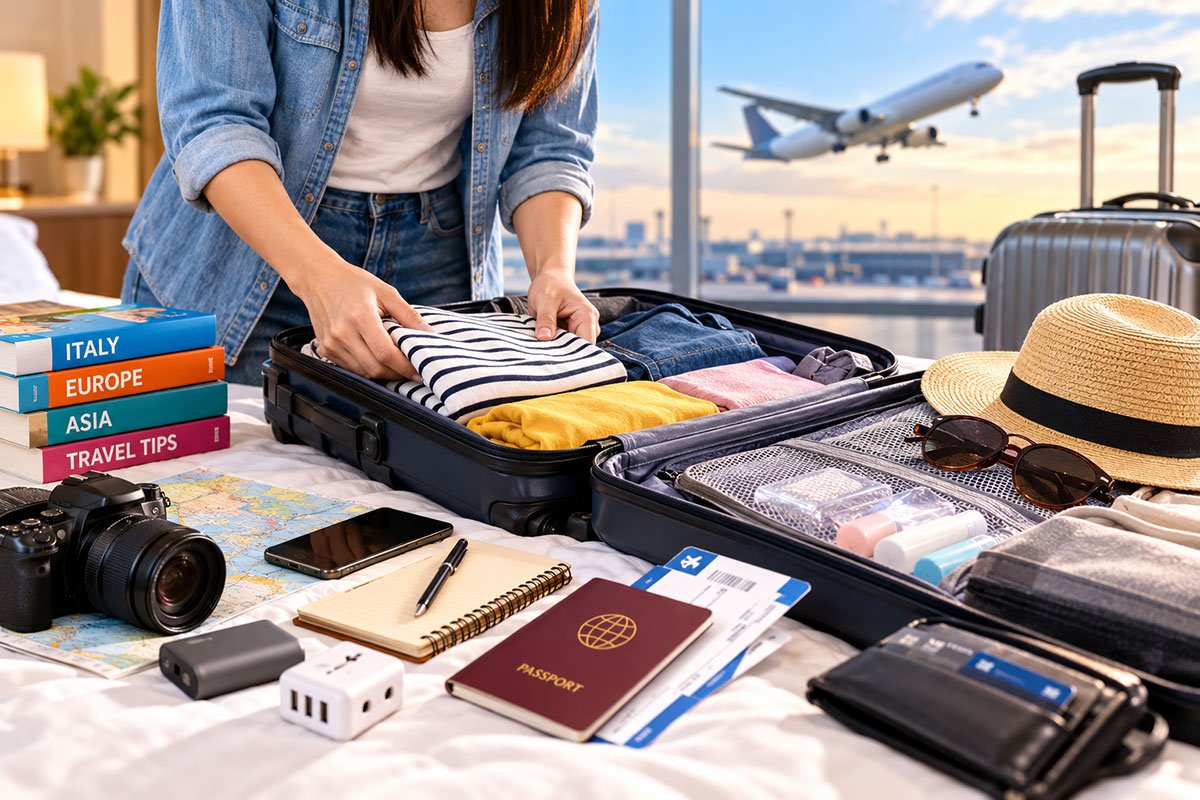
International Travel Packing Checklist for Your Next Trip
Preparing for an overseas trip can be exciting, but packing often creates unnecessary stress. A well-planned international travel packing checklist can help you organize everything before you leave home.
Many travellers wait until the last evening to pack their bags. This approach can lead to forgotten documents, unsuitable clothing or unnecessary items. A structured packing plan gives you time to check everything carefully.
You also do not need to pack everything you might possibly need. Most popular destinations have shops and pharmacies where travellers can purchase everyday items. Instead, focus on the documents, medicines, electronics and personal essentials that may prove difficult to replace.
Start With Your Travel Documents
Your passport should be the first item on your packing checklist. Check its validity well before your departure because some countries require passports to remain valid for a specific period after arrival or departure.
You should also check whether your destination requires a visa, electronic travel authorization or other entry document. Requirements can vary according to your nationality, destination and transit countries.
The IATA Travel Centre provides current information about passport, visa and health requirements using data gathered from official sources worldwide.
Keep your essential documents accessible throughout your journey. Important documents may include:
- Passport
- Visa or electronic travel authorization
- Flight and accommodation confirmations
- Travel insurance details
- Driving licence and International Driving Permit, if required
- Car rental confirmation
- Emergency contact information
- Copies of important medical documents
- Copies of prescriptions
Keep digital copies in a secure location as well. A printed backup can also help if you lose your phone or cannot access the internet.
Official travel guidance also recommends keeping backup access to important information such as accommodation details, flight information, passport details, contact numbers and insurance information.
Keep Important Items in Your Hand Luggage
Do not place everything important inside your checked suitcase.
Your hand luggage should contain the items you may need during the journey or cannot easily replace. This includes your passport, wallet, phone, essential medication and important travel documents.
Consider keeping the following items in your cabin bag:
- Passport and travel documents
- Wallet and payment cards
- Mobile phone
- Medication
- Prescription copies
- Essential electronics
- Glasses or contact lenses
- Travel insurance information
- A small amount of essential toiletries
- A change of clothes for longer journeys
This approach can also help if your checked luggage becomes delayed.
Protect Yourself Against Lost or Stolen Items
Losing your phone while travelling can create more problems than simply losing access to your camera and apps. Your phone may contain boarding passes, hotel details, banking applications, contacts and authentication tools.
Before leaving home, prepare an alternative way to access essential information.
Create a small emergency contact list containing:
- Family or friends
- Accommodation
- Travel insurance provider
- Bank or card issuer
- Airline
- Car rental company
- Local emergency services
- Relevant embassy or consulate
Keep a printed copy somewhere secure in your luggage. You can also store the information in a secure cloud service.
Avoid relying entirely on your phone for critical information.
Take Appropriate Travel Insurance
Travel insurance should form part of your preparation rather than an afterthought.
Choose coverage that matches your destination, trip length and planned activities. Depending on your circumstances, you may want protection for medical treatment, emergency evacuation, baggage problems, trip disruption and other unexpected expenses.
Official travel guidance recommends arranging appropriate travel insurance before travelling abroad and checking what the policy covers.
Save your insurer’s emergency contact number and policy details. Keep both digital and printed copies where practical.
Pack Medicines Carefully
If you take prescription medication, make it a priority when packing.
Keep essential medicines in your hand luggage rather than your checked suitcase. The CDC recommends carrying enough medicine for the entire trip, plus extra in case of delays. It also recommends keeping medicines in their original labelled containers and carrying copies of prescriptions.
Medicine regulations also differ between countries. A medicine that is legal in your home country may have restrictions at your destination.
Before departure, check the destination country’s rules. You should also check the rules for countries where you have a layover.
Consider packing:
- Prescription medicines
- Copies of prescriptions
- Basic first-aid supplies
- Any required medical documents
- Glasses or contact lenses
- Essential personal healthcare products
If you need temperature-sensitive medication, check the manufacturer’s storage instructions and plan how you will keep it at the correct temperature.
Check Electronics and Battery Rules
Modern travellers often carry several electronic devices. Your phone, laptop, tablet, camera, smartwatch and headphones can quickly add weight to your hand luggage.
Take only the electronics you genuinely need.
More importantly, pay attention to lithium-battery rules. IATA advises passengers to carry power banks and spare batteries in hand luggage rather than checked baggage.
In 2026, international aviation rules also introduced additional restrictions on power banks. ICAO’s updated requirements limit passengers to no more than two power banks and prohibit passengers from recharging power banks during a flight.
Airlines and national authorities can impose additional restrictions. Always check your airline’s current requirements before travelling.
Organize Toiletries and Liquids
Toiletries can occupy more space than expected, especially when travelling with several personal-care products.
Pack only what you need and use travel-size containers where appropriate.
Common items include:
- Toothbrush and toothpaste
- Shampoo
- Soap or body wash
- Deodorant
- Moisturizer
- Sunscreen
- Shaving products
- Basic cosmetics
- Personal hygiene products
Airport security rules for liquids vary by country and airport. In many locations, carry-on liquids must remain in containers of no more than 100 ml and fit within a transparent resealable bag. IATA and European aviation guidance recommend checking the rules that apply to your specific departure airport.
Do not assume that a rule at one airport applies everywhere.
Choose Clothing Based on the Destination
Clothing should match your destination, season and planned activities.
Check the weather forecast before packing. Think beyond daytime temperatures because evenings can become considerably cooler in some destinations.
A practical clothing selection might include:
- Everyday shirts or tops
- Trousers or shorts
- Underwear
- Socks
- Comfortable walking shoes
- Sleepwear
- Light jacket or sweater
- Weather-appropriate outerwear
- Swimwear, if required
- Smart clothing for restaurants or events
Layering can help you save space. A lightweight shirt, sweater and jacket can provide more flexibility than several bulky items.
Also consider local customs. Some destinations require visitors to dress more conservatively when entering religious or cultural sites.
Pack Shoes Carefully
Shoes can take up considerable space in your suitcase.
Try to limit yourself to versatile footwear that suits several activities. Comfortable walking shoes are particularly useful when exploring cities or sightseeing destinations.
If you need formal shoes, hiking footwear or beach sandals, consider whether you will actually use them enough to justify the additional weight.
Place shoes inside reusable bags to keep your clothes clean.
Think About Money and Payment Options
Do not rely on a single payment method when travelling internationally.
Carry at least one primary payment card and consider having a backup card stored separately. Depending on your destination, a small amount of local currency can also be useful for taxis, public transport, small shops or other situations where cards may not be accepted.
Before leaving, check whether your bank requires you to activate international usage or whether additional fees apply to overseas transactions.
It is also sensible to know how you will access emergency funds if your main card is lost or blocked.
Make a Final Packing Checklist
Once everything is packed, perform one final check.
A simple checklist can include:
Documents
- Passport
- Visa or entry authorization
- Flight confirmation
- Hotel confirmation
- Travel insurance
- Driving documents
Money
- Bank cards
- Backup card
- Local currency
- Emergency funds
Health
- Prescription medicines
- Prescriptions
- First-aid essentials
- Glasses or contact lenses
Electronics
- Smartphone
- Chargers
- Travel adapter
- Camera
- Headphones
- Power bank, if permitted
Clothing
- Everyday clothes
- Underwear
- Comfortable shoes
- Jacket or sweater
- Weather-appropriate clothing
- Formal or cultural clothing when necessary
Personal items
- Toiletries
- Sunglasses
- Travel accessories
- Reusable water bottle
- Any destination-specific essentials
Check Your Destination Before You Leave
Your packing list should depend on where you are going.
Research the destination before departure and check entry requirements, local laws, health information, weather conditions and transport arrangements.
Also check the requirements for every country on your itinerary if you have connecting flights or multiple destinations.
For medicines, vaccinations and other health requirements, consult reliable official sources well before departure. Requirements can change, and some preparations may take time.
Pack Less and Plan Better
Packing for an overseas trip does not have to become a stressful last-minute task.
Start early, organize your documents and separate essential items from things you can easily purchase at your destination. Keep important documents, medicines and critical electronics accessible in your hand luggage.
Your international travel packing checklist should also account for current airline and airport rules. Pay particular attention to lithium batteries, power banks and liquids because security requirements can change.
A structured approach allows you to travel with fewer worries and makes it easier to focus on the experience waiting at your destination.
