
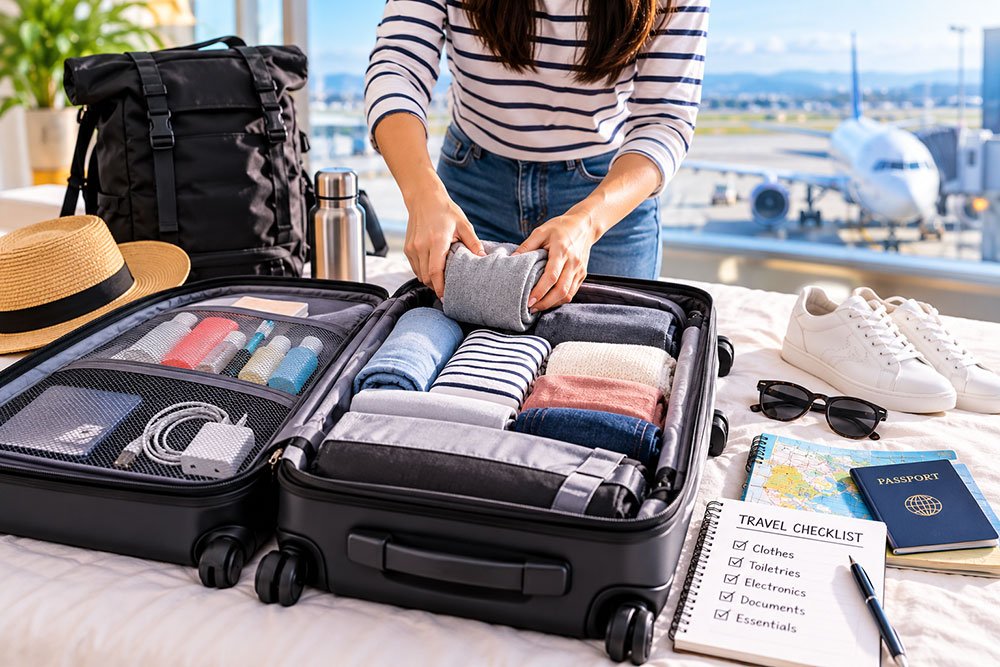
How to Pack Light for Travel: A Complete Guide
Packing light can make almost any trip easier. Whether you are taking a weekend city break, a business trip or a long backpacking adventure, carrying less luggage gives you more freedom to move around.
However, packing light does not mean leaving important items at home. The goal is to choose versatile clothing, practical accessories and essential travel items while avoiding things you probably will not use.
Airlines have also made baggage allowances an important part of trip planning. Carry-on size and weight limits vary between airlines, cabin classes and aircraft, so travellers should always check their airline’s current baggage policy before choosing a suitcase or backpack.
If you want to learn how to pack light for travel, these simple strategies can help you make the most of limited luggage space.
Why Packing Light Makes Travel Easier
Travelling with a smaller bag can provide several practical benefits.
You can move more easily through airports, train stations and busy streets. You may also spend less time waiting at baggage reclaim when you travel with cabin baggage only.
A lighter bag can also make transfers easier. If you are moving between hotels, taking public transport or walking through a city, carrying less luggage can make the journey more comfortable.
There is another advantage: packing light forces you to think carefully about what you actually need.
Instead of packing an outfit for every possible occasion, you can select clothing that works in several situations.
-
Choose Your Luggage First
One of the most useful packing light tips is to choose your luggage before selecting your clothes.
If you start with a large suitcase, it can be tempting to fill the available space. A smaller bag naturally encourages you to be more selective.
However, do not buy a cabin bag based on a generic “airline-approved” size alone. There is no single universal cabin-bag allowance for every airline.
IATA states that carry-on allowances can vary by airline, cabin class and aircraft type. Some airlines also impose specific weight limits.
Before purchasing luggage, check:
- Maximum cabin-bag dimensions
- Weight allowance
- Number of cabin bags permitted
- Personal-item allowance
- Checked-baggage allowance
- Rules for connecting flights
If your journey involves several airlines, check the rules for each carrier.
-
Pack for One Week
You do not necessarily need a separate outfit for every day of a long trip.
Instead, consider packing approximately one week’s worth of versatile clothing and arranging laundry during the journey.
For longer holidays, washing clothes can dramatically reduce the amount of luggage you need.
A basic clothing selection might include:
- Several versatile tops
- Two or three pairs of trousers or shorts
- Underwear and socks
- One smart outfit
- Lightweight sleepwear
- A sweater or jacket
- Comfortable walking shoes
- Activity-specific clothing when necessary
The exact amount depends on your destination, climate and access to laundry facilities.
For a longer trip, washing and reusing clothes is usually more practical than carrying several weeks of clothing.
-
Choose Versatile Clothing
When you pack light for travel, versatility matters more than quantity.
Choose clothes that can be combined in several ways. Neutral colours can make this easier because different tops, trousers and jackets can work together.
For example, a simple shirt could work for sightseeing during the day and a casual dinner in the evening.
Instead of packing five different outfits, think about creating several combinations from a smaller collection of clothes.
Layer Instead of Overpacking
Layers are particularly useful when travelling through different climates.
A lightweight T-shirt can work in warm weather. It can also become a base layer under a sweater or jacket when temperatures fall.
For colder destinations, consider:
- Lightweight thermal layers
- Merino wool
- Fleece
- Packable jackets
- Weather-resistant outer layers
This approach can be much more efficient than carrying several bulky sweaters.
-
Pack According to the Destination
Your packing list should reflect the actual trip.
A beach holiday requires different clothing from a winter city break. A business conference requires different footwear from a hiking trip.
Before packing, consider:
- Weather
- Local climate
- Planned activities
- Cultural expectations
- Accommodation facilities
- Laundry availability
- Trip duration
- Access to shops at your destination
Check the weather forecast before leaving and adjust your luggage accordingly.
Do not pack specialist equipment unless you genuinely need it. However, essential activity-specific equipment should always take priority over unnecessary clothing.
-
Keep Business Travel Simple
Business travellers often find it difficult to pack light because they need to look professional.
The solution is to create a small capsule wardrobe rather than packing a separate outfit for every meeting.
A neutral suit or coordinated jacket and trousers can work with several shirts or blouses.
For example, you might pack:
- One versatile suit or blazer
- Two or three shirts or blouses
- One smart pair of trousers or skirt
- One casual outfit
- One pair of smart shoes
- One comfortable travel shoe
Wear your heavier jacket or blazer during the journey if practical. This saves suitcase space and keeps the garment from becoming excessively compressed.
Accessories can also change the appearance of an outfit without taking much room.
-
Limit Your Shoes
Shoes are among the easiest items to overpack because they are bulky and heavy.
For many trips, two pairs may be enough:
- Comfortable walking shoes for travel and sightseeing
- A smart or activity-specific pair when necessary
Wear your heaviest shoes while travelling whenever practical.
Before adding another pair to your suitcase, ask yourself whether you will actually use it.
If the answer is no, leave it behind.
-
Reduce Toiletries
Toiletries can take up surprising amounts of luggage space.
Use smaller containers and take only what you are likely to need.
Consider:
- Travel-size shampoo
- Small toothpaste
- Deodorant
- Moisturiser
- Sunscreen
- Basic personal-care products
Many hotels and destinations also provide or sell common toiletries, although you should not rely on this for essential medication or specialist products.
Check Current Liquid Rules
Do not assume that the same hand-luggage liquid rules apply at every airport.
At many airports, liquids in cabin baggage are restricted to containers of no more than 100 ml. However, airport procedures can differ, and some airports have introduced different screening arrangements. UK government guidance specifically advises passengers to check the rules at their departure, transfer and return airports.
The European Union currently states that liquids carried through security generally need to be in individual containers of no more than 100 ml, with specific exemptions.
Therefore, check the current requirements for every airport on your itinerary before packing liquids.
-
Use Packing Cubes Carefully
Packing cubes can make a small suitcase easier to organise.
They allow you to separate categories such as:
- T-shirts
- Underwear
- Trousers
- Accessories
- Electronics
However, packing cubes do not create extra luggage allowance. They simply help organise the space you already have.
Do not use them as an excuse to pack more.
A useful approach is to place similar items together and keep frequently used items near the top of the bag.
-
Use Your Personal Item Wisely
If your airline allows a personal item in addition to a cabin bag, use that space strategically.
Depending on the airline’s rules, a small personal bag may hold:
- Passport and travel documents
- Phone
- Wallet
- Medication
- Chargers
- Headphones
- Laptop or tablet
- Small toiletries
- Travel essentials
Always check the airline’s current dimensions and weight restrictions before relying on a second bag. Allowances vary between carriers.
-
Keep Important Items Accessible
Some items should not be buried at the bottom of your suitcase.
Keep important documents, essential medicines, valuables and necessary electronics accessible during your journey.
For example, you may want your passport, boarding pass, phone, wallet and medication in a small personal bag.
If you take prescription medicine, check the requirements of your destination before travelling. Some countries have specific rules for certain medicines.
UK government guidance also notes that essential liquid medicines can be carried in hand luggage above the usual liquid limit, subject to requirements and screening.
-
Wear Your Bulkiest Items
One simple way to save suitcase space is to wear your heavier clothing during transit.
Depending on the weather, this could include:
- Jacket
- Blazer
- Boots
- Heavier trousers
- Sweater
You can always remove layers during the journey if you become uncomfortable.
However, comfort should come first. Do not wear several heavy layers simply to avoid putting them in your luggage.
-
Do Not Pack for Every Possible Situation
Overpacking often happens because travellers prepare for situations that are unlikely to occur.
Instead, concentrate on the activities you know you will do.
For example, if you are taking a city break, you probably do not need clothing for a formal dinner, beach day, hiking trip and sporting event unless those activities are actually part of your itinerary.
A useful question is:
“Will I realistically use this during my trip?”
If the answer is no, leave it at home.
-
Remember That You Can Buy Some Things
You do not need to take enough supplies for every day of a long trip.
Common items such as basic toiletries, snacks, simple clothing and other everyday products can often be purchased at your destination.
However, availability and prices vary. Do not assume that essential medication, specialist equipment or specific personal-care products will be easy to replace.
Pack the things you cannot afford to be without.
-
Pack Electronics Efficiently
Electronics can quickly turn a small bag into a heavy one.
Before leaving, decide which devices you genuinely need.
A typical travel setup might include:
- Smartphone
- Charger
- Charging cable
- Power bank
- Travel adapter
- Headphones
- Laptop or tablet if required
Avoid carrying separate chargers for devices that can share compatible cables or adapters.
Also check airline rules for batteries and electronic devices before flying. IATA advises travellers to check airline requirements, particularly for smart luggage and lithium batteries.
-
Keep a Small Laundry Kit
If you plan to travel for more than a week, a small laundry kit can be useful.
A few travel-sized laundry supplies can help you wash lightweight clothing in your hotel or accommodation when appropriate.
You can also use local laundry services.
Washing clothes during a longer trip means you can pack fewer items and keep your luggage manageable.
A Simple Packing Formula
If you struggle to decide what to take, use this simple approach:
Plan → Select → Reduce → Organise → Check
Plan
Write down your destination, duration, activities and expected weather.
Select
Choose clothing and equipment that directly match your plans.
Reduce
Remove duplicate items and anything you are unlikely to use.
Organise
Place similar items together and keep essential items accessible.
Check
Compare your packed bag with your airline’s current baggage allowance before leaving home.
Packing Light for Different Types of Trips
Weekend City Break
Prioritise:
- Comfortable shoes
- Two or three versatile outfits
- Light jacket
- Toiletries
- Phone and charger
- Essential documents
Business Trip
Prioritise:
- One versatile suit or smart outfit
- Shirts or blouses
- Smart shoes
- Comfortable travel clothing
- Laptop and charger
- Essential documents
Long Backpacking Trip
Prioritise:
- Lightweight clothing
- Versatile layers
- Comfortable footwear
- Essential toiletries
- Travel documents
- Basic health supplies
- Electronics you genuinely need
Plan to wash clothes instead of carrying several weeks of clothing.
Beach Holiday
Prioritise:
- Swimwear
- Lightweight clothing
- Sandals
- Comfortable walking shoes
- Sunscreen
- Hat
- Sunglasses
- Lightweight evening clothing
The Final Packing-Light Checklist
Before closing your suitcase, ask yourself:
- Do I really need every item?
- Can one item serve several purposes?
- Can I wear this during travel instead?
- Can I wash this during the trip?
- Can I buy this easily at my destination?
- Does my luggage meet my airline’s current size and weight limits?
- Are my important documents accessible?
- Are my medicines packed appropriately?
- Have I checked the latest airport security rules?
If you can answer these questions confidently, you are probably ready to travel.
Final Thoughts on Packing Light
Learning how to pack light for travel is less about owning specialist luggage and more about making better choices.
Choose versatile clothing. Limit your shoes. Use layers. Reduce toiletries. Plan to wash clothes during longer trips and avoid packing items simply because you might use them.
Most importantly, check your airline’s current baggage allowance before you travel. There is no universal cabin-bag size or weight that applies to every airline. IATA confirms that baggage conditions remain airline-specific.
Packing light does not mean travelling without what you need. It means carrying only what adds genuine value to your journey.
A lighter bag can make airports, public transport, hotel changes and sightseeing easier. Once you develop a simple packing system, you may find that you need much less luggage than you expected.
