
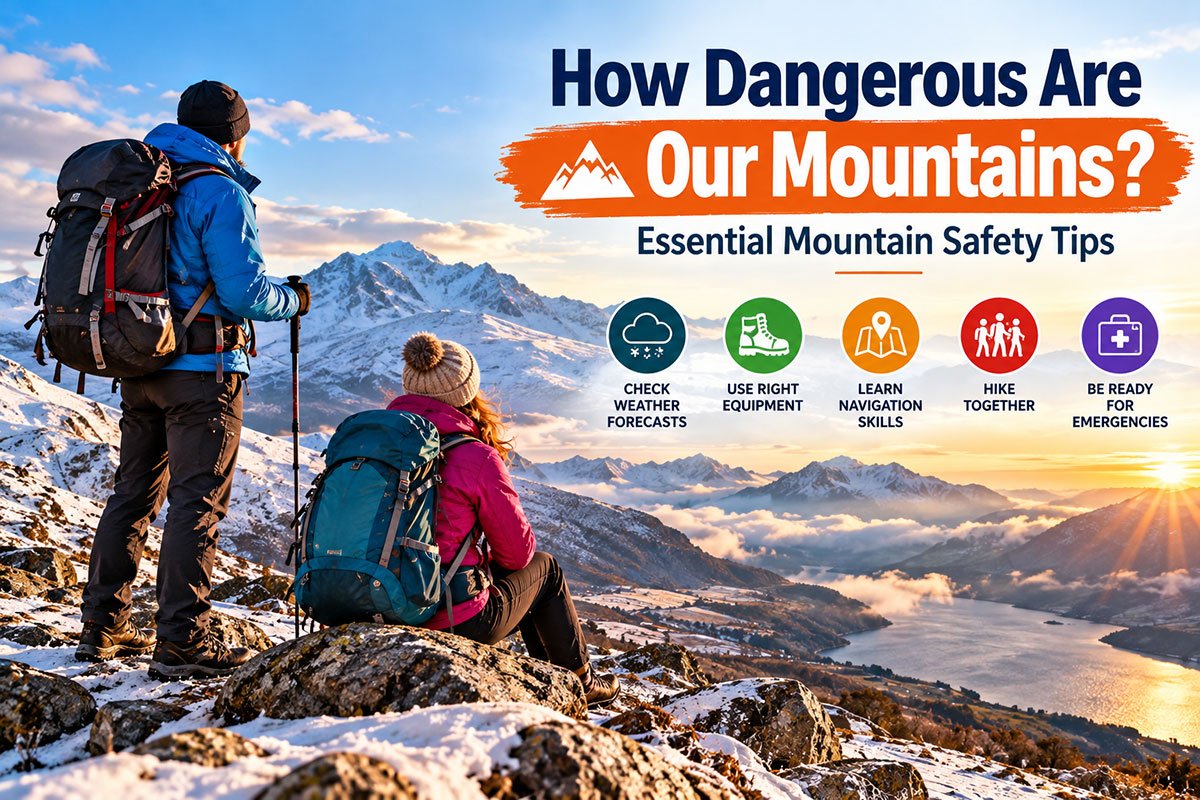
How Dangerous Are Our Mountains? Essential Mountain Safety Tips
Mountains offer some of the most spectacular landscapes in the United Kingdom. From the Scottish Highlands to the rugged peaks of Wales and the Lake District, these environments attract walkers, climbers and outdoor enthusiasts throughout the year.
However, mountain adventures also involve risks. Sudden weather changes, poor visibility, slippery terrain and freezing temperatures can turn an enjoyable walk into a dangerous situation.
Scotland’s mountains can be particularly challenging during winter. Snow, ice, strong winds and limited daylight demand additional preparation and skills. Even experienced climbers must assess conditions carefully before setting out.
Understanding mountain hazards does not mean avoiding the hills altogether. Instead, learning essential mountain safety tips can help you make informed decisions, recognise potential dangers and prepare for changing conditions.
-
Understand the Risks of Changing Mountain Weather
Mountain weather can change rapidly, sometimes within minutes. A clear morning may develop into a cold, wet and windy afternoon. Fog or falling snow can also reduce visibility dramatically.
Conditions at higher elevations can differ significantly from those in nearby towns and valleys. Strong winds, falling temperatures and sudden changes in cloud cover can make familiar routes difficult to navigate.
Before your journey, check the Met Office mountain weather forecasts. These forecasts provide information about wind, temperature, visibility, freezing levels and potential hazards across several UK mountain regions.
Pay particular attention to:
- Strong winds: Gusts can affect balance, especially on exposed ridges and near steep drops.
- Poor visibility: Fog and low cloud can make navigation difficult.
- Freezing temperatures: Wet ground can freeze, creating dangerous icy surfaces.
- Heavy precipitation: Rain and snow can increase exposure and make paths slippery.
- Reduced daylight: Short winter days leave less time to complete a route safely.
Check the forecast before leaving and review it again on the day of your walk. Always prepare an alternative route. If conditions deteriorate, be willing to turn back rather than continue towards the summit.
For further guidance, read the Met Office mountain safety advice.
-
Wear Appropriate Clothing and Footwear
Suitable clothing is essential for mountain safety, particularly during colder months. Ordinary trainers or lightweight casual shoes may be unsuitable for rough terrain, snow and ice.
Choose footwear according to the route, ground conditions and equipment requirements. Sturdy hiking boots can provide support and protection. Winter mountaineering may require specialised boots compatible with crampons.
Layering is another important part of mountain preparation. Multiple layers allow you to adjust your clothing as temperatures and activity levels change.
Your clothing should generally include:
- A moisture-managing base layer.
- An insulating mid-layer, such as fleece.
- A waterproof and wind-resistant outer layer.
- A warm hat and gloves.
- Spare dry clothing.
- Suitable hiking socks and footwear.
Carry additional insulation even during summer. Temperatures can fall considerably at higher elevations, particularly when wind and rain increase heat loss.
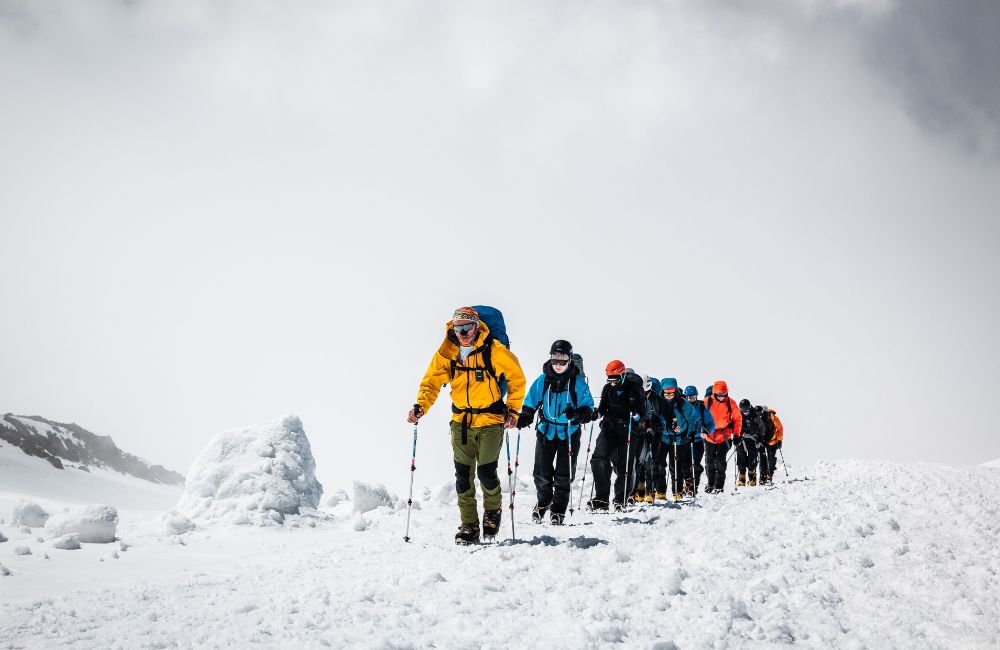
Winter equipment requires training
Crampons and ice axes can be essential on appropriate winter routes. However, carrying them does not automatically make a journey safe.
You need to understand how to select, fit and use the equipment correctly. Practise essential winter skills before entering terrain where mistakes could have serious consequences.
The Mountaineering Scotland ThinkWINTER campaign provides practical advice on winter clothing, equipment, route planning and mountain conditions.
If you lack winter mountaineering experience, choose a suitable lower-level route or hire a qualified mountain leader or instructor.
-
Learn Navigation Skills Before Setting Out
Navigation becomes more challenging when snow covers paths, fog obscures landmarks or darkness approaches.
Although smartphones and GPS devices can be useful, they should not be your only navigation tools. Batteries can fail, devices can become damaged and mobile coverage may be unavailable.
Carry a suitable map and compass, and learn how to use them confidently. If you use a GPS device, download the required maps beforehand and make sure you understand its functions.
Before leaving, study your planned route and identify important features, alternative paths and possible escape routes.
You should also estimate how long the walk will take, including breaks and difficult sections. Start early enough to allow for changing conditions and slower progress.
The Mountaineering Scotland winter planning guide explains why route planning should consider the people in your group, their experience, terrain and alternative options.
-
Recognise Snow, Ice and Avalanche Hazards
Winter mountains can present hazards that are less common during warmer months. Snow may conceal paths, while ice can make steep slopes and exposed ridges extremely dangerous.
Avalanches are another risk in snowy mountain terrain. Their likelihood depends on factors such as snowpack structure, recent snowfall, wind loading, temperature changes and slope conditions.
Scotland has a dedicated forecasting service, the Scottish Avalanche Information Service (SAIS). During its winter forecasting season, it publishes regional avalanche information for key mountain areas.
Before attempting a winter route, consult the Scottish Avalanche Information Service and review its avalanche awareness guidance.
Remember to:
- Check the relevant avalanche forecast when available.
- Learn how snow conditions can affect slope stability.
- Avoid terrain beyond your experience and training.
- Carry appropriate safety equipment when the activity requires it.
- Understand how to use that equipment before entering hazardous terrain.
An avalanche forecast is only one part of the decision-making process. Conditions can vary across a mountain, so you must also assess the terrain and snowpack during your journey.
If you are unfamiliar with avalanche assessment, avoid avalanche-prone terrain and seek instruction from a qualified professional.
-
Build Experience Through Training and Guided Walks
Mountain skills develop through practice, preparation and sound judgement. Reading about safety is useful, but it cannot replace practical experience in navigation, weather assessment and movement across difficult terrain.
If you are new to hillwalking, start with shorter routes that match your fitness and experience. Gradually progress to more demanding walks as your skills improve.
Training courses can teach you how to use a map and compass, choose appropriate equipment and recognise common hazards. Winter courses may also cover crampon use, ice-axe techniques and avalanche awareness.
An experienced mountain leader can help you understand local conditions and make better route decisions. Guided walks are particularly useful when you are unfamiliar with Scottish winter mountains.
Visit Mountaineering Scotland to explore mountain safety advice and skills resources.
Remember that experience alone does not eliminate risk. Even skilled mountaineers must adapt their plans to the weather, terrain and abilities of their group.
-
Avoid Walking Alone When You Lack Experience
Walking with others can provide practical support if someone becomes injured, lost or exhausted. An experienced companion may also help you recognise hazards and make safer decisions.
Beginners should consider joining an organised group or hiring a qualified guide. Choose companions whose experience and fitness are suitable for the intended route.
Before departure, tell a reliable person where you are going, which route you plan to follow and when you expect to return.
Agree on a turnaround time and make sure everyone understands that the group may need to abandon the summit attempt.
If you do walk alone, take additional precautions. Share your itinerary, carry suitable emergency equipment and avoid routes that exceed your navigation skills or experience.
Mountain safety is not just about reaching the summit. It is also about recognising when conditions, fatigue or other circumstances make continuing unsafe.
-
Carry Essential Supplies and Emergency Equipment
A well-prepared mountain walker should carry enough equipment to manage unexpected delays or changing weather.
Your equipment should reflect the route, season, forecast and length of the journey.
Important items may include:
- A map and compass.
- A fully charged mobile phone.
- A headtorch with spare batteries, where appropriate.
- Extra food and drinking water.
- Waterproof clothing and spare insulation.
- A first-aid kit and necessary personal medication.
- An emergency shelter suitable for the conditions.
- A whistle and any specialist equipment required by the route.
Keep your phone protected from moisture and cold. A power bank can provide additional battery capacity, but do not rely on electronic devices as your only means of navigation or emergency preparation.
Check your equipment before leaving home. Make sure you know how to use it and that everything is suitable for the conditions you expect to encounter.
For a more detailed equipment guide, visit Mountain Rescue England and Wales: Stay Safe.
-
Know What to Do in a Mountain Emergency
If someone becomes injured, lost or seriously affected by cold weather, remain calm and assess the situation.
Protect the group from further danger where possible. Provide appropriate first aid, use available insulation and shelter, and avoid unnecessary movement if it could worsen an injury.
In the UK, call 999 or 112, ask for the police and request Mountain Rescue. Be prepared to provide your location, the nature of the emergency, the number of people involved and a contact number.
The official Mountain Rescue England and Wales emergency guidance explains what information to provide and how to request assistance.
If you cannot identify your exact position, explain the landmarks, route details or GPS coordinates you have available. Follow the emergency operator’s instructions.
Do not continue moving simply because you feel pressure to finish the route. Your safety and the safety of your group must come first.
Final Thoughts
So, how dangerous are our mountains? The answer depends on the terrain, weather, season, equipment and experience of the people undertaking the journey.
Mountains are not places that everyone must avoid. However, they deserve respect, preparation and careful decision-making.
By checking mountain forecasts, carrying suitable equipment, developing navigation skills and choosing routes that match your abilities, you can reduce avoidable risks.
Winter conditions require particular care. Snow, ice, strong winds and limited daylight can transform familiar paths into challenging terrain.
Plan carefully, remain flexible and recognise when turning back is the safest decision. With the right preparation and a realistic understanding of your abilities, you can enjoy the UK’s mountains more responsibly throughout the year.
Official Mountain Safety Resources
For reliable information before your next mountain adventure, consult these official resources:
- Met Office — Mountain Weather Forecasts
- Mountaineering Scotland — ThinkWINTER
- Scottish Avalanche Information Service
- Mountain Rescue England and Wales — Safety Advice
- Mountain Rescue England and Wales — Getting Help
