
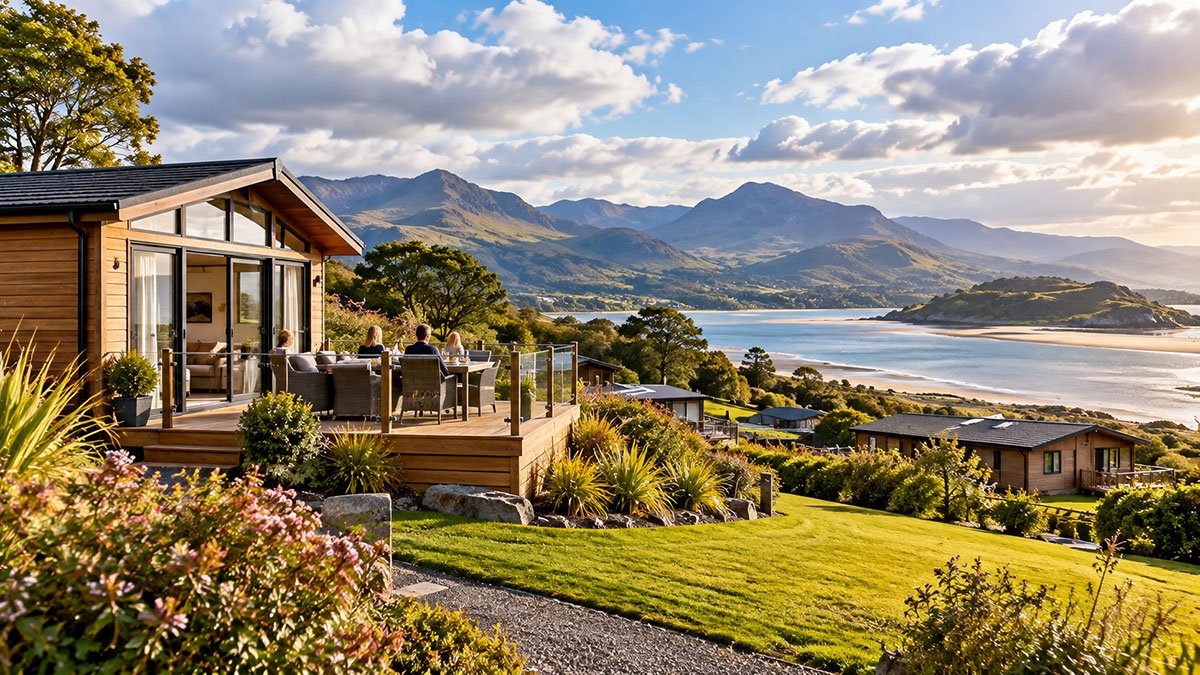
A modern holiday lodge provides a comfortable base for exploring the mountains, coastline and historic attractions of North Wales.
Buying a Lodge in North Wales: What to Know Before You Buy
North Wales is an appealing destination for anyone who enjoys mountains, beaches, historic towns and outdoor adventures. The region combines the landscapes of Eryri National Park, the coastline of North Wales and the Isle of Anglesey with historic attractions including some of Wales’s most important castles.
For people who visit regularly, owning a lodge in North Wales can provide a private base for weekend breaks and longer holidays. A lodge can also offer a practical alternative to booking accommodation each time you travel.
However, buying a holiday lodge is different from buying a conventional house. The lodge may sit on a holiday park rather than land that you own, and its use can be governed by planning conditions, site rules and a pitch licence agreement.
That makes the details of the purchase just as important as the appearance of the lodge itself.
Why North Wales Is Attractive for Lodge Owners
The strongest reason to consider a lodge in North Wales is the variety of experiences available within the region.
Eryri offers mountains, valleys, lakes and outdoor activities. Along the coast, visitors can explore beaches, seaside towns and sections of the Wales Coast Path. Historic destinations such as Conwy and Caernarfon add castles and heritage to the itinerary, while Anglesey offers coastal scenery, beaches and walking routes.
North Wales is also a year-round destination. Summer is popular for beach trips and outdoor activities, while autumn and winter bring quieter landscapes and a different atmosphere in the mountains and coastal towns.
For lodge owners, this variety can make repeated visits more appealing than staying in the same type of accommodation on every trip.
What Exactly Are You Buying?
Before looking at individual lodges, understand what the purchase actually includes.
A holiday lodge or static caravan may be privately owned while the pitch beneath it remains controlled by the holiday park. In many cases, the buyer enters into a separate agreement governing the right to keep and use the lodge on that pitch.
Current consumer guidance for holiday parks recognises that purchases can involve both the purchase of the lodge and a pitch licence agreement. The terms of those arrangements can be crucial to the value and usability of the purchase.
This is why the phrase “own your own lodge” should not automatically be interpreted as owning a conventional residential property.
Read the documentation carefully before paying a deposit.
Holiday Lodge or Residential Home?
This is one of the most important distinctions to understand.
A lodge on a holiday park may be intended for holiday use rather than permanent residential occupation. The permitted use depends on the planning permission, site licence and contractual terms applying to the particular park.
Do not assume that a lodge can be used as your main residence simply because it looks similar to a modern bungalow.
Likewise, do not assume that a lodge marketed as “all year round” gives you unrestricted residential rights. “Open all year” and “permitted as a permanent residence” are not necessarily the same thing.
Ask the park operator for written confirmation of:
- Permitted occupancy period
- Whether permanent residential use is prohibited
- Any minimum or maximum stay rules
- Seasonal closure dates, if applicable
- Planning restrictions
- The terms of the pitch licence
This is one area where independent legal advice can be worthwhile before completing a purchase.
Check the Park’s Planning and Site Licence Arrangements
A reputable holiday park should be able to provide information about its planning permission and site licensing arrangements.
Planning permission controls how land may be used, while the site licence covers the operation of the relevant caravan site. The details can affect how and when a lodge may be occupied.
Do not rely solely on a sales brochure or verbal assurances.
Ask for the relevant documents and make sure the permitted use matches the way you intend to use the lodge.
This is especially important in North Wales, where planning policies concerning second homes and holiday accommodation have become more significant in some communities.
Eryri National Park, for example, introduced an Article 4 Direction covering certain changes of use involving houses as second homes and holiday accommodation. A lodge on a dedicated holiday park may have different planning arrangements, so buyers should establish the specific status of the unit rather than applying rules for ordinary houses to every type of holiday accommodation.
Choosing the Right Location in North Wales
The best location depends on how you expect to use your lodge.
Eryri and the Mountain Areas
A lodge near Eryri can suit owners who enjoy walking, cycling, scenic drives and mountain landscapes.
The area provides access to Wyddfa, lakes, valleys, villages, historic sites and outdoor attractions.
However, mountain regions can feel very different during peak seasons. Think about road access, parking, weather conditions and how close you want to be to shops and services.
A beautifully positioned lodge may become less convenient if every shopping trip requires a long drive.
North Wales Coast
Coastal locations appeal to people who want beaches, sea views and easy access to seaside towns.
Llandudno, Colwyn Bay and the wider North Wales coastline provide beaches, promenades, coastal walks and attractions. Coastal parks can also make attractive bases for exploring inland destinations.
When viewing a lodge near the sea, think beyond the view. Consider exposure to wind, salt air, drainage, access during severe weather and the condition of outdoor decking and exterior materials.
Anglesey
The Isle of Anglesey offers a different pace and plenty of opportunities for coastal walks, beaches and wildlife experiences.
It can be a good choice for owners who want a quieter base while remaining within reach of mainland North Wales.
Check journey times carefully, especially if you expect to travel frequently for short weekend stays.
Conwy and the North Coast
The Conwy area offers a useful combination of coast, countryside, heritage and access to Eryri.
Conwy Castle, Llandudno and the surrounding coastline provide plenty of things to do without requiring a long drive for every activity.
For families, this balance between attractions and outdoor space can be particularly useful.
New or Used Lodge: Which Is Better?
Both options can make sense.
A new lodge allows you to choose a current model and often offers modern layouts, appliances and finishes. It may also come with manufacturer warranties, depending on the purchase arrangement.
A used lodge can offer a lower purchase price, but age and condition become much more important.
Before buying a pre-owned lodge, inspect:
- Exterior cladding
- Roof condition
- Windows and doors
- Flooring
- Plumbing
- Heating system
- Electrical installation
- Kitchen appliances
- Bathroom fittings
- Decking
- Steps and access
- Signs of damp or water damage
Ask how old the lodge is, who manufactured it and whether documentation for servicing or previous repairs is available.
Do not judge a used lodge entirely by its interior decoration. Cosmetic improvements can make an older unit look impressive while hiding more expensive maintenance issues.
Understand the Total Cost of Ownership
The purchase price is only one part of the budget.
Before committing to a lodge, calculate all regular and occasional costs.
Pitch or Site Fees
Most lodge owners on holiday parks pay an annual charge associated with keeping the unit on the pitch.
Ask exactly what this fee covers and how it may change in future.
Do not compare two lodges solely on purchase price if their site charges are significantly different.
Utilities
Find out how electricity, gas, water, sewage and other services are billed.
Some parks may use individual meters, while others may have different charging arrangements.
Ask for recent examples of typical bills where the park can provide them.
Insurance
Holiday lodges require appropriate insurance based on their location, construction and use.
The cover should reflect whether the lodge is used privately, rented to guests or left unoccupied for periods of time.
Maintenance
Even when a park maintains communal landscaping and shared facilities, the lodge itself still requires care.
Budget for repairs, appliance replacement, exterior maintenance, decking and other wear and tear.
Travel Costs
A lodge only provides value if you use it.
Think about fuel, transport, parking and travel time from your main home. A cheaper lodge several hours away may be less useful than one in a location you can reach easily for short breaks.
Read the Park Rules Before Buying
The park’s rules can affect how much enjoyment you get from the lodge.
Check whether the rules cover:
- Pets
- Children and guests
- Parking
- Decking and exterior changes
- Gardens or outdoor furniture
- BBQs and outdoor fires
- Noise
- Use of facilities
- Subletting
- Minimum rental periods
- Owner access
- Seasonal occupation
- Selling the lodge
Never assume that something is permitted simply because another lodge owner appears to do it.
The rules applicable to your pitch and lodge should be confirmed in writing.
Can You Rent Out Your Lodge?
Some owners use their lodge privately. Others hope to generate income by letting it to holidaymakers when they are not using it.
This can be possible at some parks, but it is not automatic.
Before assuming you can advertise the lodge on a holiday-rental platform, check:
- Whether the park permits private letting.
- Whether the pitch agreement contains restrictions.
- Whether the park operates its own rental programme.
- Whether you must use an approved management company.
- What commission or management charges apply.
- Who handles cleaning and maintenance.
- Who is responsible for guest problems.
- What insurance is required.
- Whether planning conditions restrict the use.
- Whether local taxes or registration requirements apply.
The financial calculation should use realistic occupancy and costs rather than an optimistic rental estimate.
A lodge can provide useful holiday accommodation without necessarily being a profitable investment. Purchase price, site charges, maintenance, depreciation, management fees and periods when the property cannot be let all affect the economics.
Wales Visitor Levy and Holiday Letting
Owners considering commercial holiday letting should also keep an eye on the developing Welsh Visitor Levy system.
Welsh legislation gives local authorities the power to introduce a levy on overnight visitor accommodation after consultation. The system is scheduled to begin from 1 April 2027, with councils able to introduce it from 1 April or 1 October in a financial year.
The Welsh Government’s current guidance includes self-catering accommodation such as lodges and chalets within visitor accommodation for levy purposes where a local authority has introduced the levy.
This is another reason to check the rules applying to the particular council area before setting rental prices or forecasting income.
Selling a Lodge Later
Resale should be considered before you buy, not after.
Ask the park operator:
- Can you sell the lodge privately?
- Can it remain on the existing pitch?
- Does the park have a first-refusal arrangement?
- Is there an age limit for lodges allowed on the park?
- Are there transfer or commission charges?
- Does the buyer need to meet park eligibility requirements?
- Can the lodge be moved elsewhere?
- What happens when the pitch agreement ends?
The current Business Companion guidance for holiday parks specifically highlights the importance of clear and fair terms concerning the sale or transfer of a holiday caravan or lodge.
This matters because the resale market for a lodge is different from that for a conventional house.
A lodge can lose value as it ages, and its resale prospects can depend heavily on the park, location, remaining pitch term, fees and buyer demand.
Do Not Assume a Lodge Will Appreciate Like a House
This is one of the biggest differences between lodge ownership and conventional residential property.
A holiday lodge should not automatically be approached as a normal property investment.
Its appeal may be primarily in the holidays, convenience and lifestyle it provides. Financial performance will depend on the individual unit, park and agreement.
Anyone buying primarily for investment or rental income should obtain independent financial and tax advice before proceeding.
How to Inspect a Lodge Before Buying
Arrange a proper viewing rather than making a decision from photographs.
Open cupboards and check for signs of damp. Look carefully around windows, bathrooms and external doors.
Walk across the floors and listen for unusual movement. Test doors, windows and visible appliances where possible.
Outside, inspect the roofline, cladding, steps, decking and drainage.
For a more expensive purchase, consider arranging an independent inspection by someone experienced with holiday caravans or lodges.
Also ask for documentation relating to:
- Purchase history
- Age and manufacturer
- Guarantees or warranties
- Service records
- Pitch agreement
- Park rules
- Planning conditions
- Site licence information
- Utility arrangements
- Insurance requirements
- Resale procedure
Think About the Park, Not Just the Lodge
A beautiful lodge can still be a poor choice if the park does not suit your lifestyle.
Visit the park at different times of day if possible.
Look at the surrounding pitches. Check noise levels, road access, parking and communal areas.
Consider how the park feels during both busy and quiet periods.
Ask yourself:
Would I enjoy spending a long weekend here?
That simple question is often more useful than focusing only on the kitchen, decking or number of bedrooms.
What Can You Do Around North Wales?
One of the strongest advantages of owning a lodge in the region is the sheer variety of nearby attractions.
Explore Eryri
Eryri National Park is the natural choice for walkers and outdoor enthusiasts.
The region includes mountains, lakes, valleys and some of the most dramatic landscapes in Wales.
You do not need to climb Wyddfa every time you visit. Scenic drives, easier walks, villages and other outdoor activities provide plenty of alternatives.
Visit North Wales Castles
North Wales has an exceptional concentration of historic castles.
Conwy, Caernarfon, Beaumaris and Harlech are part of the UNESCO-listed Castles and Town Walls of King Edward in Gwynedd World Heritage Site.
For lodge owners, this creates an easy way to turn a weekend break into a heritage trip.
Enjoy the Coast
The North Wales coast offers beaches, promenades and coastal paths.
Depending on where your lodge is located, you can explore seaside towns, quiet coastal areas and sections of the Wales Coast Path.
The coast also gives families plenty of alternatives when mountain weather makes outdoor plans less appealing.
Discover the Welsh Slate Landscape
The Slate Landscape of Northwest Wales is another major attraction.
The UNESCO World Heritage Site combines historic industrial landscapes with mountains, quarries, settlements and cultural heritage.
It provides a fascinating alternative to the region’s better-known beaches and mountain walks.
Is Buying a Lodge in North Wales Right for You?
A lodge can be a good fit for someone who wants a regular holiday base and expects to use it frequently.
It may work particularly well for families who enjoy returning to the same region, couples who prefer outdoor escapes and travelers who want a base for exploring North Wales over many years.
It requires more careful consideration when the purchase is being made mainly for financial returns.
Before buying, compare the full annual cost with the price of booking similar holiday accommodation for the number of nights you realistically expect to stay.
The calculation should include site fees, utilities, insurance, maintenance, travel and any rental-management costs.
Questions to Ask Before Signing
Before committing to any lodge, get clear written answers to these questions:
- What exactly am I buying?
- Do I own the lodge itself?
- What is the term and cost of the pitch agreement?
- How often can site fees increase?
- When can the lodge be occupied?
- Is permanent residential use prohibited?
- Can I rent the lodge to holidaymakers?
- Are there park closure periods?
- What are the rules for pets, guests and parking?
- What are the resale and transfer arrangements?
- Are there commissions or other sale charges?
- What happens if I want to remove the lodge from the park?
- What insurance must I maintain?
- How are utilities charged?
- Can I obtain copies of the planning permission and site licence?
Do not be uncomfortable asking these questions. They are part of understanding the purchase.
Final Thoughts
Owning a lodge in North Wales can provide a convenient base for exploring one of the UK’s most varied holiday regions.
The attraction is easy to understand: mountains, beaches, castles, coastal walks and outdoor adventures are all within reach, depending on where your lodge is located.
But the smartest purchase is not necessarily the newest or most luxurious lodge.
Look at the park, pitch agreement, permitted use, ongoing costs and resale terms alongside the lodge itself.
A carefully researched purchase can give you years of memorable family breaks and spontaneous escapes. The important thing is to understand exactly what you are buying before you sign the paperwork.
