
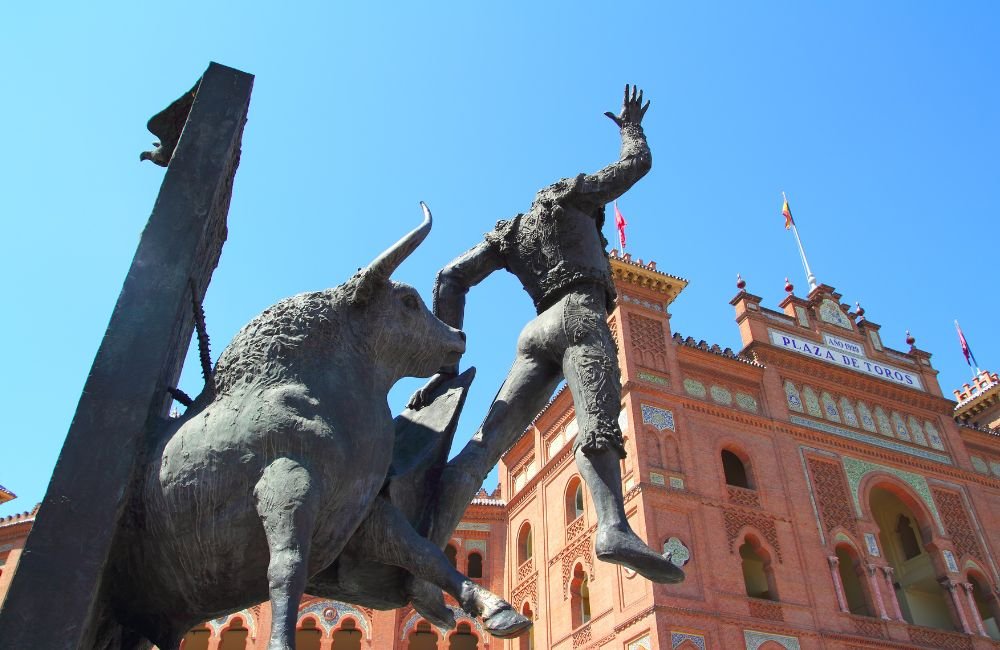
The bullfighting monument outside Madrid’s historic Las Ventas bullring reflects the city’s longstanding bullfighting traditions and cultural heritage.
Bullfighting in Madrid: A Visitor’s Guide to Las Ventas
Bullfighting in Madrid is closely associated with Las Ventas, the Spanish capital’s historic bullring. Known for its distinctive architecture, ceremonial traditions and place in Spanish cultural history, Las Ventas remains an important landmark for visitors interested in understanding the country’s past and present.
However, attending a traditional Spanish bullfight is very different from watching an ordinary sporting event. A corrida de toros involves a formal sequence in which the bull is wounded and normally killed. The practice has deep historical roots, but it also remains controversial because of animal-welfare concerns.
Travelers interested in the subject have several options. You can attend a scheduled corrida, explore the bullring on a cultural tour or visit the Bullfighting Museum without watching a live event.
This guide explains what happens during a traditional bullfight, how to visit Las Ventas, when events normally take place and what to consider before deciding which experience is right for you.
1. Discover Las Ventas, Madrid’s Historic Bullring
The Plaza de Toros de Las Ventas is one of Madrid’s distinctive architectural landmarks. Located on Calle de Alcalá in the Salamanca district, the bullring has played a prominent role in Spanish bullfighting history since opening in 1931.
The building was designed by architect José Espelius and completed by Manuel Muñoz Monasterio. Its Neo-Mudéjar architecture features red brickwork, decorative ceramic tiles, arched entrances and elaborate façades inspired by historical Spanish architectural traditions.
The arena accommodates approximately 23,800 spectators, making it Spain’s largest bullring.
Las Ventas is also recognised as a protected cultural monument. Beyond the events held in its arena, it provides an opportunity to explore the relationship between Spanish architecture, public entertainment and cultural identity.
What makes Las Ventas significant?
Las Ventas has long been an important venue for professional bullfighters. Appearances here have traditionally carried considerable prestige within the bullfighting world.
The venue is especially associated with the annual San Isidro festival, a major part of Madrid’s traditional bullfighting calendar.
Visitors can also explore the building’s architecture, museum collections and exhibition spaces.
You do not need to attend a live bullfight to appreciate the historical significance of the building.
2. What Happens During a Traditional Spanish Bullfight?
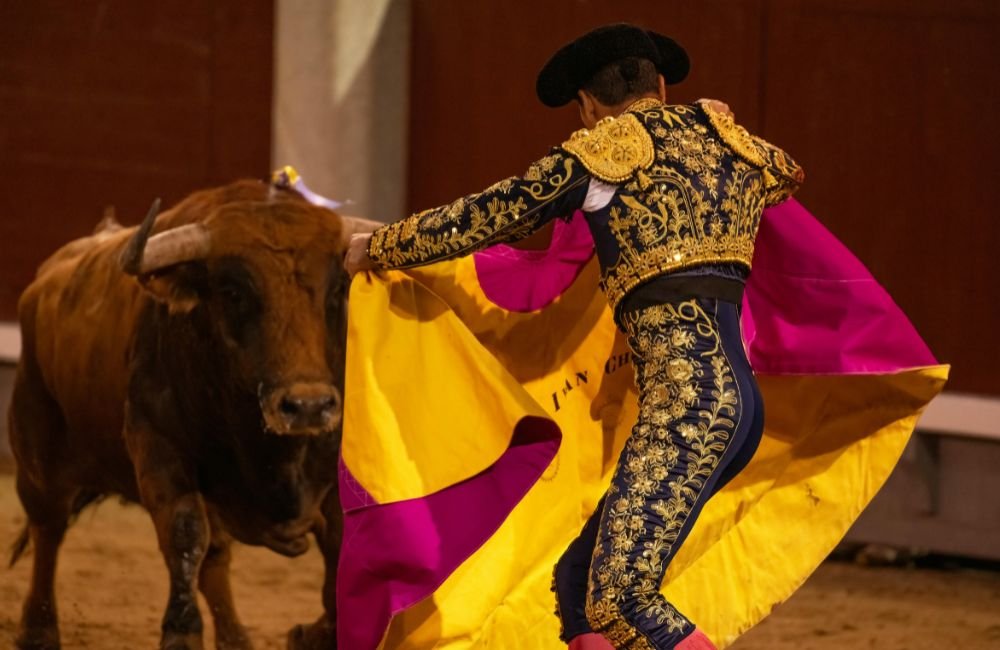
A matador performs with a traditional cape during a Spanish bullfight, illustrating the centuries-old customs and continuing controversy surrounding bullfighting in Spain.
A traditional corrida de toros follows an established ceremonial structure.
In a conventional event, three matadors generally face six bulls, with each matador assigned two animals. The programme may differ for special events or other types of bullfighting.
The participants include the matadors, their assistants, mounted picadors and officials responsible for overseeing the proceedings.
The traditional ceremony begins with the paseíllo, a formal procession in which the bullfighters and their teams enter the arena.
The participants wear elaborate clothing, including the distinctive traje de luces, or suit of lights, associated with professional bullfighting.
After the procession, the contest moves through three principal stages, known as tercios.
Tercio de Varas: The First Stage
The tercio de varas begins with the bull entering the arena.
The matador and assistants use large capes to direct the bull’s movements and observe how it responds.
Mounted participants called picadors then enter the arena on horses fitted with protective equipment.
The picadors use lances to wound the bull’s neck and shoulder area. This stage is intended to affect the animal’s strength and the way it carries its head.
It is an important part of the traditional sequence, but it also causes injury and bleeding.
Tercio de Banderillas: The Second Stage
During the tercio de banderillas, assistants known as banderilleros approach the bull and place pairs of barbed, decorated sticks into its upper back and shoulder area.
The banderillas are traditionally brightly coloured and form part of the visual ceremony.
However, they are sharp instruments that cause further injury to the animal.
The stage also involves considerable physical risk to the participants, who must approach the bull closely before moving out of its path.
Tercio de Muerte: The Final Stage
The final stage is known as the tercio de muerte, or third of death.
The matador uses a smaller red cloth called the muleta to guide the bull through a sequence of passes.
These movements are judged by traditional bullfighting standards, including positioning, control and execution.
The matador then attempts to kill the bull using a sword. Death may not occur immediately, and additional intervention can be necessary.
This final stage is central to the ethical debate surrounding bullfighting.
For spectators unfamiliar with the practice, it is essential to understand beforehand that a conventional corrida involves deliberate injury and the killing of animals.
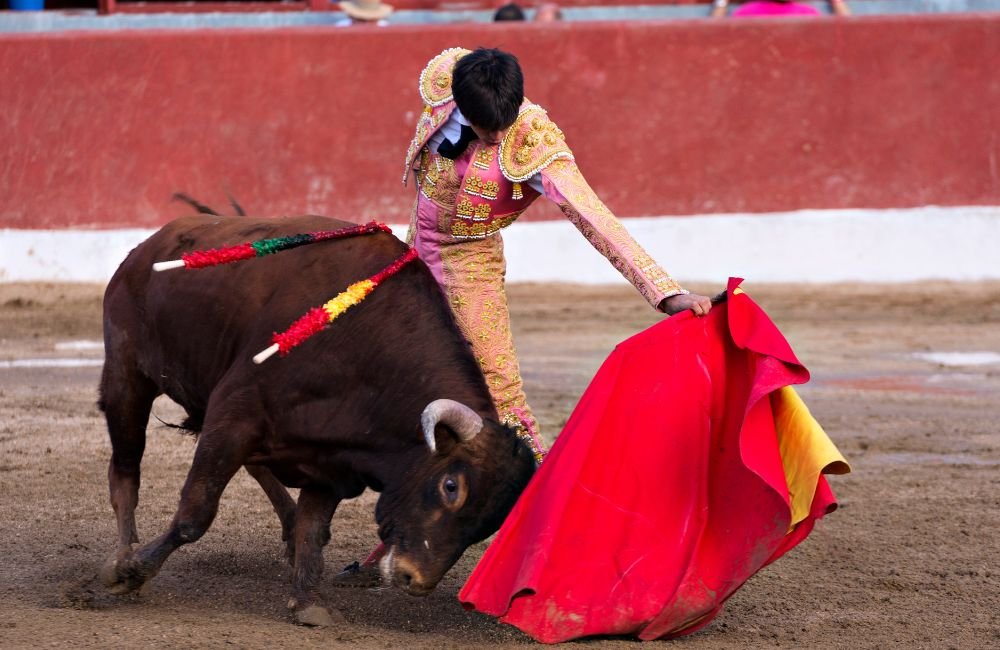
A matador performs with a red muleta during a traditional Spanish bullfight, illustrating the ceremony and animal-welfare controversy surrounding corrida de toros.
3. Understanding the Traditions and Spectator Customs
A live corrida includes ceremonial elements that may be unfamiliar to international visitors.
The event is overseen by a presiding official, who controls important parts of the proceedings and determines certain awards.
Musical signals, including the sound of bugles, mark transitions between stages.
Spectators may applaud, call out or respond to particular movements.
The expression olé is commonly associated with appreciation of a bullfighter’s performance.
What do white handkerchiefs mean?
Spectators may wave white handkerchiefs to request that the presiding official award a matador a traditional trophy.
Depending on the performance and the applicable rules, these awards can include one or more ears from the bull.
A highly regarded matador may also be carried on supporters’ shoulders through the famous Puerta Grande, or main gate.
These customs reflect the historical rules and symbolism of the event.
Understanding the symbolism can help visitors interpret what they are seeing, although it does not remove the concerns surrounding the animals’ treatment.
4. When Is the Bullfighting Season in Madrid?
Madrid’s bullfighting calendar generally runs from March into October, although the exact programme changes each year.
Las Ventas hosts several types of events, including conventional corridas, contests involving younger bulls and certain performances involving mounted bullfighters.
The most prominent period is the San Isidro festival, which usually takes place during May and June.
The San Isidro Festival
San Isidro is associated with Saint Isidore, Madrid’s patron saint.
The festival forms an important part of the city’s traditional calendar and includes bullfighting events at Las Ventas.
Demand can be higher for notable performances and appearances by prominent matadors.
However, it is incorrect to assume that every bullfight sells out months in advance. Ticket availability depends on the event, participants, seating category and date.
Before planning your visit, consult the official Las Ventas programme.
Are bullfights held throughout the year?
No. Although tours and museum visits may be available during much of the year, live bullfighting events do not take place every day.
Some periods have more extensive programmes than others.
If attending a specific event matters to you, confirm the date and availability before making travel arrangements.
5. How to Buy Tickets for Las Ventas
Visitors who decide to attend a live event should use the official Las Ventas ticketing service or another authorised seller.
Ticket prices vary according to the event and seating category.
You should not rely on historical ticket prices, as current charges may differ significantly.
Understanding the seating categories
Las Ventas has several seating areas, including sections exposed to the sun and others that provide shade.
The principal distinctions include:
- Sol: Seating in areas exposed to the sun.
- Sombra: Seating in shaded areas.
- Sol y sombra: Seating that may experience a combination of sun and shade during the event.
The exact conditions depend on the time of day and the seating position.
Shaded seats often command higher prices than comparable seats in sunny sections, but check the current ticket categories before booking.
Seats also vary in their distance from the arena.
What should you check before buying?
Review the event date, scheduled start time, seating location and ticket conditions.
Check whether booking charges apply and whether tickets can be changed or refunded.
Do not assume that a ticket for a bullring tour also provides admission to a live corrida. These are separate experiences.
If you are uncertain about attending an event involving animal injury, consider visiting the museum or taking the architectural tour instead.
6. Take a Guided Tour of Las Ventas Without Attending a Bullfight
Visitors who want to understand the building and its history can explore Las Ventas through its official visitor tours.
These visits provide access to parts of the bullring that ordinary spectators may not otherwise see.
Depending on the selected tour, visitors can discover areas such as the stands, entrances, ceremonial spaces and the arena itself.
The experience introduces the building’s architecture and the history of bullfighting through commentary and interpretive material.
What can you expect on the tour?
The official Las Ventas Tour offers audio-guided and privately guided options.
Some packages include interactive or audiovisual experiences explaining the ceremonial traditions.
The standard cultural tour does not include a live bullfight.
Madrid’s official tourism authority describes tours lasting approximately 60 to 90 minutes, although the duration and itinerary may differ according to the package selected.
Tour routes can also change when events or operational requirements affect access.
Is the tour appropriate for visitors concerned about animal welfare?
A cultural tour offers a way to learn about the bullring without directly attending an event where an animal is injured or killed.
However, some exhibits and audiovisual presentations may depict bullfighting scenes. Visitors who prefer to avoid such imagery should check the tour content before booking.
The tour can be particularly useful for travelers interested in Spanish architecture, cultural history and the social debate surrounding bullfighting.
7. Visit the Bullfighting Museum at Las Ventas
The Museo Taurino, or Bullfighting Museum, provides another way to explore the history of bullfighting in Madrid.
Located within the Las Ventas complex, the museum displays objects and artworks connected with the development of the tradition.
Its collections include historical posters, costumes, ceremonial clothing and other items associated with prominent bullfighters.
The museum also features works connected with the artistic representation of bullfighting, including engravings by Francisco Goya.
Is admission free?
The Community of Madrid operates the museum, which offers free admission subject to capacity restrictions.
A combined bullring tour and museum ticket is a separate paid product.
This distinction is useful for budget-conscious visitors who want to learn about the subject without purchasing a more extensive tour.
Practical visitor information
The museum is located near the Patio de Caballos entrance on Calle de Alcalá.
Opening arrangements can change during events, holidays or maintenance periods.
The museum also maintains visitor rules relating to photography, large bags and the protection of exhibits.
Check its current official information before arriving.
For visitors who prefer a quieter cultural experience, the museum provides an alternative to attending a crowded live performance.
8. Bullfighting and Animal Welfare: Understanding the Debate
Bullfighting remains a contested part of Spanish cultural life.
Supporters regard it as a longstanding tradition involving ceremony, artistic expression, breeding practices and specialised skills passed down through generations.
Some also emphasise its historical influence on Spanish painting, literature and regional identity.
Opponents argue that deliberately injuring and killing an animal for entertainment causes unnecessary suffering and should not be protected merely because the practice has historical roots.
Both perspectives are important to understanding the controversy, but the physical harm involved is not a matter of interpretation. Traditional corridas cause injuries to the bull and normally end in its death.
Is bullfighting legal in Spain?
Bullfighting continues to be legally permitted in Spain under the applicable national and regional framework.
Spanish legislation recognises tauromaquia as part of the country’s cultural heritage.
The country’s general animal-welfare law enacted in 2023 excludes animals used in specified bullfighting events from its scope.
That does not mean there is no regulation of bullfighting. The activity remains subject to other relevant laws and rules.
Is bullfighting banned in Catalonia?
Catalonia introduced a prohibition on conventional bullfighting, but Spain’s Constitutional Court annulled that prohibition in 2016.
It would therefore be misleading to describe the original Catalan ban as remaining legally in force in its original form.
Nevertheless, the court’s ruling did not automatically restore regular bullfighting events in Barcelona.
Cultural attitudes, local circumstances and the availability of operating venues continue to influence where events actually take place.
Visitors should not assume that bullfighting is equally common throughout Spain.
Should tourists attend a bullfight?
There is no universal answer to this question.
Some visitors regard attending a corrida as an opportunity to observe a historical tradition. Others are uncomfortable with the treatment of the animals and prefer not to support the activity.
The most useful approach is to understand what happens before purchasing a ticket and make an informed personal decision.
Madrid offers ways to learn about the tradition without watching a live bullfight.
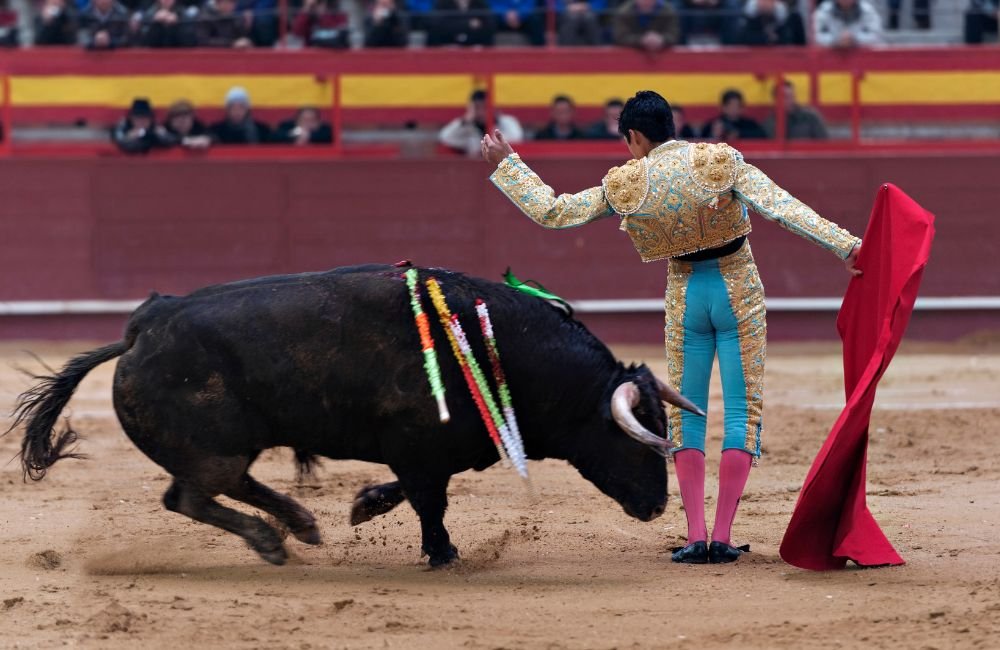
A matador faces a charging bull during a traditional Spanish corrida, reflecting the dramatic ceremony and ongoing controversy surrounding bullfighting.
9. How to Get to Las Ventas in Madrid
Las Ventas is located at Calle de Alcalá 237, Madrid, outside the main historic centre but accessible through the city’s public transport network.
By Madrid Metro
The convenient Metro stop is Ventas, served by Lines 2 and 5.
The station provides access to the bullring area.
Check the official Madrid Metro journey planner for the most suitable route from your accommodation.
By bus or taxi
Several Madrid city bus routes serve the surrounding area.
Licensed taxis and authorised ride-hailing services may also be convenient, depending on where you are staying and the time of your visit.
Allow additional time when a major event is taking place because nearby streets and public transport services may be busy.
Accessibility
Las Ventas offers visitor arrangements for people with disabilities, and its official tour operator provides accessibility information.
If you use a wheelchair or require particular assistance, contact the tour operator or venue before booking to confirm access to the specific areas included in your visit.
10. Practical Tips Before Visiting Las Ventas
The experience you choose will determine how you prepare.
A museum visit is different from a guided architectural tour, while a live corrida requires additional consideration.
Check the correct booking category
Confirm whether your reservation is for the museum, a guided tour, a self-guided visit or a live event.
Do not assume that these experiences are included in one ticket.
Review the schedule close to your visit
Live event programmes and tour access may change.
Confirm the latest arrangements through the official operator before travelling across Madrid.
Consider the weather and your seat
Madrid can be hot during summer, and uncovered seating may be exposed to direct sunlight.
If attending an outdoor event, consider the seating orientation, forecast and appropriate sun protection.
Arrive with enough time
Allow time to locate the correct entrance and follow the venue’s admission instructions.
Late entry may be subject to restrictions during the programme, so check current rules rather than assuming you can enter at any moment.
Consider whether the experience suits children
A conventional bullfight involves visible injuries, blood and the death of animals.
Parents should consider whether this is appropriate for their children before booking.
For a family interested mainly in architecture or history, a daytime cultural visit may be more suitable.
Respect the venue
Follow staff instructions, remain in permitted visitor areas and observe any photography restrictions.
Treat other visitors respectfully, including those whose views on bullfighting differ from your own.
11. Bullfighting in Madrid vs the Running of the Bulls in Pamplona
Travelers sometimes confuse a traditional bullfight with the running of the bulls.
They are different events.
A corrida de toros takes place in a bullring and follows a formal sequence involving matadors and their teams.
An encierro, or running of the bulls, involves animals moving through a designated route, often accompanied by runners.
The internationally known running of the bulls takes place during the San Fermín festival in Pamplona, in the autonomous community of Navarre.
Pamplona is a separate destination from Madrid and requires its own travel planning.
Running with bulls also involves significant physical danger. Visitors should not treat participation as a casual tourist activity.
Anyone considering a bull-running festival should consult the event organiser’s official safety rules and local regulations beforehand.
Frequently Asked Questions About Bullfighting in Madrid
Can tourists still watch bullfighting in Madrid?
Yes. Traditional bullfighting events continue to take place at Las Ventas. The programme is seasonal, so visitors should check the official calendar before making plans.
Where is the main bullring in Madrid?
The Plaza de Toros de Las Ventas is located at Calle de Alcalá 237, Madrid. It is served by Ventas Metro station on Lines 2 and 5.
How long does a traditional bullfight last?
A conventional programme involving six bulls can occupy several hours, depending on the event and proceedings. Check the official programme and allow additional time for arrival and departure.
Do bulls die during Spanish bullfights?
In a conventional corrida, the bull is normally killed during the final stage. The earlier stages involve deliberate wounding. Rare exceptions can occur under traditional rules, but visitors should not assume that the animal will survive.
Can you visit Las Ventas without attending a bullfight?
Yes. The venue offers cultural and architectural tours, and the Bullfighting Museum can be visited separately. These options allow visitors to explore the history of Las Ventas without attending a live corrida.
Is the Bullfighting Museum at Las Ventas free?
The museum offers free admission, subject to capacity and operating arrangements. A more extensive bullring tour is a separate paid experience.
Are bullfights held in Madrid every day?
No. The live-event programme follows a seasonal calendar. Tours and museum visits generally have wider availability, although hours and access may change on event days.
Is bullfighting suitable for children?
Parents should understand that a conventional bullfight involves visible animal injury and death. A museum or architectural tour may be more appropriate for children interested in Madrid’s history.
Final Thoughts
Bullfighting in Madrid is a complex subject that combines architecture, ceremony, historical tradition and continuing ethical disagreement.
Las Ventas remains an important cultural landmark, but visiting it does not have to mean attending a live corrida.
The Bullfighting Museum and official architectural tours provide opportunities to discover the building, its history and the traditions associated with Spanish bullfighting.
For travelers who are considering a live event, understanding the three-stage ceremony and the treatment of the animals is essential before making a booking.
Madrid offers visitors the opportunity to explore this part of Spanish history while deciding for themselves which experiences align with their interests and values.
