
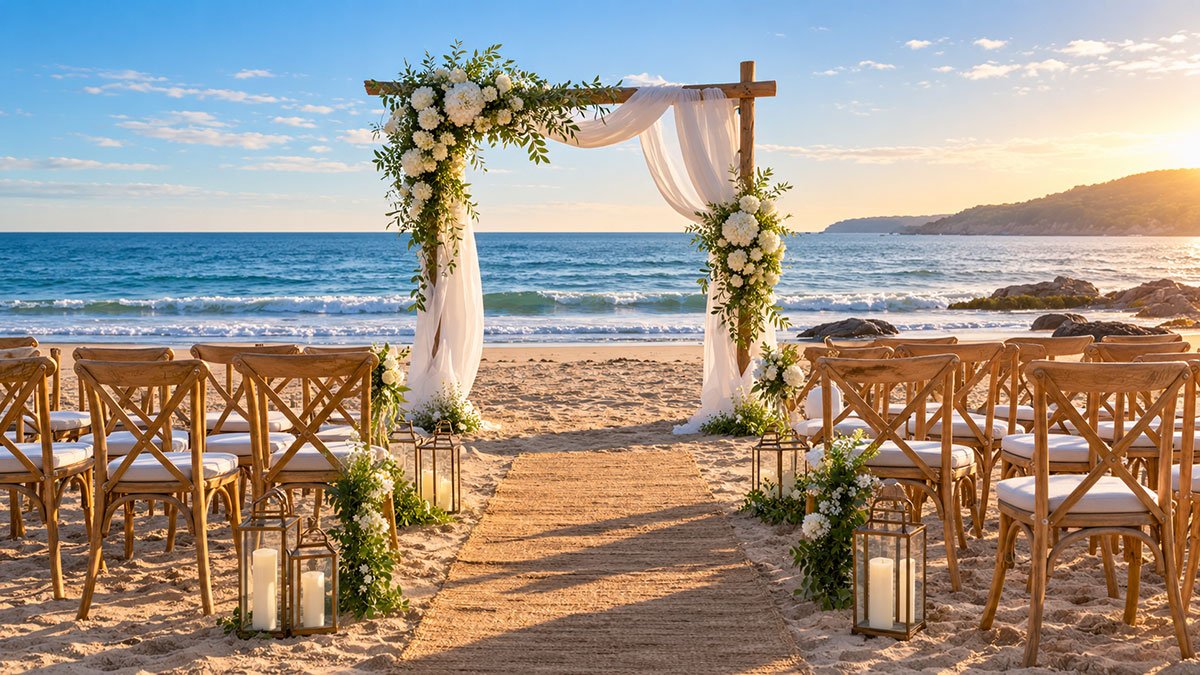
Create an unforgettable seaside celebration with elegant wedding décor and a peaceful coastal backdrop.
The Ultimate Beach Wedding Checklist
A beach wedding combines a memorable setting with the relaxed atmosphere of a seaside celebration. However, planning a ceremony on the sand requires more preparation than choosing a beautiful view and sending invitations.
A successful beach wedding checklist covers everything from venue permissions and weather contingency plans to suitable footwear, refreshments, guest accessibility and photography. Wind, strong sunlight, shifting sand and changing tides can affect even carefully planned celebrations.
Whether you’re organizing an intimate ceremony or a larger destination wedding, this checklist will help you prepare for the practical details while keeping the focus on your special day.
1. Secure the Beach Venue and Check the Rules
Before booking suppliers or sending invitations, confirm that your chosen beach allows weddings and that you can hold your intended ceremony there.
Public beaches may have restrictions on gatherings, decorations, amplified music, catering, alcohol, temporary structures and commercial photography. Some locations require permits or restrict the number of guests.
Ask the local authority, beach manager or venue coordinator about:
- Wedding and event permits.
- Rules for chairs, arches, gazebos, marquees and other equipment.
- Restrictions on music, speakers and generators.
- Catering, alcohol and waste-disposal requirements.
- Access times for suppliers and setup crews.
- Photography, filming and drone restrictions.
- Rules protecting dunes, wildlife and other sensitive coastal habitats.
Confirm the Legal Ceremony Requirements
The legal requirements for marriage vary by country and destination. Some venues can host both the legal ceremony and reception, while others may only accommodate a symbolic celebration.
For example, England and Wales have specific rules for civil ceremonies at approved premises and their eligible outdoor areas. A public beach does not automatically qualify as a legal wedding venue.
Contact the local registration authority and your venue before confirming the ceremony arrangements. If you plan to marry legally elsewhere and hold a symbolic beach ceremony, schedule both events and complete the required paperwork.
2. Choose the Date and Prepare for Coastal Weather
A sunny forecast cannot guarantee perfect wedding weather. Beaches can experience strong winds, sudden showers, high temperatures and rapidly changing coastal conditions.
Consider the climate, tide patterns and typical weather at your destination when selecting the date and time.
Check Tides and the Ceremony Location
High tide can reduce the amount of available beach space and affect guest access. Waves may also reach areas that appear safely distant from the water at low tide.
Ask the venue which areas remain suitable for ceremonies throughout the planned event. Check local tide forecasts and follow any restrictions that apply to the site.
Keep the ceremony away from the active shoreline and avoid placing equipment on unstable sand or fragile dunes.
Arrange a Weather Backup Plan
A reliable backup plan can prevent last-minute confusion if the weather changes.
Arrange an alternative location, such as an indoor room, covered terrace or approved sheltered area. Confirm that the alternative can accommodate your guests and essential equipment.
If you plan to use a marquee or temporary shelter, check whether the venue permits it and whether suitable anchoring and installation arrangements are available.
Agree on a clear decision-making deadline with your venue coordinator. This will give your suppliers and guests time to respond if you need to move the ceremony.
3. Protect Guests From Sun, Wind and Heat
Guest comfort deserves as much attention as the ceremony decorations. Sitting or standing on exposed sand for an extended period can become uncomfortable, particularly for older guests, young children and anyone sensitive to heat.
Provide Shade and Comfortable Seating
Arrange umbrellas, approved shade structures or a sheltered waiting area where possible. Confirm that the equipment can withstand the expected wind and will not obstruct public access.
Choose stable chairs that work on sand. Reserve seating for guests who may struggle to stand on an uneven surface.
If your venue has a natural route from a hotel, parking area or nearby building, share clear directions with guests.
Keep Water and Refreshments Available
Set up an easily accessible station with drinking water. Lemonade, iced tea and other non-alcoholic drinks can provide additional options.
For longer ceremonies or hot weather, arrange refreshments before guests arrive rather than waiting until the reception begins.
Do not rely on alcohol as a substitute for drinking water. Give guests access to non-alcoholic options throughout the event.
Encourage Sun Protection
Remind guests to bring sunglasses, hats and suitable sun protection. The couple and wedding party should also prepare for prolonged outdoor exposure.
Use broad-spectrum sunscreen according to its directions and reapply as instructed. Wedding makeup that contains SPF should not replace a proper sunscreen routine.
Consider scheduling the ceremony in the morning or later afternoon if the local climate makes midday heat uncomfortable.

4. Choose Wedding Attire That Works on Sand
Beach weddings offer more freedom with clothing, but your outfit should suit the terrain and weather.
Bridal Dress and Groom’s Attire
Lightweight, breathable fabrics can help keep the wedding party comfortable in warm conditions. Long trains may collect sand, while heavy layers can become uncomfortable in humid weather.
Consider a dress length that allows easy movement across the beach. If you prefer a long train, arrange help when walking and check whether the fabric handles sand well.
For the groom and wedding party, lightweight suits, breathable shirts and comfortable fabrics can work better than heavy formalwear in warm conditions.
Keep a light wrap or jacket available if the temperature drops after sunset.
Shoes and Sandals
High heels can sink into soft sand, making walking difficult. Flats, sandals, wedges designed for sandy terrain or going barefoot where appropriate may offer more comfort.
Let guests know about the surface in advance so they can choose suitable footwear.
You can also provide a basket of inexpensive flip-flops or sandals for guests who would like to change shoes. Make this an optional convenience rather than an expectation.
Prepare for Wind
Coastal wind can affect veils, hairstyles, lightweight clothing and loose accessories.
Ask your hairstylist about secure styles and choose accessories that stay in place. Practice walking in your wedding attire before the event, particularly if the dress has a long hem or train.
Keep a few discreet clips, hairpins and fashion tape in an emergency kit.
5. Plan Makeup, Hair and Personal Care
Sunlight, heat, humidity and sea breezes can affect makeup throughout the day. A trial before the wedding helps you find a look that suits both your skin and the local conditions.
Choose Products for Outdoor Conditions
Lightweight, long-wearing products may feel more comfortable than heavy layers in warm weather. Waterproof or water-resistant makeup can help where appropriate, especially around the eyes.
Use products you have already tested rather than experimenting with unfamiliar cosmetics on the wedding day.
Apply a suitable sunscreen beneath makeup and follow the product’s reapplication instructions. A makeup artist can help plan touch-ups without compromising sun protection.
Pack a Wedding-Day Beauty Kit
Include practical items such as:
- Lip balm and lipstick for touch-ups.
- Tissues and blotting papers.
- Hairpins, clips and a small comb.
- A compact mirror.
- Makeup remover and cotton pads.
- Sunscreen suitable for your skin.
- A small towel and wet wipes.
Assign someone in the wedding party to keep the kit nearby. This will make quick touch-ups easier between the ceremony, photographs and reception.
6. Organize Drinks, Food and the Wedding Cake
Food and refreshments need additional planning at an outdoor coastal venue. Sand, wind, sun and limited refrigeration can affect both presentation and food safety.
Plan a Refreshment Station
Provide water where guests can reach it easily. For a longer celebration, arrange drinks and small refreshments before the reception meal.
Ask your caterer about chilled storage, safe serving temperatures, covered serving areas and protection from blowing sand.
Discuss dietary requirements and allergies in advance. Clear labels can help guests identify suitable dishes without asking the catering team about every item.
Protect the Wedding Cake
Direct sunlight and warm conditions can affect cake icing, cream fillings and decorative details.
Coordinate delivery with your cake supplier so the cake arrives as close to serving time as practical. Arrange suitable indoor or chilled storage when required.
Avoid leaving the cake exposed to sun and wind while waiting for photographs.
7. Prepare the Ceremony Setup, Decorations and Sound
Simple decorations often work well in a beach setting. However, the coast can make lightweight equipment difficult to manage.
Secure Decorations Properly
Choose sturdy structures and weather-appropriate materials. Secure fabrics, signs, tablecloths and floral arrangements so the wind does not move them.
Confirm whether your venue allows arches, aisle runners, flower petals, candles or other decorative elements. Open flames, confetti and disposable decorations may be restricted.
Avoid attaching equipment to fragile vegetation or leaving materials behind after the celebration.
Check Sound and Power Requirements
Waves and wind can make spoken vows difficult to hear, even at a small gathering.
Test microphones and speakers at the actual ceremony location if possible. Ask the venue about sound limits, power access and approved equipment.
Arrange a battery-powered alternative where practical, and assign someone to check the equipment before guests arrive.
Keep the ceremony essentials together in a labelled bag or box. Include the rings, vows, readings, required documents and any items the officiant needs.
8. Plan Photography and Supplier Logistics
A beautiful location does not guarantee a smooth event. Photographers, florists, musicians and caterers need clear arrival times and setup instructions.
Coordinate the Wedding Team
Create a schedule that includes supplier arrival, setup, the ceremony, group photographs, refreshments and the reception.
Share the venue address, parking instructions, loading arrangements and a contact number with each supplier. Confirm whether vehicles can reach the setup area and whether staff must carry equipment across the sand.
Ask your photographer which locations offer good light and suitable backgrounds. Plan portraits around the ceremony schedule rather than leaving the wedding party waiting in exposed conditions.
Prepare for Equipment and Weather Changes
Salt air and sand can affect cameras, sound equipment and electronic devices. Suppliers should protect their equipment appropriately and bring any necessary backup supplies.
Have a named venue contact who can coordinate a move indoors or implement other changes if conditions deteriorate.
For destination weddings, share the schedule with guests well in advance. Include travel information, accommodation details and a clear arrival time.
9. Make Practical Choices for Bridesmaid and Groomsmen Gifts
Wedding-party gifts are optional, but a thoughtful item can be a useful way to thank the people helping with the celebration.
Consider personalized keepsakes, practical travel accessories, reusable drink bottles or small items that suit the destination. Beach-themed jewellery and nautical accessories can also work if they match the recipient’s style.
Choose gifts that feel personal rather than buying items simply because they match the wedding theme.
If the wedding involves travel, keep gifts lightweight and easy to pack. Avoid fragile items that may break during transport.

10. Reduce Waste and Respect the Beach
Beaches are shared public spaces and often contain sensitive habitats. Plan the celebration so that it leaves as little impact as possible.
Use reusable decorations and containers where practical. Avoid releasing balloons or leaving confetti, plastic ribbons and small decorative pieces that can reach the ocean.
Provide clearly marked rubbish and recycling stations where the venue allows them. Arrange a final cleanup and check that suppliers remove their packaging and equipment.
Follow local requirements for wildlife protection, noise, fires and dune access. A thoughtful cleanup plan will help protect the setting that made you choose a beach wedding in the first place.
The Final Beach Wedding Checklist
Use this checklist during the final week and on the wedding day.
Venue and Legal Arrangements
- Confirm the booking and any required permits.
- Verify legal ceremony requirements with the relevant authority.
- Check restrictions on structures, decorations, music and catering.
- Confirm guest numbers and site access.
- Finalize the weather backup plan.
Guest Comfort
- Arrange suitable seating and shade.
- Provide clear directions and arrival instructions.
- Confirm access to toilets and appropriate facilities.
- Arrange drinking water and refreshments.
- Consider guests who need accessible routes or additional support.
Attire and Personal Care
- Prepare wedding outfits and suitable footwear.
- Pack sunscreen, sunglasses and weather-appropriate layers.
- Arrange hair and makeup touch-up supplies.
- Bring a small emergency kit.
Ceremony and Reception
- Check the tide and local weather forecast.
- Confirm delivery and setup times with suppliers.
- Test microphones and sound equipment.
- Prepare rings, vows and required documents.
- Confirm food storage and cake delivery arrangements.
- Designate a person to coordinate last-minute changes.
After the Celebration
- Remove decorations, packaging and equipment.
- Dispose of rubbish according to local rules.
- Return hired items as agreed.
- Collect personal belongings and gifts.
- Confirm final payments and supplier arrangements.
Enjoy Your Beach Wedding With Confidence
A beach wedding can be beautiful without becoming complicated. The key is to balance the setting you love with the practical needs of the ceremony.
Secure the correct venue, prepare for local weather, protect your guests from the elements and coordinate your suppliers carefully. With those essentials in place, you can spend less time solving problems and more time enjoying the occasion with the people who matter most.
