
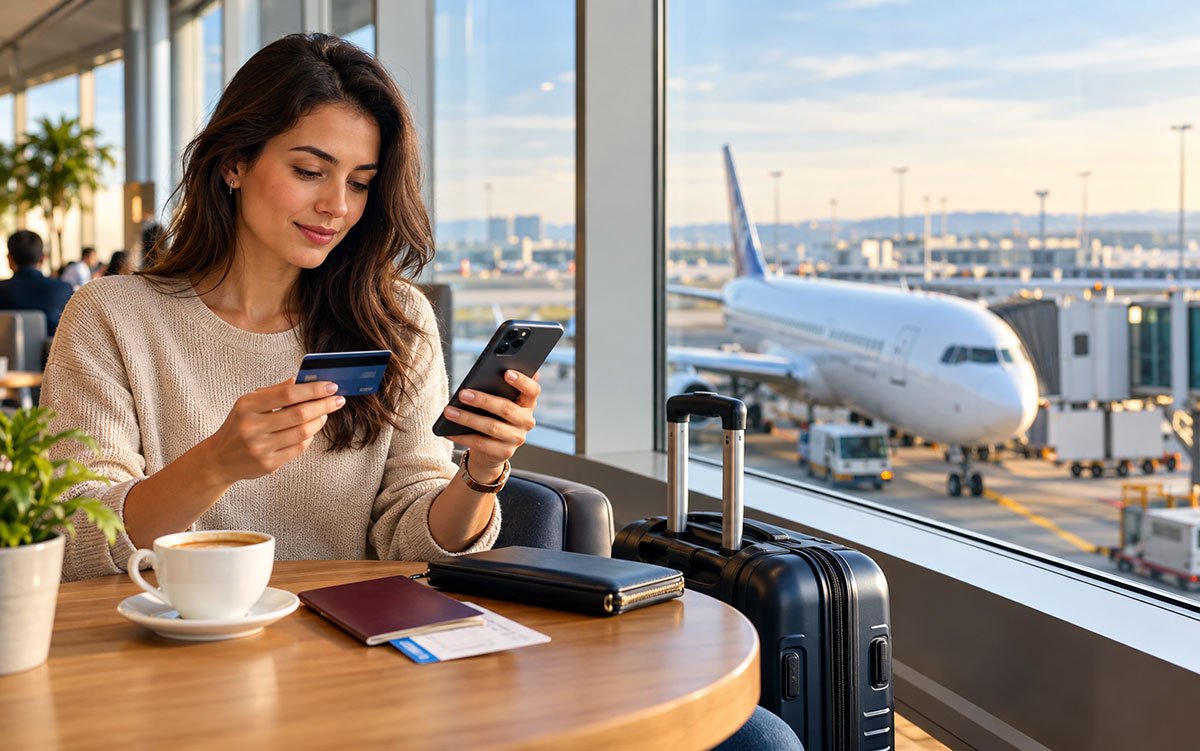
Preparing your payment cards, checking security settings and keeping a backup payment option can help prevent financial problems during international travel.
12 Credit Card Safety Tips for Travel: How to Protect Your Money Abroad
Credit cards make travelling easier. You can book flights, reserve hotels, pay for meals and manage unexpected expenses without carrying large amounts of cash. However, using your card away from home also brings certain risks, including theft, payment fraud, unfamiliar transaction fees and declined purchases.
Fortunately, a little preparation can prevent many common problems.
The most important credit card safety tips for travel involve choosing suitable cards, activating international payment features, protecting your financial information and monitoring transactions. It also helps to understand how currency conversion works and what to do if your card disappears.
Whether you are planning a short domestic holiday, an overseas family vacation or an international business trip, these 12 practical precautions can help keep your money secure.
Why Credit Card Safety Matters When Travelling
Credit cards offer several advantages over carrying cash. They make it easier to track spending, arrange travel bookings and pay for larger purchases. Many cards also include protections against unauthorised transactions, although the conditions vary by issuer and country.
Nevertheless, travellers may encounter problems that rarely arise during everyday spending at home.
Common risks include:
- Lost or stolen cards: A missing wallet can leave you without an immediate payment method.
- Card skimming: Criminals may attempt to capture payment information through compromised card readers.
- Unauthorised transactions: Fraudulent purchases can occur even when your physical card remains in your possession.
- Unexpected currency conversion charges: Unfavourable exchange rates and additional fees can increase the cost of purchases abroad.
- Declined payments: Banks may reject transactions because of fraud checks, disabled international settings or insufficient available credit.
- Online payment scams: Fraudulent hotel, airline and booking websites can expose payment information.
The goal is not to avoid using credit cards while travelling. Instead, understand how to use them securely and have alternatives ready when something goes wrong.
12 Essential Credit Card Safety Tips for Travel
1. Carry Only the Credit Cards You Actually Need
Travelling with every credit card in your wallet creates unnecessary risk.
Before departure, select the cards you expect to use and leave the others securely at home. For many travellers, one primary card and one backup card provide a sensible balance between convenience and security.
Choose cards based on their international acceptance, available credit, foreign transaction fees and emergency support.
Visa and Mastercard have extensive international acceptance, but individual merchants, destinations and payment systems may impose restrictions. Check what travellers commonly use at your destination rather than assuming every card will work everywhere.
Keep your backup card somewhere separate from your primary wallet. If your everyday card goes missing, you will still have another way to pay.
Practical tip: Avoid depending on two cards linked to the same account as your only backup. If the issuer restricts that account, both cards may become unusable.
2. Confirm International Card Activation Before Leaving
A credit card that works perfectly at home may not automatically work overseas.
Some banks require customers to enable international transactions or adjust card controls before making foreign payments.
Before travelling, check your bank’s official app, website or customer service channel to confirm:
- International point-of-sale payments are enabled.
- Overseas online payments are permitted when needed.
- Your available credit can cover expected expenses.
- The card will remain valid throughout the trip.
- Your daily or transaction limits are suitable.
- The issuer has your correct mobile number and email address.
Some card issuers recommend registering travel plans to avoid unusual transactions triggering fraud controls. Others no longer require travel notifications.
Check your own issuer’s policy instead of assuming notification is always necessary.
Travellers using Indian-issued cards should pay particular attention to international transaction settings, which may need to be enabled separately for different payment channels.
3. Activate Transaction Alerts and Secure Your Banking App
One of the simplest ways to identify suspicious activity is to receive alerts whenever someone uses your card.
Most major issuers provide transaction notifications through SMS, email or mobile banking applications.
Activate available alerts before departure and confirm that you can receive them abroad.
You should also:
- Enable biometric authentication or a strong passcode on your phone.
- Use a unique password for your banking account.
- Turn on additional account authentication where available.
- Keep your banking app and phone software current.
- Confirm how your bank handles transaction verification while you are overseas.
If your bank sends one-time passwords through SMS, check that your mobile service will receive the necessary messages abroad. International roaming arrangements and alternative authentication options may affect access.
Never disclose your PIN, card security code, banking password or one-time password to someone claiming to represent your bank.
4. Keep Emergency Card Details in a Secure Location
Imagine discovering that your wallet is missing while you are in an unfamiliar city.
Reporting the loss becomes much easier when you already know how to contact your bank.
Before departure, save your issuer’s official international customer service number, its lost-card reporting procedure and the website or app used to block cards.
Store this information separately from your physical cards.
A secure password manager or another properly protected digital record can be useful for keeping contact information accessible.
Avoid placing photographs of both sides of your card in an unsecured phone gallery or storing complete payment details in ordinary notes.
You should never keep your card PIN or security code alongside its number.
Also check whether your issuer offers emergency card replacement or other assistance overseas. Availability and eligibility depend on the card provider.
5. Protect Your Cards in Hotels, Airports and Public Places
Busy airports, railway stations, public transport systems, markets and tourist attractions require extra attention to personal belongings.
Carry your main payment card in a secure wallet or bag that you can monitor.
Avoid leaving cards unattended on restaurant tables, at reception desks or in open luggage.
When paying at a shop or restaurant, try to keep the card within sight. If possible, use a payment terminal brought to your table rather than handing your card to someone who takes it elsewhere.
At your accommodation, store unnecessary cards and valuables in a suitable locked location.
A hotel room safe may offer useful protection, but no storage arrangement is completely risk-free. Similarly, a private holiday rental should not automatically be considered more secure than a hotel.
Assess the actual security arrangements rather than relying on the type of accommodation.
Practical tip: Keep your primary card, backup payment method and emergency cash in separate secure locations. Losing one bag should not leave you without access to money.
6. Use Contactless Payments and Digital Wallets Where Available
Contactless payment technology can offer useful security benefits while travelling.
When you tap a contactless card, you can keep it in your possession throughout the transaction.
Compatible mobile wallets can provide another layer of protection through tokenisation. This technology replaces your actual card number with a digital substitute during supported transactions.
Digital wallets may also use device authentication, such as a fingerprint, facial recognition or passcode.
Before leaving, check whether your card issuer and chosen digital wallet support payments in your destination country.
Not every bank, card or merchant supports the same contactless payment features.
Always keep a physical card or another payment method available as a backup. A lost phone, depleted battery or unsupported terminal could otherwise interrupt your plans.
7. Check ATMs and Payment Terminals Before Using Them
ATMs can be convenient for accessing local currency, but travellers should remain alert to suspicious machines.
Whenever practical, use ATMs inside established banks or other reputable, well-monitored locations.
Before inserting or tapping your card, inspect the machine for unusual attachments, damaged components or anything that appears loose around the card reader and keypad.
If something looks suspicious, choose another machine.
When entering your PIN:
- Shield the keypad from nearby people and cameras.
- Keep your card and cash secure immediately after the transaction.
- Decline unexpected assistance from strangers.
- Review the amount and any displayed charges before confirming.
Apply similar caution when using payment terminals in shops, restaurants and transport locations.
Never allow someone to pressure you into entering your PIN on an unfamiliar device.
8. Choose the Local Currency When Paying Abroad
An overseas restaurant, hotel or shop may offer to charge your credit card in your home currency instead of the currency of the country you are visiting.
This process is called dynamic currency conversion, or DCC.
Although seeing the bill in your own currency can feel convenient, the conversion may include an additional markup or a less favourable exchange rate.
For most travellers, choosing the destination’s local currency is the better starting point.
For example, if you are visiting Singapore with a card billed in Indian rupees, a payment terminal may offer a choice between Singapore dollars and Indian rupees.
Choosing Singapore dollars generally allows your card’s payment network and issuer to handle the currency conversion rather than accepting the merchant’s offered conversion.
However, your issuer may still charge a foreign transaction fee.
Before confirming any international payment, check the currency shown on the terminal.
If a merchant selects home-currency conversion without your consent, raise the issue immediately and contact your issuer if necessary.
9. Understand Foreign Transaction Fees and Avoid Costly Cash Advances
Not all credit cards charge the same fees for international purchases.
Some cards impose foreign transaction fees, while others advertise no such fees for eligible purchases.
Your total cost may also depend on the currency conversion arrangements and other terms in your card agreement.
Before travelling, check:
- Foreign transaction fees on overseas purchases.
- Currency conversion conditions.
- Charges for international cash withdrawals.
- Cash advance interest rates.
- Any relevant ATM operator fees.
Pay particular attention to cash withdrawals made with a credit card.
Using a credit card at an ATM generally counts as a cash advance rather than an ordinary purchase. Such transactions can attract additional fees and interest, often without the normal purchase grace period.
When possible, arrange local cash through a suitable debit card or another lower-cost method after checking the applicable fees and security risks.
Also remember that foreign transaction fees may apply to some purchases made through overseas merchants even when the amount appears in your home currency.
10. Protect Your Credit Card During Online Travel Bookings
Travellers often book accommodation, attraction tickets, transfers and activities through websites or mobile apps.
Unfortunately, fraudulent travel websites and payment requests can imitate legitimate businesses.
Before entering credit card information, confirm that you are dealing with the actual airline, hotel, travel operator or booking platform.
Avoid following suspicious payment links received through unexpected emails, text messages or messaging apps.
A message that appears to come from a hotel may claim that your reservation will be cancelled unless you immediately verify your card.
Do not assume the message is genuine.
Instead, open the provider’s official website or app independently and contact the business through a verified channel.
For added security:
- Use trusted booking platforms and official websites.
- Check the full website address before entering payment information.
- Use secure, authenticated payment methods.
- Avoid saving your card details unnecessarily on unfamiliar websites.
- Keep your browser and device software current.
Public Wi-Fi is not automatically unsafe, particularly when websites use modern encryption. Nevertheless, verify that you are using the correct network and a genuine website. Mobile data can be a useful alternative when handling sensitive banking tasks.
Remember that an HTTPS connection does not prove a business is legitimate. Scam websites can also use encryption.
11. Monitor Transactions and Retain Important Receipts
Do not wait until you return home to review your credit card activity.
Check your banking app regularly during the trip, particularly after major purchases.
Look for unfamiliar merchants, duplicate transactions, unexpected amounts and charges that do not match your records.
Keep digital receipts or confirmation emails for substantial expenses such as:
- Hotel accommodation and deposits.
- Car rentals and security deposits.
- Airline tickets and travel bookings.
- Tours and activities.
- Expensive purchases or cancelled reservations.
Hotels and car rental companies may place temporary authorisation holds on your card. These can reduce your available credit until they are released, even though they are not necessarily final charges.
Ask the provider about its deposit policy and check how the hold affects your spending limit.
If you notice an unfamiliar transaction, contact your issuer promptly. Some merchant names appear differently on statements, so a quick check may help establish whether a charge is legitimate.
If the amount is incorrect or unauthorised, follow your issuer’s dispute procedure without unnecessary delay.
12. Carry Emergency Cash and a Backup Payment Method
Even with careful preparation, a card may be declined, blocked, damaged or lost.
Some smaller businesses and transport providers may also accept only cash or specific local payment methods.
Carry a modest amount of local currency for immediate expenses such as transportation, small purchases or unexpected payment failures.
Avoid carrying more cash than reasonably necessary.
Keep your emergency reserve separate from your main wallet and protect it as you would other valuables.
For international trips, consider whether your backup payment method can cover at least essential transport, food and accommodation if your primary card becomes unavailable.
A secure backup plan is especially important when visiting remote destinations where banking services or ATMs may be limited.
What to Do If Your Credit Card Is Lost or Stolen Abroad
Discovering that your credit card is missing can be stressful, particularly when you are far from home.
However, acting promptly can help limit further problems.
Step 1: Lock or Block the Card Immediately
If your banking app offers a temporary card-lock feature, use it while checking whether the card is simply misplaced.
If you believe it has been stolen or cannot recover it, contact the issuer immediately to report the loss and arrange the appropriate block or cancellation.
Use the official banking app, website or verified customer service number.
Step 2: Review Recent Transactions
Check your account for purchases you do not recognise.
Report suspicious transactions to the issuer, even if the amounts appear small.
Do not assume a stolen card cannot be misused because you have not shared your PIN.
Step 3: Ask About Emergency Replacement Options
Some international card services and participating issuers may provide emergency replacement cards or assistance with obtaining funds.
Ask what support is available for your specific card and destination.
Do not assume an emergency replacement can be delivered immediately or that every card qualifies.
Step 4: Use Your Backup Payment Method
Use the backup card or emergency cash you prepared before departure.
If your phone remains secure and an eligible digital wallet is available, ask the issuer whether you can continue using a supported digital payment method.
Step 5: Keep a Record of the Incident
Save the complaint or reference number provided by your issuer.
Record when you reported the loss and retain relevant correspondence.
If theft occurred, consider reporting it to local police, particularly if your insurer or card provider requires an incident report.
Important: Your financial responsibility for unauthorised transactions depends on applicable law, your card agreement and the circumstances of the incident. Report suspicious activity immediately rather than assuming every fraudulent charge will automatically be refunded.
Credit Card Safety Before, During and After Travel
A few well-timed checks can make managing money abroad much easier.
| Travel stage | Recommended precautions |
|---|---|
| Before departure | Select cards, check overseas payment settings, review fees and save emergency contacts. |
| At the airport | Keep cards in secure luggage or your wallet and avoid exposing payment details unnecessarily. |
| During the holiday | Use trusted payment terminals, pay in local currency and monitor transaction alerts. |
| At hotels and car rentals | Understand security deposits, authorisation holds and cancellation conditions. |
| When shopping online | Verify the booking website and avoid suspicious payment links. |
| If a card goes missing | Lock or block the card, contact the issuer and use your backup payment method. |
| After returning home | Review your final statement, resolve discrepancies and restore your preferred card security settings. |
Frequently Asked Questions About Credit Card Safety While Travelling
Is it safe to use a credit card internationally?
Yes, credit cards can be a practical way to pay internationally when you take sensible precautions. Use reputable merchants, protect your card details, enable available security alerts and check your transactions regularly.
No payment method is completely risk-free, so carrying a backup remains important.
Should I inform my credit card company before travelling abroad?
Check your card issuer’s requirements. Some issuers recommend travel notifications, while others rely on automated fraud monitoring and do not require advance notice.
You should still confirm that international transactions are enabled and that your contact information is correct.
Is it better to use a credit card or debit card when travelling?
Both have advantages.
Credit cards can be convenient for purchases, hotel reservations and certain consumer protections. Debit cards provide access to funds in your bank account and may be more appropriate for cash withdrawals.
Fees, fraud protections and acceptance depend on the issuer and destination. Carrying both types, where appropriate, can provide useful flexibility.
How many credit cards should I carry on an international trip?
One primary credit card and one backup card are often sufficient, provided both are accepted at your destination and have suitable spending limits.
Store them separately to reduce the risk of losing access to both at once.
Should I pay in my home currency or the local currency abroad?
Choosing the local currency will generally help you avoid the additional markup associated with dynamic currency conversion.
Your card issuer’s normal international transaction and currency conversion charges may still apply.
Can someone use my credit card without knowing my PIN?
Yes. Depending on the payment method, merchant and authentication requirements, some transactions may not require the card’s PIN.
This is why payment alerts, account monitoring and prompt reporting are important, even when your PIN remains confidential.
Are mobile wallets safer than carrying physical credit cards?
Supported mobile wallets offer security features such as tokenisation and device authentication, which can reduce exposure of your actual card details.
However, their usefulness depends on local acceptance, issuer support and access to your device. A separate backup payment method remains advisable.
Final Thoughts: Travel with Confidence, Not Unnecessary Risk
Credit cards can make both domestic and international travel more convenient, but secure payments begin with preparation.
Choose the cards you genuinely need, confirm their overseas usability, understand potential fees and keep emergency contact information accessible.
During your journey, protect your physical cards, use trusted payment methods, choose local currency where appropriate and monitor account activity.
Most importantly, prepare for the possibility that a card may stop working or go missing.
A few practical precautions can reduce financial disruption and allow you to spend more time enjoying your destination instead of worrying about your money.
