
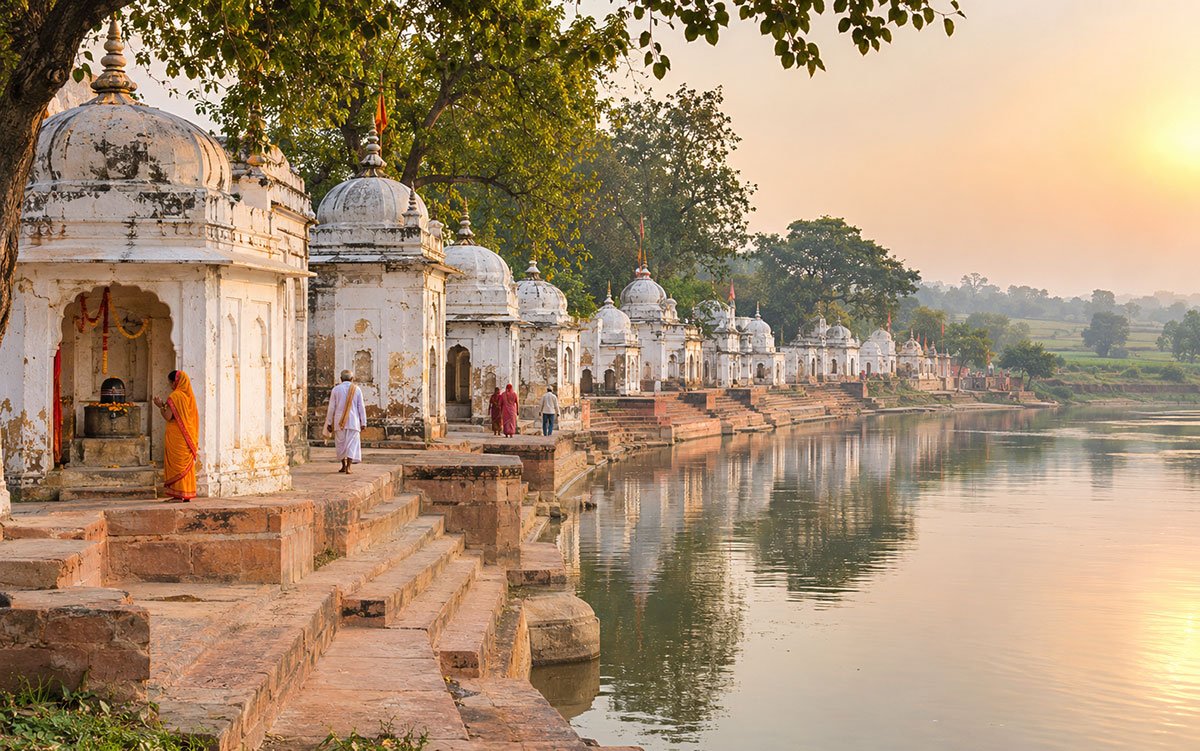
The historic Bateshwar Temple complex near Agra is famous for its riverside Shiva shrines, sacred Yamuna ghats and traditional religious heritage.
Bateshwar Temple near Agra: Complete Travel Guide
Bateshwar Temple, located near Agra in Uttar Pradesh, is a remarkable Hindu pilgrimage destination known for its historic Shiva temples, peaceful Yamuna River setting and centuries-old religious traditions.
Situated approximately 70 kilometres southeast of Agra, Bateshwar is famous for a chain of whitewashed temples overlooking a sweeping bend of the Yamuna. The riverfront ghats, temple architecture and devotional atmosphere make it a rewarding destination for travelers interested in India’s spiritual and cultural heritage.
The town becomes particularly lively during the annual Bateshwar Fair, held around Kartik Purnima. This traditional celebration brings together religious ceremonies, livestock trading, local communities and cultural activities.
However, Bateshwar is worth visiting beyond the fair season. The riverside temples offer a quieter experience for pilgrims, photographers and travelers exploring places beyond Agra’s famous Mughal monuments.
This guide covers the history and significance of Bateshwar Temple, its main attractions, annual fair, best time to visit, transport options and practical travel advice.
Where Is Bateshwar Temple Located?
Bateshwar Temple is situated in Bateshwar village in the Bah area of Agra district, Uttar Pradesh, India.
The temple complex stands along a distinctive curve of the Yamuna River, where numerous whitewashed shrines overlook a series of traditional bathing ghats.
The journey from Agra follows the road towards Fatehabad and Bah, passing through towns and agricultural landscapes.
Unlike the busy streets surrounding the Taj Mahal, Bateshwar offers an opportunity to explore a smaller religious settlement where temple worship and local traditions remain important.
The destination is associated with Lord Shiva, worshipped here as Bateshwarnath Mahadev.
Visitors should note that Bateshwar near Agra is different from the Bateshwar Group of Temples in Morena district, Madhya Pradesh. The latter is a separate archaeological complex known for ancient sandstone temples.
History and Religious Significance of Bateshwar Temple
Bateshwar is an important Shaivite pilgrimage destination in northern India.
The town takes its name from its presiding deity, Lord Bateshwarnath Mahadev, a form of Lord Shiva.
Its religious importance is closely connected with the temples and sacred traditions associated with the Yamuna River.
Bateshwar is traditionally described as a complex of more than 100 temples, although official accounts differ on the precise historical number.
The surviving shrines are mainly associated with Shiva worship, while the wider temple settlement reflects different Hindu devotional traditions.
The Riverside Shiva Temples
One of Bateshwar’s most distinctive features is the long sequence of temples overlooking the Yamuna.
The buildings include whitewashed shrines, domed roofs, traditional gateways and religious structures built along the riverfront.
Together, they create an impressive landscape that differs considerably from the Mughal architecture for which Agra is internationally known.
Many devotees visit Bateshwar to offer prayers, perform religious rituals and seek the blessings of Lord Shiva.
For visitors interested in architecture, the temples provide insight into a longstanding regional religious tradition.
The Sacred Yamuna Ghats
The riverfront ghats are central to Bateshwar’s identity.
These stepped areas connect the temple precinct with the Yamuna and provide spaces traditionally associated with ritual bathing and worship.
During important religious occasions, devotees gather along the river to participate in ceremonies and offer prayers.
The temples and ghats also create attractive views across the water, especially during the softer light of early morning and late afternoon.
Visitors should be cautious around the river. Water depth, currents and conditions may change, and ritual bathing should only take place where local authorities permit it and appropriate safety arrangements exist.
Things to See and Do at Bateshwar Temple
Although Bateshwar is primarily a religious destination, visitors can appreciate several aspects of its cultural and natural surroundings.
1. Offer Prayers at Bateshwarnath Mahadev Temple
The main religious attraction is the shrine dedicated to Lord Bateshwarnath Mahadev.
Devotees visit the temple to offer prayers and participate in traditional Shiva worship.
The atmosphere is particularly meaningful during Hindu festivals and auspicious religious occasions.
Visitors who are not participating in worship can still appreciate the temple’s architectural character while respecting religious customs.
Dress modestly, follow any footwear restrictions and seek permission before taking photographs inside sacred spaces.
2. Explore the Riverside Temple Complex
Walking through the permitted parts of the temple precinct reveals the distinctive arrangement of shrines along the Yamuna.
The whitewashed buildings, stepped ghats and river views make this one of Bateshwar’s most memorable experiences.
Some temples may be more accessible than others, depending on their condition and religious activities.
Do not enter restricted, damaged or unstable structures.
3. Experience the Yamuna Riverfront
The riverside setting is an important reason to visit Bateshwar.
From safe public areas, visitors can admire the curve of the Yamuna and the temples rising above the ghats.
The combination of religious architecture and a broad river landscape provides opportunities for photography and quiet observation.
During the annual fair, these same surroundings become busy with pilgrims and festival activities.
4. Discover Local Religious Traditions
Bateshwar offers a chance to observe aspects of religious life that remain important to the local community.
Depending on the time of your visit, you may encounter temple ceremonies, devotional gatherings and pilgrims offering prayers.
These experiences are best approached respectfully.
Avoid interrupting worshippers and ask permission before photographing individuals or private religious ceremonies.
Bateshwar Fair: The Famous Cattle and Religious Festival
The Bateshwar Fair, also known as Bateshwar Mela, is one of the town’s most important annual events.
Held around Kartik Purnima, usually during October or November, the fair combines religious pilgrimage with traditional livestock trading and community celebrations.
It has long been associated with the rural economy and cultural life of the surrounding region.
The event brings farmers, livestock traders, pilgrims, local businesses and visitors to Bateshwar.
Religious Celebrations at Bateshwar Fair
The religious component of the fair centres on worship at Bateshwarnath Mahadev Temple and ceremonies along the Yamuna.
Kartik Purnima is a particularly significant occasion, attracting large numbers of devotees.
Traditional activities include:
- Prayers dedicated to Lord Shiva.
- Ritual bathing at designated Yamuna ghats.
- Religious gatherings and devotional activities.
- Temple offerings and ceremonies.
- Community celebrations and cultural programmes.
The exact festival programme changes each year.
Visitors planning to attend should consult announcements from the Agra district administration before arranging transport or accommodation.
The Traditional Livestock Fair
Another distinctive feature of Bateshwar Mela is its association with livestock trading.
Historically, the fair has attracted traders dealing in animals such as horses, cattle and other livestock.
The event reflects a longstanding agricultural tradition in which rural communities gather to trade animals, purchase supplies and participate in social activities.
Visitors may encounter decorated animals, trading areas, temporary stalls and busy marketplaces.
The types of animals present and the scale of trading can vary by year.
Travelers should observe livestock activities from an appropriate distance and avoid interfering with animals, traders or handlers.
Local Markets and Cultural Activities
The fair also brings a variety of temporary shops and entertainment activities to the area.
Depending on the programme, visitors may find local food stalls, household goods, handicrafts, folk performances and other community attractions.
The combination of pilgrimage and rural trading makes Bateshwar Mela quite different from a conventional tourism festival.
For photographers and cultural travelers, it offers opportunities to observe a traditional gathering while respecting the people who participate in it.
Best Time to Visit Bateshwar Temple
The best time to visit Bateshwar depends on whether you prefer a peaceful pilgrimage or the lively atmosphere of the annual fair.
October to March: Comfortable Sightseeing Weather
The cooler months are generally the most pleasant for exploring Bateshwar.
Walking around the temple complex and riverfront is usually more comfortable than during the intense heat of summer.
Early mornings can be particularly attractive for photography, although winter fog may occasionally reduce visibility.
October and November: Bateshwar Fair Season
Travelers interested in local culture and religious festivals should consider visiting during the annual Bateshwar Mela.
The event provides an opportunity to experience traditional pilgrimage activities and livestock trading.
However, the fair also brings substantial crowds, traffic restrictions and increased demand for local transport.
Plan carefully and confirm the official dates for your chosen year.
April to June: Hot Summer Conditions
Summers in the Agra region can be extremely hot.
Visitors should avoid unnecessary outdoor activity during the hottest hours and carry adequate drinking water.
If travelling during this season, an early morning visit is preferable.
July to September: Monsoon Conditions
Rainfall during the monsoon can affect river levels and access to some riverside areas.
The ghats may become slippery, and local conditions can change after heavy rainfall.
Follow official safety instructions and avoid entering restricted riverfront sections.
How to Reach Bateshwar Temple from Agra
Agra is the most convenient starting point for a visit to Bateshwar Temple.
The temple town is approximately 70 kilometres southeast of Agra, although the road distance depends on the starting point and route.
By Car or Taxi
A private car or taxi is generally the most convenient option for visitors.
The journey follows the road towards Fatehabad and Bah before continuing to Bateshwar.
Hiring a vehicle with a driver is particularly useful if you are unfamiliar with the area or want to return to Agra on the same day.
Allow flexibility for traffic, roadworks and possible restrictions during the annual fair.
By Public Bus
Regional road transport services connect Agra with towns in the wider area.
However, a convenient year-round direct bus service to the temple complex should not be assumed.
The Agra district administration identifies special Uttar Pradesh State Road Transport Corporation services during the annual fair.
Travelers using public transport should confirm current routes, departure points and return options before leaving Agra.
By Train or Air
Agra is connected to other Indian cities through its railway stations and regional transport network.
Travelers arriving by train can continue towards Bateshwar by road.
Agra Airport also serves the city, although flight availability and routes should be checked before planning a journey.
For most visitors, Bateshwar is best explored as a day trip from Agra.
Bateshwar Temple Timings and Entry Information
According to the Agra district administration, Bateshwar Temple is generally open every day from morning until evening.
There is no general admission charge for visiting the temple complex.
However, individual shrines may follow their own worship schedules, and access may change during ceremonies, maintenance or crowded festival periods.
Visitors should not assume that every shrine remains open throughout the day.
During major festivals, local authorities may introduce additional crowd-management arrangements and temporary access restrictions.
For the most reliable information, consult the official Agra district tourism website before travelling.
Places to Visit Near Bateshwar Temple
Bateshwar can be combined with other destinations in the wider Agra region, although not every attraction is suitable for the same day’s itinerary.
Shauripur Jain Pilgrimage Site
Shauripur is a nearby Jain pilgrimage destination associated with Bhagwan Neminath, the 22nd Tirthankara in Jain tradition.
It offers visitors an opportunity to explore another important religious heritage site in the region.
Travelers interested in pilgrimage tourism may consider visiting Shauripur alongside Bateshwar.
Confirm road conditions and local temple access before departing.
National Chambal Sanctuary
National Chambal Sanctuary is an important wildlife conservation area extending across parts of Uttar Pradesh, Madhya Pradesh and Rajasthan.
The sanctuary protects habitats along the Chambal River and supports several threatened species.
Wildlife associated with the area includes gharials, river dolphins, turtles and numerous bird species.
Authorised wildlife excursions may offer opportunities for river-based nature observation, depending on the season and operating conditions.
Sightings are never guaranteed.
Visitors should use approved operators, follow forest department regulations and confirm boating arrangements in advance.
A Chambal excursion is best planned as a separate activity or as part of a carefully arranged regional itinerary.
Fatehpur Sikri
Fatehpur Sikri is a UNESCO World Heritage Site west of Agra, famous for its red-sandstone Mughal architecture.
Established under Emperor Akbar, the historic complex includes Buland Darwaza, Panch Mahal, Jama Masjid and several important palace structures.
Fatehpur Sikri is a worthwhile excursion, but it lies in a different direction from Bateshwar.
Rather than attempting to combine both places in a rushed journey, most visitors will find it more practical to plan separate outings.
Akbar’s Tomb at Sikandra
Akbar’s Tomb is another significant historical attraction in Agra.
Located at Sikandra, the mausoleum is surrounded by landscaped gardens and features a distinctive combination of Mughal architectural influences.
It is best visited as part of an Agra city heritage itinerary rather than treating it as an attraction immediately beside Bateshwar.
Bharatpur and Keoladeo National Park
Bharatpur in neighbouring Rajasthan is known for Keoladeo National Park, a UNESCO World Heritage Site celebrated for its birdlife.
It is particularly interesting to wildlife enthusiasts and birdwatchers.
However, Bharatpur lies west of Agra, so a visit should be planned separately from a Bateshwar day trip unless sufficient travel time is available.
Suggested One-Day Itinerary from Agra to Bateshwar
A day trip provides enough time to appreciate the main temples and their surroundings without rushing.
Morning: Travel from Agra
Depart Agra in the morning and travel towards Bateshwar via the Fatehabad–Bah route.
On arrival, begin with the main temple precinct.
Late Morning: Explore the Shiva Temples
Visit Bateshwarnath Mahadev Temple and spend time observing the traditional architecture.
Explore accessible sections of the neighbouring riverside shrines.
Take photographs from permitted public areas while respecting worshippers.
Afternoon: Visit the Ghats and Nearby Heritage Sites
Enjoy views of the Yamuna from safe, accessible locations.
If time and local access arrangements permit, consider an excursion to the nearby Shauripur Jain pilgrimage area.
Return to Agra
Travel back to Agra with sufficient time for the return journey.
During the Bateshwar Fair, allow additional flexibility for traffic, parking arrangements and large crowds.
Travelers interested in the National Chambal Sanctuary should consider a separate excursion rather than adding a wildlife safari to an already busy day.
Practical Travel Tips for Bateshwar Temple
Bateshwar offers a rewarding experience, but its facilities and atmosphere differ from Agra’s major international tourist attractions.
Consider these recommendations:
- Dress respectfully: Wear modest clothing suitable for a Hindu religious site.
- Remove footwear where required: Follow instructions at temple entrances.
- Carry drinking water: Basic services are available in the wider Bah area, but facilities near individual shrines may be limited.
- Wear comfortable shoes: Riverfront steps and older pathways may be uneven.
- Protect yourself from the sun: Carry sunscreen, sunglasses and a hat during warmer months.
- Be careful around the Yamuna: Avoid unsupervised bathing, unstable steps and restricted riverbanks.
- Respect religious activities: Ask permission before photographing people or ceremonies.
- Check festival arrangements: Transport, parking and visitor access can change during Bateshwar Mela.
- Plan transport in advance: Confirm your return journey if you are not using a private vehicle.
- Keep the surroundings clean: Do not leave plastic, food waste or other litter around temples or riverbanks.
Accessibility Considerations
Some sections of Bateshwar contain traditional stone steps, uneven surfaces and sloping paths.
These may be challenging for travelers with limited mobility.
Visitors requiring step-free access should contact local authorities or their transport provider before travelling.
Frequently Asked Questions About Bateshwar Temple
Where is Bateshwar Temple located?
Bateshwar Temple is located in the Bah area of Agra district, Uttar Pradesh, approximately 70 kilometres southeast of Agra, beside the Yamuna River.
Why is Bateshwar Temple famous?
Bateshwar is famous for its historic riverside Shiva temples, religious significance, Yamuna ghats and annual Bateshwar Fair, which combines pilgrimage traditions with livestock trading.
How many temples are there in Bateshwar?
Bateshwar is traditionally associated with more than 100 temples. Official sources refer to both 101 riverside Shiva temples and 108 temples representing different Hindu deities. The number of surviving structures in good condition may differ from these historical descriptions.
Which deity is worshipped at Bateshwar Temple?
The principal deity is Lord Shiva, worshipped as Bateshwarnath Mahadev.
Is there an entry fee for Bateshwar Temple?
General entry to the temple complex is free, according to the Agra district administration.
When is the Bateshwar Fair held?
Bateshwar Fair is generally held during October or November around Kartik Purnima. The exact dates and programme are announced locally each year.
Is Bateshwar worth visiting from Agra?
Yes. Bateshwar is a worthwhile day trip for travelers interested in Hindu pilgrimage traditions, riverside temples, religious architecture and rural cultural heritage.
Can you visit Bateshwar Temple and Fatehpur Sikri on the same day?
Both are accessible from Agra, but they are situated in different directions. Separate day trips are usually more practical for visitors who want enough time to explore each destination.
Is Bateshwar Temple in Agra the same as the Bateshwar Temples in Morena?
No. Bateshwar near Agra is a living religious pilgrimage destination on the Yamuna River in Uttar Pradesh. The Bateshwar Group of Temples near Morena in Madhya Pradesh is a different archaeological site featuring ancient sandstone temples.
Where should visitors stay when visiting Bateshwar?
Agra offers a wider range of accommodation and transport services, making it a practical base for most travelers. Visitors planning an extended stay in the Bateshwar or Chambal region should confirm local accommodation directly before travelling.
Discover Bateshwar’s Spiritual and Cultural Heritage
Bateshwar Temple offers a different perspective on the Agra region, revealing religious traditions and riverfront architecture beyond the city’s famous Mughal monuments.
The historic Shiva temples, Yamuna ghats and annual Bateshwar Fair make the town an important destination for pilgrims and cultural travelers.
A visit outside the festival season provides an opportunity to appreciate the temples in a quieter atmosphere. During the fair, Bateshwar becomes a lively gathering place shaped by devotion, rural commerce and local traditions.
Whether you are planning a religious pilgrimage or exploring lesser-known attractions near Agra, Bateshwar provides a meaningful addition to a journey through Uttar Pradesh.
