
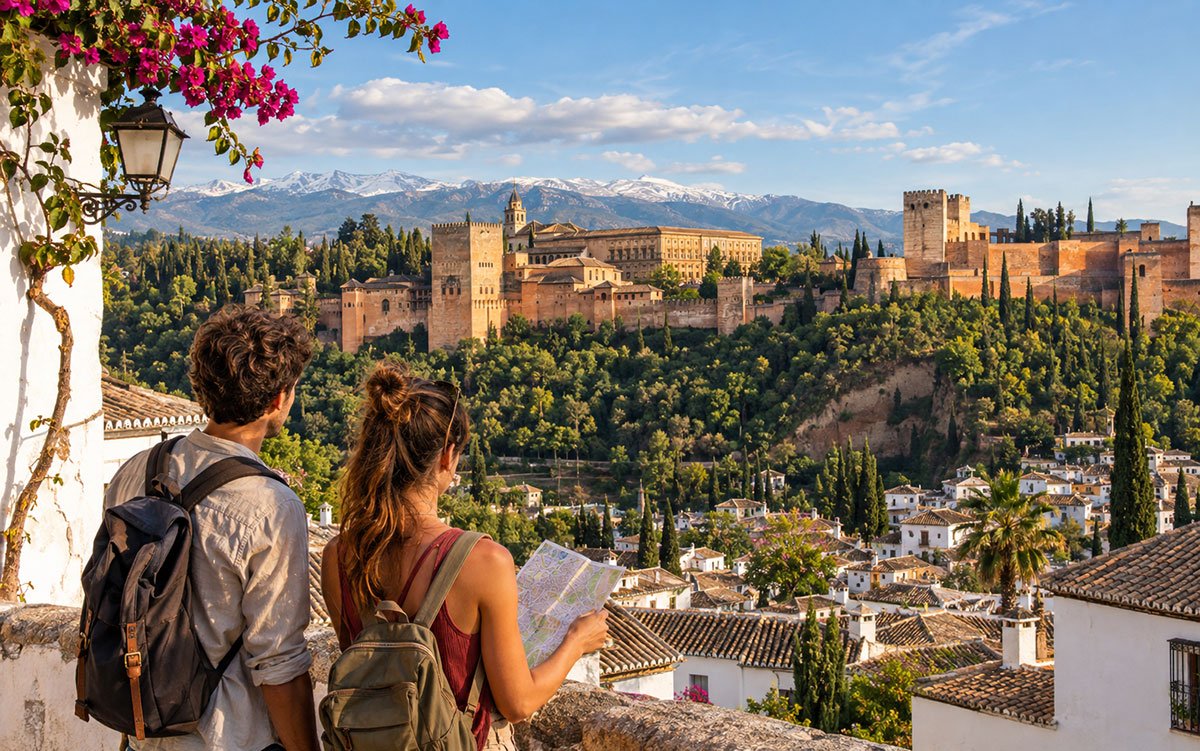
Backpackers enjoy panoramic views of the Alhambra in Granada, one of Spain’s most fascinating destinations for students and gap-year travelers.
Gap Year in Spain: 10 Best Things to Do and Travel Tips
A gap year in Spain offers an opportunity to experience a different culture, learn a new language and explore some of Europe’s most fascinating destinations. From Barcelona’s remarkable architecture to the historic streets of Granada, Spain provides a rewarding mix of education, adventure and everyday cultural experiences.
You could spend several months improving your Spanish, discover regional food traditions, explore the Mediterranean coast or travel between cities by train. Spain also offers opportunities for volunteering and certain types of employment, provided you meet the relevant immigration and work requirements.
However, planning an extended stay requires more than choosing places to visit. Your nationality, visa arrangements, budget and intended activities will determine how long you can remain in the country and whether you can legally work.
Whether you are taking time off before university, exploring career options or simply hoping to discover somewhere new, these ten experiences can help you make the most of your time in Spain.
1. Learn Spanish and Experience Everyday Life
Learning Spanish is one of the most valuable things you can do during a gap year.
Although English is widely understood in many tourist areas, speaking Spanish makes everyday activities easier. It can also help you connect with local residents and appreciate the culture beyond major attractions.
Spain offers numerous language schools, university programmes and short courses for international students.
Where to Learn Spanish in Spain
Several cities provide attractive environments for language study.
- Madrid: A lively capital with museums, cultural attractions and opportunities to practise Spanish in everyday situations.
- Salamanca: A historic university city with a strong academic atmosphere and longstanding language-learning tradition.
- Granada: A student-oriented city combining Spanish classes with Andalusian culture and historic attractions.
- Valencia: A coastal destination offering urban life, beaches and opportunities to learn Spanish.
- Seville: A beautiful Andalusian city known for its historic streets, traditional music and cultural heritage.
Before enrolling, compare teaching hours, class sizes, course accreditation, accommodation options and the qualifications provided.
The Instituto Cervantes maintains an official directory of accredited Spanish-language teaching centres.
Practise Spanish Outside the Classroom
Language lessons become more useful when you apply what you learn.
Try ordering food in Spanish, shopping at local markets and attending community activities.
Language exchanges, often called intercambios, can also provide opportunities to practise with native speakers.
If you plan to study in Spain for more than 90 days, check whether your course qualifies for the appropriate study visa or authorisation. Enrolling in a language course does not automatically provide permission to remain in Spain for an entire year.
2. Discover Spanish Food and Tapas Culture
Food is an important part of everyday life in Spain, and exploring its regional cuisine can become one of the most enjoyable aspects of your gap year.
Tapas are small portions of food commonly served in bars and restaurants. They may accompany drinks or form part of a shared meal.
The custom of ir de tapas involves visiting different establishments and sampling their specialities.
Traditional Spanish Dishes to Try
Some popular dishes include:
- Patatas bravas: Fried potatoes served with a spicy or seasoned sauce.
- Tortilla española: A Spanish omelette made with potatoes and eggs, often including onion.
- Croquetas: Small fried rolls with creamy fillings such as ham, mushrooms or cheese.
- Gazpacho: A chilled vegetable soup traditionally associated with Andalusia.
- Paella: A rice dish originating in the Valencia region.
- Pulpo a la gallega: A Galician speciality of octopus with paprika, olive oil and potatoes.
Spanish cuisine varies considerably between regions.
Granada is particularly associated with tapas culture, while the Basque Country is famous for pintxos, small portions often presented on bread.
Coastal areas offer fish and seafood dishes, while inland regions have their own stews, meats and seasonal specialities.
Make Food Part of Your Cultural Experience
Rather than eating exclusively in restaurants catering to tourists, explore neighbourhood markets and traditional food shops.
Learning to prepare a few Spanish dishes can also help you manage your budget while developing practical cooking skills.
If you stay with a host family or share accommodation with local residents, meals may become an opportunity to practise Spanish and understand regional customs.
3. Explore Gaudí’s Architecture in Barcelona
Barcelona is one of Spain’s most rewarding destinations for travelers interested in architecture, design and urban culture.
The city is closely associated with Antoni Gaudí, the Catalan architect whose distinctive buildings have become internationally recognised landmarks.
His designs combine natural forms, imaginative structures, colourful decoration and remarkable attention to detail.
Visit the Sagrada Família
The Sagrada Família is Gaudí’s most famous architectural project.
The basilica combines elaborate façades, soaring towers and an extraordinary interior inspired by natural shapes.
Its columns branch upwards like trees, creating an atmosphere unlike that of a conventional church.
The building remains an active place of worship as well as a major visitor attraction.
Tickets are sold through the official Sagrada Família website, and advance booking is strongly recommended.
Discover Park Güell and Casa Batlló
Park Güell is another important Gaudí attraction.
Located on a hillside above Barcelona, it features colourful mosaics, unusual architectural forms, gardens and views across the city.
The principal visitor area has controlled admission arrangements, so check ticket availability before arriving.
Casa Batlló, on Passeig de Gràcia, offers another example of Gaudí’s imaginative architecture.
Its flowing shapes, decorative façade and carefully designed interiors make it especially interesting for visitors studying art and design.
Explore Barcelona Beyond Its Landmarks
During a longer stay, make time for neighbourhoods such as Gràcia, El Born and the Gothic Quarter.
You can also explore local markets, museums, public spaces and beaches.
Barcelona is a convenient base for visiting other parts of Catalonia by train.
Travel tip: Popular attractions can become crowded. Spread major sightseeing visits across several days instead of trying to visit every landmark in one afternoon.
4. Discover the History and Culture of Andalusia
Andalusia offers some of Spain’s most memorable cultural experiences.
The region is known for its historic cities, Moorish architectural heritage, traditional neighbourhoods, flamenco and distinctive food.
Granada, Seville and Córdoba are particularly rewarding destinations for travelers interested in history.
Explore the Alhambra in Granada
The Alhambra is one of Spain’s most remarkable historic monuments.
This extensive palace and fortress complex overlooks Granada and contains beautifully decorated courtyards, gardens and architectural spaces associated with the Nasrid period.
The Generalife gardens and the Nasrid Palaces are among its principal attractions.
Due to visitor limits, it is advisable to purchase tickets in advance through the official Alhambra booking system.
Entry to the Nasrid Palaces is controlled by a specific time printed on the ticket.
Granada is also an appealing base for exploring Andalusian culture, neighbourhood markets and surrounding landscapes.
Discover Seville’s Historic Attractions
Seville is famous for its cathedral, the Giralda tower, the Royal Alcázar and the Plaza de España.
The city is also strongly associated with flamenco.
A visit to a recognised flamenco venue can introduce travelers to the relationship between singing, guitar playing and dance.
Flamenco is more than an evening performance. It is an artistic tradition with deep cultural roots in Andalusia and other parts of Spain.
Visit Córdoba’s Historic Centre
Córdoba offers another opportunity to explore the region’s architectural and cultural history.
Its best-known landmark is the Mosque-Cathedral, a remarkable building reflecting different periods of religious and architectural history.
The surrounding historic centre features narrow streets, traditional courtyards and attractive public squares.
Travel tip: Andalusia can experience intense summer heat, particularly in inland cities. Spring and autumn are often more comfortable for walking and sightseeing.
5. Spend Time on Spain’s Beaches and Islands
Spain has an extensive coastline, making it an excellent destination for travelers who enjoy beaches, swimming and outdoor activities.
However, its coastal regions offer very different experiences.
The Mediterranean coast features popular resorts and historic seaside towns, while northern Spain has rugged beaches and dramatic Atlantic landscapes.
Explore the Costa del Sol
The Costa del Sol in Andalusia includes destinations such as Málaga, Nerja and Marbella.
Visitors can enjoy beaches, coastal walks, traditional neighbourhoods and cultural attractions.
Málaga also offers museums, historic architecture and convenient transport connections.
For a longer stay, consider exploring smaller coastal towns rather than remaining exclusively in busy resort areas.
Discover Valencia’s Mediterranean Coast
Valencia combines urban culture with accessible beaches.
The city is known for its historic centre, modern architecture, parks and regional cuisine.
Visitors can explore the City of Arts and Sciences, walk through the Turia Gardens and spend time near the Mediterranean.
Valencia can be a convenient base for travelers who want both city life and opportunities to relax beside the sea.
Explore the Balearic and Canary Islands
Spain’s islands provide additional possibilities for a gap year itinerary.
The Balearic Islands include Mallorca, Menorca, Ibiza and Formentera.
The Canary Islands, located in the Atlantic Ocean, offer volcanic landscapes, beaches and outdoor activities.
Travelers interested in hiking, coastal scenery and island culture may enjoy exploring these destinations beyond their best-known resorts.
Travel tip: Accommodation costs and visitor numbers can rise considerably during the summer season. Compare transport, accommodation and activity costs before choosing an island destination.
6. Go Hiking in the Mountains or Ski in Sierra Nevada
Spain offers much more than beaches and historic cities.
Its mountains, national parks and walking routes create opportunities for outdoor adventure throughout the year.
Depending on the season, you can explore mountain trails, cycle through scenic countryside or enjoy winter sports.
Ski in the Sierra Nevada Mountains
The Sierra Nevada mountain range rises above Granada in southern Spain.
Its ski and mountain resort is located near Pradollano, within the municipality of Monachil.
During suitable winter conditions, the resort offers skiing, snowboarding and other mountain activities.
The ski area also provides facilities for visitors who do not plan to ski.
However, snow conditions and lift operations vary from season to season.
Always consult the official Sierra Nevada resort website before arranging a skiing trip.
Can You Ski and Visit the Beach on the Same Day?
The Sierra Nevada mountains and Granada’s Mediterranean coastline are close enough to make a combined mountain-and-coast itinerary possible.
However, skiing and visiting the beach on the same day requires careful planning, suitable weather and sufficient travel time.
Granada is a more practical base for skiing than Málaga because it lies closer to the Sierra Nevada resort.
Rather than rushing between the mountains and the coast, consider dedicating separate days to each experience.
Walk Part of the Camino de Santiago
The Camino de Santiago is a network of pilgrimage routes leading to Santiago de Compostela in Galicia.
Today, people walk the Camino for religious, cultural, personal and recreational reasons.
Different routes offer opportunities to discover villages, landscapes and historic sites.
You do not need to walk an entire route to experience it.
A shorter section can provide a rewarding introduction to long-distance walking.
Travel tip: Choose a walking route that matches your experience and fitness level. Check weather conditions, accommodation availability and any seasonal restrictions before departure.
7. Experience La Tomatina and Spain’s Traditional Festivals
Spanish festivals offer an opportunity to experience local traditions, music, food and community celebrations.
Different regions have distinctive festivals throughout the year.
Some events attract international crowds, while others remain closely connected to local customs.
Join La Tomatina in Buñol
La Tomatina is one of Spain’s most unusual annual celebrations.
The festival takes place in Buñol, a town in the province of Valencia, on the last Wednesday of August.
Its central event involves participants throwing tomatoes at one another in a designated area.
Although the celebration attracts visitors from around the world, participation is organised and subject to official rules.
Tickets are required, and attendance is controlled.
Prepare for La Tomatina
If you plan to participate, remember that this is a crowded and physically active event.
Wear suitable closed footwear and clothing that you do not mind getting dirty.
Protect your phone and other belongings from water and tomato pulp.
Follow the organisers’ instructions and avoid throwing anything other than the permitted tomatoes.
Check official transport arrangements before traveling from Valencia or another nearby destination.
Discover Other Spanish Festivals
A gap year provides time to attend celebrations in different regions.
Some notable examples include:
- Las Fallas, Valencia: A March festival featuring elaborate monuments, fireworks and traditional celebrations.
- Semana Santa: Holy Week processions held in many Spanish cities, particularly across Andalusia.
- Feria de Abril, Seville: A traditional fair featuring music, dancing, decorated spaces and local customs.
- San Fermín, Pamplona: A July celebration with parades, music and the famous Running of the Bulls.
- San Juan: Midsummer celebrations held in many coastal communities.
Dates and arrangements vary, particularly for festivals linked to the Easter calendar.
Travel tip: Major festivals attract large crowds and can affect accommodation availability and local transport. Check official programmes and book essential arrangements in advance.
8. Experience Ibiza’s Music, Beaches and Island Culture
Ibiza is internationally famous for its nightlife and electronic music scene.
During the summer season, the island hosts performances by international DJs and events at major music venues.
However, Ibiza offers far more than clubs and late-night entertainment.
Its historic settlements, beaches, rural villages and protected natural areas provide opportunities for a more varied stay.
Discover Ibiza’s Nightlife
For travelers who enjoy electronic music, Ibiza offers an established club and live entertainment scene.
Many major nightlife venues concentrate their programmes in the warmer months, although individual opening periods vary.
Check official venue schedules and ticket conditions before making plans.
Only enter age-restricted venues if you meet the applicable minimum age requirements.
Plan safe transport in advance, particularly when returning from late-night events.
Explore Ibiza Beyond the Clubs
Spend time discovering Dalt Vila, the historic fortified upper town of Ibiza.
The island’s UNESCO World Heritage designation reflects its significant cultural and natural heritage.
Other attractions include Ses Salines Natural Park, coastal viewpoints, rural villages and traditional markets.
Visitors can also enjoy walking, cycling, kayaking and swimming in suitable conditions.
Consider Visiting Outside Peak Summer
Spring and autumn offer opportunities to explore Ibiza at a slower pace.
These seasons can be particularly appealing for hiking, sightseeing and discovering the island’s cultural attractions.
However, some seasonal entertainment venues and services may operate reduced schedules.
A gap year gives you the flexibility to enjoy Ibiza without planning your entire stay around its busiest summer months.
9. Gain Experience Through Volunteering or Educational Programmes
A gap year can be an opportunity to develop practical skills, participate in community activities and explore potential career interests.
Volunteering and organised educational programmes can offer a more structured experience than independent sightseeing.
However, participation rules depend on the programme and your immigration status.
Explore Volunteer Opportunities
Potential areas of interest include environmental conservation, youth activities, social inclusion and community projects.
The European Solidarity Corps supports eligible young people participating in approved volunteering activities.
Its general volunteering programme is available to eligible participants aged 18 to 30.
Eligibility also depends on residence and programme requirements.
Certain projects provide support for travel, accommodation, food and other essential expenses.
However, not every international traveler qualifies for these opportunities.
Choose a Responsible Programme
Before accepting a placement, check the organisation’s credentials and the precise nature of its activities.
Ask about:
- Programme duration and responsibilities
- Supervision and training
- Accommodation and meals
- Insurance arrangements
- Any participation fees
- Visa and residence requirements
- Safeguarding and emergency procedures
Volunteering does not automatically remove the need for immigration authorisation.
Non-EU participants may need specific documentation even when the placement is unpaid.
Consider a Structured Internship
An internship related to your studies or future career may also be worth exploring.
However, internships can involve separate rules concerning training agreements, remuneration and work authorisation.
Check the legal status of the placement before accepting an offer.
A legitimate programme should explain its eligibility requirements and provide clear written documentation.
10. Find Legal Seasonal Work in Spain
Some gap-year travelers hope to earn money while spending time abroad.
Spain’s tourism, hospitality and agricultural sectors employ seasonal workers, particularly during periods of high demand.
However, a seasonal job is not automatically available to every international visitor.
Your right to work depends on your nationality, immigration status and the type of employment.
What Types of Seasonal Jobs Are Available?
Depending on qualifications, language skills and legal eligibility, opportunities may exist in:
- Hotels and accommodation businesses
- Restaurants and cafés
- Tourism and visitor services
- Agricultural and seasonal production
- Recreational and leisure activities
- Customer service and related roles
Speaking Spanish can be an advantage, even in destinations that attract many English-speaking visitors.
Employers may also require previous experience or specific qualifications.
Do You Need a Work Visa?
EU, EEA and Swiss citizens generally have rights to live and work in Spain, subject to applicable registration and administrative requirements.
For most non-EU nationals, working in Spain requires an appropriate immigration status or work authorisation.
A tourist visa or visa-free short stay does not ordinarily grant permission to take paid employment.
Some qualifying study authorisations permit employment that is compatible with the approved studies, subject to the relevant legal conditions and working-hour limits.
Other students may require additional authorisation.
If your main purpose is employment, investigate the appropriate work visa before traveling.
Avoid Informal Employment Arrangements
Do not assume that accepting cash payments, working temporarily or receiving accommodation in exchange for duties makes an arrangement legal.
Employment, volunteering and accommodation-for-work schemes can have different legal consequences.
Request written information from prospective employers and confirm your eligibility through official Spanish authorities.
Travel tip: Build your budget around money you already have or employment you are legally authorised and realistically able to undertake. Do not depend on finding a job after arrival to finance your entire stay.
Best Places to Stay During a Gap Year in Spain
Choosing the right base is one of the most important decisions when planning an extended stay.
Spain’s cities and regions offer different lifestyles, and the best location depends on your priorities.
Madrid: For Art, Culture and City Life
Madrid is an attractive choice for travelers interested in museums, cultural events and urban life.
The city offers extensive public transport and convenient connections to many destinations across Spain.
However, accommodation costs can be a significant consideration.
Barcelona: For Architecture and Creative Culture
Barcelona combines Mediterranean beaches with art, architecture and an international urban atmosphere.
It may appeal to students interested in design, culture and city living.
Spanish and Catalan are both important languages in the region, and learning about Catalan culture can enrich your experience.
Granada: For History and Student Life
Granada offers a strong combination of historical attractions, university culture and access to mountain landscapes.
Its compact historic areas are particularly suitable for exploring on foot.
The city can be appealing to travelers who want an immersive cultural experience.
Valencia: For Beaches and Urban Convenience
Valencia combines a Mediterranean setting with museums, parks, historic architecture and modern cultural attractions.
It provides an alternative to Spain’s two largest cities for travelers who enjoy coastal living.
Seville: For Traditional Andalusian Culture
Seville is particularly rewarding for travelers interested in architecture, flamenco and regional traditions.
However, the intense summer heat is an important factor when planning an extended stay.
Do You Need a Visa for a Gap Year in Spain?
Before planning a year in Spain, you must establish how long you are legally permitted to stay.
Spain is part of the Schengen Area, where most short-stay visitors from outside the EU are limited to 90 days within any 180-day period.
This rule applies across the Schengen Area, not separately to each country.
Leaving Spain briefly for another Schengen country does not reset the allowance.
Staying in Spain for More Than 90 Days
For most non-EU nationals, a stay exceeding 90 days requires an appropriate Spanish national visa or residence authorisation.
The correct category depends on whether you intend to study, work, volunteer or undertake another qualifying activity.
A conventional sightseeing holiday does not automatically qualify someone for a year-long stay.
Spain’s official consular services provide information about national visas and supporting documents.
Student Visas and Language Courses
Certain recognised educational programmes may qualify for a Spanish study visa.
Applicants generally need documentation showing admission to an eligible course and evidence that they meet the relevant financial, insurance and other requirements.
Not every short course or privately arranged activity qualifies.
Check eligibility with the Spanish consulate responsible for your place of residence before paying non-refundable course fees.
Travel Authorisation and Border Procedures
Spain follows the European Union’s Schengen border arrangements.
Non-EU visitors should check whether they need a Schengen visa, a national visa or an applicable travel authorisation.
The EU’s Entry/Exit System and the European Travel Information and Authorisation System have also changed or are changing procedures for certain travelers.
Consult official EU and Spanish government websites before departure rather than relying on outdated entry information.
How Much Money Do You Need for a Gap Year in Spain?
The cost of spending an extended period in Spain depends on your destination, accommodation choices, lifestyle and travel plans.
A student living in shared accommodation in a smaller city will have different expenses from someone renting a private apartment in central Barcelona.
It is therefore more useful to calculate a personal budget than to rely on a single estimate.
Main Expenses to Consider
Include the following when planning your finances:
- Flights and international travel
- Visa and residence application fees
- Accommodation and security deposits
- Food and groceries
- Public transport
- Language classes or tuition
- Travel and medical insurance
- Mobile phone and internet services
- Sightseeing and entertainment
- Emergency savings
If you intend to spend several months studying, include the full cost of your course before deciding how much money remains for travel.
Save Money on Accommodation
Shared apartments and student accommodation may provide alternatives to hotels.
Some institutions also offer assistance with housing arrangements.
Before sending money, verify the property, rental agreement and identity of the landlord or accommodation provider.
Avoid paying large deposits for accommodation that you cannot independently verify.
Reduce Everyday Spending
Shopping at supermarkets and local markets can help control food expenses.
Public transport may also be more economical than frequent taxis or private transfers.
Where appropriate, compare monthly transport passes with individual tickets.
Free museums, public beaches, parks and walking routes can provide rewarding experiences without increasing daily spending significantly.
Keep an emergency reserve separate from your normal travel budget.
How to Travel Around Spain During Your Gap Year
Spain has an extensive transport network connecting major cities and regional destinations.
Railways, buses, domestic flights and local public transport offer different options depending on the journey.
Explore Spain by Train
High-speed rail services connect major destinations such as Madrid, Barcelona, Valencia and Seville.
Renfe is a principal railway operator, while other companies provide services on selected high-speed routes.
Rail travel is particularly convenient for visiting major cities without renting a vehicle.
Compare prices, schedules and luggage conditions before booking.
Use Buses for Smaller Destinations
Long-distance and regional buses connect many towns that do not have convenient railway services.
Bus travel may also offer an alternative when rail connections are limited or disrupted.
Check the departure station carefully, as some cities have multiple transport terminals.
Consider Domestic Flights for Islands
Flights may be useful when traveling between mainland Spain and the Balearic or Canary Islands.
Ferries also connect various island destinations and mainland ports.
Compare the complete journey cost, including baggage and airport transfers.
Travel Slowly When Possible
One of the advantages of a gap year is the opportunity to spend longer in each destination.
Instead of moving every few days, consider staying several weeks in a city before exploring another region.
This approach can reduce frequent travel expenses and allow more meaningful cultural experiences.
Best Time to Take a Gap Year in Spain
Spain’s climate and travel conditions vary considerably by region.
A year-round stay allows you to experience seasonal changes rather than limiting yourself to summer.
Spring: March to May
Spring is particularly attractive for exploring cities and enjoying outdoor activities.
Andalusia hosts several important cultural celebrations, while many destinations experience comfortable sightseeing temperatures.
Summer: June to August
Summer is popular for beach holidays, island travel and outdoor festivals.
However, inland cities can experience intense heat.
Accommodation demand is also high in many coastal destinations.
Autumn: September to November
Autumn is a good time for city sightseeing, hiking and cultural activities.
Temperatures become more comfortable in many regions, although rainfall varies.
Winter: December to February
Winter provides opportunities for skiing in the Sierra Nevada when conditions permit.
Cities such as Madrid and Barcelona remain active throughout the year.
The Canary Islands may appeal to travelers seeking comparatively mild winter conditions.
Essential Tips for a Safe and Successful Gap Year
Preparing carefully can help you avoid common difficulties associated with long-term travel.
Arrange Appropriate Insurance
Choose insurance that covers your activities and the full duration of your intended stay.
Check whether the policy includes medical care, emergency assistance and activities such as skiing or hiking.
If you plan to work or study, confirm that the policy is suitable for those purposes.
Protect Your Personal Belongings
Pickpocketing and bag theft can occur in busy tourist areas and on public transport.
Keep valuables secure and remain attentive in crowded locations.
Avoid carrying large amounts of cash, and maintain access to a backup payment method.
Understand Local Customs
Meal times, shop opening patterns and regional traditions can differ from what you are accustomed to.
Learn basic Spanish phrases and approach local practices respectfully.
Be particularly considerate when visiting religious buildings and residential neighbourhoods.
Keep Important Documents Accessible
Store secure digital copies of your passport, visa, insurance information and essential travel documents.
Keep originals protected and follow any legal identification requirements.
Know the Emergency Number
Spain uses 112 as its general emergency telephone number.
Save the contact details of your country’s embassy or consulate and make sure someone you trust knows your general travel plans.
Frequently Asked Questions About a Gap Year in Spain
Is Spain a good destination for a gap year?
Yes. Spain offers opportunities for language learning, cultural experiences, historic sightseeing, outdoor activities and travel between different regions.
However, its suitability depends on your budget, interests and eligibility for the appropriate visa or residence authorisation.
Can you spend an entire year in Spain as a tourist?
Not automatically.
Most non-EU visitors are subject to the Schengen short-stay limit of 90 days within any 180-day period.
A longer stay generally requires a qualifying Spanish national visa or residence authorisation.
Can you work during a gap year in Spain?
You can work if your nationality or immigration status provides the necessary employment rights.
EU, EEA and Swiss citizens generally have broader rights to work.
Most non-EU travelers need appropriate authorisation, and a tourist visa does not ordinarily permit employment.
Is it necessary to speak Spanish before visiting?
Fluency is not essential for a short tourist visit.
However, learning Spanish can make an extended stay much easier, particularly when arranging accommodation, handling administration and communicating with local residents.
Which Spanish city is best for gap-year students?
Granada and Salamanca may appeal to those seeking a university atmosphere and opportunities to practise Spanish.
Madrid and Barcelona offer extensive cultural attractions, while Valencia combines city life with Mediterranean beaches.
The best choice depends on individual priorities.
Can you study Spanish during a gap year?
Yes. Spain has recognised language schools and educational institutions offering Spanish courses.
However, the course and institution must meet the relevant requirements if you intend to apply for a study visa.
Is Spain expensive for gap-year travelers?
Costs vary by destination and lifestyle.
Accommodation is likely to be one of the largest expenses, especially in major cities and popular coastal locations.
Shared housing, grocery shopping and public transport can help manage spending.
What are the best experiences during a gap year in Spain?
Learning Spanish, exploring Barcelona’s architecture, discovering Andalusian culture, trying regional cuisine and attending traditional festivals are rewarding options.
Outdoor activities, island travel and authorised volunteer programmes can also add variety to a longer stay.
Make the Most of Your Gap Year in Spain
A gap year in Spain can offer much more than an extended holiday.
It provides time to develop language skills, discover regional traditions and experience everyday life in a different country.
You might choose to study Spanish in Granada, explore Gaudí’s architecture in Barcelona, discover traditional festivals in Valencia or spend time hiking through the country’s mountain landscapes.
Whatever interests you most, the key is to balance adventure with practical preparation.
Choose your destinations carefully, plan a realistic budget and confirm your legal right to stay, study or work before committing to long-term arrangements.
With the right preparation, a gap year in Spain can become a rewarding experience that combines travel, personal development and a deeper understanding of Spanish culture.
