
Historic Homes and Buildings to Visit in Williamsburg, Virginia
Williamsburg, Virginia, is one of the most important historic destinations in the United States. Once the capital of colonial Virginia, the city preserves a remarkable collection of 18th-century buildings, reconstructed structures, gardens, and historic sites.
Today, Colonial Williamsburg forms the heart of the city’s historic experience. The Williamsburg Historic District is a National Historic Landmark District and represents one of the most ambitious historic restoration projects in the country. The restoration began in 1927 with the support of John D. Rockefeller Jr. Today, visitors can explore restored and reconstructed buildings that help explain life, politics, architecture, and society in colonial Virginia.
If you enjoy historic architecture, colonial homes, and early American history, these Williamsburg landmarks are worth adding to your itinerary.
-
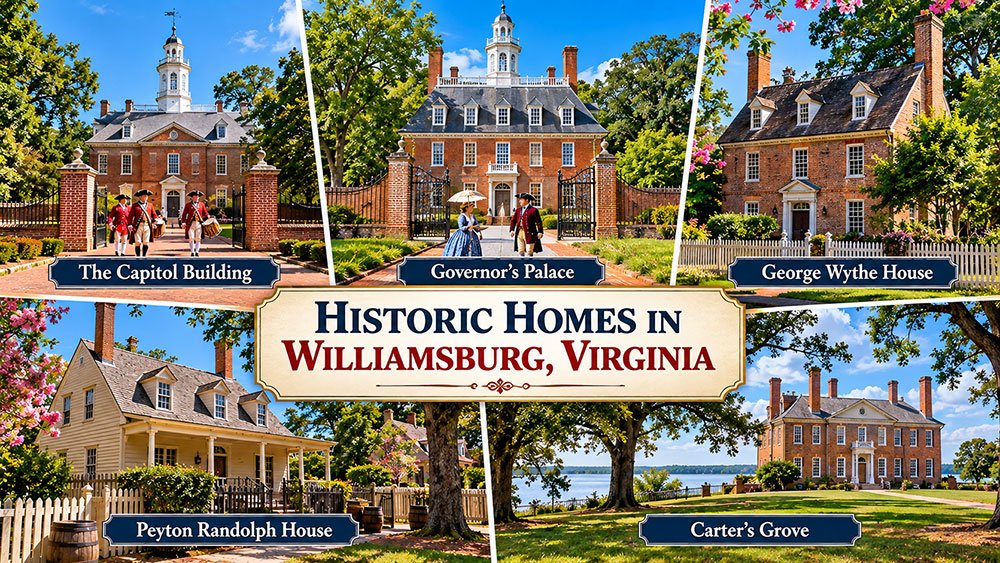
The Capitol Building

The Capitol in Williamsburg is one of the city’s most important historic buildings. It served as the center of Virginia’s colonial government during much of the 18th century.
Williamsburg became Virginia’s capital in 1699 after the colonial government decided to move from Jamestown. The first Capitol in Williamsburg was completed in 1705. It later burned in 1747 and was rebuilt on the same site. Virginia’s government remained in Williamsburg until it moved to Richmond in 1779.
The Capitol was more than an administrative building. It was a place where lawmakers debated taxation, representation, justice, and other issues that shaped Virginia’s political development.
The building also played an important role during the American Revolution. In 1776, Virginia delegates meeting in Williamsburg took steps toward independence from Britain. Today, the reconstructed Capitol helps visitors understand the political debates that influenced the creation of the United States.
Why visit the Capitol?
- See an important example of colonial-era architecture.
- Learn about Virginia’s colonial government.
- Explore the setting of important revolutionary debates.
- Join a guided tour or explore the site’s virtual experience.
Colonial Williamsburg currently lists the Capitol as a guided historic site, with tours available during regular operating periods. Visitors should check the official schedule before traveling because hours and programming can change.
-
Governor’s Palace

The Governor’s Palace is one of the most recognizable buildings in Colonial Williamsburg. The reconstructed residence represents the home of Virginia’s royal governors and later served Virginia’s first elected governors.
The Virginia General Assembly authorized construction of a governor’s residence in the early 18th century. The project took many years and required considerable resources. The completed building was designed to demonstrate the wealth, authority, and permanence of the colonial government.
The Governor’s Palace is also significant because of the people who lived and worked there. Colonial Williamsburg explains that the residence was home to royal governors, lieutenant governors, Virginia’s first elected governors, servants, and enslaved people. This makes the site useful for understanding not only architecture but also the different social groups who lived and worked within the colonial system.
What can visitors see?
The Palace experience includes the reconstructed residence, period furnishings, formal gardens, and interpretation of life within the governor’s household.
Colonial Williamsburg currently schedules tours of the reconstructed Palace during the day, followed by a period when visitors can explore the residence more independently. Check the official Colonial Williamsburg schedule before visiting for current hours and admission requirements.
-
George Wythe House
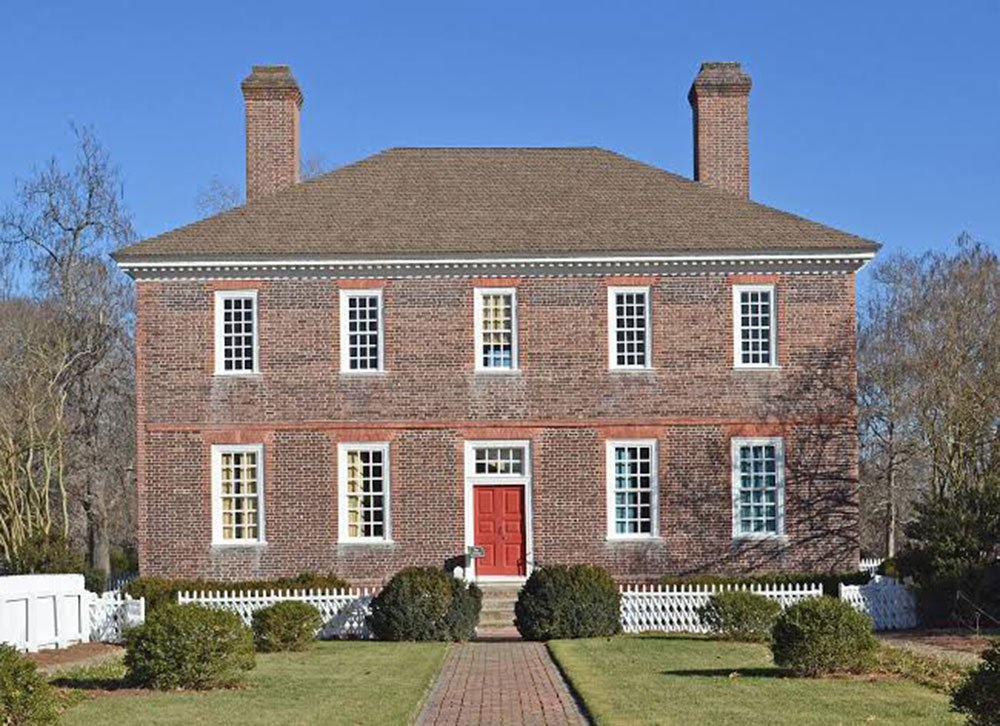
For travelers interested in historic homes, the George Wythe House is another important stop.
Built around 1755, the house became the home of George Wythe, an influential Virginia lawyer, educator, and signer of the Declaration of Independence. Wythe also taught law students, including Thomas Jefferson.
The house became connected with several important figures during the American Revolution. George Washington used it as his headquarters in 1781 while planning the Yorktown campaign, according to Colonial Williamsburg’s historical interpretation.
The home also provides an opportunity to learn about the people whose labor supported life in a wealthy 18th-century household. Colonial Williamsburg’s current interpretation discusses both free and enslaved people associated with the property, giving visitors a broader understanding of life in colonial Williamsburg.
Why architecture enthusiasts should visit
The George Wythe House is a strong example of an 18th-century Williamsburg residence. Its brick exterior, symmetrical design, garden setting, and reconstructed interiors demonstrate the architectural style associated with Virginia’s colonial elite.
Colonial Williamsburg currently identifies the George Wythe House as a self-guided historic site, although its opening status and hours can vary. Check the official schedule before visiting.
-
Peyton Randolph House
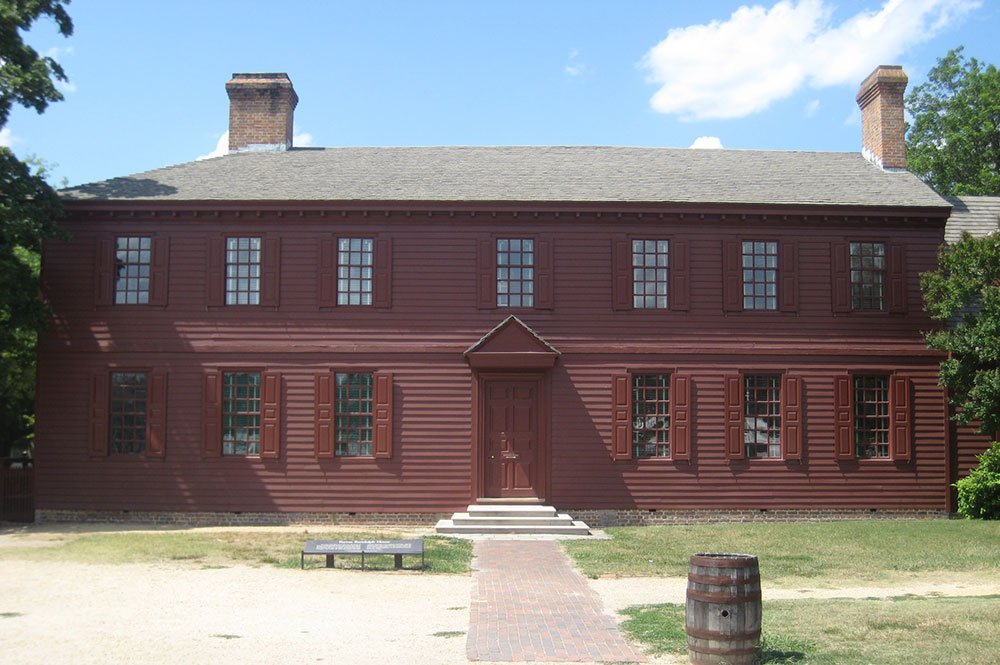
The Peyton Randolph House offers another fascinating look at life in colonial Williamsburg.
Peyton Randolph was a prominent Virginia political figure and served as president of the First Continental Congress. His Williamsburg property was also home to a large enslaved community. Colonial Williamsburg’s current interpretation focuses on both the Randolph family and the 27 enslaved people who lived on the property.
The site is particularly valuable because it does not present colonial history only through the lives of wealthy or politically powerful residents. Instead, its interpretation examines the people who lived and worked on the property and explores how slavery, freedom, politics, and the American Revolution affected different groups.
Colonial Williamsburg currently lists the Peyton Randolph House as a guided site with regular daytime hours, although visitors should confirm the schedule before their trip.
-
Carter’s Grove

Carter’s Grove is one of the most important historic plantation houses in the Williamsburg region, but it requires an important visitor update.
The mansion was built between approximately 1750 and 1755 for Carter Burwell, grandson of the wealthy Virginia landowner Robert “King” Carter. The Virginia Department of Historic Resources recognizes Carter’s Grove as an important example of colonial Virginia plantation architecture and lists it as a National Historic Landmark.
The property is also significant archaeologically. Excavations at Carter’s Grove uncovered evidence associated with Wolstenholme Towne, an early 17th-century settlement connected with the first years of the Virginia Colony.
For many years, Carter’s Grove was operated as a public historic attraction by the Colonial Williamsburg Foundation. However, it is not currently a regular public house tour. The National Park Service states that the property was purchased privately in 2008, effectively closing the plantation to public access.
Therefore, travelers should not plan a normal interior tour of Carter’s Grove when visiting Williamsburg. Its historical importance can still be explored through official historical records, archaeological research, and information about Virginia’s colonial architecture.
A Historic District Filled With Architectural Treasures
Williamsburg’s historic appeal goes far beyond these five landmarks. The city’s restored historic area includes numerous buildings associated with colonial government, education, religion, commerce, and domestic life.
The National Park Service notes that the restoration of Williamsburg includes approximately 100 restored buildings and roughly 350 reconstructed buildings on their original sites. Notable examples include the Public Magazine, Ludwell-Paradise House, Old Courthouse, Bruton Parish Church, Wren Building, and George Wythe House.
This mixture of original structures, archaeological evidence, and carefully researched reconstructions makes Williamsburg particularly interesting for visitors who want to understand early American architecture.
Tips for Visiting Historic Williamsburg
A little planning can make a Williamsburg history trip much easier.
Check opening hours
Historic buildings may have different schedules, and some sites can change between guided and self-guided access. Check Colonial Williamsburg’s official visitor information before your trip.
Allow enough time
Do not try to rush through the Historic Area. Several buildings require time to explore, and guided interpretation can add considerable historical context.
Look beyond the architecture
The buildings are beautiful, but the stories behind them are equally important. Current interpretation increasingly examines the experiences of enslaved people, free Black residents, women, workers, political figures, and other communities.
Explore more than one type of building
Combine grand buildings such as the Governor’s Palace and Capitol with residential sites such as the George Wythe House and Peyton Randolph House. This provides a more complete picture of colonial Williamsburg.
Final Thoughts
Williamsburg, Virginia, is much more than a collection of old buildings. Its historic district provides a window into colonial Virginia, the American Revolution, early American government, architecture, and everyday life.
The Capitol, Governor’s Palace, George Wythe House, and Peyton Randolph House remain important places to explore within the Colonial Williamsburg experience. Carter’s Grove is also historically significant, although it is privately owned and is not currently a regular public attraction.
For architecture lovers, history enthusiasts, and travelers interested in America’s colonial past, Williamsburg offers an unusually rich combination of preserved history, reconstructed buildings, gardens, museums, and living-history interpretation.
Travel update: Because historic-site schedules, admission arrangements, and access can change, verify current information with Colonial Williamsburg before visiting.
