
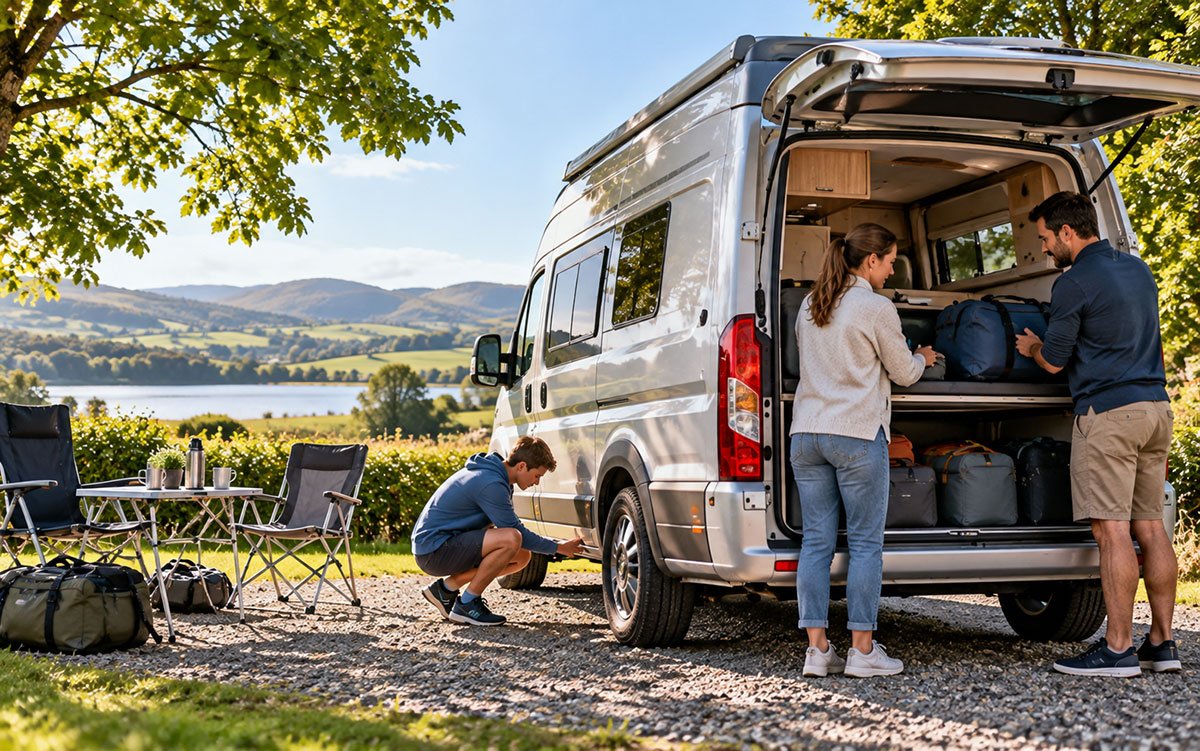
Prepare your campervan for a memorable road trip with essential vehicle checks, secure luggage and a well-organised travel checklist.
Campervan Holiday Checklist: Prepare for Your Trip
A campervan or motorhome holiday offers the freedom to explore at your own pace, discover scenic routes and spend more time together as a family. However, a successful road trip starts before you turn the key.
A thorough campervan holiday checklist helps you prepare the vehicle, check its essential systems, organise your luggage and plan overnight stops. It can also help you identify potential problems before they interrupt your trip.
Whether you own a campervan, drive a motorhome or have rented one for a family holiday, use the following guide to prepare for a safer, more comfortable journey.
1. Arrange a Vehicle Inspection Before Departure
A mechanical problem can disrupt an otherwise carefully planned holiday. Arrange servicing or a professional inspection well before departure, particularly if your vehicle has been unused for several months or is due for maintenance.
An MOT certificate, where required, does not guarantee that a vehicle remains roadworthy. You are responsible for ensuring it is safe to drive.
Ask a qualified mechanic to examine the systems that need attention and address any faults before you leave.
Essential vehicle checks
- Tyres: Inspect tread, sidewalls and overall condition. Check tyre pressures against the vehicle manufacturer’s instructions, taking the expected load into account.
- Brakes: Have the braking system inspected if servicing is due or you notice unusual noises, pulling, vibration or changes in braking performance.
- Engine and fluids: Check engine oil, coolant, brake fluid and screenwash as instructed in the vehicle handbook.
- Battery: Check its condition and charging performance, particularly if the campervan has been standing unused.
- Lights: Test headlights, indicators, brake lights, rear lights and any other required lighting.
- Wipers and windows: Check the wipers, washer system, mirrors and windscreen for damage or visibility problems.
- Belts and hoses: Ask the mechanic to inspect relevant components as part of scheduled maintenance.
- Spare tyre or repair equipment: Check whether a spare is fitted and that it is usable, or confirm that the approved tyre repair equipment is present and in working order.
If you are unfamiliar with mechanical checks, leave them to a professional rather than attempting repairs without the necessary skills.
Practical tip: Book the inspection early enough to allow time for repairs and replacement parts. Do not leave important maintenance until the day before departure.
2. Check the Campervan’s Weight and Driving Requirements
A motorhome may feel more substantial and less manoeuvrable than an ordinary car. Its height, width, length and fully loaded weight can affect which roads you can safely use.
Before packing, check the vehicle’s maximum authorised mass (MAM), permitted payload and axle weight limits.
Payload is the weight available for passengers, luggage, food, water and other items carried after accounting for the vehicle’s specified operating weight.
Make sure your driving licence covers the vehicle
In the UK, the licence category required to drive a motorhome depends on its maximum authorised mass and your licence entitlements. Larger vehicles may require category C1 or C, so confirm your entitlement through official government guidance before driving.
This is particularly important when renting an unfamiliar or larger motorhome.

Record your vehicle dimensions
Know the vehicle’s actual height, including roof-mounted equipment, as well as its width and length.
Keep these measurements somewhere visible to the driver. Configure your navigation system for the vehicle’s dimensions where that feature is available, and plan routes that accommodate its size.
Low bridges, narrow lanes, weight restrictions and restricted parking areas can create difficulties for larger motorhomes.
Check passenger capacity
The number of sleeping berths is not necessarily the same as the number of approved travelling seats.
Check the vehicle’s seating and seat-belt arrangements before taking passengers. Use suitable child restraints and comply with the rules that apply to your vehicle and destination.
Never carry more passengers than the vehicle is approved to transport.
3. Test the Campervan’s Living Facilities
A campervan is more than a vehicle. Depending on its design, it may also contain cooking equipment, refrigeration, water tanks, heating, a toilet, electrical connections and gas appliances.
Test the facilities you expect to use before setting off. Small problems are usually easier to address at home than at a remote campsite.
Inspect gas and electrical systems
Check that appliances operate as described in the manufacturer’s instructions. If you notice a gas smell, damaged connections or an electrical fault, stop using the affected system and seek qualified assistance.
Close the gas cylinder valve before driving, following the vehicle manufacturer’s instructions. Make sure all electrical equipment and external power connections are prepared for travel.
Never drive away with a campsite electrical hook-up cable still connected.
Check water and waste systems
If the vehicle has fresh-water and wastewater tanks, inspect the systems for leaks and confirm that caps, valves and connections are secure.
Empty or fill tanks according to your route, intended use, vehicle payload and availability of suitable facilities. Carrying unnecessary water adds weight, so balance convenience with the vehicle’s limits.
Check that the toilet system is clean and ready for use. Identify suitable places to empty wastewater and chemical toilets, where fitted, rather than relying on finding facilities at the last minute.
Secure windows, doors and equipment
Before driving, follow the vehicle’s departure checklist:
- Close and secure windows, roof vents and skylights.
- Lock cupboards, drawers and external storage lockers.
- Secure refrigerators and internal equipment using their travel locks.
- Retract awnings and external steps, where fitted.
- Lower or secure roof aerials and other projecting equipment.
- Store loose items so they cannot move around when braking or cornering.
The specific requirements will vary between campervans and motorhomes. Keep the manufacturer’s instructions accessible and use them whenever you are unsure about an onboard system.
4. Check Insurance and Breakdown Cover
An unexpected breakdown can be expensive, particularly if it occurs far from home or in another country.
Before departure, check that your insurance is valid for the vehicle and intended use. If you are travelling abroad, confirm that the policy covers every country on your route.
Look beyond the basic premium. Depending on your needs, you may want to check cover for:
- Accidental damage and theft.
- Windscreen damage.
- Personal belongings and camping equipment.
- Third-party liability.
- Recovery after a mechanical breakdown.
- Repatriation of the vehicle if it cannot be repaired locally.
Breakdown policies are not all the same. Some restrict assistance according to vehicle height, length, weight, age or type. Others may exclude particular roads or destinations.
If you are renting, read the rental agreement and establish who to contact if the vehicle develops a fault. Find out how roadside assistance works and what to do in an emergency.
Keep insurance details, emergency telephone numbers and the relevant policy documents accessible.
5. Pack a Practical Road Trip Emergency Kit
An emergency kit can help you manage minor problems while waiting for assistance or dealing with an unexpected delay.
The exact equipment you need depends on your destination, vehicle and season. Start with these useful items:
- First-aid kit and essential personal medication.
- Torch or headlamp with spare batteries or a charging facility.
- Drinking water and non-perishable snacks.
- Phone charger and a fully charged power bank.
- Reflective vest and warning triangle, where appropriate and required.
- Warm clothing, waterproof layers and a blanket.
- Basic tools suitable for the vehicle.
- Contact details for your breakdown provider and insurer.
- Spare vehicle keys stored securely and separately from the main set.
If your vehicle requires a particular tyre repair kit or other specialist equipment, make sure you understand how it works before travelling.
Do not attempt roadside repairs in an unsafe location. If you break down, prioritise your passengers’ safety, follow the relevant road authority’s guidance and contact assistance.
Keep food and drinks accessible
Carry enough food and water for the journey and any planned periods without convenient access to shops.
A cooler or the campervan’s refrigerator can be useful, provided food is stored safely. Choose snacks that are easy to manage without distracting the driver.
Plan fuel stops according to your expected range and the availability of filling stations along your route. Avoid relying on an assumption that every rural stop will have fuel or refreshments.
6. Pack Light and Secure Everything Properly
Campervans have limited storage, and excessive luggage can make the living area uncomfortable. More importantly, unsecured objects can become dangerous if the driver brakes suddenly or the vehicle changes direction sharply.
Soft travel bags can be easier to fit into compact storage spaces than rigid suitcases. However, the type of bag matters less than the way you store and secure it.

What should you pack?
For most trips, consider:
- Clothing suitable for the forecast and planned activities.
- Comfortable footwear and waterproof outerwear.
- Toiletries and personal medication.
- Towels and bedding, if they are not supplied.
- Cooking utensils and reusable water bottles, where appropriate.
- Food-storage containers and basic cleaning supplies.
- Phone chargers, navigation equipment and entertainment.
- Camping equipment required by your vehicle and chosen campsites.
Check your vehicle’s supplied equipment before buying or packing duplicates.
Distribute weight safely
Place heavy items low down in suitable storage areas and secure them using the vehicle’s designated restraints or storage fittings.
Avoid placing heavy objects high up or leaving bags in aisles, emergency exits or areas that interfere with seat belts.
After packing, ensure that the total weight and each axle load remain within the vehicle’s permitted limits.
7. Plan Your Route and Overnight Stops
One of the attractions of campervan travel is the freedom to discover places at your own pace. Even so, basic route planning makes a trip more comfortable and helps avoid unnecessary driving.
Estimate driving times realistically
Build your itinerary around the actual distance, road conditions and type of vehicle you are driving. A route that seems short on a map may take longer on narrow rural roads or through busy towns.
Allow time for fuel stops, meals, rest breaks, roadworks and unexpected delays.
Try not to schedule several long driving days consecutively. The aim is to enjoy the destinations, not spend the entire holiday behind the wheel.
Check campsites before arrival
Research potential overnight stops and check which facilities each campsite offers.
Depending on your vehicle and requirements, you may need electricity, fresh-water access, wastewater disposal, toilet facilities or accessible showers.
Check current opening dates, arrival times, reservation requirements and cancellation conditions. During busy periods, booking ahead can reduce the risk of arriving to find that no suitable pitches are available.
Do not assume that overnight parking or wild camping is permitted everywhere. Check local restrictions and use designated sites where required.
Prepare for changes in the weather
Weather can affect driving conditions, coastal roads, mountain routes and access to outdoor attractions.
Check forecasts before departure and review them throughout the journey. Have an alternative route or indoor activity in mind when severe weather could affect your plans.

8. Prepare for Driving Abroad
If your campervan holiday includes mainland Europe or another international destination, there are additional requirements to consider.
The rules vary by country, so check every country you intend to visit or transit through before setting off.
Carry the right documents
Depending on your trip, you may need:
- A valid driving licence and any required international driving permit.
- Vehicle registration documents, such as the V5C for a UK-registered vehicle.
- Appropriate insurance documents.
- The necessary authorisation if the vehicle is hired or leased.
- Passport and other required travel documents for everyone travelling.
For UK-registered vehicles taken into the EU, official guidance explains when a UK identifier must be displayed and which documents should be carried. Vehicle insurance must remain valid for the countries you visit.
Check local road regulations
Different countries may require particular safety equipment, headlight adjustments, environmental permits or emissions-zone stickers.
Research the rules for the destinations on your route. Do not assume that requirements are identical throughout Europe.
Also check speed limits, drink-driving rules, road tolls, vehicle restrictions and any requirements relating to winter tyres or seasonal equipment.
Check driving arrangements for your route
If you are using a ferry or another vehicle transport service, check the operator’s booking conditions, arrival instructions and any restrictions on gas cylinders or onboard equipment.
For hired campervans, confirm which countries you are permitted to enter and whether additional insurance or permission is required.
A little preparation can prevent expensive problems at a border, on a restricted road or at a transport terminal.
9. Make the Journey Comfortable for the Whole Family
A family campervan holiday requires planning for passengers as well as the vehicle.
Discuss the route with everyone before departure so that expectations are clear. Children may enjoy choosing a few stops, identifying landmarks or helping plan suitable activities along the way.
Keep children safe and occupied
Check that every passenger has an approved travelling seat and that child restraints are suitable and correctly installed.
Pack age-appropriate activities, books, games or downloaded entertainment. Keep drinks and safe snacks accessible to passengers without creating distractions for the driver.
Plan regular stops to stretch, use facilities and take a break from sitting.
Consider pets and accessibility needs
If you are travelling with pets, check campsite rules, transport arrangements and any applicable animal travel requirements. Make sure pets are safely restrained while the vehicle is moving.
If anyone in your group has mobility or accessibility needs, check the vehicle layout, access arrangements, campsite facilities and availability of suitable services before booking.
Share the driving where possible
If more than one person is legally entitled and suitably insured to drive the vehicle, sharing the driving may help reduce fatigue.
However, the size and handling of a motorhome can differ considerably from a car. Any additional driver should be comfortable with the vehicle’s dimensions and controls before taking the wheel.
Never continue driving when tired. Stop in a safe, permitted place and rest before continuing.
10. Create a Realistic Campervan Holiday Budget
A campervan trip may reduce the need for separate hotel bookings, but it is not automatically cheaper than a conventional holiday.
Your budget should account for the full cost of travelling and staying overnight.
| Expense | What to include |
|---|---|
| Vehicle | Rental charges or maintenance costs for an owned vehicle |
| Fuel | Expected fuel use and planned refuelling |
| Campsites | Pitch fees, electricity and any additional facilities |
| Food | Groceries, meals out, drinks and snacks |
| Road charges | Tolls, ferries and other applicable fees |
| Insurance | Vehicle cover and suitable breakdown assistance |
| Activities | Attraction admissions, tours and other experiences |
| Equipment | Necessary camping supplies or replacement items |
| Contingency | Unexpected repairs, delays or changes to plans |
Compare this estimate with the cost of accommodation, transport and meals for a conventional trip. This will help you determine whether a campervan holiday is financially worthwhile for your group.
You can also reduce avoidable costs by planning a sensible route, preparing some meals, carrying only necessary equipment and avoiding unnecessary mileage.
11. Complete a Final Check Before Driving Away
Whether you are leaving home or departing from a campsite, make a quick final inspection.
Use the checklist below before every journey.
Pre-departure checklist
- Walk around the vehicle and check the tyres for visible damage.
- Test that the lights are working and the windows and mirrors are clear.
- Confirm that cupboards, drawers, doors and external lockers are secured.
- Close and lock windows, roof vents and skylights.
- Disconnect and stow any electrical hook-up cable.
- Close gas supplies as directed by the vehicle manual.
- Retract awnings and steps and secure external equipment.
- Check that water tanks, luggage and other loads are secure and within weight limits.
- Confirm the route, fuel level and next planned stop.
- Make sure all passengers are seated correctly with seat belts fastened.
Follow the manufacturer’s instructions for any vehicle-specific checks. If something appears unsafe, do not set off until the problem has been resolved.
Frequently Asked Questions
How far in advance should I prepare my campervan?
Start several weeks before departure if the vehicle needs servicing, repairs or replacement equipment. This gives you time to address problems without rushing. Complete the final checks shortly before setting off and repeat the relevant safety checks before subsequent journeys.
Does a valid MOT mean my motorhome is safe to drive?
No. An MOT certificate does not guarantee that a vehicle remains roadworthy. Check its condition regularly and follow the manufacturer’s maintenance schedule.
What should I keep in a campervan emergency kit?
Useful essentials include a first-aid kit, torch, water, snacks, phone charger, power bank, suitable warm clothing, emergency contact details and any required roadside safety equipment. Adapt the kit to your vehicle, destination and season.
Can I drive any motorhome on a standard UK car licence?
Not necessarily. Licence entitlements depend on the vehicle’s maximum authorised mass and your individual licence category. Check the relevant government guidance before hiring or driving a larger motorhome.
Do I need extra equipment to drive a campervan in Europe?
Requirements vary by country. You may need particular safety equipment, vehicle documents, insurance documentation, an appropriate country identifier or environmental permits. Check the current rules for each country on your itinerary.
Final Thoughts
A well-prepared campervan makes it easier to enjoy the freedom of the road without overlooking the practical responsibilities involved.
Arrange the necessary mechanical checks, confirm that your driving licence and insurance are suitable, test the onboard facilities, secure your luggage and plan realistic driving days. If you are travelling abroad, research the relevant documents and road regulations well before departure.
Most importantly, keep your itinerary flexible enough to accommodate weather changes and unexpected delays. A campervan holiday should leave room to enjoy the journey, explore new places and spend quality time together.
