
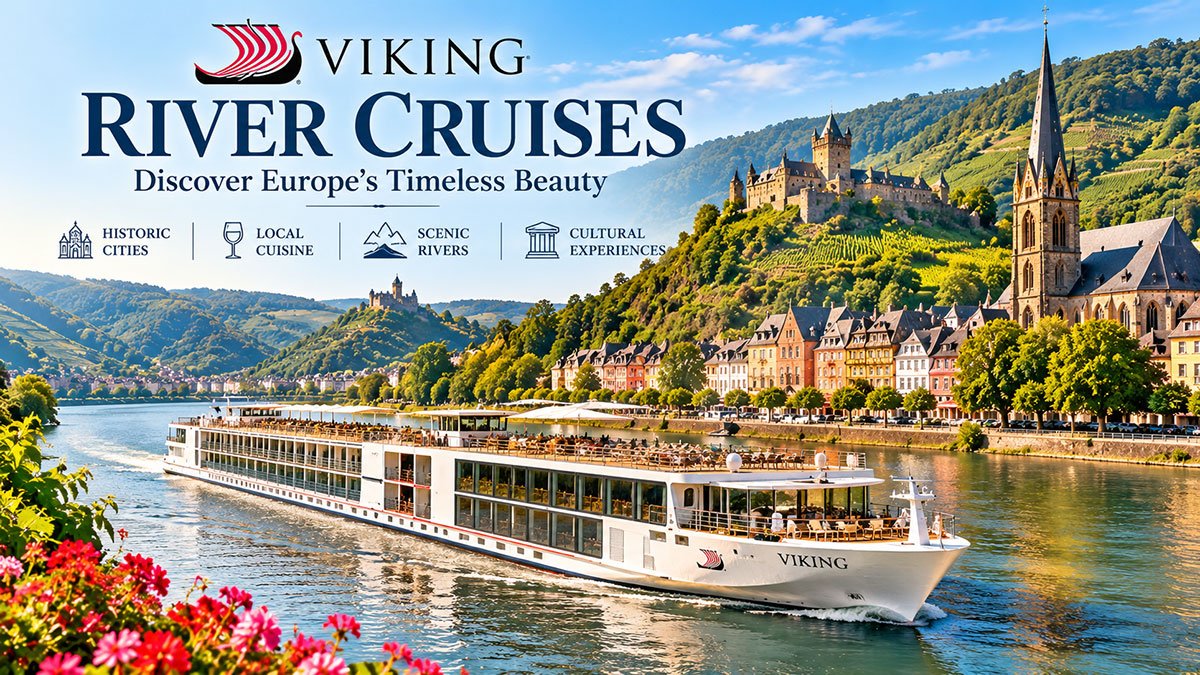
Viking River Cruises: Why the European River Cruise Boom Continues
Europe remains one of the world’s most rewarding regions to explore by river. Its waterways connect historic capitals, medieval towns, vineyard-covered valleys, famous cultural sites, and picturesque countryside.
For travelers who want to experience several European destinations without constantly changing hotels, a Viking River Cruise offers an appealing alternative. Guests can unpack once while the ship carries them between destinations along some of Europe’s most famous rivers.
Viking has also changed substantially since this article was originally published in 2013. The company now operates river, ocean, and expedition voyages across the world. Its current fleet includes more than 100 vessels overall, with itineraries covering 21 rivers, five oceans, and all seven continents.
The company’s continued expansion suggests that its river-cruise strategy remains firmly in growth mode. Based on its committed ship orderbook, Viking expects to have 114 river ships by 2028, compared with the much smaller fleet described in the original article.
Why Choose a Viking River Cruise in Europe?
A European river cruise offers a different style of travel from a traditional ocean cruise.
Instead of spending most of your time at sea, river cruising keeps you close to the places you came to see. Ships travel directly through the heart of Europe, often stopping close to city centers and historic districts.
Viking emphasizes this destination-focused approach. Its current river program includes an included shore excursion in every port, while Wi-Fi and beer and wine with lunch and dinner are part of its all-inclusive offering.
That approach can simplify the travel experience. Rather than spending time arranging transportation between multiple hotels and cities, travelers can enjoy guided sightseeing while keeping the same accommodation throughout the voyage.
Viking’s European River Network
Viking operates European river voyages across some of the continent’s most famous waterways. Major programs include the Rhine, Danube, Seine, Rhône, Douro, Moselle, Main, and Elbe rivers.
Each river provides a different perspective on Europe.
The Rhine offers castles, vineyards, historic towns, and major cities. The Danube links destinations including Budapest, Vienna, and Passau. Seine itineraries explore Paris and Normandy, while the Rhône introduces travelers to French landscapes and cuisine.
The Douro provides a very different experience through Portugal’s wine country. Travelers can combine river scenery with historic cities such as Porto and Lisbon.
This variety is one of Viking’s strongest advantages. You can select an itinerary based on history, food, architecture, wine, scenery, or a combination of all five.
The Viking Longship Experience
Viking’s European fleet is built largely around its Viking Longships, which were designed specifically for Europe’s rivers.
A typical Longship accommodates up to about 190 guests and features Scandinavian-inspired interiors, an indoor-outdoor Aquavit Terrace, multiple accommodation categories, and suites with full-size verandas.
The ships are considerably smaller than many ocean cruise vessels. That gives them an advantage on narrow waterways and allows them to use docking locations close to major attractions.
Viking has also incorporated technology and efficiency features into its newer Longships. These include solar panels, hybrid propulsion systems on newer vessels, and shore-power capability on qualifying ships.
New Viking River Ships in 2026
The expansion described in this article is not simply a future ambition. Viking added multiple new river vessels during 2026.
In March 2026, the company took delivery of Viking Eldir, a 190-guest Longship designed for the Rhine, Main, and Danube. The vessel joined itineraries including Rhine Getaway, Grand European Tour, Passage to Eastern Europe, European Sojourn, and Christmas on the Rhine.
Viking followed this with the delivery of Viking Annar and Viking Fjolvar in June 2026. Annar sails the Rhine, Main, and Danube, while Fjolvar was built specifically for the Seine River. The Fjolvar accommodates 168 guests and can use Viking’s exclusive docking location in the heart of Paris.
Another new Longship, Viking Dagur, was also introduced to the European fleet in 2026. It accommodates 190 guests and is scheduled to sail itineraries including Rhine Getaway, Paris to the Swiss Alps, and Christmas on the Rhine.
These additions demonstrate how much the company has expanded since the original 2013 article.
New Experiences Beyond Traditional Sightseeing
Today’s Viking River Cruises are also broader than the basic sightseeing model described in older travel articles.
In June 2026, Viking announced new European shore excursions and land extensions. Among the most unusual additions is a Zeppelin flight over Germany’s Ruhr Valley on select Rhine itineraries. Other new experiences focus on food, culture, local traditions, and smaller-group exploration.
The company has also introduced new 2026 itineraries such as Croatia & Slovenia, Best of Belgium, and Best of Holland. These programs combine river travel with guided visits to major cultural destinations and attractions.
Looking ahead, Viking has already opened selected 2027 programs and continues to add specialized itineraries. It has also announced new 2030 voyages combining river cruising with the Oberammergau Passion Play in Germany.
What Is Included on a Viking River Cruise?
One of the attractions of Viking is the relatively straightforward pricing structure.
The company describes its river experience as all-inclusive and says that every port includes a shore excursion. Wi-Fi is included, as are beer and wine with lunch and dinner.
The exact inclusions can vary by itinerary and voyage package, so travelers should always check the current booking terms before making a reservation.
The emphasis is less on flashy onboard entertainment and more on the destination. That distinction is important when comparing Viking with larger ocean-focused cruise companies.
A Destination-Focused Style of Travel
Viking deliberately positions its cruises around cultural discovery rather than traditional resort-style cruising.
The company’s current corporate materials describe its core audience as English-speaking travelers aged 55 and older who value comfortable travel, history, culture, and exploration. Viking also maintains an adults-only policy, with no guests under 18 and no casinos aboard its ships.
That makes the experience particularly suitable for travelers who prefer a quieter atmosphere.
Lectures, guided tours, regional food, local traditions, and historical sites are generally more central to the experience than large-scale onboard entertainment.
Is Viking River Cruises a Luxury Experience?
Viking occupies an upscale position in the river-cruise market, although the definition of luxury varies among cruise companies.
Its smaller ships, Scandinavian design, destination-focused programming, included excursions, and attentive service contribute to a premium experience.
The ships are also designed to bring guests closer to destinations. Their relatively compact size allows them to navigate European waterways and use strategically located docking facilities. Viking says it controls or has access to desirable docking locations, including one in central Paris.
For travelers, that can translate into less time spent transferring between the ship and the city center.
Current Leadership and Viking’s Continued Expansion
The original article’s headline focused on Viking chairman Torstein Hagen and the company’s expected growth.
That prediction has become increasingly relevant, although Viking’s leadership structure has since evolved. Hagen founded Viking and served as chairman and CEO for many years. In May 2026, he transitioned to Executive Chairman, where he focuses on long-term strategy, while Leah Talactac serves as President and CEO.
The company’s fleet expansion provides a clear indication of its ambitions. Viking currently has more than 100 vessels across river, ocean, and expedition cruising. Its committed orderbook is expected to take the river fleet to 114 ships by 2028.
That is a dramatic change from the fleet size cited in the 2013 article.
Popular European Viking River Cruise Itineraries
Viking offers itineraries covering many of Europe’s best-known waterways.
Rhine River Cruises
Rhine voyages can include Amsterdam, Cologne, the Middle Rhine, Strasbourg, Basel, and other destinations. Travelers can expect historic castles, medieval towns, vineyards, cathedrals, and UNESCO-recognized landscapes.
Danube River Cruises
The Danube is one of Viking’s signature European routes. It links major destinations such as Budapest, Vienna, Bratislava, and Passau while offering access to Central European history and culture.
Seine River Cruises
A Seine itinerary can combine Paris with Normandy. Travelers can explore the French capital while visiting destinations connected with Impressionist art, French history, and the D-Day beaches.
Rhône River Cruises
Rhône voyages provide an opportunity to explore southern France. Food, wine, Roman history, architecture, and Provençal landscapes are important elements of these itineraries.
Douro River Cruises
Portugal’s Douro Valley offers dramatic hillsides, vineyards, historic villages, and wine-country scenery. Viking’s Portugal’s River of Gold itinerary combines Lisbon, Porto, and a cruise through the Douro region.
Things to Consider Before Booking
A Viking River Cruise can be an excellent choice, but it is not designed for everyone.
The experience prioritizes sightseeing and cultural immersion. Travelers who want large swimming pools, extensive amusement facilities, casinos, or constant onboard entertainment may prefer a large ocean cruise.
Walking is also an important part of many river-cruise excursions. Guests should consider their mobility and the amount of walking required by their preferred itinerary.
River levels can also affect European cruising. Water conditions can occasionally lead to schedule or itinerary adjustments, so flexible travelers should understand the operator’s current policies before departure.
Viking River Cruise Reviews and Reputation
Viking continues to receive strong recognition from major travel publications.
In Travel + Leisure’s 2025 World’s Best Awards, readers placed Viking seventh among the magazine’s favorite river cruise lines and recognized it as a Hall of Fame honoree. The survey considered factors including itineraries, destinations, excursions, activities, and value.
Viking says it has received more than 450 awards and was rated No. 1 for Rivers and No. 1 for Oceans in Condé Nast Traveler’s 2025 Readers’ Choice Awards.
Awards are not a guarantee that every traveler will have the same experience. However, they show that Viking continues to maintain a strong position in the competitive cruise market.
Is a Viking River Cruise Worth It?
For travelers who enjoy history, architecture, food, local culture, and scenic landscapes, a Viking River Cruise in Europe can be an excellent way to travel.
The biggest advantage is convenience. You can visit several destinations while keeping the same room throughout the journey.
Viking’s small ships also create a more intimate atmosphere than large ocean liners. Included excursions and destination-focused programming further simplify the experience.
The company’s continued investment in new vessels and itineraries suggests that European river cruising remains a major part of its long-term strategy. Viking’s expected growth to 114 river ships by 2028 provides particularly strong evidence that the company intends to keep expanding this segment.
Final Thoughts on Viking River Cruises
The European river cruise market has changed significantly since this article was first published in 2013, and Viking has changed with it.
What was once a relatively small river-cruise operation has grown into part of a global travel company with more than 100 ships and itineraries across rivers, oceans, and expedition destinations.
For European travelers, the fundamental appeal remains the same: historic destinations, beautiful scenery, comfortable accommodation, and the ability to explore multiple places during one journey.
The difference is scale. New ships, new itineraries, specialized excursions, and continued investment have made Viking River Cruises a much larger and more diverse operation than it was when this article was originally published.
For travelers seeking a quieter, culturally focused European vacation, Viking remains one of the strongest names to consider. Its approach puts the destination first, making the journey itself part of the experience.
