
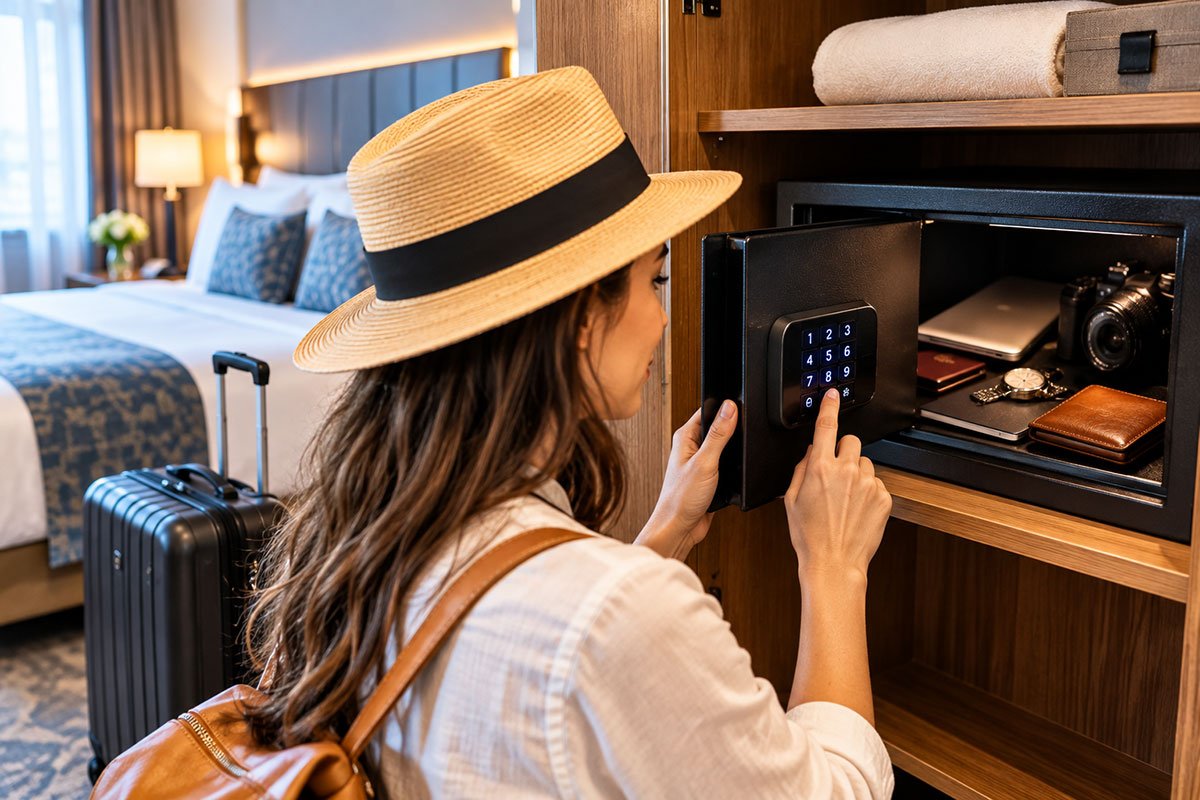
5 Tips for Choosing the Right Hotel Room Safe
Guest security is an essential part of a positive hotel experience. Travellers often carry valuable belongings, including passports, laptops, jewellery, cameras, cash and important documents. Providing a suitable in-room safe gives guests a convenient place to store these items during their stay.
However, not all hotel safes offer the same level of protection, convenience or durability. Some prioritise basic storage and ease of use, while others include electronic locking systems, access records and emergency opening features.
For hotel owners and managers, choosing the right hotel room safe means balancing security, guest convenience, installation requirements and long-term operating costs.
A hotel safe cannot guarantee protection against every theft attempt. Nevertheless, selecting an appropriate model and installing it correctly can help reduce certain risks and support a more secure guest environment.
Here are five important factors to consider before investing in hotel room safes.
-
Assess the Security Features of the Hotel Safe
Security should be your first consideration when choosing a hotel room safe. A safe may look sturdy from the outside, but its construction, locking mechanism, mounting method and resistance to tampering determine how well it performs.
Start by evaluating the safe’s body material, door construction, locking bolts and overall build quality. Ask manufacturers for documented specifications and independent test or certification information where applicable.
Choose a Suitable Locking System
Hotel room safes commonly use electronic keypads, digital PIN codes or key-operated mechanisms. Electronic keypads allow guests to create their own codes, making access convenient during short stays.
However, the presence of a digital keypad does not automatically make a safe secure. The quality of the lock, the design of its override mechanism and the hotel’s access-control procedures also matter.
Look for features such as:
- Guest-set PIN codes: Allow guests to choose a personal access code.
- Automatic locking: Secures the door after it closes, where supported.
- Incorrect-code protection: Limits repeated unauthorised access attempts.
- Emergency access controls: Allow authorised staff to assist guests who cannot open their safes.
- Audit trails: Record selected access or operating events for investigation and maintenance.
Evaluate emergency access carefully. Master codes, override keys and emergency opening tools should be restricted to authorised personnel and managed under documented procedures.
Check Anchoring and Tamper Resistance
A lightweight safe that can be carried away may offer limited protection if it is not properly secured. Consider models designed for bolting to a suitable wall, floor or fixed cabinet.
Confirm that the mounting method is compatible with the room’s structure and the manufacturer’s installation instructions. Proper anchoring can make removal more difficult, although it does not make a safe theft-proof.
For properties storing particularly valuable items, ask a qualified security professional whether a higher-rated safe or a central deposit facility is more appropriate.
UL Solutions provides third-party testing and certification services for hotel room safes and other anti-theft equipment. Its work can help buyers assess documented product performance rather than relying on appearance alone.
Learn more through the official UL Solutions anti-theft device testing and certification page.
-
Compare the Purchase Price With Long-Term Costs
Hotel safes are available in a range of sizes, designs and price categories. The right choice depends on your property type, room standards, guest expectations and available budget.
Although a low-cost model may reduce the initial investment, the purchase price should not be your only consideration. A safe that frequently malfunctions or requires difficult servicing can increase operating costs over time.
Evaluate the Total Cost of Ownership
Before selecting a model, compare the following expenses:
- Purchase cost: The initial price of each safe.
- Installation: Mounting, labour and any required modifications to furniture or walls.
- Maintenance: Routine inspections, repairs and replacement components.
- Battery replacement: The cost and frequency of replacing batteries in electronic models.
- Staff training: Time required to teach employees safe operation and emergency procedures.
- Warranty and support: Coverage, spare-part availability and access to technical assistance.
Calculate the total investment across all rooms rather than considering a single unit in isolation. For example, a hotel installing 50 safes should compare the complete purchase and installation costs for all 50 units.
Balance Functionality With Room Design
Hotel safes should complement the room without compromising usability. Many models feature neutral finishes and compact designs that fit inside wardrobes, cabinets or fixed furniture.
Choose a model that suits your property’s interior design while meeting the practical needs of your guests.
For boutique hotels, luxury resorts and business hotels, the ideal safe may differ in size, appearance and functionality. Focus on reliable operation, guest convenience and serviceability rather than paying for decorative features that provide little practical value.
-
Measure the Available Space Before Purchasing
The safe’s dimensions are just as important as its security features. A model that is too large may interfere with furniture or reduce usable storage space. A model that is too small may not accommodate the belongings guests expect to secure.
Before ordering, measure the intended installation area and compare it with the manufacturer’s external dimensions.
Consider What Guests Need to Store
Different guests carry different valuables. Business travellers may need space for laptops, while leisure travellers may want to store passports, jewellery, cameras, cash and travel documents.
A laptop-compatible safe can be particularly useful for properties that regularly accommodate business travellers or international visitors.
Check the internal dimensions rather than relying only on the external measurements. Door thickness, hinges and the locking mechanism can reduce the available storage space.
Plan the Installation Location
Common locations for hotel room safes include:
- Inside a wardrobe or fixed cabinet.
- Within a purpose-built furniture compartment.
- On a suitable fixed shelf, where the manufacturer’s design permits it.
- In a designated area that allows guests to access the keypad and door comfortably.
Allow sufficient clearance to open the safe door fully and enter the PIN without difficulty. The installation should also permit authorised staff to inspect and service the unit.
Do not install a safe where guests must lift heavy objects, reach awkwardly or move furniture to use it. Consider accessibility needs when choosing the height and position.
Before finalising the purchase, create a sample installation in one room. This allows your team to confirm the fit, usability and appearance before purchasing safes for the entire property.
-
Choose Features That Support Guest Convenience and Hotel Operations
Modern hotel room safes can include features that simplify guest access and help hotel staff manage routine issues. The best configuration depends on your operating procedures and the needs of your guests.
Avoid paying for features that your property will not use. Instead, prioritise functions that improve reliability, accountability and ease of maintenance.
Electronic Keypads and Motorised Bolts
Electronic keypads are common in hospitality safes because guests can enter a personal code without carrying a separate key.
Some models also use motorised locking bolts, illuminated displays and automatic locking functions. These features may make the safe easier to operate, especially in dimly lit hotel rooms.
During product demonstrations, check that the keypad is easy to understand and that the door opens and closes smoothly.
Audit Trails and Emergency Overrides
An audit trail can record certain events, such as openings, failed attempts or other operations, depending on the model. This information can help authorised staff investigate reported problems and identify recurring maintenance issues.
Check how many events the system records, how the information is retrieved and whether records remain available after a power interruption or battery replacement.
Emergency overrides can also help when guests forget their codes or a lock malfunctions. However, access to override keys and codes must be controlled carefully.
Establish a written procedure that covers staff authorisation, identity verification, incident documentation and periodic review of access privileges.
Battery Monitoring and Maintenance
Battery-powered safes should provide clear indications of low battery levels or other operating problems. Ask manufacturers about battery life under typical hotel usage and how batteries can be replaced.
Your housekeeping or maintenance team should have a routine for checking safe operation, responding to guest reports and documenting faults.
If you are considering network-connected or remotely managed safes, evaluate their cybersecurity, access permissions, software support and data-handling requirements before deployment.
-
Inspect the Interior, Usability and Overall Build Quality
The interior of a hotel room safe can influence both usability and the guest experience. A well-designed interior protects stored belongings from scratches and makes the available space easier to use.
Some models include carpeted bases, soft liners, internal lights or removable shelves. These features can be useful, but they should not replace more important considerations such as reliable locking and sound construction.
Look for Practical Interior Features
When comparing models, consider whether the safe offers:
- A soft base or protective lining for jewellery and electronics.
- Enough height and width for common guest belongings.
- An internal light, where useful.
- Smooth edges and a door that opens without obstruction.
- A clear display and accessible keypad.
- A layout that makes items easy to retrieve.
Choose an interior finish that is durable and easy for housekeeping staff to clean. Decorative lining should not be so delicate that it deteriorates quickly under regular hotel use.
Test the Safe Before Installation
Ask the supplier for a demonstration or sample unit. Test the complete guest experience, from entering a code to opening the door and retrieving stored items.
Check the following:
- The keypad responds consistently.
- The door and locking bolts operate smoothly.
- The emergency opening procedure follows the manufacturer’s instructions.
- The safe can be securely mounted as intended.
- The display and instructions are clear.
- The supplier provides a usable manual and after-sales support.
A practical evaluation can reveal problems that are not obvious from a product photograph or specification sheet.
Additional Considerations Before Buying Hotel Room Safes
The five main factors above cover the most important purchasing decisions. However, hotel operators should also consider how the safes will be managed throughout their service life.
Establish Clear Guest Instructions
Provide simple instructions showing guests how to set a code, lock the safe and retrieve their belongings. Include guidance on whom to contact if the safe will not open.
Instructions should be easy to understand and available in suitable languages for your guest profile.
Create a Maintenance Schedule
Inspect safes regularly for loose mounting hardware, damaged keypads, weak batteries and door alignment problems. Test the locking mechanism according to the manufacturer’s maintenance instructions.
Record faults and repairs so recurring problems can be identified before they affect more rooms.
Review Your Hotel’s Security Policy
A room safe is one part of a wider security system. It should complement room access controls, staff training, incident reporting and appropriate procedures for handling lost property.
Tell guests clearly what the safe is designed to do and whether the hotel offers alternative secure storage for particularly valuable items.
Check Warranty, Certification and Supplier Support
Before purchasing, request the product specifications, warranty conditions and details of any applicable independent testing or certification.
Confirm that replacement parts, technical assistance and servicing are available in your region. For hotels operating multiple properties, standardising safe models may simplify staff training and maintenance.
Frequently Asked Questions About Hotel Room Safes
Are hotel room safes secure?
Hotel room safes can help protect valuables from casual access and certain theft risks. However, security varies by model, installation and management procedures. No in-room safe should be assumed to provide absolute protection.
What size safe should a hotel choose?
Choose a size that accommodates the items your guests are most likely to store. Measure the available installation space and check the internal dimensions, especially if you want the safe to hold a laptop.
Are electronic hotel safes better than key-operated models?
Electronic safes can offer convenient guest-set codes, audit trails and other useful functions. However, the best option depends on build quality, reliability, emergency access controls and maintenance requirements rather than the locking method alone.
Should hotel room safes be bolted down?
Where the design and room structure permit, anchoring a safe according to the manufacturer’s instructions can make unauthorised removal more difficult. A qualified installer should confirm that the mounting method is suitable.
How often should hotel safes be checked?
Hotels should establish a regular inspection schedule based on the manufacturer’s recommendations, usage levels and previous faults. Safes should also be checked promptly when a guest reports a problem.
Conclusion
Choosing the right hotel room safe requires more than comparing prices and dimensions. Hotel owners and managers should assess security, installation, operating costs, guest convenience and long-term maintenance before making a purchase.
Start by defining what guests need to store and the level of protection your property requires. Then compare the locking system, anchoring options, internal capacity, operational features and supplier support.
Finally, test a sample unit and establish clear maintenance and emergency-access procedures before installing safes throughout the property.
A carefully selected and properly managed hotel room safe can support guest confidence, improve day-to-day operations and contribute to a more professional hospitality experience.
