
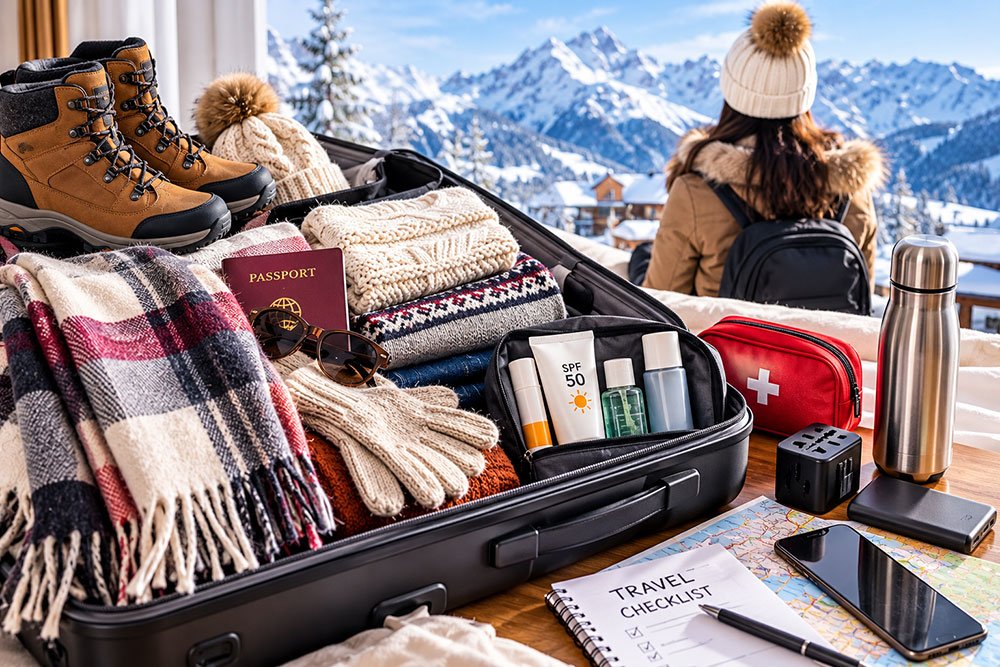
Winter Holiday Packing: Essential Suitcase Essentials
Packing for a winter holiday requires more planning than packing for a summer beach break. Cold weather can change quickly, and the right clothing can make the difference between enjoying your trip and spending your time feeling uncomfortable.
The good news is that you do not need to fill your suitcase with bulky winter clothing. A smart winter holiday packing list focuses on versatile layers, weather-resistant footwear and a few practical travel essentials.
Whether you are visiting a snowy European city, heading to the mountains or exploring a cold-weather destination, these suitcase essentials can help you travel comfortably.
-
A Warm Shawl or Scarf
A warm scarf, shawl or pashmina is one of the most useful items you can pack for winter travel.
Airports, aircraft and hotels can have different temperatures. A lightweight scarf gives you an easy extra layer without taking much space in your suitcase.
Choose a material that is warm but easy to carry. Merino wool and other lightweight insulating fabrics can work particularly well for cold-weather travel.
A scarf can also be useful outdoors. You can wear it around your neck or use it as an additional layer when temperatures drop.
-
Essential Medicines and a Small Travel Health Kit
Instead of relying on supplements such as Echinacea, pack a simple travel health kit that suits your needs.
The NHS notes that there is little evidence that Echinacea prevents common colds or helps people recover faster. Therefore, it should not be treated as a guaranteed way to avoid getting sick while travelling.
Your travel health kit could include:
- Regular prescription medicines
- Basic first-aid supplies
- Any medicines you normally use
- Plasters or bandages
- Pain relief that you normally take
- Hand sanitiser
- Any destination-specific health supplies
Keep important medicines in your hand luggage rather than placing them only in checked baggage.
If you take prescription medication, check the rules of your destination before travelling. Some countries have restrictions on particular medicines.
-
Moisturiser and Lip Balm
Cold air, wind and indoor heating can leave your skin feeling dry and uncomfortable.
A good moisturiser and lip balm therefore deserve a place in your winter travel packing list.
Consider packing:
- Face moisturiser
- Hand cream
- Lip balm
- Body moisturiser
- A gentle cleanser
Choose travel-size containers when possible. If you are carrying liquids, creams or gels in your hand luggage, always check the rules at the airports on your journey.
At many airports, liquids in hand luggage are still limited to containers of no more than 100 ml. However, rules can vary by airport. UK government guidance specifically advises travellers to check the rules for every airport they will use.
The European Commission also currently lists a 100 ml maximum for individual liquid containers at EU airport security checkpoints, subject to stated exemptions.
-
Hat, Gloves and Warm Accessories
Do not underestimate the value of a warm hat and gloves.
Cold-weather travel often involves spending more time outdoors than expected. You may be walking between attractions, waiting for transport or exploring areas where the temperature feels lower than expected.
The CDC recommends wearing warm clothing in several loose layers and protecting your head, hands and feet when travelling to cold destinations.
For particularly cold destinations, consider:
- Wool or insulated gloves
- A warm hat or beanie
- A neck warmer
- Thick socks
- An insulated coat
- Weather-resistant outerwear
Pack accessories that can work together rather than taking several bulky alternatives.
-
Hand Sanitiser
Hand sanitiser remains a practical item for any travel bag.
You may not always have immediate access to soap and water while travelling. Airports, public transport and busy tourist attractions can also involve frequent contact with shared surfaces.
The CDC recommends washing your hands with soap and water when possible. When soap and water are unavailable, it recommends hand sanitiser containing at least 60% alcohol.
A small bottle can therefore be useful in your day bag or hand luggage.
Remember that hand sanitiser is a liquid, so check the applicable airport security rules before packing it in your cabin bag.
-
Sunscreen
Sunscreen is not only for summer holidays.
Winter travellers can still receive significant UV exposure, particularly when visiting mountains or snowy destinations. Snow can reflect UV radiation and increase exposure.
The CDC advises travellers to protect themselves from UV radiation even during winter activities. It recommends broad-spectrum sunscreen and notes that UV exposure can increase when sunlight reflects from snow, water or sand.
Add these items to your winter suitcase:
- Broad-spectrum sunscreen
- SPF lip balm
- Sunglasses with UV protection
- A suitable hat
If you plan to ski, snowboard or spend long periods outdoors, sun protection becomes even more important.
-
Thermal Layers
Thermal clothing can help you stay warm without filling your suitcase with heavy jumpers.
Instead of packing several thick sweaters, consider taking lightweight base layers that can be worn underneath your normal clothes.
Useful options include:
- Thermal tops
- Thermal leggings
- Merino wool base layers
- Warm socks
- Lightweight fleece layers
The CDC recommends wearing several loose layers when travelling in cold weather. It also advises choosing clothing appropriate for the destination and activities.
Layering also makes it easier to adjust your clothing when moving between cold outdoor conditions and heated indoor spaces.
Packing tip: Roll or fold lightweight thermal layers together to save suitcase space.
-
Comfortable, Weather-Resistant Walking Boots
Good footwear should be near the top of your winter holiday packing list.
Winter trips often involve more walking than expected. Wet pavements, snow, ice and uneven paths can also make ordinary shoes uncomfortable or unsafe.
Look for walking boots with:
- Good grip
- Comfortable cushioning
- Weather-resistant materials
- Adequate insulation
- Strong ankle support when appropriate
The CDC recommends waterproof shoes with good traction for wet conditions.
If you are visiting a destination where snow or ice is likely, check the expected conditions before choosing your footwear.
Avoid taking brand-new boots on holiday. Wear them before your trip so you know they are comfortable for longer walks.
-
A Weather-Resistant Jacket
A good winter jacket can be more useful than several bulky layers.
Choose an outer layer according to the conditions you expect at your destination. A waterproof or water-resistant jacket can be particularly useful in rainy or snowy weather.
For colder destinations, consider an insulated jacket that can be worn over your thermal base layers.
If you expect changing conditions, a three-layer approach works well:
- A moisture-managing base layer
- A warm middle layer
- A wind- or rain-resistant outer layer
This gives you flexibility without requiring an oversized suitcase.
-
A Reusable Water Bottle
A reusable water bottle is another practical addition to your travel bag.
Cold weather does not eliminate the need to stay hydrated. Walking, sightseeing and spending time in dry indoor heating can all increase your need for fluids.
Choose a leak-resistant bottle that fits comfortably in your day bag.
Before flying, remember that airport security restrictions may apply to liquids in your bottle. Follow the instructions at the airport security checkpoint.
-
Power Bank and Travel Adapters
Cold-weather travel often means long days away from your hotel. Your phone may be particularly important for maps, tickets, translation, transport information and emergency communication.
Pack:
- Phone charger
- Suitable travel adapter
- Power bank
- Charging cable
- Spare cable if needed
Check your destination’s electrical socket and voltage requirements before departure.
Keep essential electronics and charging equipment in your hand luggage where practical.
-
A Compact Day Bag
Your suitcase may contain everything you need, but you will not want to carry it around while sightseeing.
A small, comfortable day bag can hold your:
- Phone
- Wallet
- Passport or travel documents
- Water bottle
- Gloves
- Hat
- Sunscreen
- Hand sanitiser
- Camera
- Portable charger
Choose a bag that is comfortable enough for several hours of walking.
Smart Packing Tips for a Winter Holiday
Winter clothing can quickly consume your suitcase space. A few simple packing techniques can help.
Pack in layers
Prioritise versatile clothing that can be combined in different ways.
Choose neutral colours
Neutral clothing is easier to mix and match. This means you can create more outfits with fewer items.
Check the weather forecast
Check the forecast shortly before departure. This helps you adjust your clothing choices to the actual conditions.
Check your airline’s baggage allowance
Airlines can have different cabin and checked baggage limits. Check your airline’s current allowance before packing.
Keep essentials in your hand luggage
Pack medicines, important documents, valuables, electronics and one change of clothes in your cabin bag when appropriate.
Leave some space
Avoid filling your suitcase completely before leaving home. Extra space can be useful for souvenirs and items purchased during your trip.
Final Winter Holiday Packing Checklist
Before leaving for the airport, make sure you have:
- Warm scarf or shawl
- Thermal layers
- Winter coat
- Hat and gloves
- Warm socks
- Comfortable walking boots
- Moisturiser and lip balm
- Sunscreen and UV-protective sunglasses
- Hand sanitiser
- Essential medicines
- Basic travel health supplies
- Reusable water bottle
- Phone charger
- Travel adapter
- Power bank
- Travel documents
- Compact day bag
Make Your Winter Trip More Comfortable
A successful winter holiday starts before you reach your destination. The right winter holiday packing list can help you stay warm, comfortable and prepared without overloading your suitcase.
Focus on versatile layers rather than bulky clothing. Choose footwear according to the weather and activities. Remember sunscreen even when temperatures are low, and keep essential medicines and travel documents accessible.
Most importantly, check current airline baggage rules, airport security requirements and local weather conditions before you leave. Travel regulations can change, and requirements may differ between airports.
With a little preparation, you can spend less time worrying about what you packed and more time enjoying your winter adventure.
Latest Update
Current travel guidance continues to emphasise layered clothing for cold destinations, appropriate footwear, hand hygiene and protection from UV exposure during winter activities. The CDC specifically warns that snow can reflect UV radiation and recommends suitable clothing and equipment for cold-weather travel.
Liquid rules have also changed at some airports over time. At present, travellers should not assume that every airport follows the same cabin-liquid procedure. UK government guidance notes that some airports have different arrangements, while EU guidance currently specifies a 100 ml maximum for individual liquid containers at security checkpoints. Always check the requirements for your departure, transit and return airports before travelling.
