
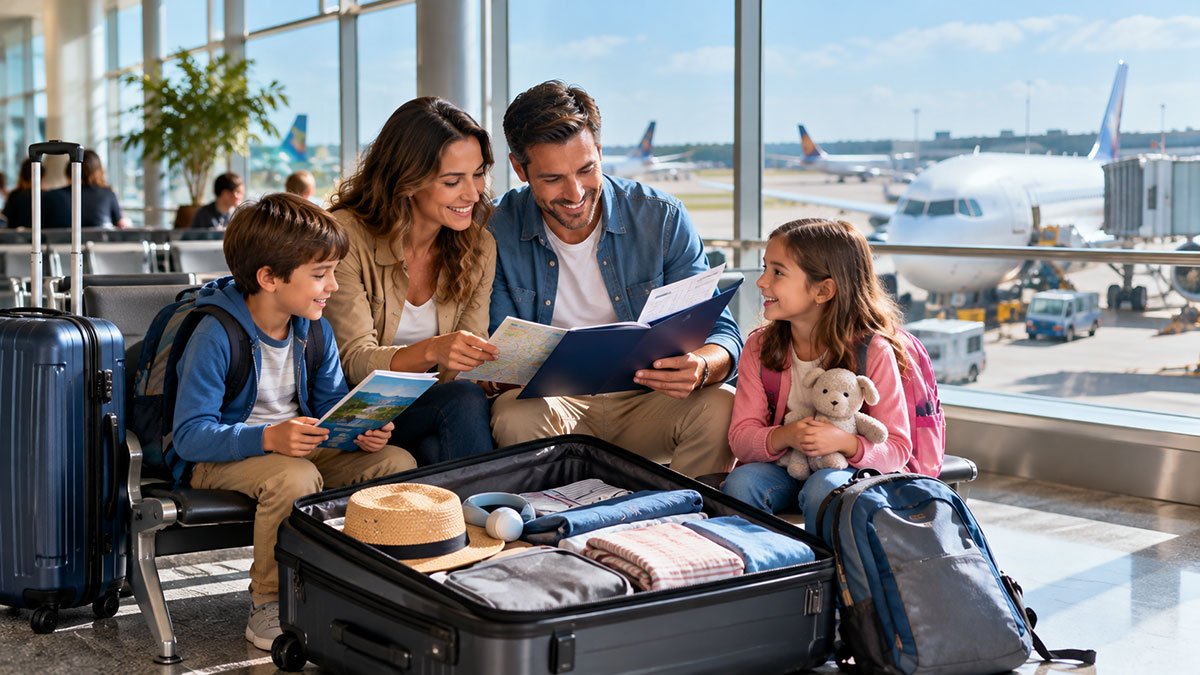
Make international family travel easier with organized documents, prepared luggage and a flexible travel plan.
How to Travel Overseas with Kids: A Practical Guide
Traveling overseas with kids can be a rewarding way to explore new cultures, discover unfamiliar places and spend meaningful time together as a family. However, international family holidays need more preparation than a trip without children.
Passports, visas, flight arrangements, health precautions and accommodation all require attention. Children also need time to rest, eat and adjust to unfamiliar surroundings. A realistic plan can help you manage these details without making the holiday feel like a tightly scheduled project.
Whether you’re traveling with a toddler, school-age children or teenagers, these practical tips will help you prepare for a safer, more comfortable and enjoyable family trip.
1. Choose a Destination That Suits Your Family
Start by considering what your children can comfortably manage. A destination that appeals to adults may involve long transfers, extreme temperatures, difficult walking routes or activities unsuitable for younger travelers.
Think about your children’s ages, interests, sleep schedules and health needs before making a final choice.
Consider Travel Time and Local Transport
A direct flight may be easier than a cheaper itinerary with several long connections. Likewise, staying near public transport or attractions can reduce the time and energy required to reach each activity.
Check the journey from the arrival airport to your accommodation. Consider whether you will need a transfer, child car seat or assistance with luggage.
If your trip includes several cities, compare the benefits of visiting fewer places for longer. Moving hotels every night can become tiring when traveling with children.
Research the Climate and Local Conditions
Look into the typical weather for your travel dates. Heat, cold, rain and high humidity can affect outdoor activities and the amount of clothing you need.
Check local health advice, safety information and seasonal closures. Research swimming conditions, wildlife risks and other hazards related to your planned activities.
Choose experiences that interest the whole family, but leave room to change plans if the weather or children’s energy levels make an activity impractical.
2. Prepare Passports, Visas and Travel Documents
Document problems can disrupt a family trip before it begins. Start checking passport validity and entry requirements as soon as you choose a destination.
Check Every Family Member’s Documents
Every traveler, including infants, must meet the applicable travel-document requirements. Depending on the destination, nationality and route, children may need their own passports, visas, electronic travel authorizations or other documents.
Check the official immigration website or embassy for the countries you will visit. Also check any transit-country requirements if you have connecting flights.
Some destinations require passports to remain valid for a specified period beyond arrival. Do not assume that the rules for adults and children are identical.
Carry Proof of Your Relationship to Each Child
When traveling internationally, especially if a child has a different surname from the accompanying adult, carry suitable evidence of your relationship.
Depending on your circumstances and destination, this could include a birth certificate, adoption certificate or other relevant document.
Some countries require written consent from a parent or legal guardian who is not traveling with the child. A consent letter may also be advisable when a child travels with relatives, family friends or another responsible adult.
Requirements differ by jurisdiction. Confirm what applies to your family before departure, including whether documents need signatures, notarization or official translations.
Keep Copies of Important Information
Store secure digital copies of essential documents and keep physical copies separately from the originals.
Useful records include:
- Passports, visas and travel confirmations.
- Accommodation addresses and booking references.
- Emergency contact details.
- Medical information and prescriptions.
- Travel insurance policy information.
- Relevant consent documents for children.
Keep original passports and other essential travel documents in a secure place during the journey. Avoid placing them in checked luggage.
3. Arrange Health Care and Travel Insurance Early
Children can face the same travel-related health risks as adults, but their needs may differ. Preparing early can help you identify the right precautions for your destination.
Arrange a Pre-Travel Health Appointment
Consult your child’s healthcare professional or a travel medicine specialist before departure. The US Centers for Disease Control and Prevention recommends arranging a travel health appointment at least one month before travel.
Discuss your itinerary, planned activities, routine vaccinations and any destination-specific recommendations. Some vaccines or preventive medicines require advance planning.
If your child has a medical condition, ask about managing it during the journey and what to do if symptoms develop abroad.
Check Medication Rules
Pack prescribed medicines in their original packaging where practical, together with the relevant prescription or medical documentation.
Check whether the destination restricts any medicine you need to carry. Some medicines that are common in one country may have different legal requirements elsewhere.
Pack essential medication in your hand luggage, subject to airline and security rules. Bring enough for the planned trip and ask your healthcare professional how to handle delays.
Choose Suitable Travel Insurance
Read the policy carefully before purchasing it. Check medical expenses, emergency assistance, evacuation cover, exclusions and any restrictions connected with pre-existing conditions.
Confirm that every family member has appropriate coverage. Do not assume that a policy designed for adults automatically covers children’s needs or every activity you intend to undertake.
Save the insurer’s emergency contact information somewhere accessible, not just on one phone.
4. Book Flights With Children in Mind
The flight itself can be one of the most demanding parts of international travel, particularly with babies and younger children.
Choose an itinerary that balances cost, travel time and the needs of your family.
Choose Suitable Flight Times
Think about your children’s usual sleep and meal schedules. A flight that fits their routine may be easier to manage, although some children sleep better at different times.
Consider the length of layovers carefully. Very short connections can create unnecessary pressure, while long connections may require extra food, entertainment and a place to rest.
If your itinerary involves a change of airport or an overnight connection, check the practical arrangements before booking.
Confirm Seating and Child Safety Arrangements
Check the airline’s current family seating policy and ask about seating arrangements before departure. If you are traveling with young children, confirm how the airline handles adjacent seats, bassinets and child restraint systems.
For air travel, do not assume that every car seat can be used aboard an aircraft. Check the airline’s rules and the relevant aviation authority’s guidance for an approved restraint suitable for your child’s size.
The US Federal Aviation Administration strongly recommends an appropriate approved child restraint or device for young children during flights. Requirements and accepted equipment can differ internationally.
Prepare for Airport Delays
Keep snacks, water, spare clothes and basic toiletries in an accessible bag. Include diapers or other essential supplies if required.
Pack a small selection of books, games, headphones or downloaded entertainment. Familiar activities can help children during long waits.
Before leaving home, explain the basic airport process to children who may be unfamiliar with flying. Describe check-in, security, boarding and what they can expect during takeoff and landing.
5. Pack a Practical Carry-On Bag
Packing for children often means preparing for unexpected delays, spills, temperature changes and lost luggage.
Rather than placing everything in a large bag, divide supplies into items you need during transit and items you can access after arrival.
Essentials for the Journey
Depending on your children’s ages, pack:
- Spare clothing and underwear.
- Diapers, wipes and changing supplies.
- Necessary medication and medical documents.
- Familiar snacks and feeding supplies.
- Reusable water bottles, where permitted.
- Comfort items such as a small toy or blanket.
- Chargers, headphones and age-appropriate entertainment.
- A light layer of clothing for temperature changes.
Check airline baggage limits and the security rules for liquids, food, medicines and feeding equipment. International transfer airports can apply different screening procedures.
For longer journeys, keep some supplies in a separate compartment so you can reach them without unpacking everything.
Let Children Help Where Appropriate
Older children can pack a small bag containing approved comfort items, entertainment and a change of clothes.
Give them responsibility for suitable tasks, such as checking their headphones or choosing books for the journey. Keep passports, medication and other critical items under adult supervision.
A small amount of preparation helps children feel involved and gives them something constructive to focus on.
6. Plan a Flexible Itinerary With Rest Time
A common mistake is trying to fit too many attractions into every day. Children may need more breaks than adults, and unfamiliar surroundings can make even simple activities tiring.
Plan a few main activities instead of scheduling every hour.
Leave Time for Sleep and Meals
Consider naps, bedtime routines and regular meals when choosing sightseeing times.
You may want to plan a quieter first day after a long international flight. Familiar meals, an easy walk or some time at the hotel can help everyone adjust.
For longer trips across time zones, allow time to settle into the local routine. Daylight exposure, regular meals and gradual adjustments may help, but younger children’s sleep patterns can take time to change.
Mix Busy Days With Slower Days
Alternate major attractions with lighter activities. A museum visit could be followed by a playground, swimming session or relaxed meal.
Choose nearby activities for days when energy is low. Even a short walk around the neighborhood can provide a break without requiring another lengthy transfer.
Build flexibility into your plans so you can leave an attraction early or change activities without feeling that the day has failed.
Include the Children in Planning
Ask children what they would like to experience and offer a choice between suitable activities.
Younger children may enjoy parks, aquariums and interactive exhibits. Older children may prefer sports, markets, museums or outdoor adventures.
When children have some input, they often have a clearer idea of what to expect and a greater sense of involvement in the trip.
7. Choose Family-Friendly Accommodation Carefully
The right accommodation can make a significant difference to an international holiday. Location, room layout, nearby services and the ability to rest often matter more than a long list of amenities.
Check the Location and Facilities
Look for accommodation that suits your itinerary. Staying near public transport, grocery shops or planned activities may reduce the time spent traveling across a city.
Check room capacity, sleeping arrangements and any extra charges for children. If you need a cot, adjoining rooms or an accessible bathroom, confirm availability directly with the property.
A swimming pool or play area can be useful, but do not assume that these facilities are supervised or suitable for every child’s age.
Check Safety When You Arrive
Inspect the room for potential hazards, especially when traveling with babies and toddlers.
Check that windows and balcony doors close securely. Look for accessible electrical outlets, loose cords, unstable furniture and other hazards within a child’s reach.
If the room has a balcony, establish clear rules about access and supervise children closely. Never assume that an unfamiliar hotel room is childproof.
Ask the accommodation provider about any safety concerns you cannot resolve yourself.
8. Research Childcare Before Booking
Some resorts, hotels and destinations offer supervised children’s clubs or childcare services. These can give parents time for an activity while children enjoy age-appropriate experiences.
However, the quality and arrangements vary. Research the provider instead of relying on the promise of a hotel children’s club.
Questions to Ask a Childcare Provider
Before leaving your child in someone else’s care, confirm:
- What qualifications, screening or licensing requirements apply to staff?
- How many children does each staff member supervise?
- What ages does the service accept?
- How does the provider handle allergies, medication and emergencies?
- What security procedures control child collection?
- Can you contact staff while the session is running?
- What safeguarding policies and supervision arrangements are in place?
Ask how activities work and whether children spend time outdoors or indoors. If possible, inspect the facilities and speak with staff before enrolling your child.
Consider a short initial session rather than committing to a long period immediately. Explain to your child what will happen, who will collect them and how to ask for help.
If anything seems unclear or uncomfortable, choose another arrangement.
9. Create a Clear Safety Plan if Someone Gets Lost
Busy airports, markets, theme parks and public transport stations can make it easier for family members to become separated.
Discuss a simple safety plan before arriving at crowded places.
Agree on a Meeting Point
At each major location, identify a recognizable meeting point. Choose a staffed information desk or another clear landmark where the venue allows it.
Tell children what to do if they become separated. Depending on their age, they can stay in a safe, visible place and seek assistance from an identifiable staff member or uniformed official.
Rehearse the plan in simple language. Young children need clear instructions that they can remember under stress.
Make Sure Children Can Contact You
Teach older children an appropriate contact number and how to ask for help. Younger children may benefit from an identification card or contact details carried securely by an adult.
If children have phones, check roaming charges, battery life and whether mobile coverage will be available. A local SIM or eSIM may be useful in some destinations.
Take a recent photo of each child before leaving. This can help you describe their appearance and clothing if they go missing.
Do not rely entirely on mobile phones or tracking devices. A simple meeting plan remains important when batteries run out or networks are unavailable.
10. Plan Ground Transport and Outdoor Activities Safely
Travel safety continues after the flight. Research how your family will move around the destination and whether particular activities need specialist equipment or supervision.
Check Car Seats and Local Rules
If you plan to hire a car or use a taxi, check the local child-restraint laws and what equipment the provider supplies.
Where permitted and practical, bringing a suitable child seat can help you maintain familiar safety arrangements. Confirm that it fits the vehicle and complies with local rules.
Do not assume that every taxi, transfer operator or rental company provides the correct seat automatically. Arrange it in advance and reconfirm before travel.
Assess Activities Before Booking
For cycling, hiking, water sports and other activities, check age restrictions, safety equipment and supervision arrangements.
Look for reputable operators with clearly explained safety policies. Consider your child’s experience, health and confidence, not just their age.
Keep children supervised near roads, water, wildlife and unfamiliar animals. Follow local warnings and adapt plans to weather conditions.
11. Manage Food, Sleep and Everyday Routines
Children often handle travel better when they can rely on some familiar routines.
Time zones, unfamiliar foods and busy sightseeing schedules can change sleep and meal patterns. Prepare for these differences rather than expecting children to adapt immediately.
Plan Meals and Snacks
Research food options if your child has allergies, dietary restrictions or strong food preferences.
Pack suitable snacks where customs and airline rules allow. Check the destination’s food and water safety guidance, particularly when traveling somewhere with different sanitation conditions.
Keep water accessible and encourage regular breaks, especially in hot weather or during active days.
Keep a Few Familiar Routines
A familiar bedtime story, comfort toy or regular wind-down routine can help children settle in a different time zone or accommodation.
Do not try to preserve every routine at the expense of the holiday. Focus on the parts that matter most to your child’s comfort.
Allow extra time in the morning if your children need help getting ready. A calmer departure can be more useful than squeezing one extra attraction into the day.
12. Share Responsibilities and Allow Parents Time to Rest
A family holiday works better when the adults have a clear understanding of their responsibilities.
If two parents or caregivers are traveling together, divide tasks such as managing documents, arranging transport and carrying essential supplies.
You can also take turns supervising children during suitable parts of the trip. One adult might visit an attraction while the other enjoys a slower activity with the children, then switch later.
Agree on these arrangements in advance so that everyone knows who is responsible for the children at a given time.
If you travel alone with children, organize support where possible. Pre-book transfers, simplify the itinerary and keep essential contacts accessible.
13. Prepare for Children With Additional Needs
Some children need extra planning because of disabilities, sensory sensitivities, medical conditions or developmental needs.
Contact airlines, accommodation providers and attractions before booking to discuss the support they can offer.
Ask about accessible transport, step-free routes, quiet spaces, dietary requirements and medication storage. Confirm any assistance that requires advance registration.
Bring familiar sensory items, communication aids or medical supplies that help your child remain comfortable. Keep a written summary of important medical information if that is useful for the people supporting your child.
Do not assume that an arrangement available at home will exist at the destination. Confirm the details before departure and plan an alternative where necessary.
14. Use This Final Checklist Before Departure
Documents and Booking
- Check passports, visas and transit requirements for every traveler.
- Confirm any parental-consent or child travel-document requirements.
- Save flight, accommodation and transfer confirmations.
- Keep secure copies of essential documents.
- Confirm seating and airline child-safety arrangements.
Health and Safety
- Arrange destination-specific health advice in advance.
- Check medication rules and pack essential supplies.
- Confirm travel insurance for every family member.
- Review local transport and car-seat requirements.
- Agree on a lost-child plan and meeting point.
Packing and Planning
- Pack spare clothes, snacks and age-appropriate entertainment.
- Confirm accommodation facilities and sleeping arrangements.
- Research childcare before booking.
- Plan activities with regular breaks and flexible time.
- Download important addresses and contact details.
- Check weather conditions before departure.
Enjoy the Journey, Not Just the Destination
Traveling overseas with kids rarely follows a perfectly predictable schedule. Children may need more rest than expected, an attraction may close or a long journey may disrupt familiar routines.
Prepare for the important details, but leave room for changes. Choose activities that suit your children’s interests, prioritize health and safety, and keep your daily plans manageable.
A successful family holiday does not require doing everything. With realistic expectations and good preparation, you can explore somewhere new together while giving everyone enough time to enjoy the experience.
