
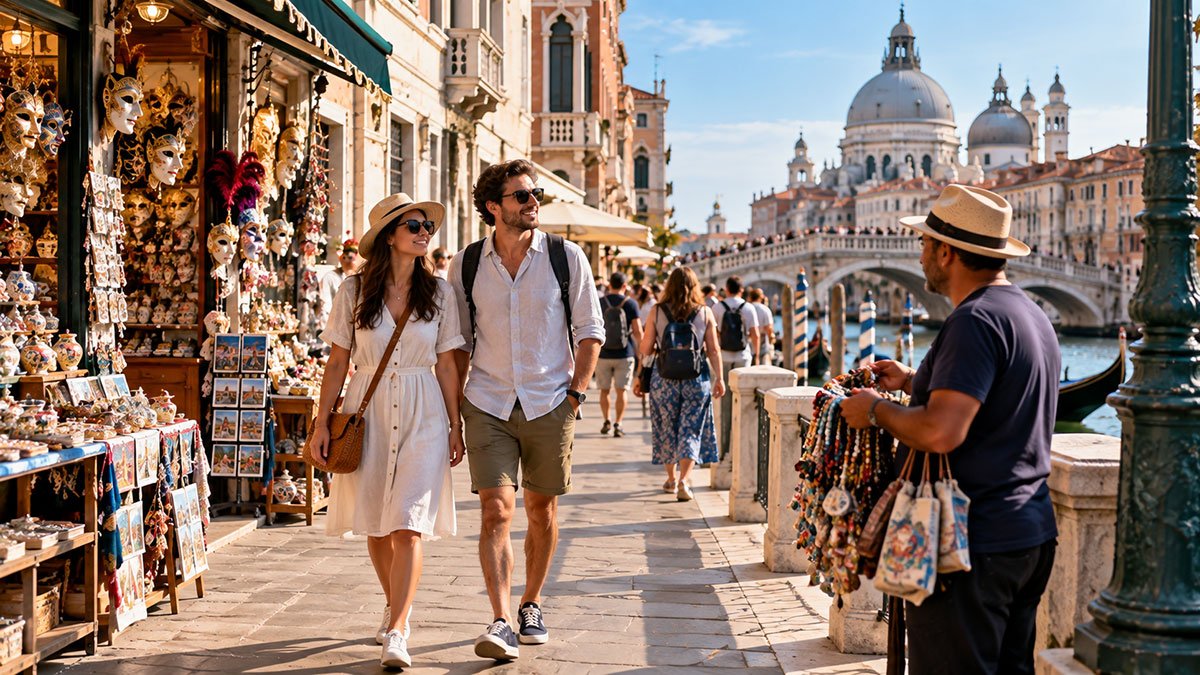
Street Hawkers in Italy: How to Avoid Scams and Counterfeit Goods
Italy is one of Europe’s most rewarding destinations for travellers. Its historic cities, famous landmarks, museums, food and shopping attract millions of visitors.
Busy tourist areas can also attract unofficial sellers, promoters and people offering questionable bargains. You may encounter someone trying to sell sunglasses, bags, watches, souvenirs or other goods while walking between major attractions.
Not every street seller is operating illegally, and legitimate street commerce exists in Italy. The important distinction is between authorized businesses and unauthorized sellers offering goods or services without the required permissions.
For travellers, the safest approach is simple: do not feel pressured to buy anything, and be particularly cautious when someone offers branded products at suspiciously low prices.
Why Do Street Hawkers Target Tourist Areas?
Unauthorized sellers generally look for places with large numbers of visitors.
Major landmarks, busy squares, pedestrian streets, transport hubs and popular sightseeing routes provide a constant stream of potential customers.
The approach can be straightforward. A seller may simply ask whether you want to buy something.
In other cases, the interaction can be more persistent. A person may walk alongside you, repeatedly lower the price or try to create a sense that you are missing an exceptional bargain.
This is when a normal shopping interaction can become uncomfortable.
You are not required to continue the conversation.
Not Every Street Vendor Is Illegal
It is important not to treat every person selling goods on an Italian street as a criminal or scammer.
Italy has legitimate forms of street commerce. Municipal regulations determine where and how authorized vendors can operate.
For example, Venice regulates itinerant commerce and places restrictions on how authorized vendors can display and sell merchandise in public areas.
The problem for visitors is usually unauthorized selling, counterfeit merchandise or deceptive sales practices.
A useful rule is to distinguish between:
Authorized shopping
- Established shops
- Recognized markets
- Licensed stalls
- Established artisan businesses
- Retailers displaying prices and business information
Higher-risk situations
- A seller approaching tourists directly with branded goods
- Merchandise spread informally across a pavement
- Products offered at an implausibly low price
- Pressure to make an immediate purchase
- A seller who refuses to provide normal purchase information
- Someone who follows you after you decline
You do not need to investigate the seller yourself. If something feels wrong, simply walk away.
Counterfeit Goods Are a Serious Issue
One of the biggest reasons to avoid unauthorized street sellers is counterfeit merchandise.
Fake handbags, watches, sunglasses, shoes, clothing, perfumes and accessories may look convincing at first glance. However, appearance does not guarantee quality, authenticity or safety.
Counterfeiting also extends beyond fashion.
European enforcement authorities regularly encounter counterfeit toys, cosmetics, electronics, medicines, vehicle parts and other products. Some counterfeit goods can create genuine health or safety risks.
The European Union Intellectual Property Office and European Commission reported that EU authorities detained more than 112 million counterfeit items in 2024, with an estimated value of more than €3.8 billion. The figures show that counterfeiting remains a substantial enforcement issue across Europe.
Buying Fake Goods Can Have Legal Consequences
This is an important point for tourists.
Buying counterfeit goods in Italy is not simply a harmless way of finding a cheap souvenir.
Italy’s Customs and Monopolies Agency states that a final purchaser can face an administrative fine of €100 to €7,000 when the circumstances of the purchase indicate a violation involving product origin, provenance or industrial property rights. The goods can also be confiscated.
Venice’s municipal guidance specifically warns visitors not to purchase counterfeit goods from unauthorized sellers and refers to the same potential €100–€7,000 sanction and confiscation of the merchandise.
The practical lesson is straightforward:
If a stranger is offering a supposedly expensive branded product for a tiny fraction of its normal price, do not assume you have found a bargain.
Venice: What Travellers Should Know
Venice has long attracted large numbers of visitors, particularly around the most famous parts of the historic centre.
The city actively regulates public-space commerce and continues to conduct enforcement operations against irregular commercial activity.
In 2026, Venice municipal authorities reported several enforcement operations involving unauthorized or irregular merchandise and souvenir sales. One June operation resulted in the seizure of more than 1,400 souvenirs, while another September operation targeted irregular merchandise and products that did not meet required labelling standards.
This does not mean that every street seller in Venice is operating illegally.
Instead, travellers should use normal shopping judgement. If you want a souvenir, buy it from an established shop, an authorized market stall or a genuine artisan business.
The city itself advises responsible visitors to choose original products and avoid buying goods from unauthorized vendors.
Rome: Stay Alert Around Major Tourist Attractions
Rome presents a different but related issue.
The city has some of Italy’s busiest tourist areas, including the surroundings of major historic and religious attractions. Those crowds can attract both unauthorized sellers and people attempting different types of tourist scams.
Rome authorities continue to conduct enforcement operations against unauthorized commercial activity in heavily visited areas.
In August 2026, the Rome Police reported an operation targeting unauthorized sellers and tourist promoters around the Vatican area, including streets and public spaces near the Vatican Museums.
Rome police have also recently reported enforcement activity against organized street scams in highly visited parts of the historic centre.
The message for visitors is not to avoid these areas. They are among Rome’s most important attractions.
Instead, stay aware when someone tries to divert your attention, pressure you into a game, sell you something unexpectedly or persuade you to hand over money.
What Should You Do If a Seller Approaches You?
You do not need to be rude or confrontational.
A simple response is usually enough.
1. Say No Clearly
A brief “No, thank you” is sufficient.
You do not need to explain why you are not interested.
2. Keep Walking
If the seller continues talking, do not stop simply because you feel uncomfortable leaving.
Continue toward your destination.
3. Do Not Show Interest in the Merchandise
Looking closely at a product, asking its price or handling it can encourage a seller to continue the conversation.
If you are not interested, keep moving.
4. Do Not Take the Product
Avoid accepting an item “just to look.”
If you do not want to buy it, there is no reason to handle it.
5. Do Not Negotiate With Someone You Do Not Trust
Haggling is common in some markets, but there is little benefit in negotiating over a product you are unsure about or suspect may be counterfeit.
6. Move Towards a Busier or Staffed Location
If someone continues following you, walk toward a shop, hotel, museum entrance, transport station or another staffed location.
You do not need to confront the person yourself.
Be Particularly Careful With Branded Products
A very low price can be an obvious warning sign.
Suppose someone offers you a luxury watch or designer handbag for a tiny fraction of its normal retail price.
Ask yourself:
- Why is the seller offering it so cheaply?
- Where did the product come from?
- Is the seller authorized to sell the brand?
- Can the seller provide a proper receipt?
- Is there any guarantee?
- Does the product have the expected packaging and documentation?
If the answers are unclear, walk away.
A genuine bargain from an established retailer is very different from a supposedly premium product being pushed on tourists in the street.
Look Beyond Fashion Counterfeits
Travellers often associate counterfeit goods with handbags, watches and sunglasses.
The risks are broader.
Counterfeit products can include:
- Cosmetics
- Perfumes
- Toys
- Electronics
- Medicines
- Automotive components
- Clothing
- Shoes
- Food and beverages
Italian Customs and the EUIPO warn that counterfeit products can create consumer safety risks in addition to financial and intellectual-property concerns.
For that reason, never buy medicines, cosmetics, food, electrical products or children’s products from an unknown street seller simply because the price looks attractive.
How to Shop More Safely in Italy
You do not have to avoid shopping during your Italian holiday.
Instead, make the buying process more deliberate.
Choose Established Retailers
For branded goods, use the brand’s own store or an established retailer.
Buy From Genuine Artisan Businesses
Italy has a rich tradition of craftsmanship. Look for established workshops and stores when buying local products.
Venice, for example, actively encourages visitors to discover its artisan workshops and choose original products.
Check the Price
If the same product normally costs hundreds of euros but someone offers it for a tiny amount, treat the price as a warning rather than an opportunity.
Ask for a Receipt
A proper purchase should normally provide documentation appropriate to the transaction.
Keep receipts for expensive purchases, especially if you may need to return an item or make a consumer complaint.
Be Careful With “Exclusive” Offers
Claims such as “last one,” “special price only for you” or “today only” are designed to create urgency.
You are on holiday. You can walk away and think about the purchase.
What If You Feel Threatened or Harassed?
Most unwanted sales approaches end when the traveller walks away.
If someone becomes threatening, follows you for an extended period or attempts to take your belongings, treat the situation as a safety issue rather than a shopping problem.
Move to a populated location and seek assistance from local staff or authorities.
Italy’s national tourism portal advises visitors to report theft, fraud or violent incidents to the appropriate authorities. The European emergency number in Italy is 112, which can connect callers with the relevant emergency service.
Keep your passport, wallet and phone secure, particularly in crowded tourist areas.
Do Not Let Hawkers Define Your Experience of Italy
Street sellers and tourist scams are not the defining feature of an Italian holiday.
Italy remains a destination where travellers can spend days exploring historic cities, visiting museums, enjoying regional food and discovering local craftsmanship.
The key is to understand how to respond when an unwanted sales approach occurs.
Do not feel obligated to buy something because somebody has approached you. Do not assume a very cheap branded product is genuine. Avoid unauthorized sellers when you are unsure about the goods, and use established retailers or genuine artisan businesses for purchases.
A calm “no,” followed by continuing on your way, is usually all that is required.
Travel Smart in Italy
The original concern behind stories about aggressive street hawkers is still relevant in a modern form: tourist-heavy places can attract people looking for quick money from visitors.
The difference today is that the problem is broader than persistent sellers. Travellers should also watch for counterfeit merchandise, unauthorized commercial activity and organized tourist scams.
With a little awareness, you can enjoy Venice, Rome and the rest of Italy without allowing unwanted sales approaches to distract from the experience.
