
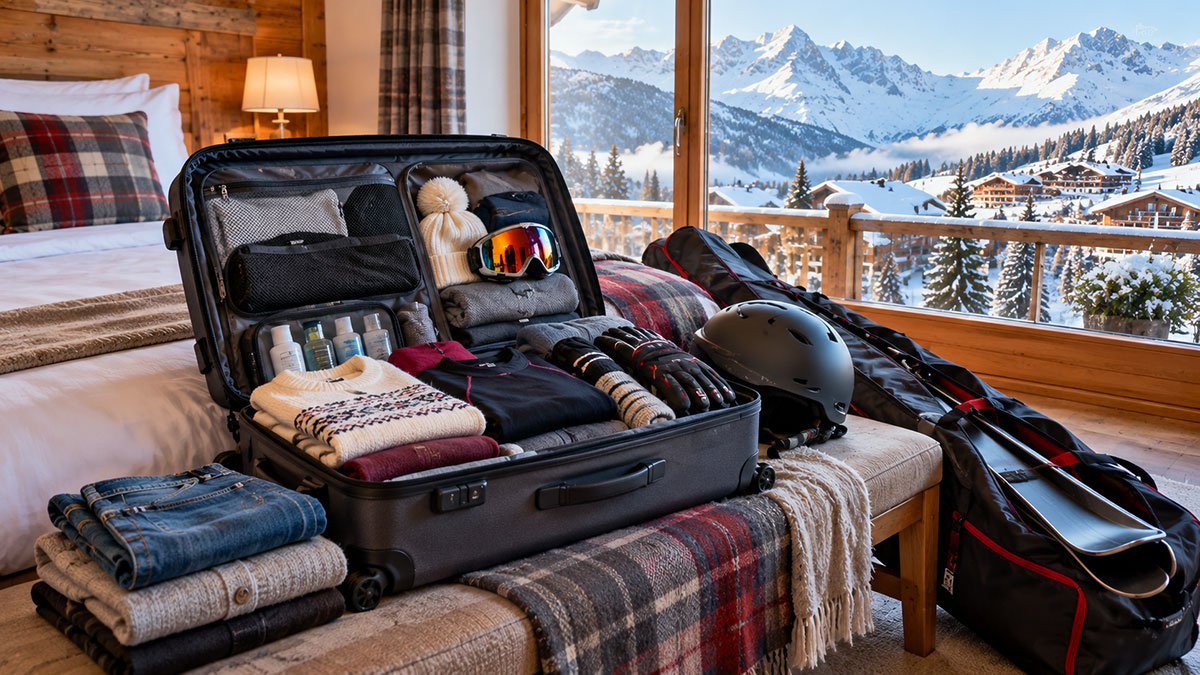
Prepare for a stress-free ski holiday with neatly packed thermal layers, warm clothing, ski goggles, gloves and essential equipment. A cosy Alpine chalet and snow-covered mountain views set the scene for a well-planned winter getaway.
Ski Holiday Packing List: What to Pack and Wear
Packing for a ski holiday can be tricky. Ski jackets, snow trousers, boots and helmets take up valuable luggage space, especially when your airline has strict baggage limits.
The solution is to pack strategically rather than take your entire winter wardrobe. This ski holiday packing list covers the clothing, equipment and everyday essentials you need for a comfortable mountain getaway without unnecessary luggage.
Whether you are planning your first skiing trip or returning to your favourite alpine resort, a little preparation can save money, reduce airport stress and leave more room for the things that matter.
1. Essential Ski Clothing to Pack
Ski clothing needs to keep you warm, dry and comfortable throughout the day. Instead of relying on one thick outfit, use layers that you can adjust as the weather and your activity level change.
Base Layers
Base layers sit next to your skin and help manage perspiration in cold conditions.
Pack:
- Two or three thermal tops.
- Two or three thermal bottoms.
- Several pairs of ski socks.
- Enough underwear for your trip.
Merino wool and suitable synthetic fabrics are popular choices because they can help regulate moisture and dry more efficiently than ordinary cotton.
Choose a fresh base layer for each day on the slopes when possible. Damp clothing can make you uncomfortable and cold, so allow used layers to dry properly.
Mid-Layers
Mid-layers provide insulation beneath your ski jacket.
Consider packing:
- One or two fleece tops.
- A lightweight insulated jacket or warm sweater.
- Comfortable thermal accessories for colder conditions.
You can often wear the same mid-layer more than once if it stays dry and clean. Choose items that work with your outer jacket without restricting movement.
Outer Layers
Your outer clothing protects you from wind, snow and wet weather.
Your essential items include:
- A waterproof or weather-resistant ski jacket suited to the conditions.
- Waterproof ski trousers or salopettes.
- Insulated gloves or mittens.
- A warm hat or beanie for time away from the slopes.
- A neck warmer or buff.
Check your resort’s expected temperatures and conditions before deciding how much insulation you need. Clothing suitable for a mild spring skiing trip may not be adequate for a colder mountain destination.
2. Ski Equipment: Bring It or Rent It?
Ski equipment can occupy considerable luggage space. Before packing everything, compare the costs and convenience of taking your own gear with renting it at the resort.
Essential Equipment
If you already own ski equipment, consider the following checklist:
- Skis and poles, or a snowboard.
- Properly fitted ski or snowboard boots.
- A suitable helmet.
- Ski goggles.
- Appropriate gloves.
- Any personal equipment you regularly use.
Protective equipment and clothing deserve priority. Do not compromise on warmth, fit or safety just to reduce luggage weight.
Should You Rent Skis and Boots?
Renting equipment can make flying easier, particularly for beginners or occasional skiers. Many established resorts offer equipment rental, although availability, prices and reservation requirements vary.
Rental can reduce the amount of bulky equipment you transport. However, ski jackets, trousers, gloves and suitable base layers may not be included in the rental package.
Check exactly what your booking provides before leaving home.
Experienced skiers may prefer their own boots because fit and comfort are important. You can still rent skis or a snowboard at the destination if that works better for your budget and baggage allowance.
Pack Your Equipment Properly
If you travel with your own skis or snowboard, check the airline’s sports-equipment rules before booking.
Airlines may classify skis, snowboards and boots differently from ordinary checked luggage. Some charge a separate fee, while others allow eligible equipment within the checked baggage allowance.
Use a suitable protective bag and check the airline’s size, weight and packaging requirements. Do not assume that buying a standard checked bag automatically covers sports equipment.
3. Everyday Clothes for Evenings and Rest Days
A ski holiday is not spent entirely on the slopes. You will probably need comfortable clothes for restaurants, cafés, shopping and relaxing at your accommodation.
The key is choosing versatile outfits that work in several situations.
What to Pack for Off-Slope Activities
For a typical week-long trip, consider:
- One or two pairs of comfortable trousers or jeans.
- Two or three casual tops.
- One warm sweater or hoodie.
- Comfortable walking trousers, if needed.
- A lightweight outfit for indoor relaxation.
- Sleepwear.
- A practical pair of shoes or boots with suitable grip.
- A small number of accessories to vary your outfits.
Adjust these quantities for your accommodation, planned activities and access to laundry facilities.
Jeans can be a useful option for village visits and casual evenings. However, they are not ideal for skiing or prolonged outdoor activity in wet snow because denim can become heavy and uncomfortable when damp.
You do not need a different complete outfit for every evening. Neutral colours and interchangeable layers make it easier to create several combinations from a few items.
Choose Practical Footwear
Mountain villages often have snowy, wet or slippery paths. Pack comfortable footwear with good traction and enough room for warm socks.
Ordinary trainers may not provide sufficient grip in icy conditions. Check the expected weather and the surfaces you are likely to encounter around your accommodation.
4. Toiletries, Personal Care and Travel Essentials
Small items can easily be forgotten when most of your attention goes to ski equipment.
Prepare a separate toiletries bag containing:
- Toothbrush and toothpaste.
- Shampoo and body wash in suitable travel containers.
- Deodorant.
- Moisturiser.
- Lip balm.
- High-factor sunscreen.
- Personal medication.
- Any necessary contact lenses or glasses.
Sun protection is particularly important in the mountains. Snow reflects sunlight, and ultraviolet exposure can be significant at altitude.
Carry suitable sunglasses or goggles for the conditions. Keep essential medication accessible, and follow your healthcare professional’s advice for any prescribed treatments.
Important Travel Documents
Before departure, check that you have:
- Your passport or other required identification.
- Flight and accommodation details.
- Airport transfer and resort transport information.
- Travel insurance documents.
- Ski lessons or equipment rental confirmations.
- Payment cards and emergency contact details.
Make digital copies of essential documents, but do not rely exclusively on your phone. Keep critical information accessible if the battery runs out or mobile connectivity fails.
5. How to Pack Light for a Ski Holiday
The best approach is to start with the items you genuinely need, then organise them according to weight, bulk and use.
Wear Bulky Clothing While Travelling
Wearing your heaviest ordinary travel clothes can save space in your suitcase. A fleece, warm trousers and a practical jacket may be useful during airport transfers and at your destination.
Do not wear specialist ski boots on the flight simply to save luggage space. They are designed for use with ski equipment and can be uncomfortable for airport walking.
Use Packing Cubes
Packing cubes help separate clean clothes, base layers, underwear and accessories. They also make it easier to locate items without unpacking everything.
You can roll suitable soft clothing or fold it into cubes. The best method depends on the fabric and the shape of your bag.
Keep wet or dirty clothes separate from clean items during the return journey.
Choose Clothing That Works in Several Combinations
Build a small travel wardrobe around versatile colours and compatible layers.
For example, a fleece may work beneath your ski jacket during the day and with jeans in the evening. A comfortable pair of trousers may suit restaurant visits and travel days.
Avoid packing several items that serve exactly the same purpose unless the weather or your itinerary requires them.
Plan Laundry Before You Leave
Laundry facilities can be helpful on longer trips, especially when luggage allowances are limited.
Check whether your accommodation actually provides a washing machine or laundry service. If not, do not base your packing plan on being able to wash clothes during the trip.
Remember that thermal garments and specialist clothing may need particular washing or drying arrangements.
6. Cabin Bag and Checked Baggage: Avoid Unexpected Fees
Baggage rules differ by airline, ticket type, route and destination. Checking the details before packing is one of the simplest ways to avoid additional charges.
Review these points on your airline’s official website:
- The size and weight allowed for your cabin bag.
- Whether your ticket includes checked baggage.
- The maximum weight for each checked bag.
- Whether skis, snowboards and boots require a separate sports-equipment booking.
- Whether equipment allowances count separately from ordinary luggage.
- The deadline for adding extra baggage.
- Rules for batteries, electronic devices and restricted items.
Do not assume that two airlines offer the same allowance, even when both operate low-cost flights.
What Should Go in Your Cabin Bag?
Keep essential and valuable items in your cabin bag when permitted.
These may include:
- Passport and travel documents.
- Medication and necessary medical supplies.
- Phone, charger and other essential electronics.
- Glasses or contact lenses.
- A change of underwear and a fresh base layer.
- Any small essentials you would need if checked luggage were delayed.
Keep cabin baggage within your airline’s specified dimensions and weight limits.
Check Airport Security Rules
Liquid restrictions can vary by airport, and security arrangements may change. Check the current rules at your departure airport, any transfer airport and your return airport.
If your route requires liquids to follow the standard UK restrictions, toiletries in cabin baggage generally need to meet the applicable container-size requirements. Do not assume that rules at one airport apply at every airport on your itinerary.
7. What to Pack for a Week-Long Ski Holiday
Use this example checklist as a starting point for a seven-day trip. Adjust it according to the weather forecast, your experience and whether you have laundry facilities.
| Item | Suggested quantity |
|---|---|
| Thermal tops | 2–3 |
| Thermal bottoms | 2–3 |
| Ski socks | 4–6 pairs |
| Underwear | 5–7 sets |
| Fleece or insulating mid-layers | 1–2 |
| Ski jacket | 1 |
| Ski trousers | 1 |
| Ski gloves or mittens | 1–2 pairs |
| Neck warmer | 1–2 |
| Casual tops | 2–3 |
| Jeans or everyday trousers | 1–2 pairs |
| Evening or leisure outfit | 1 |
| Sleepwear | 1–2 sets |
| Comfortable footwear | 1 pair |
| Helmet and goggles | If bringing your own |
| Sunscreen and lip balm | 1 each |
| Toiletries and medication | As required |
This list assumes you will rewear suitable outerwear and casual clothing. It does not include your skis, snowboard, boots or other bulky equipment.
You may need additional layers for very cold conditions, children or extended outdoor activities.
8. Common Ski Holiday Packing Mistakes
Avoid these frequent mistakes when preparing your luggage.
Packing too many casual clothes: You rarely need a different full outfit for every evening. Select versatile items that work together.
Bringing every piece of ski equipment: Compare rental costs and airline fees before deciding to transport your own equipment.
Forgetting warm accessories: Gloves, goggles, suitable socks and a neck warmer can make a considerable difference to comfort on the slopes.
Packing insufficient base layers: Reusing damp clothing can leave you uncomfortable. Allow enough clean layers for your activities.
Ignoring baggage rules: Check the exact allowance rather than relying on assumptions or information from another airline.
Leaving essentials in checked luggage: Keep important medication, travel documents and a small change of clothes accessible.
Overlooking the journey home: Leave enough room for dirty or damp clothing, souvenirs and other items collected during the trip.
9. Final Checks Before Leaving Home
A day or two before departure, review your luggage and confirm the essential arrangements.
Check the weather forecast, baggage allowance, airport transfer, accommodation details and equipment rental booking. Make sure any specialist clothing is dry and ready to use.
Weigh your bags at home and leave some room for small additions. If your luggage is over the permitted limit, remove non-essential items before reaching the airport.
Finally, keep your ski equipment and clothing organised so you can find what you need quickly after arriving.
Enjoy Your Ski Holiday Without Overpacking
A successful ski holiday packing list balances practical preparation with the freedom to travel light. Focus on warm layers, suitable equipment, everyday essentials and clothing you can wear in several combinations.
Rent bulky equipment when it makes financial sense, use your baggage allowance carefully and confirm your airline’s requirements before departure.
You do not need an enormous wardrobe to enjoy a week in the mountains. With a little planning, you can spend less time worrying about your suitcase and more time enjoying the slopes, mountain scenery and relaxed evenings that make a winter holiday special.
