
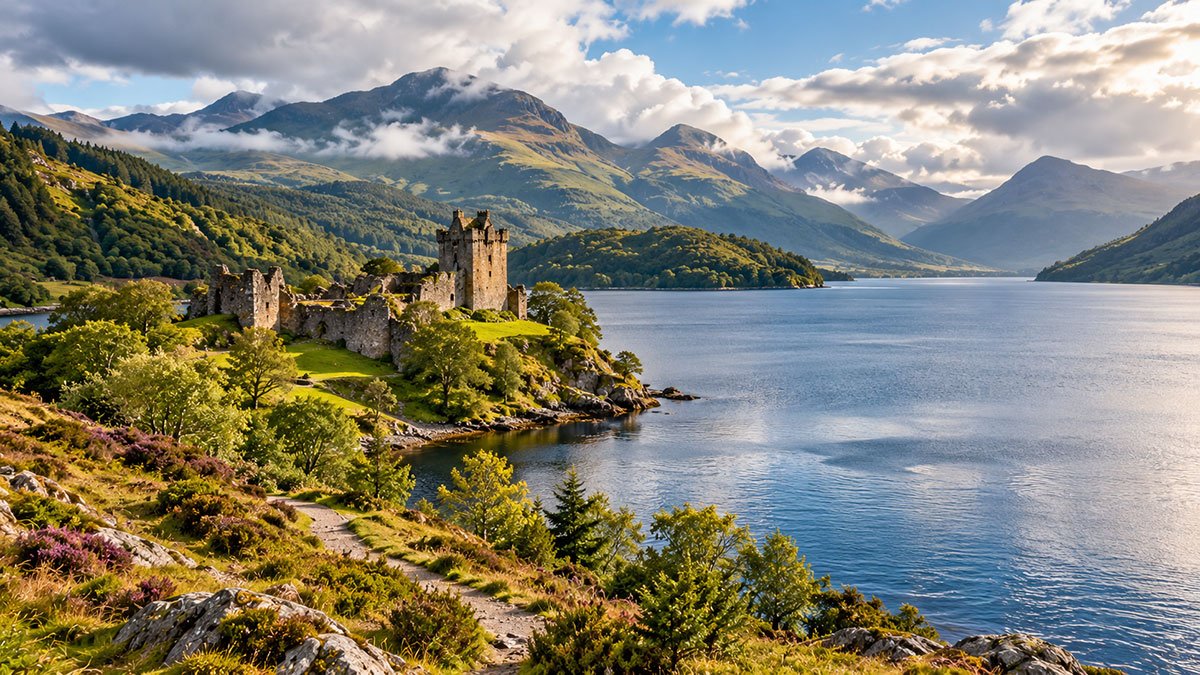
Discover the wild beauty of the Scottish Highlands, where historic stone castle ruins overlook tranquil lochs and rugged green mountains. Dramatic skies, woodland paths and breathtaking scenery make this a memorable destination for nature lovers and history enthusiasts.
Scottish Highlands Travel Guide: Castles, Lochs and Mountains
The Scottish Highlands reward travelers who enjoy dramatic scenery, rich history and time outdoors. Here, mountain ranges rise above deep lochs, castles overlook ancient routes, and quiet villages provide a base for walking, wildlife watching and exploring Scotland’s cultural heritage.
There is no single way to experience the Highlands. You could cruise on Loch Ness, visit the ruins of a medieval fortress, explore the story of the Jacobite era at Culloden, or take in the mountain scenery around Glencoe. If you prefer outdoor adventures, the region also offers walking trails, cycling routes, canoeing and opportunities to watch wildlife responsibly.
The Highlands cover a large area, so planning a route matters. Use this guide to choose the places that suit your interests, understand seasonal access and prepare for changing mountain weather.
1. Loch Ness and Urquhart Castle
Loch Ness is one of Scotland’s best-known landscapes, surrounded by wooded slopes, small settlements and stories about the legendary Loch Ness Monster. Even without a Nessie sighting, the loch is worth visiting for its scenery and access to walks, boat trips and nearby historic sites.
One of its most memorable landmarks is Urquhart Castle, a dramatic ruin on the western shore near Drumnadrochit. The fortress played a role in the Wars of Scottish Independence and other conflicts before its defences were deliberately damaged in 1692. Today, its remains provide wide views across the water and a sense of how strategically important the site once was.
Visitors can explore the ruins and learn about the castle’s history at the visitor centre. The site includes steep paths and steps, so check the official accessibility information if anyone in your group has mobility requirements.
Practical tip: Historic Environment Scotland recommends advance booking for Urquhart Castle. Parking is limited and must be booked online to guarantee a space. Check ticket availability and the latest opening arrangements before travelling, particularly during the busy summer season.
Official visitor information: Urquhart Castle — Historic Environment Scotland
2. Cawdor Castle and Its Gardens
Near Nairn, east of Inverness, Cawdor Castle offers a different perspective on Highland history. Its central tower dates to the medieval period, and the building developed over several centuries. The castle is also known for its gardens, woodland and stories associated with its history and literature.
The grounds include distinct gardens and nature trails, making the estate appealing to visitors who enjoy architecture as well as landscaped outdoor spaces. Allow enough time to explore the setting rather than treating it as a quick photo stop.
Cawdor Castle is a seasonal attraction rather than a year-round visit. Its published 2026 visitor season ended in early October. Check the official calendar for the next opening dates before including it in an autumn or winter itinerary.
Official visitor information: Cawdor Castle — Plan Your Visit
3. Ben Nevis and the Fort William Area
Ben Nevis, close to Fort William, is the highest mountain in the United Kingdom and a major draw for experienced hillwalkers. The mountain also dominates the wider landscape around Lochaber, where travelers can find easier walks and scenic viewpoints without attempting the summit.
Do not underestimate a Ben Nevis ascent. Mountain weather can change quickly, cloud can obscure the path, and snow or rocky ground can make navigation difficult. The summit area has steep gullies and serious hazards, even when conditions lower down appear manageable.
Anyone considering the climb should research the route, check the mountain forecast, carry appropriate clothing and equipment, and know how to navigate with a map and compass or a suitable GPS device. A phone alone is not a dependable safety plan.
If you lack hillwalking experience, choose a lower-level walk or seek qualified local guidance.
Official route and safety guidance: Mountaineering Scotland — Climbing Ben Nevis
4. Glencoe: Dramatic Landscapes and Highland History
Glencoe is famous for its steep-sided valley, rugged peaks and sweeping views. It is a rewarding stop for photographers, walkers and anyone interested in the natural landscapes that define the western Highlands.
The area has both natural and historical significance. The 1692 Massacre of Glencoe remains an important and painful event in Scottish history. Visitors can learn more through local interpretation and visitor facilities, while walks and roadside viewpoints offer ways to appreciate the landscape.
Glencoe has also appeared in a range of film and television productions. Screen locations can provide an extra reason to visit, but the scenery deserves attention in its own right. Follow local signs and access guidance, and avoid stopping in unsafe places to take photographs.
Conditions in the glen can change rapidly. If you plan a walk, check current weather and route information, carry suitable layers and allow enough daylight to return safely.
5. Cairngorms National Park and Highland Wildlife
The Cairngorms National Park covers a large area of the eastern Highlands and offers forests, moorland, rivers, lochs and mountain scenery. It is a good option for travelers who want walking routes, nature experiences and a chance to explore Highland landscapes beyond the best-known lochs and castles.
Wildlife watching can be rewarding, but sightings are never guaranteed. Depending on the habitat and season, visitors may look for red squirrels, deer, birds of prey and other Scottish wildlife.
Use established paths and observe animals from a respectful distance. Never feed wildlife or approach animals for a photograph.
For guided wildlife experiences, choose responsible operators who follow relevant wildlife-watching guidance. Check seasonal access restrictions and local advice before setting out, especially during sensitive breeding periods or when deer stalking may be taking place nearby.
Useful guidance: Scottish Outdoor Access Code
6. Culloden Battlefield: Understanding Highland History
A visit to the Highlands is more meaningful when its history is part of the journey. Culloden Battlefield, near Inverness, marks the site of the 1746 battle that ended the final major Jacobite Rising on British soil.
The visitor centre presents the conflict and its human cost through historical interpretation and artefacts. The battlefield itself is a place of remembrance, so allow time to explore it thoughtfully rather than treating it simply as a scenic attraction.
The Highland Clearances were a separate, longer period of social and economic upheaval, mainly from the mid-18th to the mid-19th centuries. Many Highland and Island tenants were forcibly moved from their homes as landowners changed how estates were used; others migrated to cities or emigrated overseas. The impact on communities, Gaelic culture and the landscape remains significant.
For those interested in this history, archive material and local interpretation can offer a fuller understanding than romanticized accounts of clan life alone.
Before visiting, check the National Trust for Scotland’s official visitor information. The visitor centre has seasonal opening hours, while access arrangements for the battlefield may differ.
Official visitor information: Culloden — National Trust for Scotland
7. Inverness, Fort Augustus and the Great Glen
Inverness is a useful base for exploring the northern Highlands, with transport links, accommodation and access to attractions around Loch Ness and Culloden. It is also a convenient place to start or finish a wider Highland itinerary.
At the southern end of Loch Ness, Fort Augustus sits beside the Caledonian Canal and offers a different view of the Great Glen. The canal, lochs and surrounding landscapes create opportunities for walking, cycling, boating and photography.
The Loch Ness 360 Trail links several settlements and viewpoints around the loch, although walking or cycling the full route requires proper planning and enough time.
Use local visitor information to check which trails and activities suit your experience. Some routes are long or remote, and mobile reception can be unreliable in parts of the Highlands.
8. Watersports and Outdoor Activities
The Highlands are not only for hillwalkers. Depending on the location and conditions, visitors can enjoy canoeing, kayaking, cycling, wildlife tours and boat trips.
Loch Ness cruises provide views of the shoreline and Urquhart Castle from the water, while parts of the Great Glen offer established paddling routes.
Choose activities that match your skills and the weather. Highland waters can be cold, and wind or changing conditions can make open-water activities hazardous. Use qualified operators for activities that need specialist equipment or local knowledge, and follow safety instructions.
For walks and cycling, select routes using reliable local information. Pack water, food, suitable footwear, waterproof layers and navigation tools. Tell someone your intended route if you are heading into remote terrain.
9. Film Locations and Highland Legends
The Highlands’ mountains, glens and castles have featured in films and television productions, making the region attractive to fans who want to see familiar landscapes in person. Glencoe and Glen Nevis, for example, have appeared on screen in major productions.
Plan film-location visits around real places that are open and accessible rather than assuming every location is a managed attraction. Some sites are private land, working farms or fragile natural areas. Follow signs, respect residents and avoid trespassing for a photograph.
The Loch Ness Monster legend is another part of the region’s popular identity. Boat trips, visitor attractions and local exhibitions explore the stories, while the loch itself remains the main reason many people visit.
Enjoy the folklore, but treat it as folklore rather than a guaranteed wildlife encounter.
Official film-location inspiration: VisitScotland — Films and TV Shows
10. Staying in a Highland Bothy
For travelers seeking a remote outdoor experience, a bothy may sound appealing. Traditionally, a bothy is a simple shelter, often in an isolated location, that can provide a roof and a dry place to sleep for people travelling through the hills.
A bothy is not a holiday cottage. Facilities are minimal and may not include running water, toilets, electricity or beds. Most bothies maintained by the Mountain Bothies Association cannot be booked, and space is not guaranteed.
Visitors should be prepared to share, carry suitable outdoor equipment and have an alternative plan, such as a tent or booked accommodation where appropriate.
Read the Bothy Code, respect the building and its neighbours, take all rubbish away and leave the shelter ready for the next visitors. Do not rely on a bothy unless your trip plan accounts for its remote location and basic conditions.
Official guidance: Mountain Bothies Association — FAQ
When Is the Best Time to Visit the Scottish Highlands?
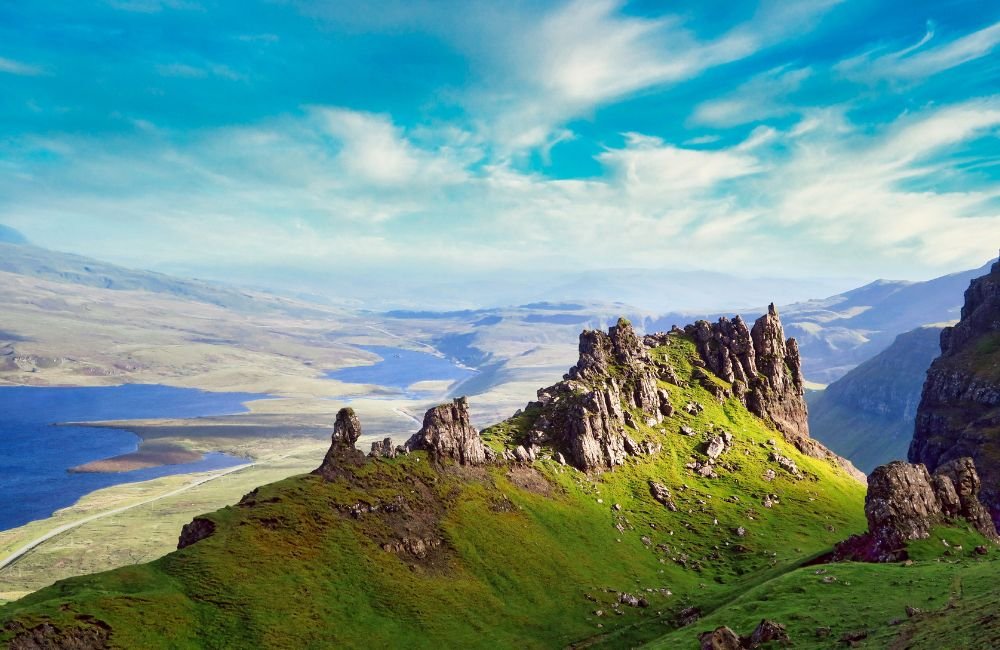
Each season offers a different experience, but Scottish weather is changeable and conditions vary with elevation and location.
Spring: Longer days begin to return and landscapes brighten, although mountain weather can remain cold and unsettled. Some attractions and seasonal services may not yet be operating on their full schedule.
Summer: Long daylight hours make it easier to plan walks and sightseeing. It is also a busy period for popular attractions and accommodation, so reserve key visits ahead. Midges can be troublesome in sheltered, damp areas during warmer months; consider suitable repellent and protective clothing.
Autumn: Woodland colours and quieter conditions can make this a memorable time to visit. Daylight gets shorter, and some castles, gardens, tours and visitor facilities reduce their hours or close for the season.
Winter: Snow, ice, wind and short daylight hours can transform mountain travel. Some roads and outdoor routes may become difficult, and seasonal attractions may be closed. Plan conservatively and check local forecasts before travelling.
For mountain routes, use official forecasts and current route guidance rather than relying on a general town forecast.
How to Get Around the Highlands
The Highlands cover a large area, and travel times can be longer than they appear on a map. A car gives flexibility for remote viewpoints and trailheads, but rural roads may be narrow or single-track.
Use passing places correctly, allow local traffic to pass, and never park where you obstruct other vehicles.
Public transport can work well between some towns and popular destinations, but services outside main settlements may be limited or infrequent. Check the route and timetable for your specific travel dates, including the return journey. Do not assume that every attraction has frequent public transport access.
Inverness and Fort William are useful bases for different parts of the region. If you have only a short stay, focus on one area rather than trying to cover the entire Highlands in a few days.
Responsible Travel in the Scottish Highlands
Scotland’s access rights allow people to enjoy much of the countryside responsibly, but they come with obligations. Respect residents, farming activity, private gardens, wildlife and historic sites. Follow any local restrictions and use established paths where appropriate.
Take all litter away, avoid disturbing animals, keep dogs under close control and leave gates as you find them. Do not light an open fire when conditions or local guidance make it unsafe; use a camping stove where permitted. In dry periods, fires can spread quickly through grass, woodland and peatland.
The Scottish Outdoor Access Code explains what responsible access means and where exceptions apply. Read it before wild camping or exploring remote areas.
Official guidance: Scottish Outdoor Access Code
Practical Planning Checklist
Before you set off, check these essentials:
- Reserve timed-entry attractions and any required parking in advance.
- Confirm seasonal opening dates for castles, gardens, visitor centres and tours.
- Check weather and daylight before planning mountain walks.
- Carry suitable footwear, waterproof layers, water, snacks and navigation tools.
- Check road conditions and public transport times for each leg of the trip.
- Allow more time than a direct map distance might suggest, especially on rural roads.
- Keep a flexible plan for bad weather or closures.
- Respect wildlife, communities and the Highland landscape.
Plan a Highland Journey That Suits You
The Scottish Highlands offer much more than beautiful views. From Loch Ness and Urquhart Castle to Ben Nevis, Glencoe, Culloden and the Cairngorms, the region combines nature, culture and history in a way that rewards thoughtful travel.
Choose a manageable route, check opening arrangements before departure and approach the outdoors with proper preparation. Whether you spend your days exploring castle ruins, walking through glens, watching wildlife or relaxing beside a loch, the best Highland trip is one that gives you time to appreciate the place rather than rushing between distant sights.
