
Rio Carnival: Complete Guide to the World’s Famous Carnival Celebration
Rio Carnival is one of the most famous cultural celebrations in the world. Every year, Rio de Janeiro comes alive with samba, music, colourful costumes, elaborate floats, street parties and spectacular parades.
The celebration is much more than a single event. Visitors can experience the famous samba-school parades at the Marquês de Sapucaí Sambadrome, join one of the city’s street blocos, watch samba performances or simply enjoy the festive atmosphere throughout Rio de Janeiro.
The official tourism authorities of Rio describe Carnival as one of the state’s most popular events for visitors. In the capital, Carnival activities extend across numerous neighbourhoods, with hundreds of authorised street processions forming an important part of the celebration.
If you are planning a trip to Brazil during Carnival, this guide explains what to expect and how to make the most of your visit.
What Is Rio Carnival?
Rio Carnival is a major annual celebration centred on music, dance, samba culture and street festivities. It has historical roots in Brazilian Carnival traditions and has developed into a huge cultural and tourism event.
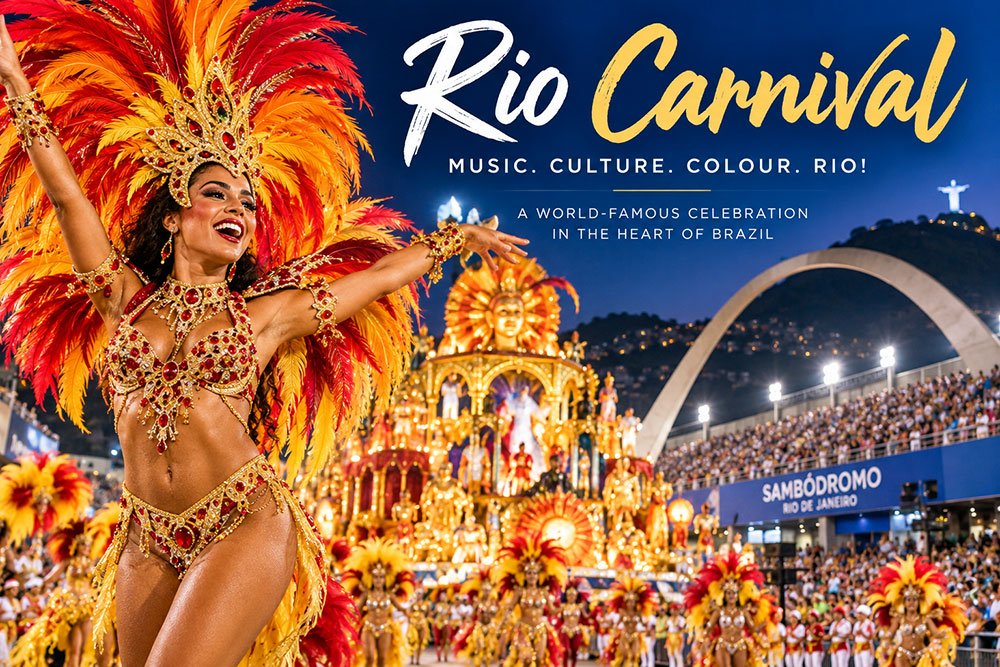
One of the most famous parts of Rio Carnival is the samba-school competition at the Sambadrome. Samba schools spend months preparing their themes, music, choreography, costumes and floats before presenting their performances to the public.
However, the Sambadrome is only one part of the celebration.
Street blocos are another essential part of Carnival. These organised street parties take place across different parts of the city and attract large crowds. The official Rio Carnival programme includes numerous authorised blocos and events throughout the Carnival season.
The Sambadrome Parade
The Sambadrome Marquês de Sapucaí is the main stage for Rio’s major samba-school parades. The permanent parade avenue was created in 1984 and was designed by renowned Brazilian architect Oscar Niemeyer.
Here, samba schools present spectacular performances featuring:
- Elaborate costumes
- Large decorative floats
- Samba dancers
- Percussion sections
- Themed choreography
- Original samba-enredo songs
- Large-scale visual productions
The samba schools compete according to a range of judging criteria. Their performances combine music, dance, costumes, storytelling and visual design to create a highly coordinated spectacle.
Since 2025, the Grupo Especial competition has featured three parade nights instead of two. For Carnival 2027, 12 Grupo Especial schools will parade at the Sambadrome on February 7, 8 and 9, 2027.
Rio Carnival Street Parties and Blocos
For many visitors, the street Carnival is just as important as the Sambadrome.
Known as blocos, these street celebrations bring music, dancing and large crowds into neighbourhoods across Rio. Some are relatively small community events, while others attract huge numbers of participants.
The city begins preparing months in advance. For Carnival 2027, Riotur opened the official registration process for street blocs in August 2026, with the street festivities scheduled to begin as early as January 16, 2027.
This means visitors who stay in Rio for longer can experience Carnival before the main Sambadrome competition begins.
Music Is at the Heart of Rio Carnival
Music is one of the defining features of Rio Carnival.
Samba schools prepare original samba-enredo songs around their annual themes. These songs are performed by singers and large percussion sections during the Sambadrome parades.
Street blocos offer a different musical experience. Depending on the bloco, visitors may hear samba, samba-enredo, marching-band rhythms and other Brazilian musical styles.
The atmosphere can begin well before the main parade nights, as samba schools hold rehearsals and other Carnival-related events.
For Carnival 2027, all 12 Grupo Especial schools have already selected or officially presented their samba-enredo songs. The official Carnival programme says the themes include Brazilian history, literature, Afro-Brazilian heritage, popular culture and the memory of samba.
Samba Schools and Their Performances
Samba schools are central to the identity of Rio Carnival.
Despite the name, these organisations are not simply dance schools. They are community-based cultural organisations that bring together musicians, dancers, costume designers, performers, artists and other contributors.
During the main parade, each school presents a carefully prepared theme through music, costumes, choreography and floats.
The result is a large-scale performance that combines Brazilian cultural traditions with creative design and theatrical presentation.
Visitors can also experience samba outside the main competition by attending rehearsals and other events connected with the samba schools.

Colourful Costumes and Elaborate Floats
Colour is one of the most recognisable features of Rio Carnival.
Samba-school costumes can include feathers, sequins, beads, fabrics and other decorative elements. Large floats are also designed around each school’s annual theme.
Rather than repeating exactly the same designs every year, samba schools develop new themes and visual concepts for each Carnival edition.
For 2027, Riotur has already published information about the themes selected by the Grupo Especial schools. The announced themes include literature, Brazilian personalities, Afro-Brazilian heritage, cultural memory and popular traditions.
Carnival Is More Than One Day
The original article described Rio Carnival as lasting throughout the entire Lenten season. However, that description does not accurately reflect the modern Carnival programme.
Carnival takes place around the period before Lent, but the Rio Carnival programme extends across several weeks. Visitors can enjoy street blocos, samba-school rehearsals, concerts, cultural events and major samba-school competitions at different times.
For example, the official 2027 street Carnival programme will begin in January. The Série Ouro samba-school parades will take place on February 5 and 6, followed by the Grupo Especial competition on February 7, 8 and 9.
This extended programme gives visitors more opportunities to experience Rio Carnival and plan their trip around the events they want to attend.
Rio Carnival 2027: Latest Dates
If you are planning to attend the next major edition, several important dates have already been announced.
Street Carnival
Rio’s 2027 street Carnival is currently scheduled to begin on January 16, 2027. The final list and schedules of authorised blocos should be checked through official Riotur channels as the event approaches.
Série Ouro Parades
The Série Ouro parades are scheduled for:
- February 5, 2027
- February 6, 2027
The 2027 Série Ouro competition will feature 17 samba schools.
Grupo Especial Parades
The main Grupo Especial competition is scheduled for:
- Sunday, February 7, 2027
- Monday, February 8, 2027
- Tuesday, February 9, 2027
Twelve schools will participate across the three nights.
Parade of Champions
The Sábado das Campeãs, or Champions’ Parade, will take place on February 13, 2027. The event brings the leading samba schools back to the Sambadrome after the competition and judging conclude.
Tickets for the Sambadrome
Travellers who want to watch the main samba-school competition should plan ahead.
For Carnival 2027, Riotur reported that ticket sales for special grandstands and individual seats for the Grupo Especial began in August 2026. Ticketmaster handled the sales, while availability varied by sector and event date.
Rio Carnival organisers also introduced a separate Carnival pass in 2026. The pass covers all three Grupo Especial parade nights. Official information says that LIESA manages the sales through its official channels, while Ticketmaster handles ticket transactions.
Ticket availability and prices can change. Therefore, visitors should check the latest information from Riotur and official ticketing channels before making a purchase.
Technical Rehearsals at the Sambadrome
Visitors do not necessarily have to wait for the main competition to experience the Sambadrome.
Technical rehearsals provide samba schools with an opportunity to practise their performances and make final adjustments before the official parades.
For Carnival 2027, Riotur has announced technical rehearsal dates at the Marquês de Sapucaí on January 23, 24, 30 and 31. The events are scheduled to be free to attend.
These rehearsals can be an interesting option for travellers who want to experience the Sambadrome atmosphere without attending the main ticketed competition.
How to Plan Your Rio Carnival Trip
Planning ahead is particularly important because Rio becomes extremely busy during Carnival.
Consider the following tips:
- Book accommodation early: Hotels and holiday rentals can become highly sought after.
- Choose your Carnival experience: Decide whether you want street blocos, Sambadrome parades, rehearsals or a combination.
- Buy official tickets: Use recognised ticketing channels and avoid unofficial sellers.
- Plan transportation: Large crowds and road closures can affect travel times.
- Carry only essentials: Crowded Carnival areas require extra attention to personal belongings.
- Stay hydrated: Rio can be hot during Carnival season.
- Wear comfortable clothing: You may spend several hours walking, standing and dancing.
- Check the official schedule: Bloco locations and times can change.
- Respect local rules: Follow instructions from organisers, police and city authorities.
Where to Experience Rio Carnival
Different parts of the celebration offer different experiences.
The Sambadrome is the place to go for the major samba-school competition. Street blocos provide a more open-air and neighbourhood-oriented Carnival experience.
Travellers can also explore other attractions in Rio de Janeiro during their stay, including beaches, viewpoints, historic areas and cultural landmarks.
This combination makes a Carnival trip more than just attending a parade. Visitors can experience both the cultural celebration and the wider attractions of Rio de Janeiro.
Safety Tips for Rio Carnival
Large public celebrations require sensible precautions.
Keep important documents and valuables secure, avoid carrying unnecessary cash and remain aware of your surroundings in crowded areas.
Follow official transportation and security instructions, especially around the Sambadrome and major street events.
Rio authorities also operate specific Carnival security and tourist-support measures. During Carnival 2026, the state government reported reinforced policing at major tourist locations, airports, the bus terminal and the Sambadrome, along with multilingual tourist assistance.
The details may change from one Carnival edition to another, so visitors should check the latest official guidance before travelling.
Frequently Asked Questions About Rio Carnival
When is Rio Carnival 2027?
The main Grupo Especial samba-school parades will take place at the Marquês de Sapucaí Sambadrome on February 7, 8 and 9, 2027. The Champions’ Parade will follow on February 13, 2027.
When does Rio Carnival street party season start in 2027?
The official street Carnival will begin on January 16, 2027. As the Carnival period approaches, check Riotur for the latest bloco schedules and authorisations.
Where is the main Rio Carnival parade held?
The Marquês de Sapucaí Sambadrome, also known as the Sambódromo, hosts the main samba-school competition.
Is Rio Carnival only about the Sambadrome?
No. The celebration also includes street blocos, samba-school rehearsals, concerts and other cultural events across Rio de Janeiro.
Should I book Rio Carnival tickets in advance?
Yes. Travellers who want to attend the main Sambadrome parades should monitor official ticket sales well in advance because popular sectors and dates can sell out.
What should I wear to Rio Carnival?
Choose lightweight, comfortable clothing and footwear suitable for walking and standing for long periods. Many visitors also wear colourful or themed outfits, particularly when attending street blocos.
Final Thoughts
Rio Carnival offers much more than a spectacular parade. It is a city-wide celebration shaped by samba, music, dance, community traditions, elaborate costumes and street culture.
The Sambadrome provides the grand spectacle of the samba-school competition, while the city’s blocos offer a more spontaneous street experience. Technical rehearsals and other Carnival events provide additional ways to experience the celebration.
For travellers planning Rio Carnival 2027, the main Grupo Especial parades are scheduled for February 7–9, with the Champions’ Parade on February 13. Street Carnival activities are scheduled to begin earlier, from January 16.
Because schedules, tickets, street routes and local arrangements can change, always check the latest information from Riotur and official Rio tourism channels before travelling.
