
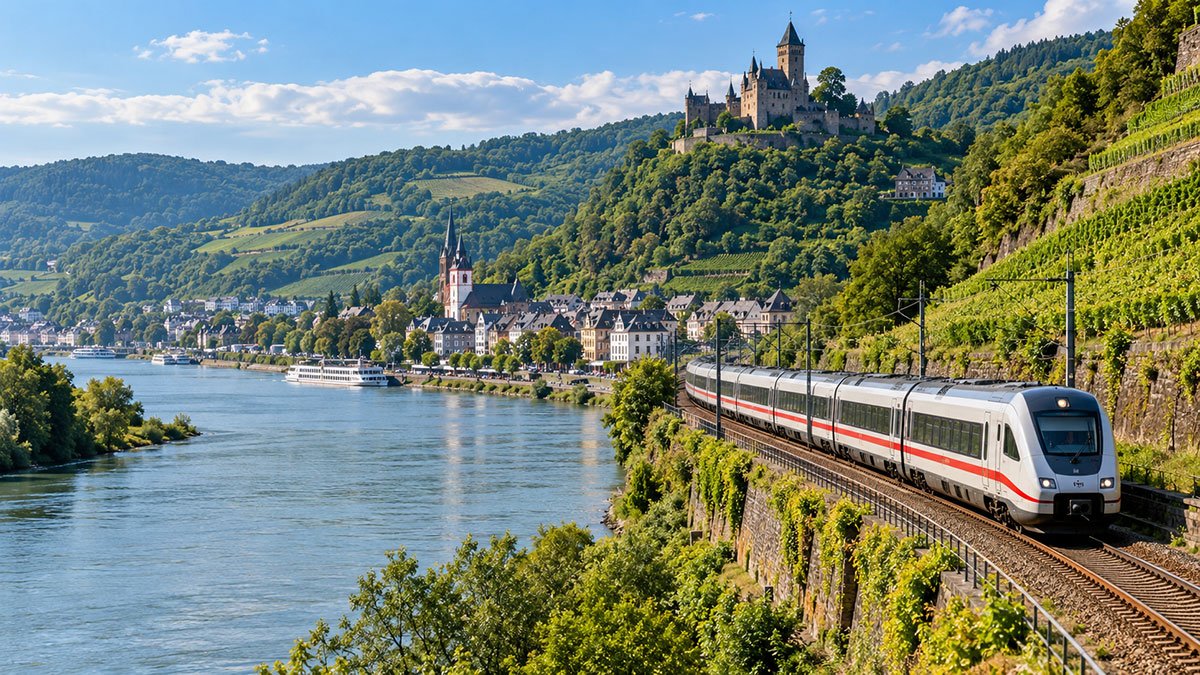
Discover the beauty of Europe’s Rhine Valley by train, where vineyard-covered hills, historic castles and charming riverside towns make the journey as memorable as the destination.
Overland Travel in Europe: Why the Journey Matters
A European holiday can be about much more than reaching a famous city, checking into a hotel or spending a week beside the sea. Travelling by train, coach or car gives you the opportunity to discover the landscapes, towns and everyday life that lie between your starting point and your destination.
Overland travel in Europe offers a different way to experience the continent. Instead of treating transport as a necessary part of the holiday, you can make the journey itself one of its highlights. Watch vineyards pass the train window, stop in a historic town for lunch, follow a river through a dramatic valley or spend an extra night somewhere you had not originally planned to visit.
This approach will not suit every itinerary. Flying can be the most practical option for long distances or limited holidays. However, when time allows, travelling overland can add depth, flexibility and memorable experiences to a European adventure.
Why Choose Overland Travel in Europe?
One of the main advantages of travelling overland is the opportunity to experience a destination gradually. You see how landscapes change, notice the differences between regions and encounter places that might otherwise remain outside your travel plans.
Consider a journey through southern Germany. Rather than arriving directly at a lakeside resort, you could travel through historic towns, explore the countryside and break the journey before reaching Lake Constance.
The holiday becomes a collection of experiences rather than a single destination.
Overland travel can also appeal to different types of traveller:
- Couples: Enjoy scenic journeys, leisurely stops and stays in smaller towns.
- Families: Break up long journeys with activities and overnight stops.
- Independent travellers: Explore destinations at a flexible pace.
- Photography enthusiasts: Capture changing landscapes, architecture and everyday scenes.
- Slow travellers: Spend more time in fewer destinations instead of rushing between cities.
The key is to choose a transport method and itinerary that suit your interests, budget and available time.
1. Enjoy the Scenery Along the Way
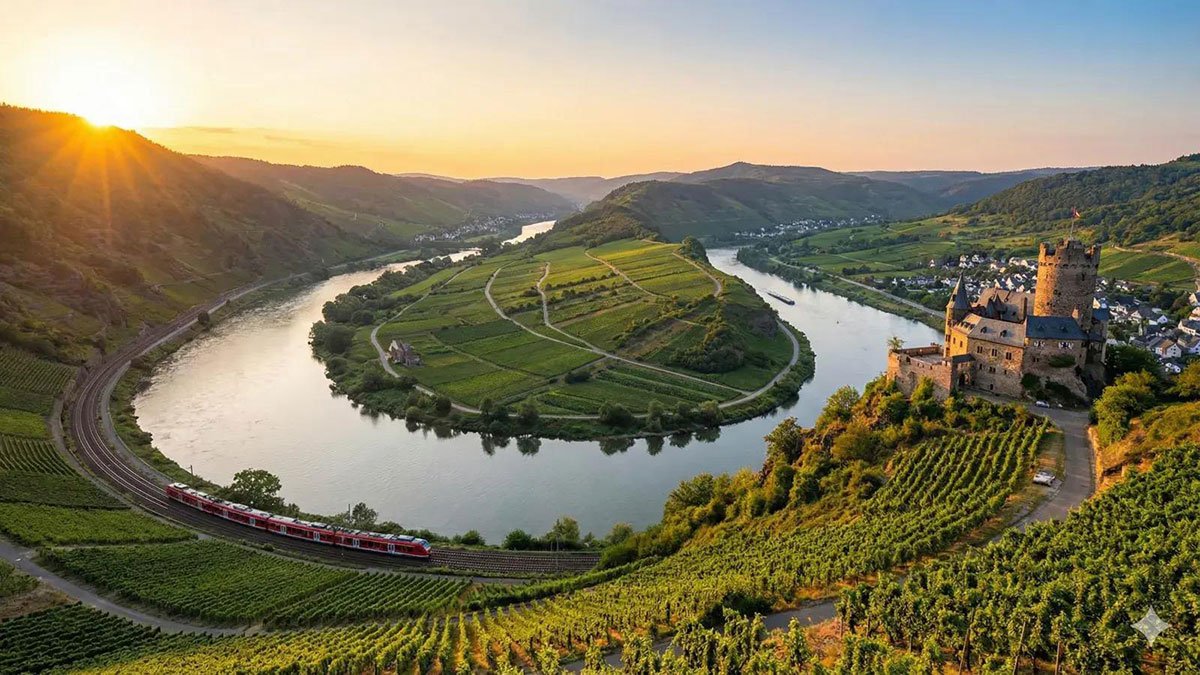
Some of Europe’s most rewarding travel experiences happen between major destinations. River valleys, mountain passes, lakeside villages and rural landscapes can be just as memorable as the places listed in guidebooks.
The Rhine Valley in Germany is a particularly appealing example. The UNESCO-listed Upper Middle Rhine Valley stretches between Bingen, Rüdesheim and Koblenz, with historic settlements, terraced vineyards, castle ruins and a dramatic river landscape.
Travelling through this region allows you to appreciate the relationship between the river, the surrounding communities and centuries of trade. It also offers opportunities to stop in historic towns rather than simply pass through the region.
Lake Constance, known locally as Bodensee, provides another reason to slow down. The lake borders Germany, Switzerland and Austria, creating opportunities to combine lakeside towns, boat trips and regional excursions within one holiday.
Choose your transport for the views
Different forms of transport offer different perspectives.
- Train: Relax, watch the scenery and avoid concentrating on the road.
- Coach: Travel between towns while leaving the driving to someone else.
- Car: Stop at viewpoints, villages and attractions that may be difficult to reach by public transport.
- Boat: Experience lakes and rivers from the water, often with a completely different view of the surrounding landscape.
Before booking, research the route itself. Not every train journey is scenic, and a road trip can involve considerable time on motorways rather than picturesque country roads.
2. Turn the Journey Into Part of the Holiday
A direct journey can be convenient, but it often leaves little opportunity to explore places along the way. Overland travel makes it easier to build these experiences into your itinerary.
Imagine travelling between two major European cities. Instead of booking the fastest available connection, you could spend a night in a smaller town, visit a local museum or enjoy an unhurried meal before continuing the following morning.
These stops can provide a more rounded understanding of a country. You experience different architectural styles, local food, regional traditions and the pace of everyday life.
A useful way to plan is to divide your holiday into three parts:
- The route: Decide how you want to travel and which landscapes interest you.
- The stops: Choose a small number of towns or attractions worth exploring.
- The destination: Leave enough time to enjoy the main purpose of your holiday.
You do not need to stop everywhere. A few carefully chosen detours can be more rewarding than an itinerary packed with constant changes of accommodation.
3. Discover Places You Might Otherwise Miss
Travelling overland makes smaller destinations easier to include in a holiday, particularly when the route passes through regions with good rail or road connections.
Around Lake Constance, for example, travellers can explore different towns along the shoreline rather than staying in one resort for the entire visit.
The region’s public transport network connects many lakeside destinations by train and bus. Passenger boats provide another way to travel between selected towns, although routes and service frequency vary by season.
This combination makes the area well suited to a holiday built around several short excursions.
You could spend a morning exploring a historic centre, take an afternoon boat trip when services are operating, and return to your accommodation in the evening. Alternatively, you could stay overnight in another town and experience the region at a slower pace.
Allow room for spontaneous discoveries
Spontaneity works best when the itinerary has some flexibility.
Leave an afternoon free, choose accommodation that allows you to change plans where possible, and identify alternative routes before setting out. If a village, viewpoint or local event catches your attention, you will have more freedom to investigate it.
However, check onward connections before making an unplanned stop, especially in rural areas where public transport may be less frequent.
4. Choose Between Train, Coach and Car Travel
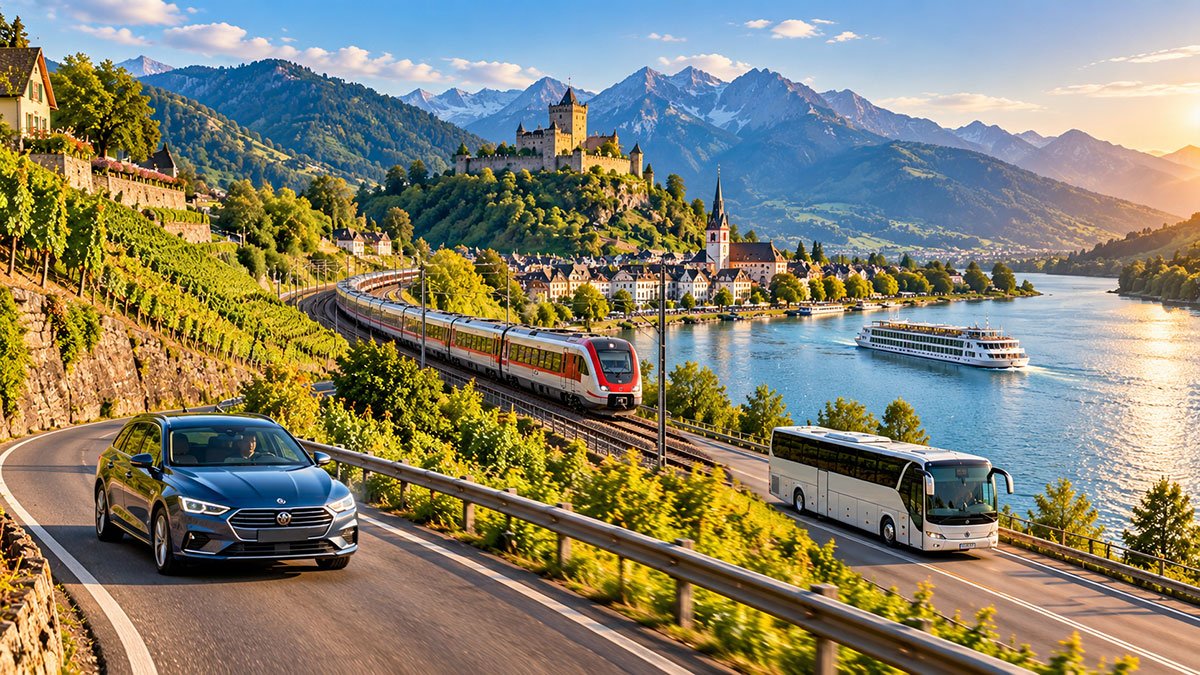
Explore Europe by car, train or bus and enjoy scenic mountain roads, lakeside railways and charming historic towns along the way.
There is no single best way to travel overland in Europe. Your ideal option depends on the route, the number of people travelling, the luggage you carry and how much independence you want.
Train travel
Rail is often the strongest choice for journeys between well-connected towns and cities. You can read, relax, enjoy the view and avoid driving in unfamiliar places.
Best for: City-to-city trips, scenic routes and travellers who prefer public transport.
Consider: Reservations, changes between operators, station locations and possible service disruptions.
Coach travel
Coaches can offer useful connections between destinations and may be competitively priced. They can also reach places that are not served conveniently by rail.
Best for: Budget-conscious travellers and routes with convenient direct services.
Consider: Road traffic, journey duration, luggage rules and the location of coach terminals.
Car travel
Driving provides greater control over your route and makes it easier to reach rural accommodation, remote viewpoints and attractions away from public transport.
Best for: Rural exploration, families carrying luggage and itineraries with multiple stops.
Consider: Fuel, parking, tolls, rental charges, local driving rules and restrictions in some city centres.
For a mixed itinerary, you do not have to choose just one method. A train journey between major cities, followed by a rental car for a few days in the countryside, can provide a useful balance between convenience and flexibility.
5. Is Overland Travel Cheaper Than Flying?
It can be, but the answer depends on the journey.
Budget airlines sometimes offer very low fares, particularly when travellers book early and travel light. Trains and coaches may provide better value on other routes, especially when their departure and arrival points are more convenient.
The headline ticket price is only part of the calculation.
When comparing transport options, consider:
- The cost of reaching the airport, railway station or coach terminal.
- Checked baggage and other additional charges.
- Airport transfers and onward transport to your accommodation.
- Seat reservations and ticket flexibility.
- Car rental, fuel, tolls and parking.
- Accommodation costs if an overnight stop is necessary.
- The amount of holiday time spent travelling.
For car journeys, compare the total cost for everyone travelling rather than the fuel cost alone. A car may offer better value for a group, but this is not guaranteed once rental charges, parking and other expenses are included.
Likewise, an inexpensive flight may become less attractive if the airport is far from the city you intend to visit.
Practical tip: Compare the full door-to-door journey, including travel time and likely extra costs. The cheapest ticket is not always the cheapest or most convenient holiday option.
6. Can Overland Travel Be Better for the Environment?
Environmental impact is another reason to consider alternatives to flying.
The European Environment Agency identifies rail as one of the more climate-efficient forms of motorised passenger transport in Europe. Its research also shows why comparisons should account for the vehicle, occupancy and journey rather than assuming that every land journey is automatically greener.
In general, a well-used train or coach can offer lower emissions per passenger than flying. However, travelling alone in a petrol or diesel car may produce more emissions per passenger than taking a flight on some routes.
The practical implications are straightforward:
- Choose rail where it offers a suitable alternative to flying.
- Consider a scheduled coach for routes with useful direct services.
- Share a car journey when it makes practical sense.
- Use local buses, trains, walking and cycling to explore once you arrive.
- Avoid unnecessary detours if reducing your travel footprint is a priority.
There is no need to make every part of a holiday overland to make more considered transport choices. Sometimes, flying to a region and then exploring it by train or bus is the most practical compromise.
7. Plan a Scenic European Journey Without Overcomplicating It
A successful overland holiday needs a little more planning than simply choosing a destination and booking a flight. The aim is not to schedule every minute, but to make sure the journey is realistic.
Step 1: Start with a manageable route
Choose a main destination and identify a few places along the way that genuinely interest you. Avoid adding stops simply because they appear on a map.
A smaller geographical area often provides a more relaxed experience than attempting to cross several countries in a short holiday.
Step 2: Check connections and journey times
Use the relevant national railway or transport operator to confirm routes, timetables and ticket conditions. For international trips, check connections across borders and allow sufficient time between separately booked services.
Rail schedules, engineering works and seasonal services can change. Recheck your itinerary before departure.
Step 3: Decide where to stay overnight
An overnight stop can make a long journey more enjoyable, particularly if it allows you to explore a town rather than spend the entire day in transit.
Check the accommodation’s location in relation to the station, coach terminal or parking facilities. A centrally located hotel may reduce the need for additional transport.
Step 4: Leave some flexibility
Do not schedule every excursion or connection too tightly. A little spare time gives you room to enjoy an unexpected discovery or deal with a delay without disrupting the entire holiday.
Step 5: Check travel documents and local rules
Before crossing international borders, confirm passport validity, visa requirements and any applicable entry conditions for your nationality and itinerary.
If driving, check licence requirements, rental terms, insurance, road rules, toll arrangements and any required vehicle permits. Requirements vary by country, so use official government and transport sources.
Step 6: Travel with practical essentials
Keep your tickets, accommodation details, travel documents and important booking references accessible. Download maps and tickets for offline use where available, and carry any essential medication and a portable charger.
For a road trip, plan rest breaks and avoid making driving distances more ambitious than your schedule allows.
8. When Is the Best Time for Overland Travel in Europe?
The best time depends on the region, the activities you have planned and your tolerance for crowds or unpredictable weather.
Spring can be attractive for countryside walks, city breaks and landscapes emerging from winter. However, mountain conditions and some seasonal services may still limit certain activities.
Summer generally offers longer daylight hours and a wide range of outdoor activities. It can also bring heavier visitor numbers, higher accommodation demand and busy transport services.
Autumn can be rewarding for vineyard landscapes, woodland colours and quieter visits to some destinations. Weather and daylight conditions become more important as the season progresses.
Winter suits travellers interested in Christmas markets, winter scenery and seasonal city breaks. Yet some rural attractions, boat services and outdoor activities operate on reduced schedules or close for the season.
For Lake Constance in particular, check boat timetables before planning an itinerary around a lake crossing or cruise. The region’s regular passenger shipping has seasonal variations.
Whenever you travel, check the weather forecast, planned transport works and attraction opening arrangements before committing to a route.
9. Make Lake Constance Part of a Wider Journey
Lake Constance illustrates how a single region can support a varied overland holiday. Its combination of lakeside towns, historic centres, countryside and cross-border connections makes it possible to explore at different speeds.
Rather than treating the lake as a place to arrive at and remain in, consider building a journey around several experiences:
- Explore a lakeside town on foot.
- Take a regional train to another destination.
- Visit a historic centre or local attraction.
- Use a passenger boat where a suitable service operates.
- Allow time for lakeside walks, cycling or simply enjoying the scenery.
The wider region is accessible through railway connections via German, Swiss and Austrian cities. Your best route will depend on your starting point, available connections and whether you plan to continue to other parts of Europe.
If you have more time, a journey through the Rhine Valley can provide a contrasting landscape of riverside towns, vineyards and castles. Check the geography and connections carefully when combining these regions, as they are separate areas rather than a single continuous lakeside itinerary.
10. Is Overland Travel Right for Every Holiday?
Not necessarily. Travelling overland works particularly well when the journey and the places along it are part of the experience. It is less appealing when time is short or the distance is too great for a comfortable itinerary.
Flying may be more practical if you have only a few days, need to reach a distant destination quickly or are travelling between places with limited direct land connections.
Overland travel can also require additional planning. International rail journeys may involve separate booking systems, different reservation requirements and connections between operators. Driving introduces other considerations, including unfamiliar roads and parking.
The best approach is to match the transport method to the holiday rather than treating one form of travel as universally superior.
If your aim is to explore a region, visit smaller communities and enjoy the scenery, a train journey or road trip may be an excellent choice. If your priority is to reach a distant destination with limited time, flying may make more sense.
Make the Journey Count
A memorable European holiday does not always depend on how many attractions you visit. Sometimes, it is the train winding through a river valley, a leisurely stop in a historic town or an unexpected view from a lakeside road that stays with you longest.
Overland travel gives you the chance to see more of the places between your starting point and your final destination. With sensible planning, realistic travel times and room for discovery, the journey can become an important part of the holiday rather than something to get out of the way.
The next time you plan a European escape, look beyond the fastest route. You may discover that the most rewarding part of your trip begins well before you reach your destination.
