
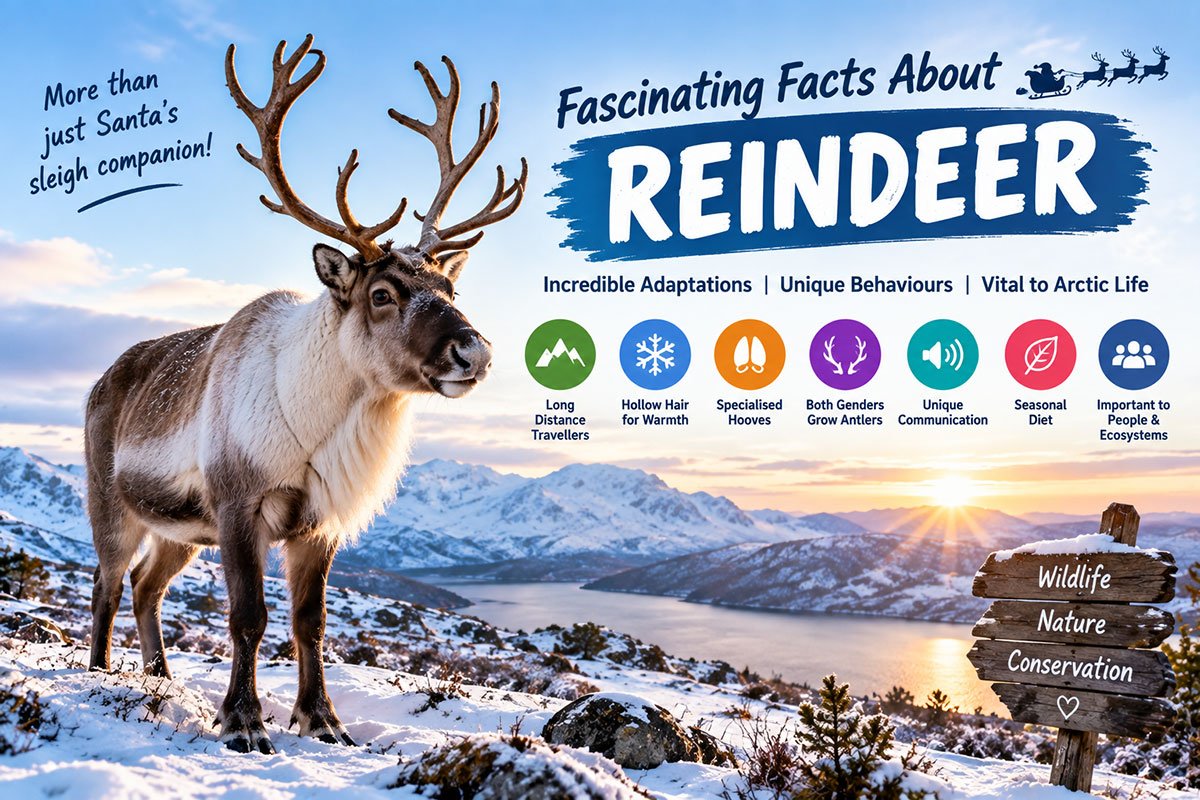
What Santa Didn’t Tell You About Reindeer
Reindeer are among the most recognisable animals in the world, especially during the Christmas season. Popular folklore celebrates these remarkable deer as Santa Claus’s trusted sleigh companions. However, their real-life abilities are just as fascinating as the stories surrounding them.
Scientifically known as Rangifer tarandus, reindeer live across Arctic and subarctic regions of North America, Europe and Asia. In North America, people commonly call wild populations caribou, although naming practices vary by region and management approach.
For many Indigenous communities, reindeer and caribou have long held cultural, economic and practical importance. Reindeer herding remains an important tradition in parts of northern Europe and Asia.
From their specialised winter coats to their impressive migrations, these animals have evolved to survive in some of the world’s harshest environments.
Here are seven fascinating reindeer facts that reveal what makes these Arctic animals so extraordinary.
-
Reindeer Are Remarkable Long-Distance Travellers
Reindeer and caribou are known for travelling long distances in search of food, suitable breeding grounds and seasonal habitats.
Some wild caribou populations undertake migrations spanning hundreds or even thousands of kilometres. Their movements depend on the population, available vegetation, weather and the landscape.
A scientific study published in Scientific Reports in 2019 examined the longest terrestrial mammal migrations. Researchers found that caribou likely undertake the longest terrestrial migrations, while grey wolves covered the greatest total annual distances in the study. These findings highlight the importance of distinguishing migration distance from all movement throughout a year.
Read the research in Scientific Reports.
Unlike animals that remain in a relatively small home range, migratory caribou may travel between seasonal feeding areas. These journeys help them access vegetation and respond to changes in their environment.
However, not all reindeer migrate over enormous distances. Some populations move shorter distances, while domesticated herds may follow routes managed by their herders.
-
Their Hollow Hair Helps Them Survive Freezing Temperatures
How do reindeer remain warm in Arctic conditions? One important adaptation is their remarkable coat.
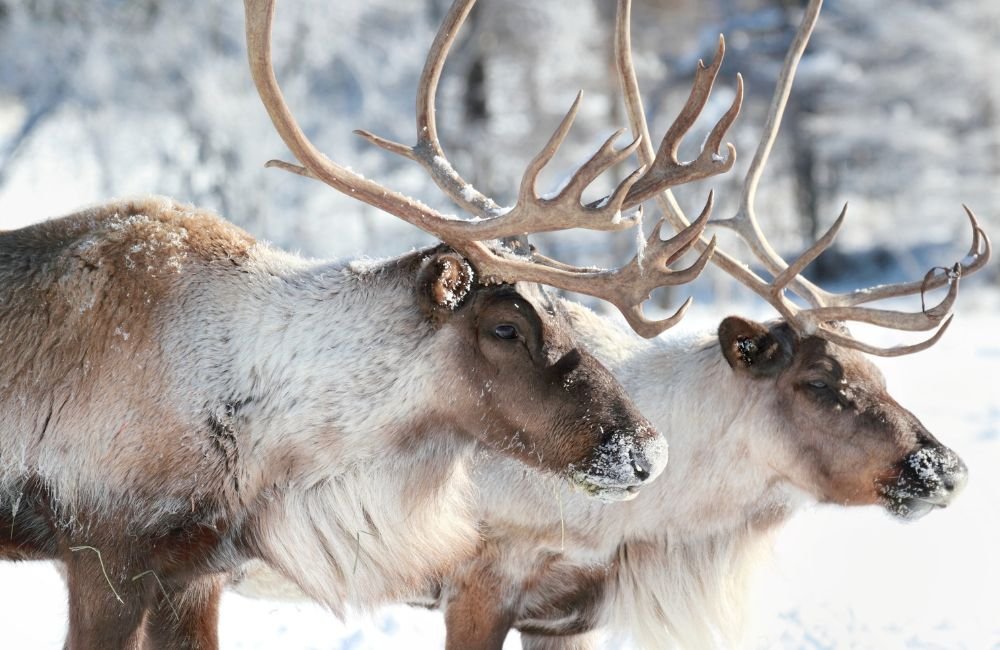
Reindeer have a dense insulating undercoat and longer guard hairs. Many of these outer hairs are hollow, helping trap air and reduce heat loss.
This natural insulation allows the animals to withstand cold temperatures and icy winds. Their coats also change seasonally, becoming thicker during colder periods.
Reindeer have additional adaptations that help them survive in northern environments. Their compact bodies and specialised circulation help conserve heat, while their broad hooves support movement across snow and soft ground.
These features work together to help reindeer cope with harsh winters.
According to the Smithsonian’s National Zoo, hollow winter hairs are an important part of the reindeer’s natural insulation.
-
Reindeer Have Specialised Hooves for Snow and Ice
Reindeer hooves are designed for more than walking across ordinary ground. They help the animals move over snow, ice, mud and uneven terrain.
Their broad hooves spread body weight across soft snow, making movement easier. The sharp edges can also provide traction on harder surfaces.
During winter, hair grows around their hooves and between their toes. This provides additional protection and helps them move through cold environments.
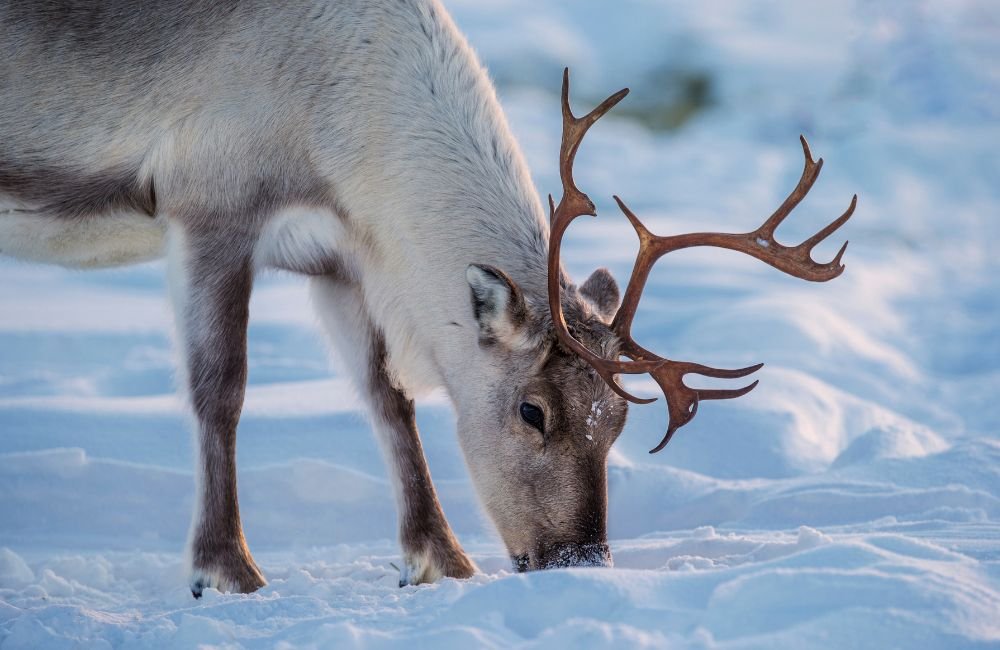
Reindeer also use their hooves to scrape away snow while searching for food. This behaviour is particularly useful during winter, when vegetation may be buried beneath the snow.
Their hooves are also well suited to swimming. Reindeer are capable swimmers and may cross rivers and other waterways during seasonal movements.
These adaptations help them travel across the varied landscapes of the Arctic and subarctic regions.
-
Both Male and Female Reindeer Can Grow Antlers
One of the most unusual reindeer facts concerns their antlers.
In most deer species, antlers are typically associated with males. Reindeer are different because both males and females can grow them.
Antlers consist of bone, and reindeer usually shed and regrow them each year. During growth, a soft, blood-rich layer called velvet covers the antlers and supplies nutrients to the developing bone.
After the antlers mature, the velvet dries and eventually comes away.
The timing of antler growth and shedding varies according to sex, age, population and environmental conditions. Adult males commonly shed their antlers after the autumn breeding season, while many females retain theirs through winter.
This seasonal difference means that antlers alone can sometimes help researchers identify reindeer of different sexes during particular times of the year.
The US Food and Drug Administration’s reindeer and caribou facts provide further information about their antlers and other adaptations.
-
Reindeer Make Sounds to Communicate
Although reindeer may appear quiet, they use sounds to communicate with one another.
During the autumn breeding season, males can produce calls that help attract females and communicate with competing males.
Females also use vocalisations to communicate with their calves. Young reindeer make sounds that help maintain contact with their mothers, particularly when herds are moving.
Some reindeer produce distinctive clicking sounds as they walk. These sounds can come from tendons moving over structures in their feet.
The clicks may be especially noticeable when several animals move together across snow or frozen ground.
Reindeer communication involves more than sound. Scent, body posture and movement can also play important roles in interactions between individuals.
These behaviours help reindeer maintain contact, reproduce and function within their herds.
-
Their Diet Changes with the Seasons
Reindeer are herbivores, meaning they feed on plant material rather than hunting other animals.
Their diet includes grasses, leaves, herbs, shrubs and other vegetation. During winter, when many plants become unavailable, lichens can become an important food source.
Reindeer use their hooves to uncover vegetation buried beneath snow. This behaviour helps them find food when the landscape appears frozen and barren.
However, winter feeding can become difficult when deep snow or ice prevents access to vegetation. Such conditions can affect the animals’ body condition and survival.
The availability of food also influences seasonal movements. Some herds travel considerable distances to reach suitable grazing grounds, while others remain within smaller areas.
Reindeer are well adapted to northern environments, but they still depend on healthy habitats and accessible food sources.
-
Reindeer Are Important to Arctic Communities and Ecosystems
Reindeer are more than iconic Christmas animals. They have deep cultural, economic and ecological significance across northern regions.
Reindeer herding supports livelihoods and traditional practices among several Indigenous peoples, including Sámi communities in northern Europe. Herding practices differ between regions and communities, reflecting local knowledge, traditions and environmental conditions.
Wild caribou also play important roles in northern ecosystems. They graze on vegetation and serve as prey for predators, including wolves.
However, reindeer and caribou face a range of challenges. Climate change, habitat alteration, industrial development and barriers along migration routes can affect their access to food and seasonal habitats.
Their conservation needs vary between populations, making local monitoring and habitat protection important.
For broader background on the species and its distribution, consult the International Union for Conservation of Nature’s Red List entry for reindeer. Its assessment dates from 2015, so it should not be treated as a newly conducted population assessment.
Final Thoughts
Reindeer are far more than the famous animals associated with Santa Claus. Their remarkable coats, specialised hooves, seasonal antlers and ability to travel across northern landscapes make them fascinating examples of wildlife adaptation.
They also have an important place in Arctic ecosystems and the cultural traditions of northern communities.
The next time you see a reindeer illustration during the Christmas season, remember the real animal behind the folklore. Its extraordinary survival skills are every bit as remarkable as the stories that made it famous.
Learning more about reindeer also reminds us why protecting their habitats and supporting responsible wildlife conservation matter throughout the year.
