
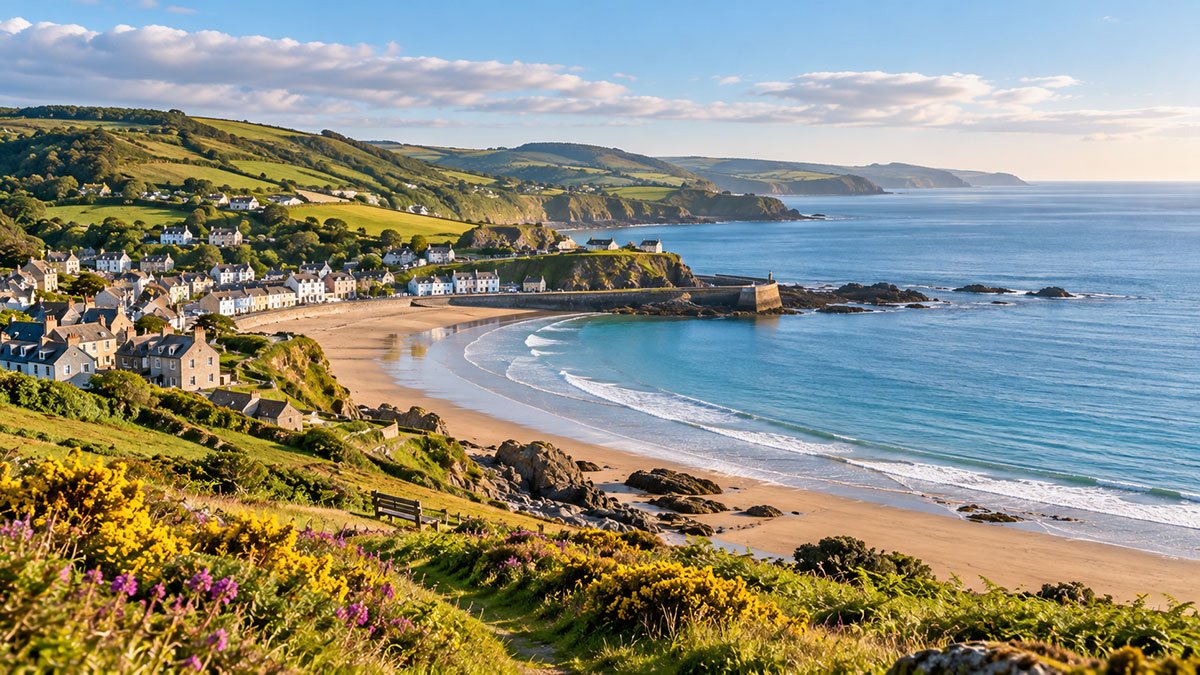
Discover the peaceful beaches, traditional villages and sweeping coastal scenery of Mid Wales.
Things to Do in Mid Wales: Coast, Mountains and Towns
Mid Wales offers a different kind of Welsh holiday, combining sandy beaches, peaceful countryside, wildlife-rich estuaries and small towns with plenty of local character. If you are looking for things to do in Mid Wales, you can spend one day exploring Cardigan Bay and the next walking through the Cambrian Mountains or discovering the region’s historic market towns.
The region commonly encompasses Ceredigion and Powys. Its landscapes range from colourful seaside communities and sheltered coves to reservoirs, wooded valleys and open uplands.
Unlike Wales’s busiest resort areas, many parts of Mid Wales reward travelers who enjoy exploring at a relaxed pace. You can watch for dolphins, cycle beside historic dams, follow coastal paths, visit traditional markets or simply enjoy a quiet picnic with mountain views.
Here are some of the best ways to experience this distinctive part of Wales.
1. Discover Cardigan Bay and Its Beautiful Coastline
Cardigan Bay is one of the highlights of Mid Wales. Its coastline includes sandy beaches, rocky headlands, small harbours and coastal walking routes.
The towns and villages along the bay offer different experiences. Some have traditional seaside attractions and places to eat, while others provide quieter access to beaches and surrounding countryside.
Visit New Quay for Harbour Views and Dolphin Watching
New Quay, also known by its Welsh name Ceinewydd, is a popular seaside town on the Ceredigion coast.
The harbour and surrounding beaches provide a pleasant setting for a day beside the sea. Visitors can walk along the waterfront, explore local shops and cafés or enjoy views across Cardigan Bay.
One of the town’s biggest attractions is the opportunity to watch bottlenose dolphins in their natural habitat. Boat operators offer wildlife-watching trips from the coast, and dolphins are regularly seen in Cardigan Bay.
Summer is generally a good time to look for dolphins, although sightings are never guaranteed. Sea conditions, weather and wildlife behaviour all influence what visitors may see.
Choose a responsible wildlife-watching operator that follows appropriate guidance for viewing marine animals without disturbing them.
Explore Aberaeron’s Colourful Harbour
Aberaeron offers a different coastal experience, with attractive Georgian-style buildings surrounding its harbour.
The town is ideal for a relaxed walk, a meal overlooking the water or a stop at independent shops. Nearby beaches and walking routes also offer opportunities to explore the surrounding coastline.
Aberaeron works well as a base for discovering the wider Ceredigion coast. You can combine a visit with New Quay, a coastal walk or an excursion into the nearby countryside.
Experience Aberystwyth’s Seaside Atmosphere
Aberystwyth is the principal coastal town in northern Ceredigion and offers a mixture of seaside scenery, culture and everyday Welsh life.
Take a walk along the promenade, explore the harbour area or visit local museums and cultural attractions. Constitution Hill offers elevated views across the coast, and the town’s arts and university communities give it a livelier atmosphere than many smaller seaside villages.
The National Library of Wales is another worthwhile stop for visitors interested in Welsh literature, history and cultural heritage.
Aberystwyth is also a practical base for travelers who want to combine coastal sightseeing with excursions inland toward the Cambrian Mountains and the Rheidol Valley.
2. Find Quiet Beaches and Coastal Walking Routes
Mid Wales has plenty of beaches for travelers who prefer a quieter setting. Some offer sheltered sandy coves, while others open onto extensive dunes, estuaries and exposed stretches of coastline.
Choose a beach according to your interests, mobility and the conditions on the day.
Visit Mwnt for a Sheltered Coastal Setting
Mwnt, near Cardigan, is known for its sandy beach, dramatic coastal views and opportunities to spot marine wildlife.
The sheltered bay makes it a popular place for a coastal outing. A walk to the top of Foel y Mwnt provides panoramic views over Cardigan Bay, and visitors may see dolphins offshore when conditions allow.
Access to the beach involves a series of steep steps. Check the access information before visiting if you have young children, limited mobility or substantial beach equipment.
Parking arrangements and available facilities can vary, so consult the National Trust’s current visitor information before setting out.
Walk Through the Dunes at Ynyslas
Ynyslas lies near the Dyfi estuary, close to Borth. Its sand dunes form part of the Dyfi National Nature Reserve, an important landscape for coastal plants, insects and wildlife.
The dunes and surrounding estuary provide excellent opportunities for nature observation and photography. Birdlife is particularly important in the area, while the changing light over the sand and water creates an attractive landscape throughout the year.
However, visitors must follow the site’s safety restrictions. Natural Resources Wales identifies Ynyslas as a red-flag beach and prohibits swimming and the use of inflatables because of dangerous tidal currents.
The car park is on the beach and can flood during high tides. Check the warning information displayed at the entrance and never leave a vehicle in the area during a stated flooding period.
Stay on suitable paths, avoid digging in the dunes and follow restrictions on fires and barbecues. These precautions help protect both visitors and the sensitive coastal habitat.
Explore More of the Ceredigion Coast Path
The Ceredigion coast offers a variety of walking routes, from gentle waterfront strolls to more demanding cliffside paths.
Parts of the coast provide views of small coves, sea cliffs, beaches and coastal villages. Routes around Tresaith, Aberporth and Penbryn are particularly appealing to walkers who enjoy changing scenery.
Before setting out, check the route length, terrain, weather forecast and access conditions. Coastal paths can include steep climbs, uneven surfaces and exposed sections.
You do not need to complete a long-distance walk to appreciate the coastline. Choose a manageable section, stop at a viewpoint and allow time to explore the villages along the way.
3. Explore the Cambrian Mountains
The Cambrian Mountains form a broad upland area across Mid Wales. Their open hills, remote valleys, rivers and reservoirs create a landscape that feels different from the busier coastal destinations.
The area suits travelers who enjoy walking, photography, cycling, wildlife watching and quiet time outdoors.
Visit the Elan Valley
The Elan Valley, near Rhayader in Powys, is one of the region’s best-known outdoor destinations.
Its network of dams and reservoirs was developed to supply water to Birmingham. Today, the landscape combines impressive Victorian engineering with broad expanses of water, wooded slopes and open hills.
The Elan Valley visitor centre provides information about the area’s history, wildlife and walking opportunities. From there, visitors can explore routes around the reservoirs or choose a longer walk through the surrounding countryside.
The valley offers options for different abilities. Short walks near the visitor centre suit visitors looking for a gentle outing, while longer routes provide a more demanding day in the hills.
Cycling is also popular, and the estate has routes for a range of experience levels.
The reservoirs are important water-supply infrastructure. Do not assume they are suitable for swimming or water sports; check the land manager’s current rules before planning any activity on or near the water.
Enjoy the Night Sky
Parts of the Cambrian Mountains offer dark skies and opportunities for stargazing away from brightly lit urban areas.
The Elan Valley is a particularly good place to consider for an evening visit when weather conditions cooperate. Clear skies offer better visibility, while cloud and rain can quickly affect the experience.
If you plan to stay after dark, check parking arrangements and access restrictions in advance. Bring warm clothing, a torch and suitable footwear, and choose an appropriate place to observe the night sky.
Visitors should avoid disturbing wildlife or private property while exploring rural areas.
Look for Wildlife
The countryside of Mid Wales supports a variety of birds and other wildlife. Red kites are among the most recognizable species in the region, and birdwatchers can explore suitable viewpoints, reserves and countryside trails.
The Dyfi Biosphere also contains important habitats, including wetlands, estuaries and woodland.
Bring binoculars if you enjoy wildlife watching, and keep a respectful distance from animals. Observe local restrictions, especially in protected habitats.
4. Discover Mid Wales’s Market Towns and Local Culture
Mid Wales is not only about beaches and mountains. Its market towns offer a chance to discover local food, independent shops, historic buildings and Welsh cultural traditions.
Explore Machynlleth
Machynlleth is a small market town known for its creative character, historic market and role within the wider Dyfi Valley.
Visitors can browse independent businesses, explore local history and use the town as a base for nearby walks and nature reserves. Its location makes it a useful stopping point when travelling between the coast and inland areas.
The town is also associated with Welsh political history and the legacy of Owain Glyndŵr. Travelers interested in these themes can look for local heritage attractions and interpretive material.
Visit Welshpool and Powis Castle
Welshpool, in Powys, is a traditional market town with historic streets, independent businesses and access to surrounding countryside.
One of its principal attractions is Powis Castle and Garden, managed by the National Trust. The medieval castle stands above terraced gardens, which are known for their formal design and sweeping views.
The castle, gardens and collections provide a different type of experience from the region’s outdoor attractions. Allow enough time to explore the grounds and check the official National Trust visitor information for opening times and access arrangements.
Discover Knighton and the Welsh Borderlands
Knighton sits close to the England–Wales border and offers access to countryside walking routes and the wider Welsh Marches.
It is associated with Offa’s Dyke Path, a long-distance trail that follows much of the historic border region. The trail passes through varied landscapes and provides a rewarding option for hikers seeking a multi-day route.
You can explore a shorter section without committing to the full distance. Check the route, transport arrangements and accommodation options before planning a linear walk.
5. Explore Waterfalls and Caves in the Southern Part of the Region
The southern side of a broader Mid Wales itinerary opens toward Bannau Brycheiniog National Park, also widely known by its English name, the Brecon Beacons.
This area offers mountains, waterfalls, woodland trails and dramatic limestone landscapes. It is a good addition for travelers who want to combine the coast and central uplands with a more rugged southern landscape.
Discover Waterfall Country
The waterfalls around the southern edge of Bannau Brycheiniog attract walkers who enjoy wooded valleys, rivers and striking rock formations.
Several routes lead to waterfalls, but conditions vary. Wet weather can make paths slippery, and some trails involve uneven ground, steep slopes or steps.
Use official walking guidance to choose a route that matches your ability. Stay behind barriers, avoid climbing around waterfalls and keep a safe distance from fast-flowing water.
Visit the National Showcaves Centre for Wales
The National Showcaves Centre for Wales, near Abercraf, offers an underground experience for visitors interested in geology and natural formations.
The attraction includes several cave systems and other family-oriented exhibits. Cave visits provide a chance to see the shapes and textures created by water moving through limestone over long periods.
The site lies toward the southern side of the wider region, so consider it as part of a separate excursion rather than a quick detour from the northern coast.
Check the official website for opening dates, booking requirements and accessibility information. Some routes and natural features may be difficult for visitors with limited mobility.
6. Follow Long-Distance Walking and Cycling Routes
Mid Wales offers opportunities for both short outdoor excursions and extended journeys through the landscape.
You can select a route that matches your experience and the time available.
Walk Part of Glyndŵr’s Way
Glyndŵr’s Way is a long-distance National Trail that passes through parts of Powys and the quieter countryside of Mid Wales.
The route links rural communities and open landscapes, offering opportunities to experience the region beyond its main roads and towns.
You do not need to complete the full trail. Choose a section with manageable terrain and a practical starting and finishing point.
Before setting out, check the official route information, weather forecast, accommodation and transport arrangements. Some sections pass through remote countryside where services are limited.
Explore the Waterford Greenway’s Welsh Counterpart: Local Cycle Routes
For cycling in Mid Wales, focus on the Elan Valley’s established routes and other signed local paths rather than assuming every rural road provides a dedicated cycle track.
The Elan Valley offers a choice of cycling experiences, including gentler routes and more demanding off-road terrain.
Choose equipment according to the route and check whether bike hire is available if you do not bring your own bicycle. Carry water, appropriate clothing and basic repair supplies.
If you plan to ride on public roads, take account of rural traffic, narrow lanes and changing weather conditions.
7. When Is the Best Time to Visit Mid Wales?
Mid Wales offers different experiences throughout the year. Your ideal travel period depends on whether you prefer beach activities, wildlife watching, long walks or quieter town visits.
Spring: Gardens, woodland and countryside begin to show fresh growth. Spring is a good time for walking and exploring villages, although weather can remain changeable.
Summer: Longer daylight hours suit beach visits, outdoor activities and boat trips in Cardigan Bay. Coastal towns may be busier, and reservations can be useful during popular periods.
Autumn: Changing colours bring character to the countryside and forested valleys. Cooler temperatures can suit walkers, although shorter days require careful planning.
Winter: The quieter season can appeal to travelers looking for peaceful towns, indoor attractions and dramatic coastal scenery. Some attractions have limited schedules, while wind, rain and poor visibility can affect outdoor activities.
Whatever the season, check local weather and access information before travelling. Mountain conditions can differ from those on the coast, and daylight hours affect how much walking you can safely complete.
8. How to Plan a Mid Wales Holiday
Mid Wales covers a broad area, so planning your base and transport will make a substantial difference to your trip.
Choose a Base Near Your Main Interests
For a coastal break, consider staying around Aberystwyth, Aberaeron or New Quay. These towns provide access to beaches, the coast path and Cardigan Bay activities.
For an inland adventure, consider accommodation around Rhayader or other communities near the Cambrian Mountains. This makes it easier to reach walking routes, reservoirs and countryside attractions.
If you prefer historic towns and gardens, Welshpool provides access to Powis Castle and the wider border region.
Check Transport Before Booking Accommodation
Some towns have rail or bus connections, but rural attractions can be difficult to reach without a car or pre-arranged local transport.
Use official journey planners to check current services and connections. Do not assume that a return bus or train will operate at a convenient time after a long walk or evening activity.
If driving, plan fuel stops and allow additional time for narrow rural roads. Download maps for offline use if you expect patchy mobile coverage.
Leave Space for Unplanned Stops
One of the pleasures of Mid Wales is discovering places along the way. You may find a small harbour, a countryside café or a viewpoint worth exploring.
Avoid scheduling every hour. Allow time for weather changes, longer-than-expected walks and spontaneous stops in local communities.
Experience the Quiet Character of Mid Wales
Mid Wales combines several distinct travel experiences in one broad region. Cardigan Bay offers beaches and opportunities to spot dolphins, while the Cambrian Mountains provide space for walking, cycling and stargazing. Historic towns, traditional markets and the landscapes of southern Wales add further variety.
Whether you plan a coastal weekend or a longer countryside journey, choose a base that suits your main interests and check conditions before heading outdoors.
The region rewards travelers who take their time. Explore a village, pause beside a reservoir or walk along a quiet stretch of coast, and you will discover why Mid Wales offers a memorable alternative to busier holiday destinations.
