

A Walking Guide to London: Best Routes, Food, Culture and Shopping
London is a city made for exploring on foot. Although the capital is famous for its busy Tube network and crowded streets, walking can reveal a different side of the city.
A good walking guide to London can take you from historic landmarks to riverside paths, food markets, theatres, museums and shopping streets. Many of London’s most interesting neighbourhoods are close enough to explore on foot, making a walking tour an enjoyable way to experience the capital.
Whether you are visiting London for a weekend or looking for a new way to explore the city, these walking ideas can help you plan your own route.
Why Explore London on Foot?
Walking gives you the freedom to explore London at your own pace. Instead of travelling directly between Tube stations, you can discover small streets, historic buildings, public squares, markets and riverside views along the way.
Transport for London provides official walking routes, walking maps and short walking trails across the capital. Its TfL Go app can also help visitors plan journeys that include walking and check live transport information.
London also has Legible London signs, which provide maps, walking times and directions in many areas. This makes it easier to navigate between nearby attractions without constantly checking your phone.
-
Walk Along the South Bank and Bankside
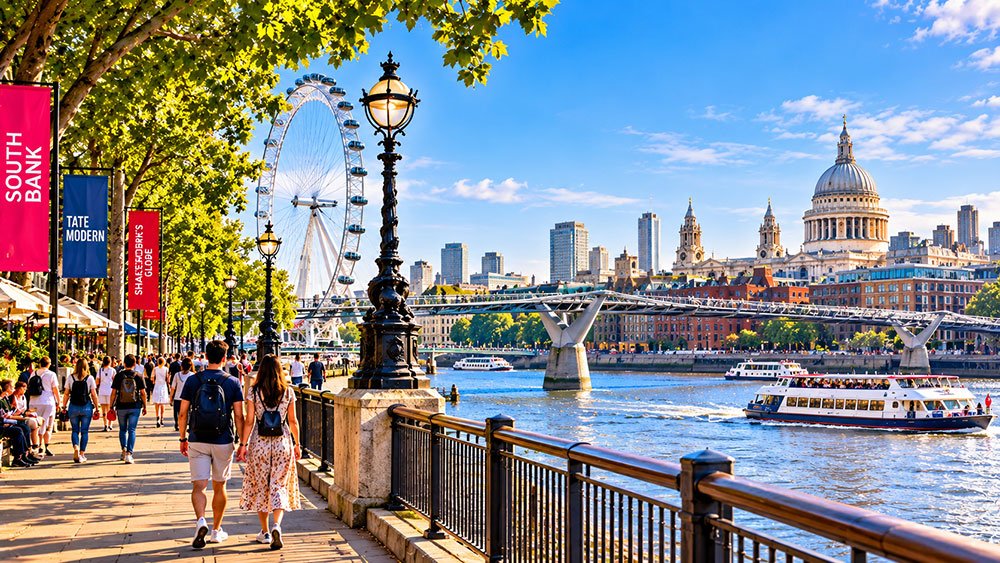
The South Bank is one of the easiest places to begin a London walking tour.
Start near Westminster Bridge and follow the River Thames eastwards. Along the way, you can enjoy views of the London Eye, the Thames, Westminster and some of London’s most recognisable landmarks.
Continue towards the South Bank Centre, where you will find cultural venues, restaurants and public spaces. The route then leads towards Bankside, home to attractions including Tate Modern and Shakespeare’s Globe.
Visit London’s current South Bank guide describes the area as a pedestrian-friendly part of the capital, with riverside walkways and attractions that can be explored on foot.
Stop at Shakespeare’s Globe
Shakespeare’s Globe is an important stop for anyone interested in theatre and London’s cultural history.
The reconstructed Globe Theatre stands on Bankside near the River Thames. Visitors can book theatre performances or guided tours, depending on the schedule. The venue’s official visitor information recommends checking opening times and booking requirements before visiting.
The area around the Globe is also ideal for a riverside stroll. You can continue towards Millennium Bridge, with views towards St Paul’s Cathedral on the opposite side of the Thames.
-
Explore Borough Market
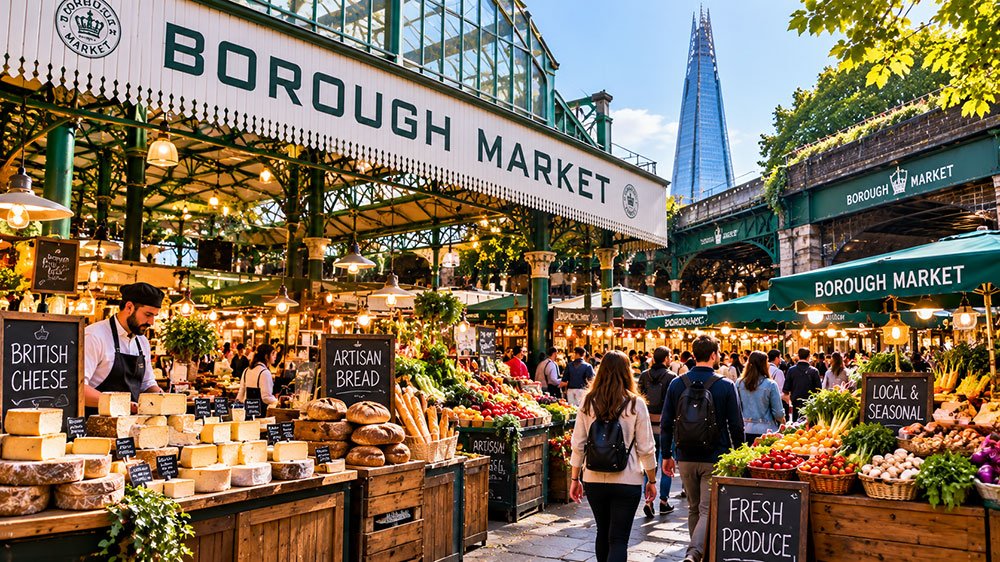
Food lovers should add Borough Market to their walking itinerary.
Located close to London Bridge, Borough Market is one of London’s best-known food markets. Its traders offer fresh produce, prepared food, international flavours and specialist products.
The market is particularly useful as a stop during a South Bank or Bankside walking route. You can browse the stalls, enjoy street food and then continue towards London Bridge or the City of London.
Borough Market is normally closed on Mondays. Its regular opening hours are Tuesday to Friday from 10am to 5pm, Saturday from 9am to 5pm and Sunday from 10am to 4pm. However, opening times can change around bank holidays and seasonal periods, so check the official website before visiting.
-
Discover the City of London
If history interests you, walking through the City of London can feel like travelling through different periods of the capital’s past.
The City of London Corporation provides several self-guided walking routes. These include trails covering medieval London, the Great Fire of London and the Roman history of the City.
A walking route through the City can include landmarks such as:
- St Paul’s Cathedral
- Guildhall
- The Monument
- Leadenhall Market
- Tower Hill
- The Tower of London
- Roman remains
- Historic churches
The Medieval City self-guided walk includes 21 points of interest and takes about two hours for the main section. You can extend the route if you want to explore more of the historic City.
For another historical experience, the Great Fire of London walking trail follows locations connected with the devastating 1666 fire. The official route takes around two hours and includes landmarks such as the Monument, Guildhall and St Paul’s Cathedral.
-
Enjoy Food and Restaurants Along the Way
One of the advantages of walking around London is the variety of food available along the route.
The West End, Soho, Chinatown, Covent Garden, Borough and Bankside all offer different dining experiences. Instead of choosing one restaurant and travelling directly there, consider building your walking route around a neighbourhood and stopping for food along the way.
Explore Chinatown
Chinatown is a natural addition to a central London food walk. The area has a large selection of restaurants, cafés, bakeries and specialist food businesses.
Its food scene now extends beyond Chinese cuisine, with restaurants offering Cantonese, Malaysian, Thai, Vietnamese, Japanese and other Asian flavours.
A simple route can combine Chinatown with Leicester Square, Soho, Covent Garden and the West End.
Visit Covent Garden
Covent Garden is another excellent destination for a walking and food itinerary.
The area combines restaurants, cafés, shops, theatres and historic streets. Seven Dials, Neal’s Yard, Floral Street and the Market Building can all be explored on foot.
The pedestrianised areas make it particularly pleasant for visitors who want to take their time rather than rush between attractions.
-
Take a Riverside Pub Walk
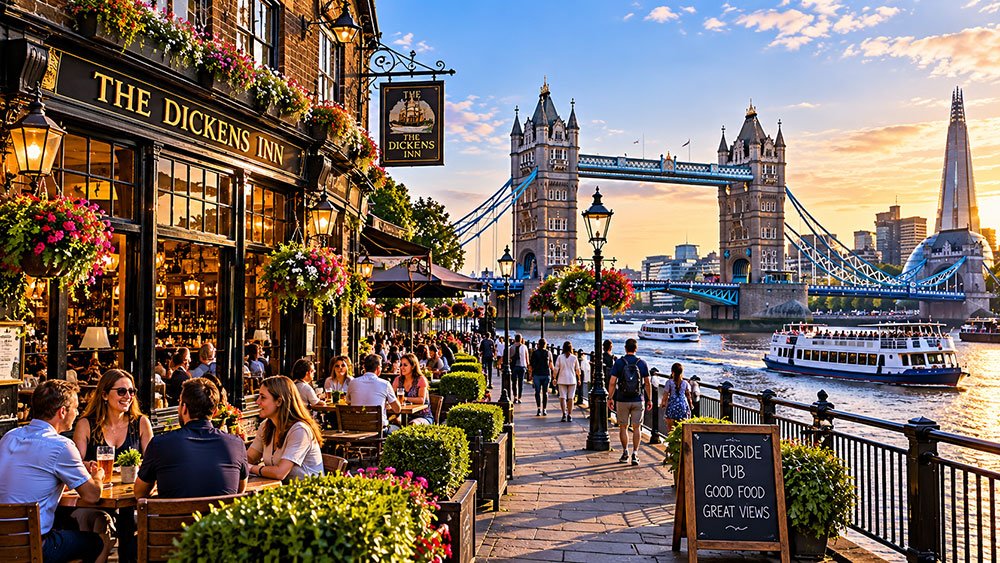
London’s relationship with the River Thames has shaped the city’s history for centuries. Today, the riverside is also a good place to stop for food or a drink during a long walk.
Areas around London Bridge, Bankside, Tower Bridge and Wapping offer historic pubs, restaurants and riverside views.
Rather than treating pubs as destinations by themselves, include them as short breaks during a longer walking route. This allows you to explore more of the city while still having time to relax.
Always check current opening hours before visiting a particular pub, especially on Sundays and public holidays.
-
Walk Through London’s Cultural Districts
London’s cultural attractions are spread across several walkable neighbourhoods.
A route through the South Bank and Bankside can combine:
- Shakespeare’s Globe
- Tate Modern
- Millennium Bridge
- Borough Market
- St Paul’s Cathedral
- Riverside views
Tate Modern is one of the major attractions in Bankside, while Shakespeare’s Globe provides a different type of cultural experience. Visit London’s current attraction guide also highlights this combination as one of the capital’s popular sightseeing routes.
For art lovers, a walking day can therefore combine galleries with cafés, markets and riverside scenery.
-
Explore London’s Shopping Streets
Walking in London does not have to focus entirely on sightseeing. Shopping districts can also form excellent self-guided routes.
Oxford Street is one of the city’s best-known shopping destinations, while Carnaby, Covent Garden, St James’s and Knightsbridge offer different styles of shopping.
Visit London’s current shopping guide highlights areas such as Carnaby, Covent Garden, St James’s, Oxford Street, Knightsbridge and Coal Drops Yard.
Shopping in Covent Garden
Covent Garden is particularly suitable for a shopping walk because many stores, restaurants and attractions are concentrated within a relatively compact area.
You can explore the Market Building and Piazza before continuing through Seven Dials, Floral Street and King Street. The area includes both major brands and independent businesses.
Explore Carnaby and Soho
Carnaby and the surrounding Soho area offer another interesting option for shoppers who prefer independent stores, fashion brands, restaurants and cafés.
A walk through the area can be combined with Regent Street, Oxford Circus, Piccadilly Circus and Chinatown.
-
Try a Self-Guided London Walking Route
One of the easiest ways to create a walking tour is to choose a theme.
For example, you could plan a:
Historic London walk:
Tower of London → Tower Hill → Monument → Leadenhall Market → St Paul’s Cathedral
South Bank walk:
Westminster Bridge → London Eye → South Bank Centre → Shakespeare’s Globe → Tate Modern → Millennium Bridge → Borough Market
Food and shopping walk:
Piccadilly Circus → Soho → Chinatown → Covent Garden → Seven Dials
Medieval London walk:
Guildhall → historic churches → old streets → St Paul’s Cathedral → City of London
The City of London and TfL both provide official walking resources that can help you plan routes according to your interests.
Tips for Walking Around London
A little preparation can make your London walking tour much more enjoyable.
Wear comfortable shoes
London’s pavements can be busy, and some historic areas have cobbled or uneven surfaces. Comfortable footwear is essential if you plan to walk for several hours.
Check the weather
London weather can change quickly. Carry a lightweight waterproof jacket or umbrella when appropriate.
Plan breaks
You do not need to visit every attraction on one walk. Leave time for cafés, markets, parks and scenic viewpoints.
Use public transport strategically
Walking does not mean avoiding public transport completely. Use the Tube, bus or rail network to reach the beginning of your route and walk between nearby attractions.
TfL’s journey planner lets you select walking as a travel option and can also provide routes with step-free access where required.
Check attractions before visiting
Opening times, ticket requirements and events can change. Check the official website of each attraction before setting out.
Make Walking Part of Your London Experience
London is much more than a collection of famous landmarks connected by Tube stations. Its streets, markets, riverbanks, historic buildings and neighbourhoods are part of the experience.
A good walking guide to London can help you discover the capital at a slower pace. You can combine sightseeing with food in Borough Market, culture around Bankside, history in the City, shopping in Covent Garden or a relaxing riverside break.
Whether you have a few hours or several days, choose an area that interests you, put on comfortable shoes and start exploring. You may find that some of the most memorable parts of London are the places you discover between the major attractions.
Frequently Asked Questions About Walking in London
Is London a good city to explore on foot?
Yes. Many central London attractions are close together, and TfL provides dedicated walking maps and routes. Areas such as South Bank, Bankside, the City and Covent Garden are particularly suitable for walking.
What is a good London walking route for first-time visitors?
A South Bank and Bankside route is a good option because it can include Westminster Bridge, the London Eye, Shakespeare’s Globe, Tate Modern, Millennium Bridge and Borough Market.
Can you walk between London attractions instead of using the Tube?
Yes. Many central attractions are within walking distance of one another. TfL provides walking maps and journey-planning tools to help visitors choose routes on foot.
Is Borough Market worth including in a London walking tour?
Borough Market is a useful stop for food lovers. It is located beside London Bridge and can easily be combined with a South Bank, Bankside or City of London walking route.
Where can I go shopping while walking around London?
Popular shopping areas include Oxford Street, Carnaby, Covent Garden, St James’s and Knightsbridge. Covent Garden is especially suitable for combining shopping, dining and sightseeing in one walking itinerary.
Are there official self-guided walking tours in London?
Yes. The City of London provides self-guided routes covering subjects such as medieval London and the Great Fire of London. TfL also provides walking maps and routes across the capital.
