
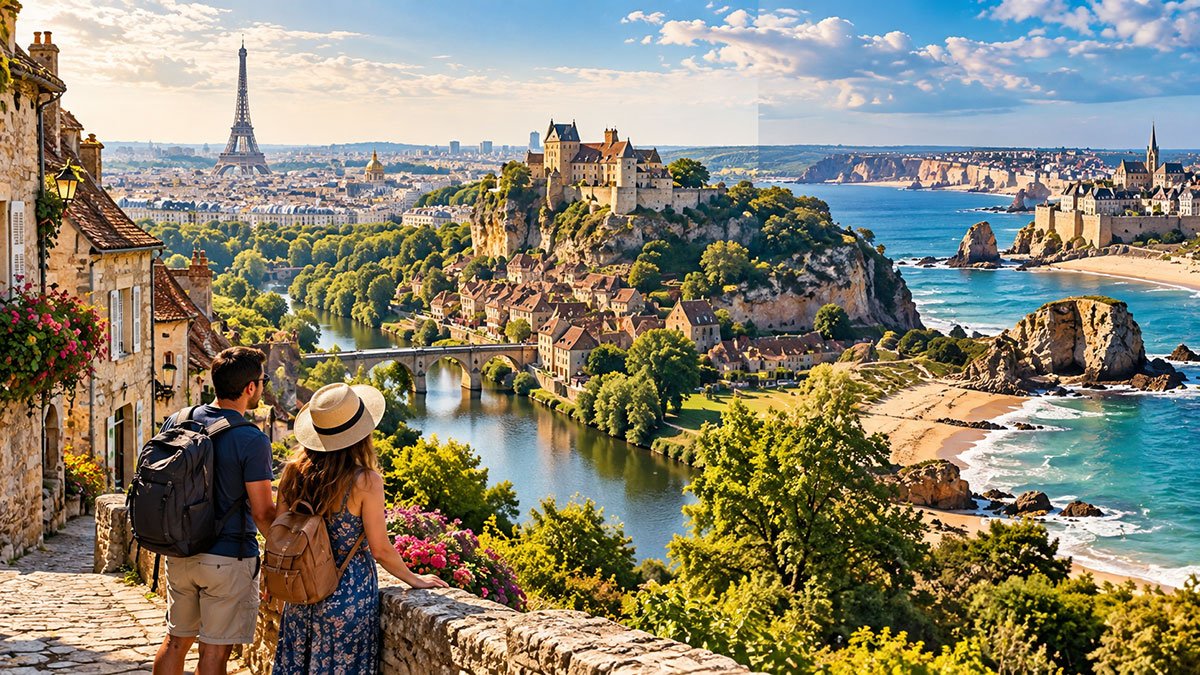
Where to Visit in France: 5 Destinations for Every Traveler
France is one of Europe’s most diverse travel destinations. It offers grand cities, historic landmarks, Atlantic beaches, medieval villages, countryside landscapes and some of the world’s most celebrated food.
That variety can make deciding where to visit in France surprisingly difficult.
A first-time visitor may naturally think of Paris. Families might prefer Disneyland Paris. History enthusiasts can explore Normandy, while travelers looking for countryside, food and medieval villages may find the Dordogne a better fit. Brittany offers another experience, combining dramatic coastlines with distinctive regional culture.
Here are five destinations that show just how different a holiday in France can be.
1. Paris: The Classic Introduction to France
Paris remains the obvious starting point for many visitors, and there is a good reason for that.
The French capital combines major landmarks with museums, historic neighbourhoods, gardens, cafés and an extraordinary food scene. You can spend one day visiting famous monuments and the next simply walking beside the Seine or exploring a neighbourhood.
What to see in Paris
For a first visit, consider making time for:
- Eiffel Tower
- Louvre Museum
- Notre-Dame Cathedral
- Arc de Triomphe
- Sacré-Cœur and Montmartre
- Musée d’Orsay
- Sainte-Chapelle
- Tuileries Garden
- Luxembourg Garden
- Seine riverbanks
Notre-Dame is particularly significant for today’s visitors. The cathedral reopened to the public in December 2024 following its major restoration, although restoration work around the wider site continues. Visitors can enter the cathedral free of charge, while access to the towers requires a separate ticket and reservation.
Paris is also a city where you do not need to plan every minute. Leave some time to walk through neighbourhoods, stop at a café, browse a market or simply enjoy the city’s streets.
How long should you spend in Paris?
A long weekend can cover many of the major highlights, but four or five days allows a more relaxed experience.
If you have additional time, Paris also works well as a base for day trips, including Versailles and other destinations in the surrounding region.
2. Disneyland Paris: A Family-Friendly French Escape
Disneyland Paris is technically outside central Paris, in Marne-la-Vallée, but it fits naturally into a French holiday itinerary.
It is particularly appealing to families, Disney fans and travelers looking for a dedicated theme-park experience.
The resort currently has two Disney Parks. Alongside Disneyland Park, the second park has become Disney Adventure World, following its transformation in 2026.
The new park includes the World of Frozen, Worlds of Pixar and Marvel Avengers Campus, as well as Adventure Way and the new Adventure Bay area.
Getting to Disneyland Paris from Paris
One of the easiest options from central Paris is the RER A regional train to Marne-la-Vallée–Chessy.
The station is only a short walk from the Disney Parks. Disneyland Paris currently describes the journey from Paris as approximately 35 minutes, depending on the departure point.
Travelers arriving from the UK can also reach the resort by rail, car or air, with connections available through the wider Paris transport network.
Is Disneyland Paris worth adding to a France trip?
That depends on your interests.
If your priority is museums, architecture, food and French culture, you may prefer to spend more time in Paris itself. Families travelling with children or dedicated Disney fans may want to give the resort a full day or more.
Check the official Disneyland Paris calendar before travelling because attraction availability, entertainment and operating arrangements can vary.
3. Normandy: History, Coastline and the D-Day Beaches
Normandy offers a very different experience from Paris.
Located in northern France, the region combines dramatic coastline, historic towns, countryside, food and some of Europe’s most important sites associated with the Second World War.
The D-Day Landing Beaches are among its most significant attractions.
Explore the D-Day sites
The Normandy coastline includes the five principal Allied landing sectors of Utah, Omaha, Gold, Juno and Sword, along with important locations such as Pointe du Hoc.
Visitors can explore beaches, museums, memorials and military cemeteries. The experience is not simply about seeing historic locations. It is also an opportunity to understand the scale and human consequences of the 1944 Normandy campaign.
The D-Day Landing Beaches were inscribed on the UNESCO World Heritage List in 2026, giving the sites additional international recognition.
Bayeux is a useful base for exploring many of the area’s historic attractions. Caen and Carentan can also be practical starting points depending on your itinerary.
Beyond D-Day
Normandy offers much more than wartime history.
Other highlights include:
- Mont-Saint-Michel
- Bayeux
- Rouen
- Honfleur
- Étretat
- Deauville
- Giverny
- Norman countryside and coastline
Mont-Saint-Michel is particularly impressive. The medieval island and its abbey rise dramatically from the surrounding bay.
The site can become busy, particularly during popular periods. Normandy Tourism recommends visiting outside peak periods, choosing weekdays where possible and considering early morning or later afternoon visits.
How much time do you need?
Allow at least three days if you want to combine the D-Day beaches with other parts of Normandy.
A longer stay makes it easier to explore the region without spending most of your time travelling between sites.
4. Dordogne: Medieval Villages, Caves and French Cuisine
For travelers who want countryside, history and food, the Dordogne Valley offers a completely different side of France.
The region in southwestern France is known for its river landscapes, prehistoric sites, castles, medieval villages, markets and regional cuisine.
Sarlat-la-Canéda is one of the best-known bases for exploring the area. Its historic centre is filled with medieval and Renaissance architecture and provides an excellent starting point for exploring the surrounding countryside.
Things to see in the Dordogne
Depending on your interests, consider:
- Sarlat-la-Canéda
- Lascaux IV
- Beynac-et-Cazenac
- Château de Beynac
- La Roque-Gageac
- Domme
- Marqueyssac Gardens
- Bergerac
- Monpazier
- Vézère Valley
The region is particularly important for prehistoric heritage. Lascaux IV is a full-scale replica of the original Lascaux cave, which is closed to the public for conservation.
The surrounding Vézère Valley contains numerous prehistoric sites and museums.
Food is part of the experience
The Dordogne is also a destination for travelers who enjoy regional cuisine.
Local specialities include duck, walnuts, truffles and other products associated with Périgord cuisine. Local markets provide an opportunity to see seasonal produce and experience the food culture of the region.
This is a destination where having a car can make rural exploration easier, although the best transport option depends on your itinerary and chosen base.
When should you visit the Dordogne?
Summer brings warm weather and busy popular sites. Spring and autumn can offer a quieter atmosphere and are particularly appealing for travelers interested in walking, villages and countryside.
If you want to visit specific caves, castles or gardens, check their individual opening arrangements before travelling.
5. Brittany: Beaches, Coastal Landscapes and Regional Culture
Brittany occupies the northwestern corner of France and has a strong regional identity.
Its Atlantic and Channel coastlines provide a dramatic contrast with the urban character of Paris and the rural landscapes of the Dordogne.
The region is particularly attractive to travelers who enjoy coastal walks, beaches, historic towns, seafood and outdoor activities.
What makes Brittany different?
Brittany has a distinctive cultural heritage shaped by its Breton identity and maritime history.
Places worth considering include:
- Saint-Malo
- Dinan
- Rennes
- Vannes
- Quiberon
- Perros-Guirec
- Côte de Granit Rose
- Pointe du Raz
- Carnac
The coastline is one of Brittany’s major attractions. The region is known for rocky headlands, sandy beaches, islands, lighthouses and long-distance coastal paths.
The Pink Granite Coast is particularly striking, with enormous rose-coloured rock formations along the northern coast.
Brittany is more than a beach destination
Historic towns add another dimension to the trip.
Saint-Malo is known for its fortified old town and maritime heritage. Dinan offers medieval architecture and a historic centre overlooking the Rance Valley. Rennes provides a more urban experience, with museums, markets and Breton culture.
Brittany is also well known for its food. Seafood, crêpes, galettes and regional cider are among the culinary experiences travelers can seek out.
Which Part of France Should You Choose?
The best destination depends on what you want from your holiday.
| If you want… | Consider… |
|---|---|
| Iconic landmarks, museums and city life | Paris |
| Theme parks and family entertainment | Disneyland Paris |
| Military history and dramatic coastline | Normandy |
| Villages, castles, caves and food | Dordogne |
| Beaches, coastal walks and regional culture | Brittany |
You do not necessarily have to choose just one.
Paris can be combined with Normandy, while a longer trip through western France could include both Normandy and Brittany. The Dordogne works particularly well as part of a slower road trip focused on villages, food and countryside.
Getting Around France
France has an extensive rail network, making trains practical for many journeys between major cities.
High-speed trains can significantly reduce travel time between major destinations, while regional services connect smaller cities and towns.
For rural areas such as parts of the Dordogne, however, a rental car can provide greater flexibility.
Before booking, compare the total journey time and the transport options available at your destination.
If travelling by train, check current schedules and availability through the official SNCF Connect service because international and connecting routes can change.
When Is the Best Time to Visit France?
There is no single best month for every destination.
Spring
Spring can be a good choice for sightseeing, gardens and countryside. Temperatures are generally milder than in the height of summer.
Summer
Summer is popular for coastal destinations such as Brittany and Normandy. Paris and major attractions can also be busy.
Book accommodation and popular attractions early if you are travelling during peak periods.
Autumn
Autumn can be particularly attractive for cities, countryside and food-focused trips. The quieter atmosphere can also make some destinations more relaxing.
Winter
Paris remains a year-round destination, while Normandy and Brittany can offer a quieter coastal experience outside the main holiday season. Weather conditions can be more variable, so plan accordingly.
Practical Tips for Planning a France Trip
Before travelling, check official information for your nationality and destination.
In particular, verify:
- Passport validity
- Visa or entry requirements
- Travel insurance
- Transport schedules
- Attraction opening arrangements
- Advance ticket requirements
- Accommodation check-in arrangements
- Local weather
- Car-hire requirements, if driving
Do not assume that information found in an old travel guide is still valid. Attractions, transport services and entry procedures can change.
For major museums, monuments and theme parks, check the official website before travelling rather than relying on third-party listings.
A France Holiday Can Be as Diverse as You Want
One of France’s biggest strengths is its variety.
You can spend a few days exploring Parisian museums and cafés, take a family trip to Disneyland Paris, walk through the history of Normandy, discover prehistoric caves and medieval villages in the Dordogne, or follow the coastline through Brittany.
That means the answer to where to visit in France depends less on finding one perfect destination and more on choosing the experience you want.
For a first visit, Paris is an obvious introduction. For a more varied trip, combine the capital with one or two regions and allow enough time to experience each place rather than rushing through a long list of attractions.
