
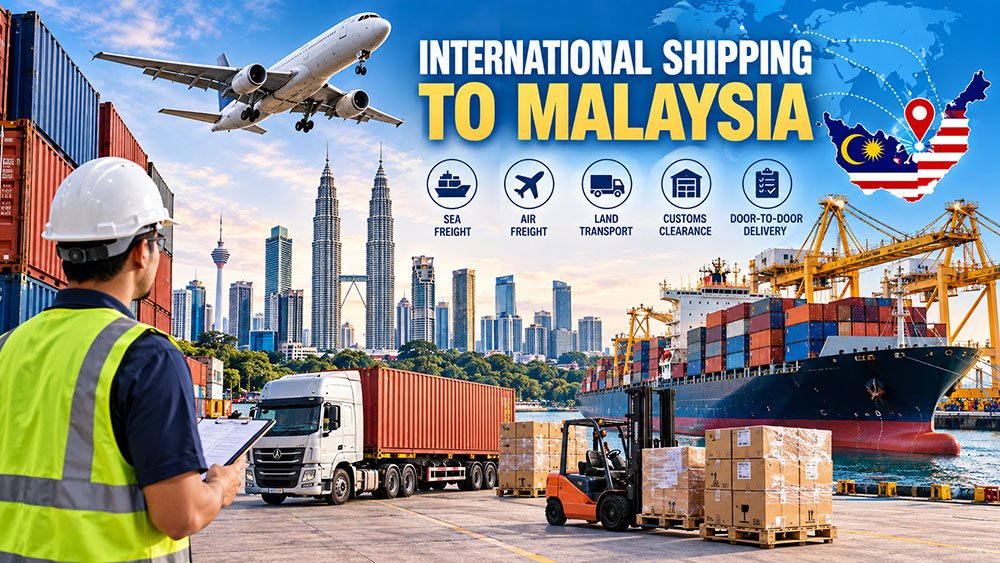
International Shipping to Malaysia: What You Need to Know
International trade depends on reliable logistics.
Whether you are shipping commercial products, machinery, documents, household belongings or other goods, choosing the right logistics provider can make the process considerably easier.
A professional freight forwarder can help coordinate transportation, documentation, customs procedures and delivery. However, the cheapest quotation is not always the best option. Service coverage, customs expertise, transit times, cargo handling and transparency can all affect the final cost and delivery experience.
For businesses and individuals planning international shipping to Malaysia, understanding the process before booking a shipment can help prevent delays and unexpected charges.
Why Malaysia Is an Important International Trade Market

Malaysia has a highly integrated economy with extensive connections to regional and global supply chains.
According to Malaysia External Trade Development Corporation (MATRADE), Malaysia’s total trade reached RM3.061 trillion in 2025, the highest level recorded at that time. Exports reached RM1.607 trillion, while imports reached RM1.455 trillion.
The country’s trade links are supported by manufacturing, electrical and electronic products, machinery, scientific equipment, agriculture and other industries.
Malaysia’s trade performance has continued strongly into 2026. MATRADE reported that during the first half of 2026, total trade increased 22.4% year over year to RM1.796 trillion, with exports reaching RM971.59 billion and imports reaching RM824.44 billion.
This level of international trade creates strong demand for dependable freight and logistics services.
Choosing the Right Transportation Method
One of the first decisions when arranging international shipping to Malaysia is selecting the right transportation method.
The most common options are air freight, sea freight and land transportation.
Air Freight
Air freight is generally suitable when speed is a priority.
It can be useful for:
- Urgent commercial shipments
- Documents
- High-value goods
- Time-sensitive products
- Smaller shipments
- Samples and replacement parts
The main disadvantage is cost. Air freight is usually more expensive than sea freight for large or heavy shipments.
Sea Freight
Sea freight is widely used for larger international shipments.
It can be suitable for:
- Commercial cargo
- Machinery
- Furniture
- Large consignments
- Containerized goods
- Bulk shipments
Malaysia has an established maritime infrastructure. The Ministry of Transport identifies major federal ports including Port Klang, Johor Port, Port of Tanjung Pelepas, Kuantan Port, Penang Port, Bintulu Port and Kemaman Port.
For larger shipments, sea freight can therefore provide a practical balance between capacity and transportation cost.
Road Transportation
Road freight can be useful for shipments moving within Malaysia or across connected regional markets.
For international movements involving multiple transportation modes, a logistics provider may coordinate an intermodal or multimodal shipment, combining road, sea and air transportation.
The appropriate option depends on the origin, destination, cargo characteristics, required delivery date and budget.
Why Customs Clearance Matters
International shipping is not simply a matter of moving a package from one country to another.
Imported goods must comply with the destination country’s customs requirements.
Malaysia’s Royal Malaysian Customs Department publishes specific import procedures and guidance for businesses. Its current import-procedure page was updated in March 2026 and includes guidance relating to import procedures and customs agents.
Depending on the shipment, customs clearance can involve:
- Import declarations
- Commercial invoices
- Packing lists
- Bills of lading or air waybills
- Import permits or approvals
- Product information
- Customs classification
- Duties and taxes
- Supporting documentation
Some products may also require approval or permits from other Malaysian government agencies.
A freight forwarder or customs agent can help coordinate these requirements, but the importer remains responsible for ensuring that the shipment complies with applicable regulations.
Malaysia’s Customs Processes Are Becoming More Digital
Technology is increasingly important in international logistics.
Malaysia Customs operates systems including the National Single Window, ASEAN Single Window, Malaysian Customs Import/Export Document System (MyCIEDS), ASEAN Customs Transit System and Malaysian Maritime Single Window.
MyCIEDS is particularly relevant to customs documentation. The system provides electronic submission of supporting documents for customs declarations and is intended to reduce physical paperwork and support digital trade processes.
Malaysia also provides Pre-Arrival Processing, which allows eligible import declarations to be submitted before goods arrive and is intended to facilitate faster customs release. The facility applies to imports through air and sea modes subject to the relevant requirements.
This makes accurate documentation even more important.
Understand Duties, Taxes and Other Charges
Shipping costs involve more than the freight rate.
Depending on the shipment, the final landed cost can include:
- Freight charges
- Customs duties
- Sales tax
- Service tax
- Customs clearance fees
- Handling charges
- Storage fees
- Insurance
- Documentation charges
- Delivery charges
- Other destination fees
Malaysia’s indirect-tax framework has also changed in recent years. The Sales and Service Tax framework was updated from 1 July 2025, with changes to the scope and rates applying to different goods and services.
For logistics services, the Malaysian Customs Department’s current MySST guidance states that logistics services are subject to a 6% service-tax rate, subject to the applicable rules and exemptions.
Tax treatment can vary depending on the type of goods, transaction and service involved. Therefore, do not rely on an old shipping quotation or outdated tax information when calculating the cost of a current shipment.
Ask for a Complete Shipping Quote
A reliable logistics provider should explain what is included in its quotation.
When comparing freight companies, ask whether the quoted price covers:
- Pickup from the supplier
- Export customs clearance
- Main transportation
- Insurance
- Destination handling
- Import customs clearance
- Duties and taxes
- Warehouse charges
- Final-mile delivery
A low headline freight rate can become considerably more expensive if important destination charges are excluded.
Ask for a door-to-door quotation when appropriate and request a clear breakdown of included and excluded charges.
Understand Incoterms Before Shipping
For commercial international shipments, it is also important to understand the agreed Incoterms® rule.
The International Chamber of Commerce’s Incoterms® rules define responsibilities between buyers and sellers, including certain costs, tasks and risks involved in delivering goods. The current edition is Incoterms® 2020.
Terms such as EXW, FCA, FOB, CIF, DAP and DDP can affect who is responsible for transportation, insurance, customs formalities, costs and risk at different stages of the shipment.
Before accepting a freight quotation, make sure you understand the Incoterm being used.
Check the Logistics Provider’s Experience
Choosing an international logistics provider requires more than comparing prices.
Look at the company’s:
- Experience with international freight
- Experience with Malaysia shipments
- Customs-clearance capabilities
- Service coverage
- Carrier and agent network
- Shipment-tracking systems
- Insurance options
- Customer support
- Documentation procedures
- Reputation and references
A company experienced in your particular type of cargo may be better equipped to handle unusual documentation, regulatory requirements or transportation challenges.
Compare More Than One Freight Forwarder
It is sensible to obtain quotations from several providers.
However, compare the quotations on an apples-to-apples basis.
For example, one company may quote port-to-port sea freight while another offers door-to-door delivery. The two prices cannot be compared directly.
Ask each provider to specify:
- Pickup location
- Delivery location
- Transportation mode
- Estimated transit time
- Cargo weight and dimensions
- Customs services
- Duties and taxes
- Handling charges
- Insurance
- Final delivery arrangements
This approach makes it easier to identify the actual landed cost.
Prepare Your Shipping Documents Carefully
Incorrect documentation is one of the common causes of international shipping delays.
Before the shipment leaves its origin, check that the information is consistent across the relevant documents.
Important details can include:
- Shipper information
- Consignee information
- Product description
- Quantity
- Weight
- Value
- Country of origin
- Commodity or HS classification
- Packaging details
- Invoice information
- Required permits or certificates
Malaysia Customs requires import declarations and supporting documentation, including permits or approvals where applicable.
If you are unsure about a product’s classification or import requirements, obtain professional advice before shipping rather than waiting until the cargo reaches customs.
Consider Cargo Insurance
International transportation involves risks such as damage, loss, accidents, delays and handling incidents.
Depending on the type and value of your shipment, cargo insurance may be worth considering.
Do not assume that the basic liability of a carrier or freight forwarder automatically provides full protection for the replacement value of your goods.
Ask the provider:
- What coverage is included?
- What additional insurance is available?
- What exclusions apply?
- What documentation is required for a claim?
- What is the maximum liability?
Understanding these details before shipping can prevent unpleasant surprises later.
Tracking and Communication Matter
Modern logistics services should provide clear shipment visibility whenever the selected service supports tracking.
A good provider should be able to tell you:
- When the shipment was collected
- When it departed
- Where it currently is
- Whether customs clearance is complete
- When it is expected to arrive
- Whether additional information is required
Good communication becomes particularly important when shipments are delayed by weather, port congestion, customs inspections or documentation problems.
What Makes a Good International Shipping Provider?
There is no single logistics company that is right for every shipment.
The right provider depends on your cargo, origin, destination, budget, delivery deadline and regulatory requirements.
However, a suitable international shipping provider should offer:
- Transparent pricing
- Clear service terms
- International freight experience
- Customs knowledge
- Reliable shipment tracking
- Appropriate insurance options
- Responsive customer support
- Clear documentation requirements
- Suitable air, sea or multimodal options
Malaysia’s Ministry of Transport continues to identify logistics efficiency, integrated transportation and seamless supply chains as important priorities for the country’s transport and logistics sector.
International Shipping to Malaysia: A Practical Checklist
Before confirming your shipment, review this checklist:
- Confirm the exact pickup and delivery addresses
- Measure and weigh the cargo
- Select air, sea or multimodal transportation
- Confirm the applicable Incoterm
- Check import restrictions
- Confirm required permits
- Prepare the commercial invoice
- Prepare the packing list
- Confirm customs requirements
- Ask for a complete quotation
- Check duties and taxes
- Consider cargo insurance
- Confirm shipment tracking
- Verify the expected transit time
- Keep copies of all shipping documents
Final Thoughts
Successful international shipping to Malaysia depends on careful planning rather than simply choosing the lowest freight rate.
The right logistics provider can help coordinate transportation, documentation, customs procedures and final delivery. However, the shipper should still understand the responsibilities, costs and regulatory requirements associated with the shipment.
Malaysia’s growing role in global supply chains, combined with its extensive port infrastructure and increasingly digital customs processes, makes it an important market for international trade.
Whether you are shipping commercial goods, machinery, personal belongings or documents, compare providers carefully, request transparent quotations and prepare your paperwork before the shipment leaves its origin.
A well-planned shipment is more likely to reach Malaysia efficiently, with fewer unexpected costs and fewer avoidable delays.
