
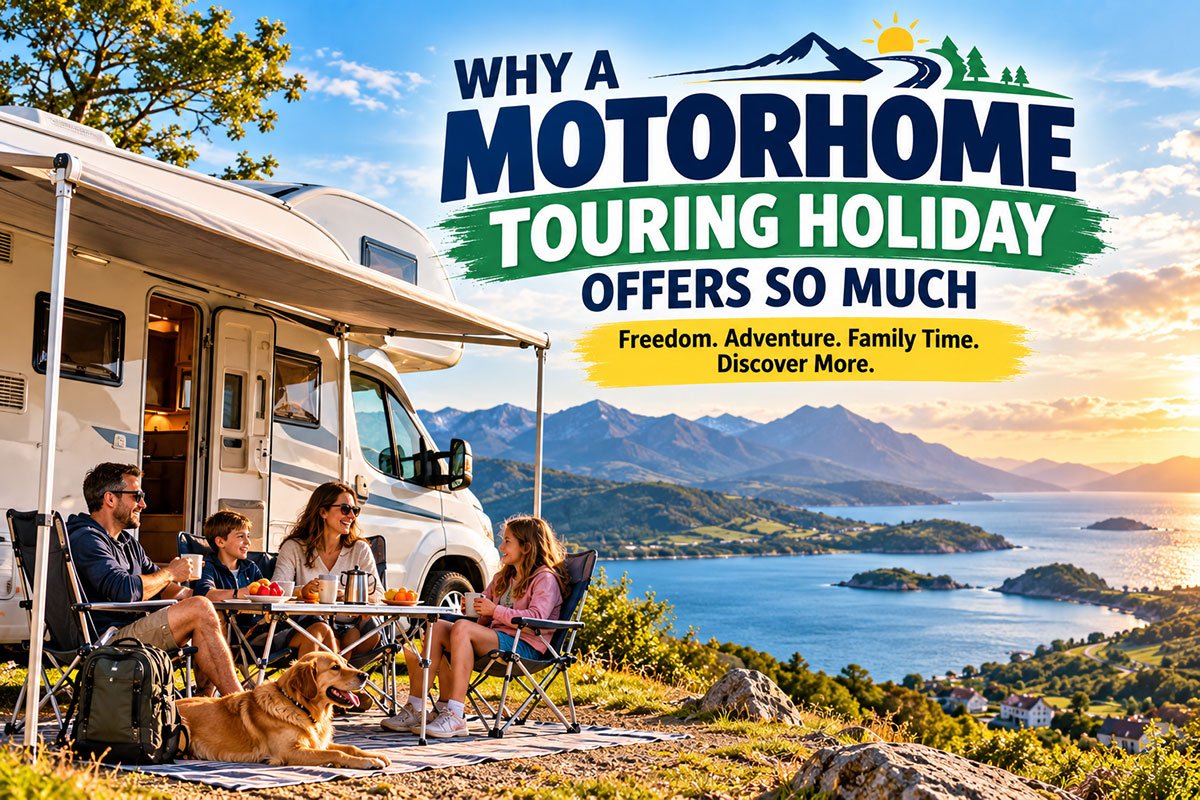
Why a Motorhome Touring Holiday Offers So Much
A motorhome touring holiday combines travel, accommodation and adventure into one flexible experience. Instead of checking into a different hotel every few days, you can take your accommodation with you and decide where the road leads next.
For families, couples and independent travellers, this style of holiday offers something that a conventional hotel break cannot always provide: freedom.
You can wake up beside the coast, spend the afternoon exploring a historic town and finish the day surrounded by countryside. You can also stay longer in places you love and move on when you are ready.
Motorhome holidays are not completely effortless. Driving a larger vehicle requires preparation, campsite availability can affect your route and living in a compact space requires some compromise. However, for many travellers, the freedom and shared experiences make those challenges worthwhile.
What Is a Motorhome Touring Holiday?
A motorhome touring holiday involves travelling between destinations in a motorhome rather than using one hotel or holiday property as a permanent base.
A typical trip might include several campsites or touring locations. You can create a fixed itinerary or leave some flexibility in your plans.
Motorhomes can provide sleeping areas, cooking facilities, seating and bathroom facilities, depending on the vehicle. This means you can have many of the comforts of home while travelling between destinations.
The growing interest in leisure vehicles also reflects the continuing popularity of this type of travel. The 2026 Caravan, Camping & Motorhome Show in Birmingham attracted more than 100,000 visitors, 12% more than the previous year, according to the National Caravan Council. (NCC)
Freedom to Explore at Your Own Pace
One of the biggest advantages of a motorhome touring holiday is flexibility.
Traditional holidays often revolve around one hotel or resort. Once you arrive, changing your plans can mean cancelling accommodation or paying additional costs.
With a motorhome, your accommodation travels with you.
You might spend three nights beside a lake, two nights near a national park and then continue towards the coast. If you discover an interesting town along the way, you can potentially add it to your itinerary.
This flexibility is particularly useful for travellers who enjoy road trips and exploring destinations away from major tourist centres.
However, flexibility does not mean you can park and stay anywhere. Campsite and parking rules vary by location. In England, for example, operating a caravan site generally requires the appropriate planning permission and site licence unless an exemption applies. Motorhomes and campervans are covered by caravan-site regulations. (GOV.UK)
Therefore, checking where you can legally stay should be part of your route planning.
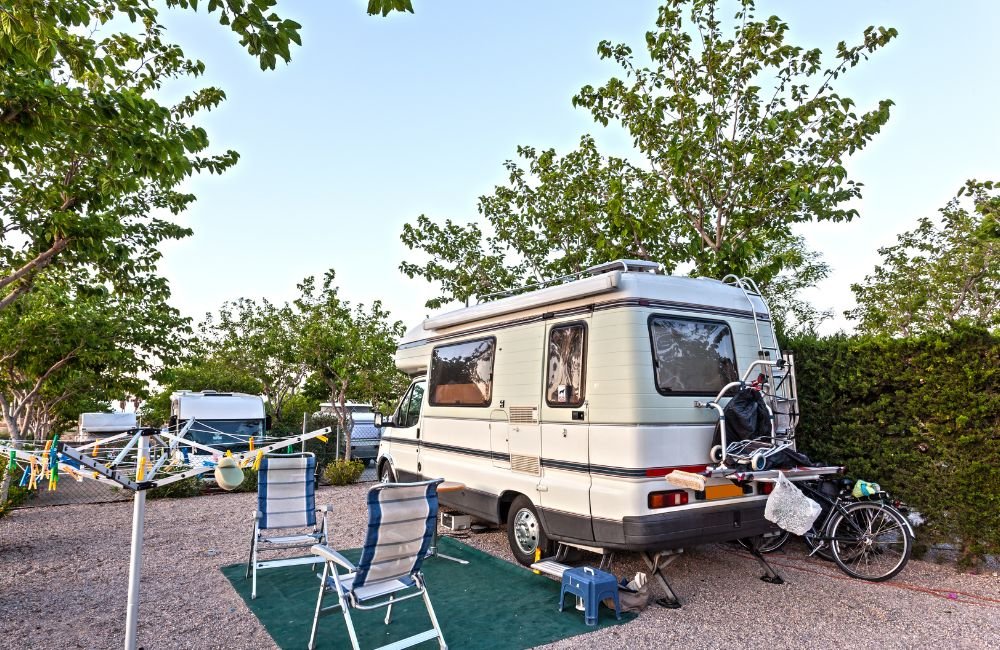
Quality Family Time
Modern family life can become extremely busy.
School, work, extracurricular activities, smartphones, streaming services and gaming can all compete for everyone’s attention. A motorhome trip creates a different environment where the journey itself becomes part of the holiday.
Families can cook together, play cards, play board games, talk about the day’s adventures and plan the next destination.
There is also something special about sharing a compact living space. Everyone has to cooperate, organise belongings and contribute to everyday tasks.
Children can become involved in preparing meals, setting up the outdoor area or planning activities for the next day.
These simple activities can create some of the most memorable moments of a family holiday.
A Motorhome Makes the Journey Part of the Holiday
With a conventional holiday, the journey to your destination can sometimes feel like something you simply have to get through.
A motorhome changes that perspective.
The road becomes part of the experience.
You can stop at viewpoints, visit small towns, explore countryside and discover attractions that were never part of your original itinerary.
A scenic driving route can become a major highlight of the trip rather than simply a means of getting from one hotel to another.
This is particularly appealing to travellers who enjoy discovering places away from conventional tourist routes.
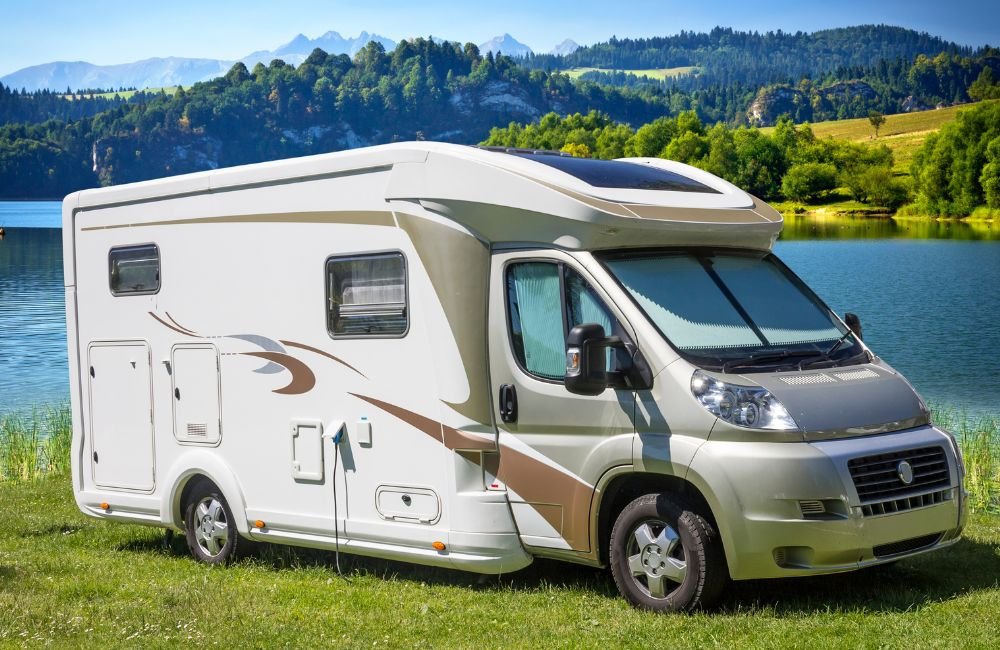
You Can Combine Comfort With Outdoor Adventure
You do not have to choose between camping and comfortable accommodation.
A motorhome can provide a useful middle ground.
You can spend the day hiking, cycling, sightseeing or exploring the countryside and then return to your own sleeping area at the end of the day.
Depending on the vehicle, you may have:
- A proper bed
- Kitchen facilities
- A dining area
- Heating
- Refrigeration
- Toilet facilities
- Shower facilities
- Storage
- Electrical power
- Outdoor living equipment
The exact facilities vary significantly between motorhomes, so it is important to choose a vehicle that suits your travelling party and itinerary.
Add More Space With an Awning
An awning can make a significant difference when you are staying at a campsite for several nights.
Once the motorhome is parked, an awning can create an additional sheltered outdoor area. It gives family members somewhere to sit, eat, relax or store suitable outdoor equipment.
For families, this can also provide a little separation from the main living area.
Children can spend time outside while adults relax inside, or everyone can use the awning as an additional dining and social space.
An awning does not turn a motorhome into a large house, but it can make longer stays considerably more comfortable.
Motorhome Holidays Encourage Outdoor Activities
A motorhome is particularly well suited to an active holiday.
Instead of travelling to a resort and staying there throughout the week, you can plan your route around outdoor activities.
Depending on the destination, you could include:
- Hiking
- Cycling
- Fishing
- Kayaking
- Swimming
- Photography
- Wildlife watching
- Beach activities
- Mountain walks
- National park visits
You can also adapt the itinerary according to weather conditions.
If heavy rain makes a planned hike impractical, you might visit a museum or historic town instead. When the weather improves, you can return to outdoor activities.
That flexibility is one of the strongest advantages of touring.
You Can Choose Your Level of Comfort
Motorhome holidays can be as comfortable or as adventurous as you want them to be.
Some travellers prefer established campsites with electricity, water connections, restaurants, swimming pools, children’s play areas and other facilities.
Others prefer quieter locations and a more independent outdoor experience where permitted.
This means a motorhome touring holiday can appeal to very different types of travellers.
If you are new to motorhome travel, established campsites can provide a more straightforward introduction. Experienced travellers may prefer to explore a wider range of touring locations.
Always check the rules applying to your destination before staying overnight.
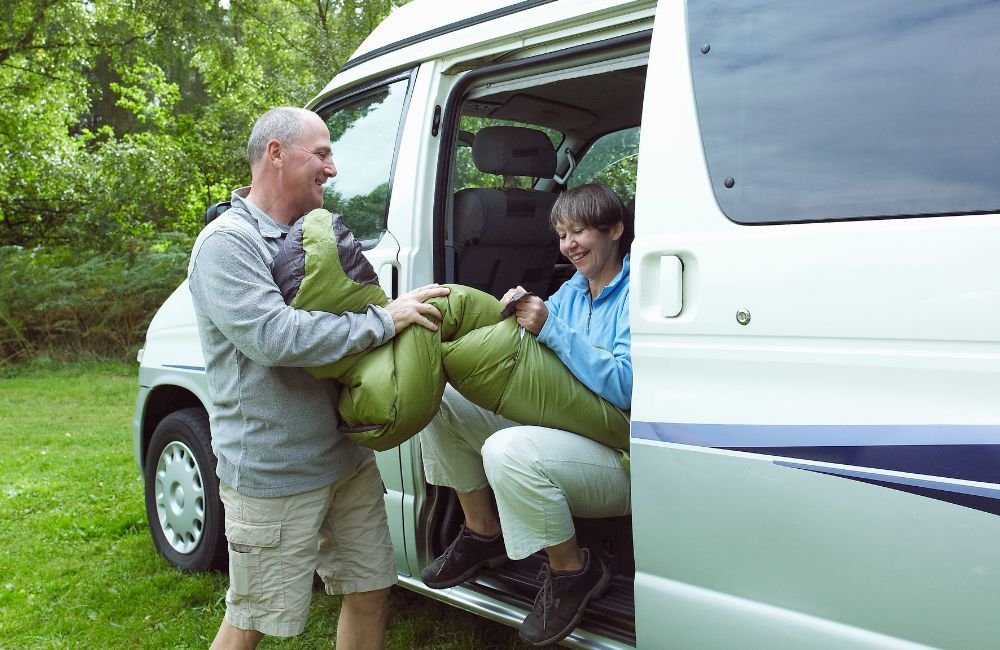
Planning Your Campsites
One of the biggest mistakes for first-time motorhome travellers is assuming that every campsite will have availability.
Popular destinations can become particularly busy during school holidays, weekends and major events.
Planning your route in advance can help you avoid unnecessary stress.
When comparing campsites, consider:
- Pitch size
- Electric hook-up
- Fresh-water facilities
- Waste disposal
- Toilet and shower facilities
- Laundry facilities
- Wi-Fi
- Children’s facilities
- Swimming pools
- Restaurants
- Public transport connections
- Pet policies
- Accessibility
- Local attractions
You do not necessarily need to book every night of a long trip months in advance. However, having a list of suitable alternatives can make flexible travel much easier.
Know the Rules Before You Travel
Motorhome drivers should understand the legal requirements that apply to their vehicle and destination.
In the UK, the licence required to drive a motorhome depends on its maximum authorised mass and the driver’s circumstances. GOV.UK states that a motorhome between 3.5 and 7.5 tonnes generally requires a category C1 licence, while a vehicle above 7.5 tonnes requires category C. Different rules can apply in Northern Ireland. (GOV.UK)
Vehicle dimensions also matter. UK rules specify limits for motorhomes, including a maximum registered width of 2.55 metres and a maximum length of 12 metres under the guidance provided by GOV.UK. (GOV.UK)
Before setting off, check your vehicle’s dimensions, weight and licence requirements.
It is also sensible to know your vehicle’s height. A low bridge or restricted road can quickly turn an enjoyable road trip into a difficult situation.
Drive With More Planning Than You Would in a Car
Driving a motorhome can require a different approach from driving a standard car.
The vehicle may be wider, longer and heavier. Manoeuvring at campsites can also require additional care.
Before a long journey, practise:
- Reversing
- Parking
- Turning in confined spaces
- Using mirrors
- Judging vehicle height
- Approaching narrow roads
- Manoeuvring at campsites
Take regular breaks during long journeys.
A touring holiday should be enjoyable rather than a race to reach the next destination.
Pack For the Space You Have
One of the biggest challenges of motorhome travel is storage.
It is tempting to pack everything you might possibly need. However, too much equipment can make the living area uncomfortable and can add unnecessary weight.
Create a practical packing list before departure.
Essential items may include:
- Clothing suitable for changing weather
- Cooking equipment
- Food and drinks
- Bedding
- Toiletries
- First-aid supplies
- Outdoor chairs
- Basic tools
- Chargers
- Navigation equipment
- Cleaning supplies
- Water and waste-management equipment
The exact requirements depend on the vehicle and destination.
Remember that the available payload matters. Adding too much luggage, equipment or water can affect the vehicle’s permitted weight.
Make the Most of Your Motorhome’s Kitchen
Having a kitchen can help make a touring holiday more flexible.
You do not have to eat at restaurants every evening. Preparing breakfast or dinner in the motorhome can also reduce the need to find restaurants after a long day of travelling.
Cooking together can become part of the holiday itself.
You might buy local ingredients during your journey and prepare meals based on the places you visit.
This can also be useful when travelling with children who have particular food preferences.
Choose a Route With a Balance of Driving and Exploring
It can be tempting to plan a long route covering as many destinations as possible.
However, excessive driving can quickly become tiring.
A better approach is to give yourself enough time to enjoy each destination.
For example, rather than changing campsites every night, consider staying for two or three nights when there is plenty to see nearby.
This gives you time to explore without constantly packing, driving and setting up again.
A slower itinerary can often make a motorhome holiday much more enjoyable.
Motorhome Touring Can Suit Different Budgets
The cost of a motorhome holiday varies considerably.
If you already own a suitable vehicle, your major costs may include fuel, campsite fees, food, activities and maintenance.
If you rent a motorhome, the rental cost becomes another significant part of the budget.
You should also account for:
- Insurance
- Fuel
- Campsite charges
- Tolls
- Parking
- Equipment
- Food
- Attraction tickets
- Vehicle servicing
- Cleaning or rental fees
A motorhome holiday is not automatically cheaper than a hotel holiday.
Its main advantage is the flexibility and combination of transport and accommodation, rather than guaranteed savings.
Try Before You Buy
If you have never travelled in a motorhome before, renting one can be a sensible way to discover whether the lifestyle suits you.
Spending several days in a compact vehicle can reveal things that are difficult to understand from photographs or dealership visits.
You will quickly discover whether you are comfortable with:
- Compact living
- Shared bathrooms
- Cooking in a small kitchen
- Limited storage
- Driving a larger vehicle
- Setting up at campsites
- Emptying waste tanks
- Planning overnight stops
If you enjoy the experience, you can then consider whether buying a motorhome makes sense for your travel habits.
New Motorhomes Continue to Evolve
Motorhomes are also changing as manufacturers introduce new layouts, technologies and vehicle designs.
The UK leisure-vehicle industry continues to attract strong consumer interest. The National Caravan Council reported more than 96,000 visitors at the 2025 Motorhome & Caravan Show and more than 100,000 visitors at the 2026 Caravan, Camping & Motorhome Show. (NCC)
Manufacturers are also increasing their focus on motorhomes and campervans. In March 2026, UK manufacturer Elddis announced a strategic shift towards motorised leisure vehicles, citing increased demand for campervans and motorhomes. (NCC)
For buyers, this means there are increasingly varied vehicle layouts and specifications to consider.
Make Your Motorhome Holiday More Sustainable
Responsible travel should also be part of the motorhome experience.
When staying at campsites, dispose of wastewater and toilet waste only at designated facilities. Avoid leaving rubbish behind and respect local wildlife.
The UK’s current model code for camping and caravanning events specifically emphasises responsible waste disposal, protection of landscapes and wildlife, and minimising disturbance to local communities. (GOV.UK)
The same principle applies to ordinary touring holidays: leave your pitch clean, follow campsite rules and respect the environment.
Why Experience Makes Motorhome Touring Easier
Your first motorhome holiday may involve a learning curve.
You may take too much equipment, underestimate driving time or discover that the campsite you wanted is already full.
Each journey teaches you something.
After several trips, you will understand:
- Which routes suit your vehicle
- How much food to carry
- How long you like to drive each day
- Which campsite facilities matter
- How much storage you actually need
- Where you prefer to stay
- Which equipment is genuinely useful
This experience makes future holidays easier to plan.
You also become better at adapting when plans change.
A Motorhome Holiday Can Bring People Together
Perhaps the biggest benefit of a motorhome touring holiday is not the vehicle itself.
It is the experience created around it.
Families can explore new places together. Couples can take spontaneous road trips. Friends can share outdoor adventures. Children can experience a different style of holiday that encourages them to spend more time outdoors.
The compact environment may occasionally test everyone’s patience, but it can also create plenty of opportunities for conversation, games and shared experiences.
Instead of simply visiting a destination, you become part of the journey.
Is a Motorhome Touring Holiday Right for You?
A motorhome touring holiday may be a good choice if you enjoy:
- Freedom and flexibility
- Road trips
- Outdoor activities
- Exploring several destinations
- Family travel
- Countryside and coastal locations
- Cooking your own meals
- Spending time away from busy resorts
- Creating your own itinerary
It may be less suitable if you strongly prefer luxury hotels, large personal spaces or completely predictable travel arrangements.
There is no right or wrong type of holiday.
The appeal of motorhome touring comes from the combination of travel, independence and adventure.
The Freedom to Make Your Own Holiday
A motorhome touring holiday gives you something that is difficult to achieve with a conventional hotel break: the freedom to change your plans.
Stay longer when you discover somewhere you love, or move on when you are ready. A motorhome also allows you to build an itinerary around your family’s interests rather than planning every day around a single hotel. This flexibility makes it easier to explore at your own pace and turn unexpected discoveries into memorable parts of the journey.
There are practical challenges. You need to consider vehicle size, driving time, campsite availability, regulations, fuel, storage and the realities of living in a compact space.
But with sensible planning, those challenges become part of the adventure.
Whether you spend your evenings beside a lake, wake up near the coast or explore a new countryside route each morning, a motorhome can turn the journey itself into one of the most memorable parts of your holiday.
That is why motorhome touring offers so much: it gives you the freedom to travel, the flexibility to explore and the opportunity to create experiences that stay with you long after you return home.
