
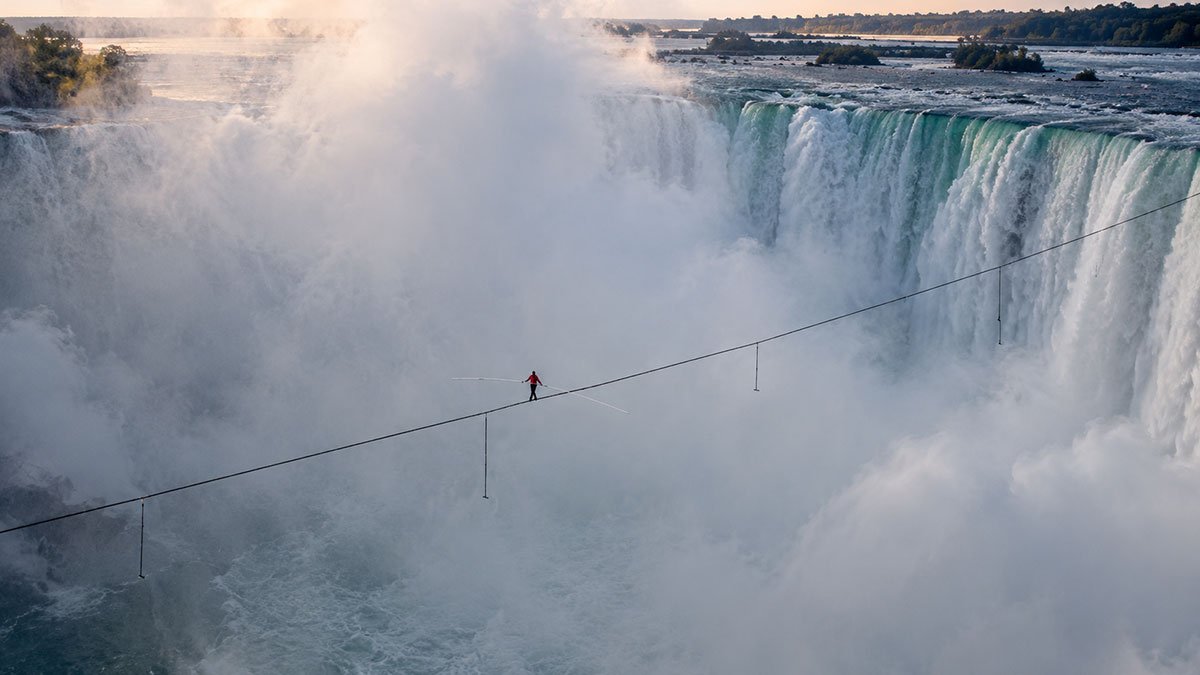
Nik Wallenda’s historic high-wire crossing above Niagara Falls combined extraordinary balance with extensive engineering and careful preparation.
Nik Wallenda Wire Walk: How He Crossed Niagara Falls
On June 15, 2012, aerialist Nik Wallenda completed one of the most remarkable high-wire performances in modern history. He walked across Niagara Falls on a steel cable stretched between the United States and Canada, facing powerful winds, dense mist and the immense force of the water below.
The Nik Wallenda wire walk was not simply a test of balance and nerve. It also required extensive planning, specialized equipment and a skilled technical team capable of installing and stabilizing the cable across a challenging international crossing.
Behind the spectacular performance were electricians from O’Connell Electric Company, linemen associated with IBEW Local 1249 and engineering specialists who helped turn Wallenda’s long-held ambition into reality.
The Historic Walk Across Niagara Falls
Nik Wallenda’s crossing took place above the Horseshoe Falls, the largest of Niagara Falls’ three waterfalls. He began on the American side and finished in Canada, completing a crossing that had captured international attention.
The high wire was approximately 1,800 feet long and two inches in diameter. It was suspended high above the gorge, where wind and water spray created difficult conditions for both the performer and the installation team.
Wallenda completed the crossing in approximately 25 minutes. The event was televised internationally and became a defining moment in his career.
The performance also had historical significance. Wallenda became the first person to complete a high-wire walk directly over the Horseshoe Falls, reviving the long tradition of daredevil spectacles associated with Niagara.
Who Is Nik Wallenda?
Nik Wallenda is a seventh-generation aerialist from the famous Flying Wallendas family. His relatives have performed high-wire and circus acts across generations, building a reputation for technically demanding performances.
Wallenda began performing at a young age and developed his career around high-wire walking and other aerial feats. His ambitions extended beyond conventional circus performances, leading him to pursue crossings above major natural landmarks and between tall buildings.
Niagara Falls had particular personal significance. Wallenda had dreamed of completing a wire walk over the falls since childhood, and the 2012 event turned that ambition into a historic achievement.
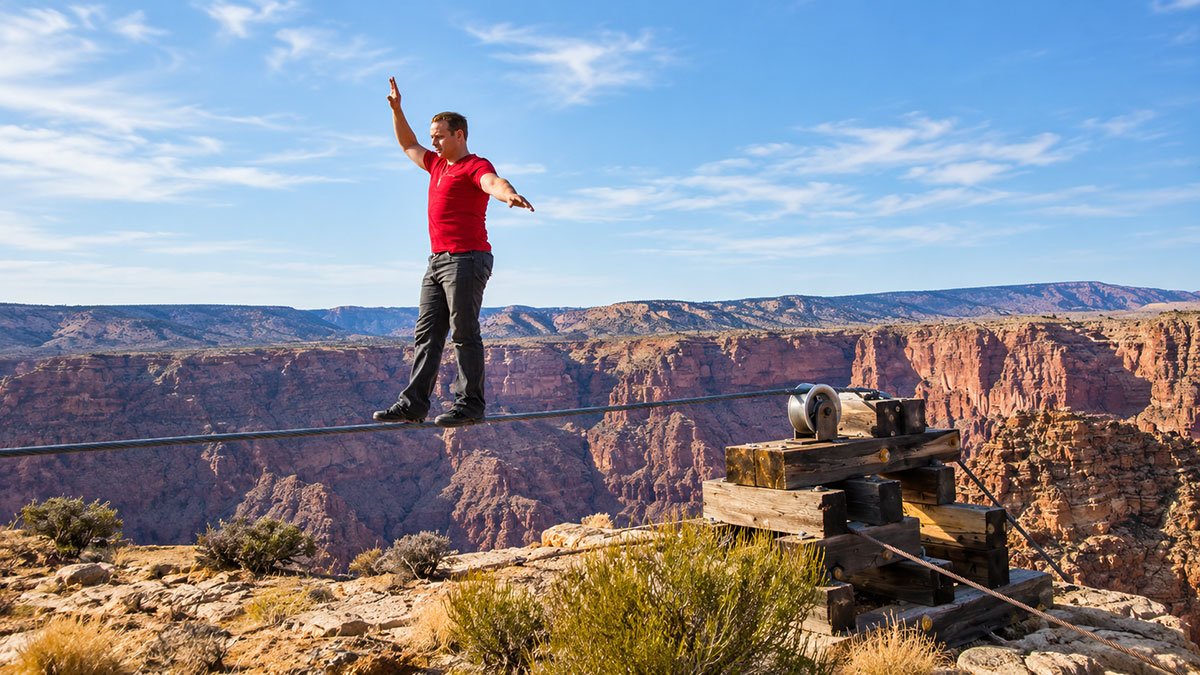
His career continued after Niagara Falls. In 2013, he crossed a high wire above the Little Colorado River gorge near the Grand Canyon. He later performed high-wire stunts between Chicago skyscrapers.
These performances required different arrangements, locations and technical solutions, but they shared a central challenge: creating a carefully engineered route for a performer working at extraordinary heights.
The Team Behind the Wire Walk
A successful high-wire crossing depends on far more than the person walking the cable. The structure must be designed, installed, tensioned and stabilized to meet demanding technical requirements.
For the Niagara Falls project, O’Connell Electric Company worked with specialists and linemen associated with the International Brotherhood of Electrical Workers Local 1249.
The project drew on the team’s experience with heavy cables, utility-line installation, specialized pulling equipment and difficult field conditions.
According to O’Connell Electric’s company history, the company partnered with Wallenda to install the 1,800-foot high wire over Niagara Falls in 2012.
O’Connell Electric Company
O’Connell Electric brought experience in electrical construction and power-line work to an unusual installation. The project required the company to apply familiar technical skills to a situation that differed considerably from ordinary utility work.
The crew had to coordinate cable handling, pulling equipment, anchoring and tension control across a difficult site. The final arrangement also needed to accommodate the physical conditions around the falls.
IBEW Local 1249 Linemen
The linemen contributed practical field expertise and helped carry out the demanding cable installation. Their work illustrates the role of skilled tradespeople in complex engineering projects, where equipment and calculations must be matched with careful execution.
The project also demonstrated the importance of coordination between contractors, specialist engineers and the high-wire performer’s own team.
The Engineering Challenge of Installing the Cable
The installation was one of the most demanding parts of the project. The team had to move a heavy cable across the gorge, secure it at both ends and reduce movement before Wallenda could attempt the crossing.
The cable weighed approximately 7.5 pounds per foot, according to accounts of the installation. At roughly 1,800 feet long, it represented a substantial load that could not be handled like an ordinary rope.
The team used a staged pulling process to move the cable into position. A lighter line was used to establish a route across the gorge before heavier equipment and the high-wire cable could be brought across.
Wind created additional complications. The crew had to manage the pulling operation carefully, maintaining control of the line and equipment while responding to changing conditions.
Tension was another major concern. Pulling forces could move or lift equipment if the machinery was not adequately secured. The crew adjusted its setup and used the available equipment to maintain stability as the cable moved into position.
Once the cable reached the opposite side, the team continued securing and adjusting it. The work then moved to stabilizing the walking surface to reduce unwanted movement.
Why Cable Stability Mattered
A high wire must respond predictably to the forces acting on it. Wind, cable tension, the performer’s movement and the surrounding environment can all affect how it behaves.
The Niagara Falls installation used stabilizing components, including pipes attached along the cable, to help control bouncing and rolling. These measures formed part of the larger system designed for the performance.
The engineering work was not a guarantee that conditions would remain easy. Instead, it helped establish the controlled structure needed for Wallenda to attempt the crossing.
Weather and Mist Made the Crossing More Difficult
Even with the cable installed, the natural environment remained a serious challenge.
Niagara Falls generates dense spray, and winds can vary around the gorge. During the crossing, Wallenda encountered mist that reduced visibility and wind that affected his balance.
A high-wire performer must continually manage posture, foot placement and the movement of a balancing pole. On a long cable exposed to the elements, small adjustments become especially important.
Wallenda proceeded carefully through the most difficult sections. His training and experience helped him maintain concentration as he moved above the falls.
The crossing also involved a safety requirement imposed by the television broadcast arrangements: Wallenda wore a safety tether. Although he had originally preferred to perform without one, the agreement required him to use it during the televised event.
The tether did not remove the challenge of the walk, but it formed part of the conditions under which the performance was permitted to proceed.
From Planning to the Final Crossing
The project required extensive preparation before the public event. Planning involved technical decisions, equipment arrangements, approvals on both sides of the border and coordination among the organizations involved.
The installation crew arrived before the scheduled performance to carry out the fieldwork. Moving the cable into position was only one stage of the operation; securing the ends, managing tension and stabilizing the walking surface also took time.
This preparation highlights an important distinction between the visible performance and the work that makes it possible. The audience saw Wallenda cross the falls, but the achievement depended on a much larger operation involving engineering, logistics and skilled labor.
The crossing was also an example of international coordination. The route connected two countries, so approvals and arrangements had to account for the regulations and requirements on both sides.
Why the Nik Wallenda Wire Walk Still Matters
The Niagara Falls crossing remains a striking example of how individual skill and technical teamwork can come together to achieve an extraordinary goal.
Wallenda’s balance, concentration and experience were central to the performance. The engineers, electricians and linemen were equally important to the infrastructure that supported it.
The project also demonstrated how skills developed in one industry can be adapted to unusual challenges. Cable installation and tension management are established areas of technical work, but applying them to a high-wire crossing over a major waterfall demanded careful planning and specialized problem-solving.
For viewers, the crossing was a dramatic spectacle. For the people who prepared it, success depended on the less visible details: equipment selection, anchoring, communication, weather awareness and controlled installation.
A Remarkable Achievement in High-Wire History
Nik Wallenda’s walk across Niagara Falls combined a lifelong ambition with a complex technical operation. On June 15, 2012, he crossed from the United States into Canada on a high wire suspended above the Horseshoe Falls.
The event demonstrated Wallenda’s abilities as an aerialist, but it also highlighted the contribution of the team responsible for installing and stabilizing the cable. Their work helped make the historic performance possible.
The story remains memorable because it brings together human determination, engineering expertise and the power of one of North America’s most recognizable natural landmarks.
